Detailed Guide to the Propagation and Pruning Methods of Peperomia tetraphylla
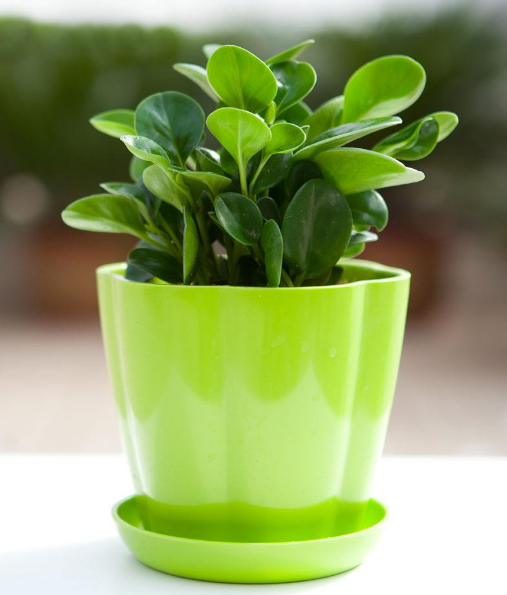
Peperomia tetraphylla is a beautiful foliage plant native to Venezuela. It is small and cute, elegant and dainty, fresh and natural. Place a pot beside your computer to relax your eyes; place a pot on the coffee table to freshen the air; place a pot on your desk to relax your mood… But how can one pot at home be enough? Take a look at the propagation methods and pruning methods of Peperomia tetraphylla.
I. How to Propagate Peperomia tetraphylla
1. Division Propagation of Peperomia tetraphylla
Division propagation of Peperomia tetraphylla is mainly used for propagating variegated-leaf varieties. When Peperomia tetraphylla fills its pot, take the plant out of the pot and use a small knife to divide it into N clumps, planting each separately. Alternatively, repot it into a larger pot and, once growth is stable, move it into a smaller pot.
2. Cutting Propagation of Peperomia tetraphylla
The cutting referred to here is stem cutting, usually carried out in April to May, and selecting the branches and leaves of the terminal bud gives the best results.
Select a robust terminal branch, about 10-12 cm long, keep 1-2 leaves on the upper part, and place it in a cool, good spot for 1-2 hours. Once the cut has dried, insert it into moist soil, and you are done!
3. Leaf Cutting Propagation of Peperomia tetraphylla
Leaf cutting is usually carried out in May. Select robust, mature leaves from the lower part of the Peperomia tetraphylla and remove the leaves together with their petioles (leaves that have been broken may also be used, but they must not be diseased leaves). After drying, bend the petiole to 45° and insert it into the soil. Keep the temperature at 25°C, and roots will form in about one month.
When leaf-cutting Peperomia tetraphylla, never cover the pot opening with plastic film to retain moisture, as this easily causes the leaves to rot.
II. How to Prune Peperomia tetraphylla
1. Pinching of Peperomia tetraphylla
Flower lovers who adore Peperomia tetraphylla may find it hard to bring themselves to do it, but if you cannot bear to pinch, you cannot grow Peperomia tetraphylla well. Generally, when it grows to about ten centimeters, it should be pinched appropriately, which can stop it from growing taller. Another point is that once pinched, it can promote the growth of lateral branches of Peperomia tetraphylla. In this way, not only is the height limited, but it also becomes fuller and fuller. Is that not killing two birds with one stone?
2. Pruning of Peperomia tetraphylla
Even after pinching, it will still keep growing taller, just not as fast, so for some branches that have already been pinched and are still very tall, we can cut them off. Note that what is cut off are the tall and dense branches, so that while maintaining good looks, the air permeability of the potted plant is also increased, and to a certain extent, rotting or death can be avoided.
3. Use of the Branches Cut from Peperomia tetraphylla
If you really feel it is a pity to discard the pruned branches, you can use stem cutting or leaf cutting to propagate them.
How to Propagate Peperomia tetraphylla: Propagation Methods of Peperomia tetraphylla
“Cultivation Methods and Precautions for Peperomia tetraphyllahave already been introduced to everyone, so how do you propagate Peperomia tetraphylla? Let us learn about the propagation methods of Peperomia tetraphylla together.
Propagation Methods of Peperomia tetraphylla
1. Division method:When the plant fills the pot, take the plant out and divide it into several pots for planting.
2. Stem cutting method:Terminal bud cuttings give the best results. Generally, in May to June, select plump and robust two-year-old branches 8-10 cm long. They should have 3 nodes, and cut at 0.5 cm below a node. Keep 3-5 leaves on the upper part, place in a ventilated, cool place for 1-2 hours, and after the cut has dried slightly, insert it into a culture soil made of half leaf mold and half garden soil, water thoroughly, and place in a shaded spot. Keep the pot soil moist at all times, and roots will form after 20 days. When the roots are 3 cm long, the plant can be potted for care.
3. Leaf cutting method:In East China, it is best to carry out this in May each year. Take robust, mature leaves from the middle and lower parts of the plant, and remove the whole leaf together with the petiole. After drying for half a day, insert the petiole at a 45° slant into a shallow pot filled with vermiculite or sand, and keep it moist. At a temperature of about 25°C, roots can be produced in about 25 days, and when the leaves have 3-4 leaves, the plant can be potted for care. When leaf-cutting, never cover the pot opening with plastic film or glass to retain moisture, otherwise it easily causes rot.
Mostly propagated by cutting and division
Cutting: In April to May, select robust terminal branches about 5 cm long as cuttings, keep 1-2 leaves on the upper part, and after the cut has dried, insert into a moist sand bed. Leaf cutting can also be used: use a knife to cut off a leaf with its petiole, let it dry slightly, then insert it at a slant into a sand bed, and it will root in 10-15 days. In a greenhouse with temperature control equipment, it can be done all year round.
Division: Mainly used for propagating variegated-leaf varieties. The pot soil can be made from leaf mold and peat soil plus some perlite or sand, with an appropriate amount of base fertilizer added. During the growing period, apply a topdressing once every half month. For watering, water that has been left standing in a water tank for 1-2 days is best. In winter, control watering. Temperature changes directly affect leaf color. The suitable winter temperature for variegated-leaf types is 18-20°C; for green-leaf species it is about 15°C. In hot summer, it fears heat, so it can be placed under a shade shed and sprayed with water to cool down, but note that both excessive heat and excessive moisture can cause the stems and leaves to turn black and rot. In winter, place it in a spot with ample light; in summer, avoid direct sunlight. Repot once every 2-3 years.
[How to grow in water]:Peperomia tetraphylla is a super easy-to-keep model for water culture. Each plant has 4-5 leaves, adapts very easily to the water environment, will not rot, and is easy to grow.
It likes a warm and humid semi-shaded environment, is not tolerant of high temperatures, and avoids direct sunlight; it is drought-tolerant, and watering should not be excessive, especially in autumn and winter when watering should be reduced. If the air is dry, spray more water on the leaf surface. It avoids frost.
[How to grow in soil]:The cultivation substrate for Peperomia tetraphylla requires an organic substrate with good air permeability and good water retention, such as peat soil plus perlite or vermiculite, with a ratio of about 6:1. Excessive moisture in the cultivation substrate should be avoided, and generally the cultivation substrate should maintain a water content of 40-60%.
It is usually placed indoors in a bright spot or outdoors in a shaded spot. The optimum temperature is 20-26°C, and the winter temperature should be above 5°C. Spray water on the leaf surface frequently to maintain relatively high air humidity. It can also be appropriately pruned after a period of care or transplanted into a courtyard for ornamental purposes.
The above isHow to Propagate Peperomia tetraphyllaintroduced. Friends who want to grow it in soil or in water can both take a look.
Peperomia tetraphylla Peperomia tetraphylla Illustrated Guide: How to Grow Peperomia tetraphylla / How to Propagate Peperomia tetraphylla
Peperomia tetraphylla ProfilePeperomia tetraphylla
Aliases: Peperomia, emerald peperomia, green-leaf jade, Douban Ruyi, little jasper, jade flower
Classification: Perennial herbaceous flower
Family and genus: Plantae, Angiosperms, Dicotyledoneae, Piperaceae, Peperomia
Full bloom period: Spring, summer, autumn
Peperomia tetraphylla is a small herbaceous plant native to the West Indies, Panama, and northern South America. It was later introduced to China and is generally used as a potted decoration. It is widely welcomed for its bright luster and natural green color. Moreover, this plant can also be used medicinally. According to traditional Chinese medicinal principles, internal use can dispel wind and remove dampness, relieve cough and eliminate phlegm. External use can treat bruises, injuries, and fractures, so it is also an important part of Chinese herbal medicine.
Cultivation Methods and Precautions for Peperomia tetraphylla: Introduction to Peperomia tetraphylla
Peperomia tetraphylla is a small herbaceous plant native to the West Indies, Panama, and northern South America. It was later introduced to China and is generally used as a potted decoration. It is widely welcomed for its bright luster and natural green color. Moreover, this plant can also be used medicinally. According to traditional Chinese medicinal principles, internal use can dispel wind and remove dampness, relieve cough and eliminate phlegm. External use can treat bruises, injuries, and fractures, so it is also an important part of Chinese herbal medicine.
Morphological Characteristics of Peperomia tetraphylla
Peperomia tetraphylla is a perennial herb, with a plant height of 15-20 cm. It has no main stem. The leaves are clustered, the stem is fleshy and rather thick, obovate, grayish green mixed with dark green vein patterns. The spike inflorescence is grayish white. Cultivated varieties include the spotted-leaf type, whose leaves are fleshy with a reddish tinge; the variegated-leaf type, whose leaves are green in the middle with a broad golden-yellow border; the glossy-leaf type, with heart-shaped leaves and a metallic luster; and the wrinkled-leaf type, with leaf veins deeply sunken, forming a very wrinkled leaf surface, which is extremely interesting.
1. Peperomia tetraphylla: A perennial clustered herb, 10-30 cm tall. The stem is fleshy, prostrate at the base, much branched, with several lower nodes often producing adventitious roots, and the internodes have thick longitudinal ridges. The leaves are dense, 3-4 in a whorl, nearly equal in size; the petiole is short, 1-2 mm long, hairless or covered with short soft hairs; the leaf blade is elliptical or nearly circular, 9-12 cm long and 5-9 cm wide, with both ends blunt or rounded, hairless or the young leaves sparsely covered with soft hairs, with 3 veins, slender and usually inconspicuous; the leaves are somewhat fleshy, with transparent glandular dots, turning pale yellow when dry and showing wrinkles. The spike inflorescence is solitary, terminal or axillary, 2-4.5 cm long; the peduncle is slightly shorter and thinner than the inflorescence axis, sparsely hairy or nearly hairless, while the inflorescence axis is densely hairy; the bracts are nearly circular, short-stalked, peltate; the flowers are small, bisexual, without perianth, growing together with the bracts in the depressions of the inflorescence axis; stamens 2, filaments short, anthers nearly elliptical; ovary ovate, 1-locular, stigma terminal, nearly head-shaped, covered with short soft hairs. The berry is ovate-spherical, pointed at the tip, nearly 1 mm long. Flowering period is February to April and September to October.
2. Peperomia tetraphylla var. hairy leaf: This species differs from Peperomia tetraphylla in that the plant is very short and small, 3-5 cm long including the inflorescence. The stems and branches are densely covered with stiff hairs. The leaves are smaller, rhombic-elliptical, 6-8 cm long and 5-6 cm wide, densely covered with stiff hairs on both sides, especially on the back. The inflorescence is short, 7-11 mm long during the flowering period, and the peduncle is densely covered with stiff hairs.
The flowering period of Peperomia tetraphylla is April to September.
Ecological Habits of Peperomia tetraphylla
Peperomia tetraphylla likes a warm and humid semi-shaded environment. The optimum growth temperature is about 25°C, and it must not be lower than 10°C. It is not tolerant of high temperatures, requires relatively high air humidity, and avoids direct sunlight; it likes loose, fertile, and well-drained moist soil.
[Water]: It likes humidity. During the growing period from May to September, water more. In hot weather, spray or sprinkle water on the leaf surface to maintain relatively high air humidity and keep the leaf patterns clear and the leaf color emerald green.
[Fertilizer]: Apply fertilizer once a month until overwintering.
[Soil]: It requires loose, fertile, and well-drained soil, which can be prepared by mixing river sand, mud surface material, and leaf mold.
[Temperature]: It likes warmth. The optimum growth temperature is about 25°C, and the overwintering temperature should not be lower than 5°C.
[Light]: It avoids direct sunlight and is suitable for growing in a semi-shaded place.
Cultivation Techniques of Peperomia tetraphylla: Substrate Preparation
Use imported peat of 5-40 mm specification with good looseness, drainage, and aeration. Break up the peat, add water, and mix evenly (watering standard: after adding water and mixing evenly, when you tightly squeeze a handful of peat, water seeps out from between your fingers). Then plant in cups. For a 9 cm pot, the amount of peat used per pot is about 200 ml. One 300 L package of imported peat can fill about 1500 cups.
Potting
For old pots that are reused, they must be soaked in a 1000-fold potassium permanganate solution for more than half an hour, then rinsed with clean water and dried for later use. New pots can be used directly. Generally, smaller flower pots (9 cm plastic pots) are used first for planting. When planting, first place an appropriate amount of substrate at the bottom of the cup, then move the screened seedlings into the cup. Small seedlings can be planted somewhat deeper, with the base of the plant slightly above level being appropriate, 1 clump per pot; the substrate should be moderately firm, filled to 9/10 of the cup, gently shake the pot soil, and water with half-soaked water or surface water to settle the roots.
Cultivation Management
Peperomia tetraphylla is suitable for culture soil with relatively high humus content. The pot soil can be prepared by mixing 4 parts peat soil or leaf mold, 2 parts sawdust, 1 part perlite or river sand, and 3 parts garden soil. During the growing period, sufficient air humidity must be ensured. In high-temperature seasons, potted plants should be placed in a ventilated and cool place, avoiding direct sunlight. At the same time, attention should be paid to watering more, and water can be sprayed on the leaf surface to keep the leaves emerald green. Peperomia tetraphylla has a relatively strong drought resistance. Excessive watering easily causes root rot. Each watering should be less rather than more, but the pot soil should be kept moist at all times.
In winter, watering should be even less, and overly cold water should be avoided; it is best to make the water temperature close to room temperature. From May to September, fertilizer can be applied once every 2-3 weeks. In spring and summer, potted plants should be placed in a semi-shaded place; in winter, they can be placed in a sunny spot, but continuous direct sunlight should also be avoided. The overwintering temperature should not be lower than 10°C. To keep the leaves emerald green, generally repot or renew once every 2-3 years. When the plant is about 10 cm tall, it can be appropriately pinched to promote the sprouting of lateral branches and keep the plant shape full.
Soilless Cultivation
For soilless cultivation of Peperomia tetraphylla, the substrate can be vermiculite:peat:slag at 1:1:1 or perlite:peat:river sand at 1:1:1. The nutrient solution used can be a foliage plant nutrient solution or a compound flower fertilizer. When potting, first add a layer of ceramic gravel or coarse sand at the bottom of the pot, place the flower seedling in the center and hold it upright, then add substrate until the pot is 8/10 full. The first watering with nutrient solution should be thorough, until seepage flows out into the tray at the bottom of the pot. After that, replenish liquid and water according to routine. For small and medium pots, replenish liquid once a week, 50-100 ml each time. On ordinary days, replenish water to keep the substrate moist, and the pH value can be maintained at about 6.5. During the growing period, it is advisable to spray clean water on the stems and leaves 1-2 times a day to help keep the leaves green, especially in dry climates and high-temperature summer seasons. Peperomia tetraphylla is relatively shade-tolerant and can be placed indoors in a place with bright scattered light all year round. In winter, it can appropriately receive a bit more sunlight. In winter, attention should be paid to cold protection and warmth, keeping the room temperature above 15°C, and reducing the frequency of liquid replenishment and watering to avoid root and leaf rot.
Cultivation Methods of Peperomia tetraphylla: How to Grow in Water
Peperomia tetraphylla is a super easy-to-keep model for water culture. Each plant has 4-5 leaves, adapts very easily to the water environment, will not rot, and is easy to grow.
It likes a warm and humid semi-shaded environment, is not tolerant of high temperatures, and avoids direct sunlight; it is drought-tolerant, and watering should not be excessive, especially in autumn and winter when watering should be reduced. If the air is dry, spray more water on the leaf surface. It avoids frost.
How to Grow in Soil
The cultivation substrate for Peperomia tetraphylla requires an organic substrate with good air permeability and good water retention, such as peat soil plus perlite or vermiculite (zhi), with a ratio of about 6:1. Excessive moisture in the cultivation substrate should be avoided, and generally the cultivation substrate should maintain a water content of 40-60%.
It is usually placed indoors in a bright spot or outdoors in a shaded spot. The optimum temperature is 20-26°C, and the winter temperature should be above 5°C. Spray water on the leaf surface frequently to maintain relatively high air humidity. It can also be appropriately pruned after a period of care or transplanted into a courtyard for ornamental purposes.
Propagation Methods of Peperomia tetraphylla
Peperomia tetraphylla is mostly propagated by cutting and division.
Cutting
In April to May, select robust terminal branches about 5 cm long as cuttings, keep 1-2 leaves on the upper part, and after the cut has dried, insert into a moist sand bed. Leaf cutting can also be used: use a knife to cut off a leaf with its petiole, let it dry slightly, then insert it at a slant into a sand bed, and it will root in 10-15 days. In a greenhouse with temperature control equipment, it can be done all year round. Division: Mainly used for propagating variegated-leaf varieties. The pot soil can be made from leaf mold and peat soil plus some perlite or sand, with an appropriate amount of base fertilizer added. During the growing period, apply a topdressing once every half month. For watering, water that has been left standing in a water tank for 1-2 days is best. In winter, control watering. Temperature changes directly affect leaf color. The suitable winter temperature for variegated-leaf types is 18-20°C; for green-leaf species it is about 15°C. In hot summer, it fears heat, so it can be placed under a shade shed and sprayed with water to cool down, but note that both excessive heat and excessive moisture can cause the stems and leaves to turn black and rot. In winter, place it in a spot with ample light; in summer, avoid direct sunlight. Repot once every 2-3 years.
Cutting Substrate
This refers to materials such as nutrient soil, river sand, or peat soil used for cuttings. For home cuttings, it is difficult to obtain an ideal cutting substrate due to limited conditions. It is recommended to use a ready-mixed and sterilized cutting substrate; medium-coarse river sand can also be used, but it should be rinsed with clean water several times before use. Sea sand and river sand from saline-alkali areas should not be used, as they are not suitable for the growth of flowers and plants.
In the peak growing seasons of early spring or late autumn (when the maximum midday temperature does not exceed 28°C and the minimum nighttime temperature is not lower than 15°C), cut off leaves or stems (with 3-4 leaf nodes), wait for the wound to dry, then insert into the substrate. Spray the cuttings and substrate lightly with water. As long as the substrate is not excessively dry or waterlogged, roots and new shoots can grow quickly. From late spring to early autumn when temperatures are relatively high, cuttings very easily rot, so it is best not to carry out cuttings then.
Potting
When potting small seedlings, first place a 2-2 cm thick layer of coarse-grained substrate or ceramic gravel at the bottom of the pot as a drainage layer, sprinkle a layer of fully decomposed organic fertilizer on top as base fertilizer, about 1-2 cm thick, then cover with a layer of substrate about 1-2 cm thick, and then place the plant in, so as to separate the fertilizer from the root system and avoid burning the roots.
The substrate used for potting can be chosen from one of the following. Vegetable garden soil:slag = 3:1; or garden soil:medium-coarse river sand:sawdust (mushroom residue) = 4:1:2; or one of paddy soil, pond mud, or leaf mold. Or peat + perlite + ceramic gravel = 2 parts + 2 parts + 1 part; vegetable garden soil + slag = 3 parts + 1 part; peat + slag + ceramic gravel = 2 parts + 2 parts + 1 part; sawdust + vermiculite + medium-coarse river sand = 2 parts + 2 parts + 1 part. After potting, water once thoroughly and place in a shaded environment for care.
Humidity Management
It likes a humid climate environment and requires the relative air temperature of the growing environment to be 60-75%.
Temperature Management
The optimum growth temperature is 18°C-30°C. It avoids cold and frost. The overwintering temperature needs to be kept above 10°C. When the winter temperature drops below 4°C, it enters a dormant state. If the ambient temperature approaches 0°C, it will die from frostbite.
Precautions in Summer:
1. Strengthen air convection so that the heat inside the plant body can be dissipated;
2. Place it in a semi-shaded spot, or shade it by 50%;
3. Spray it appropriately, 2-3 times a day.
Precautions in Winter:
1. Move it indoors to a bright spot for care;
2. Outdoors, it can be wrapped with plastic film to overwinter, but every two days at the warmer midday period the film should be opened to let it breathe;
Light Management: It fears strong direct light and needs to be placed in a semi-shaded spot for care, or shaded by 70%. For those kept indoors, place it in as bright a spot as possible, and every one or two months move it outdoors to a semi-shaded spot or a shaded spot for one month of care, so that it can accumulate nutrients and recover its growth vigor.
Fertilizer and Water Management: It has relatively high requirements for fertilizer and water, but it most fears random fertilization, concentrated fertilizer, and one-sided application of nitrogen, phosphorus, and potassium fertilizers. It is required to follow the fertilization (water) principle of "light fertilizer applied frequently, small amounts and many times, complete nutrition":
Spring, Summer, and Autumn
These two seasons are its peak growing seasons. Fertilizer and water management follows the cycle of "Hua Bao" - "Hua Bao" - clear water - "Hua Bao" - "Hua Bao" - clear water (at the very least, ensure two applications of "Hua Bao" each week), with an interval period of about: 1-4 days for outdoor care; shorter intervals on sunny days or during high temperatures, longer intervals or no watering on rainy days or during low temperatures; for indoor care, 2-6 days. Try to arrange watering time in the morning when the temperature is lower. In summer, water in the early morning or evening when the temperature is low, and also spray the plant frequently.
Winter
During the winter dormant period, the main task is to control fertilizer and water well. Fertilizer and water management follows the cycle of "Hua Bao" - clear water - clear water - "Hua Bao" - clear water - clear water, with an interval period of about 7-10 days. Try to arrange watering time at midday on sunny days when the temperature is relatively high.
Disease Control of Peperomia tetraphylla
Peperomia tetraphylla has relatively few diseases. The main one is damage from ring spot virus disease, in which affected plants become dwarfed and leaves become distorted; it can be sprayed with equal-amount Bordeaux mixture. There are also root and neck rot and canker disease, for which a 50% carbendazim wettable powder 1000-fold solution can be sprayed.
For insect pests, there are occasionally scale insects and slugs, which should be controlled promptly.
Uses of Peperomia tetraphylla: Decorative Applications
Peperomia tetraphylla is suitable for small potted plants. It is often cultivated in white plastic pots or white porcelain pots and placed on coffee tables, decorative cabinets, curio shelves, or office desks, looking very beautiful. Or let the branches spread and hang down, suspended indoors in front of a window or in a bathroom, which is also very fresh and pleasing to the eye.
Functional Applications
Peperomia tetraphylla has a certain purifying effect on formaldehyde, xylene, and secondhand smoke, and is the best plant for radiation protection.
Medicinal or Edible Value of Peperomia tetraphylla
The medical information and healthy dietary information on the Huahua website is for reference only and cannot be used as a basis for diagnosis or medical treatment. For any health problem, consult professional medical personnel, and for the treatment of any disease, please follow a doctor's advice.
Ultimate flower-protecting task: To love yourself, start from reality and strictly follow a doctor's advice. For illness, do not be careless, do not delay, do not give up hope, face it bravely, use love to warm the silent world, and use your heart to care for the flower field within.
Medicinal Information
[Aliases]Yizhuxiang, Yandouban, Doubancao, Douban Ruyi, Siban Jinchai, Zhijiacao, Douban Dabusi, round-leaf peperomia, green-leaf jade
[Source]The whole plant of Peperomia reflexa (L.f.) A.Dietr., a plant of the genus Peperomia in the family Piperaceae, is used as medicine. It can be collected all year round, used fresh or dried in the sun.
[Nature, Flavor, and Meridian Entry]Slightly bitter, warm.
[Functions and Indications]Dispel wind and remove dampness, relieve cough and eliminate phlegm, invigorate blood and relieve pain. Used for rheumatic muscle and bone pain, pulmonary tuberculosis, bronchitis, asthma, whooping cough, pulmonary abscess, infantile malnutrition, dysmenorrhea; external use for treating bruises, injuries, and fractures.
[Usage and Dosage]15-25 grams. For external use, an appropriate amount; crush fresh material and apply, or squeeze the juice and dab it on the affected area.
[Excerpt]"Compendium of Chinese Herbal Medicines"
Qingye Biyu, also called doubanlv, peppercorn grass, or emerald peppercorn grass, is a perennial evergreen herbaceous plant in the genus Peperomia of the family Piperaceae. The plant height is 20-25 cm, the stems are round, branching, light green with purplish-red markings. The leaves are alternate, slightly fleshy, oblong-elliptic, deep green, glossy, up to 15 cm long, wedge-shaped at the base, with short petioles. The spike inflorescence is 2.5-18 cm long, the small flowers are greenish-white, and the peduncle is shorter than the spike inflorescence, smooth and hairless. The fruit has a curved, sharply pointed beak. It is the representative species of upright Peperomia.
The main horticultural cultivars include (1) variegated Peperomia, with red spots on the stems, dark green leaves with yellow markings along the margins that later turn nearly white; (2) 'Green Gold', with yellow markings on the leaves.
[Discussions by Various Authors]
1. "Illustrated Investigation of Plant Names and Actualities": treats traumatic injuries.
2. "Guizhou Herbal Medicine": relieves cough, strengthens the spleen.
3. "Yunnan Chinese Herbal Medicine": clears heat and detoxifies, relaxes the tendons and activates the collaterals.
[Textual Research]Sourced from "Illustrated Investigation of Plant Names and Actualities".
"Illustrated Investigation of Plant Names and Actualities": Doubanlv grows among mountain rocks in Yunnan. In Shunning, some make it into a paste and take it, and it may prove effective. However, in southern Yunnan all grasses with nourishing properties are called luxian, and such exaggerated claims are quite untrustworthy; for now, record the formula. Six-Ingredient Luxian Grass Paste: the six ingredients of luxian grass all grow in the forest rocks of Seyin Cave, Shunning County. Collect from the overhanging rocks six ingredients, namely douban luxian grass, purple-backed luxian grass, rock-backed luxian grass, shihu luxian grass, bamboo-leaf luxian grass, and turtle-back luxian grass, add large fuping, decoct together with mulberry wood and strain off the residue, then add other medicines and simmer overnight, and melt in rock sugar to form a paste. Its nature is mild, and men, women, the young, and the old may all take it; avoid sour and cold foods. To treat phlegm-fire, take it with boehmeria root wine. For the elderly and weak, dizziness, and blurred vision, take it with fuyuan and jujube decoction. For the young with congenital deficiencies and the five consumptions and seven injuries, take it mixed with strong liquor. For long-standing illness with difficulty rising from bed, take it with fuyuan, jujube, fuping, and ginger decoction.
The Flower Language of Doubanlv
Doubanlv flower language: neutrality and justice, faith, the gentleman, harmony between men and women, and marital affection.
Doubanlv pictures