Does Peperomia obtusifolia bloom? A full guide to growing methods
The leaves of Peperomia obtusifolia are emerald green, evergreen all year round, and the plant has a beautiful shape, making it an excellent indoor potted foliage plant. It is suitable for small and medium pots and is one of the ideal decorative plants for the home, often used to decorate windowsills, desks, coffee tables and other places. The editor will share with you the growing methods and precautions for Peperomia obtusifolia.
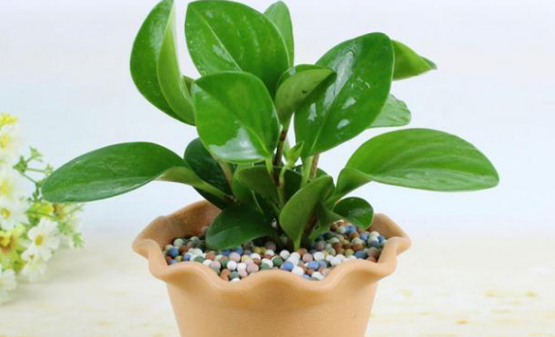
I. Growing methods for Peperomia obtusifolia
1. Soil selection for Peperomia obtusifolia
Peperomia obtusifolia requires soil rich in humus, loose, fertile and well-drained. You can choose 7 parts leaf mold, 3 parts river sand, plus a small amount of base fertilizer to make the potting soil, or mix 6 parts peat soil, 4 parts perlite and a small amount of base fertilizer. When planting, generally just buy a potted plant directly, no need to mix soil; a slight understanding of the soil composition is enough.
2. Temperature requirements for Peperomia obtusifolia
Peperomia obtusifolia likes a warm, humid, semi-shaded environment and tolerates high temperatures. The optimum growing temperature is around 25°C. In winter it can grow normally at 10-15°C, stops growing below 10°C, is damaged below 5°C, and will freeze to death below 0°C. A small pot of Peperomia obtusifolia is not that easy to grow.
3. Light requirements for Peperomia obtusifolia
Peperomia obtusifolia is fairly shade-tolerant and can be kept indoors all year round in a place with bright scattered light. In spring and autumn it can receive more light; in winter place it near a south-facing window to get more sunlight; in summer place it on a north-facing windowsill with appropriate shading. When the light is suitable, the leaf color is vivid; if the light is too strong or too dim, the leaves lose their delicate color.
4. Watering method for Peperomia obtusifolia
Watering should keep the potting soil neither too dry nor too wet. During the growing process, spring and autumn are the peak seasons of growth and development, so use a bit more water. In summer the weather is hot, but because of the high temperature the plant actually grows slowly; you can water once each in the morning and evening. High temperature and humidity easily rot the stems and leaves, so it depends on the weather and the potting soil. The potting soil should be slightly on the dry side, because its stems and leaves are thick and fleshy and too much moisture easily causes root rot; especially in winter, due to the low temperature, it is in a dormant state, so the potting soil should be kept dry.
5. Fertilization method for Peperomia obtusifolia
Peperomia obtusifolia usually has its potting soil renewed once every 2-3 years. During the growing period, apply decomposed liquid fertilizer or nitrogen-phosphorus chemical fertilizer once every 15-20 days, with a concentration of 15%-20% for cake fertilizer and 0.2%-0.3% for nitrogen-phosphorus compound fertilizer. If you are unsure about the amount of fertilizer, you can reduce the nitrogen fertilizer, which can make the markings on the leaves more prominent.
Precautions for growing Peperomia obtusifolia:
Don't be fooled by how cute a small pot of Peperomia obtusifolia is; that is because someone has grown it well. If care is half-hearted, it will also become leggy. So prune it in time. When Peperomia obtusifolia grows to about 10 cm, pinch off the growing tips to promote side branches and make the plant fuller.
In daily management, pay attention to moderate light and reasonable fertilizer and water. When the sunlight is not too strong, the pot can be placed outdoors. But in summer it must not be exposed to direct strong light, especially not placed in a spot that gets full sun, otherwise the branches and leaves will turn yellow.
II. Does Peperomia obtusifolia bloom?
Peperomia obtusifolia does bloom, it is just uncommon. If cared for properly, Peperomia obtusifolia blooms twice a year, with flowering periods in February-April and September-October.
Peperomia obtusifolia does bloom, but the shape is not really a flower; it sends out a small stick-like thing from the middle of the leaves, which many people are likely to think is a new bud, but that is not the case. After careful observation you will find that the flower of Peperomia obtusifolia is different from the leaves. Peperomia obtusifolia has a spike inflorescence, densely covered with small greenish-white flowers with pollen on them, which may be more obvious when viewed with a magnifying glass.
Does Peperomia obtusifolia bloom? Precautions for growing Peperomia obtusifolia in winter
Peperomia obtusifolia has round, emerald-green, glossy leaves and a relatively small plant form. It is a small foliage plant, and placed in front of a window, on a coffee table or on an office desk it looks fresh and elegant. So what should we pay attention to when growing it in winter? Does Peperomia obtusifolia bloom? Next we will answer these one by one.
Does Peperomia obtusifolia bloom?
Verification confirms that Peperomia obtusifolia can bloom. If cared for properly, it blooms twice a year, with flowering periods in February-April and September-October. Many flower lovers may have seen Peperomia obtusifolia bloom but simply overlooked it, because when Peperomia obtusifolia blooms it sends out a small stick-like thing from the middle, which many people are likely to think is a new bud, but that is not the case. After careful observation you will find that it is actually different from the leaves; Peperomia obtusifolia has a spike inflorescence, densely covered with small greenish-white flowers with pollen on them, which may be more obvious when viewed with a magnifying glass.
Peperomia obtusifolia is a small herbaceous plant, generally used as a potted decoration, and is widely welcomed for its bright luster and natural green color. It likes a warm, humid, semi-shaded environment. The optimum growing temperature is around 25°C, and it must not go below 10°C. It does not tolerate high temperatures, requires relatively high air humidity, and avoids direct sunlight; it likes loose, fertile, moist soil with good drainage.
Precautions for growing Peperomia obtusifolia in winter
1. Move it indoors to a place with bright light for care;
2. Outdoors, you can wrap it in plastic film to overwinter, but every two days at noon when the temperature is higher, uncover the film to let it breathe;
Light management: it fears direct strong light, so it needs to be kept in a semi-shaded place, or given 70% shading. For indoor care, keep it in a bright place as much as possible, and every one or two months move it outdoors to a semi-shaded place or shade it for a month of care, so that it can accumulate nutrients and recover its growth.
Fertilizer and water management: it has high demands for fertilizer and water, but it most fears improper fertilization, concentrated fertilizer, and one-sided application of nitrogen, phosphorus or potassium fertilizer. It should follow the fertilization (and watering) principle of "light fertilizer applied frequently, small amounts with more applications, complete nutrition":
Spring, summer and autumn: these three seasons are its peak growth seasons. Fertilizer and water management follows the cycle of "Huabao" - "Huabao" - clear water - "Huabao" - "Huabao" - clear water (at the very least, ensure two "Huabao" applications per week). The interval is approximately: 1-4 days for outdoor care; shorter intervals on sunny days or during high temperatures, longer intervals or no watering on rainy days or during low temperatures; 2-6 days for indoor care. Try to schedule watering in the morning when the temperature is lower. In summer, water in the morning or evening when the temperature is low, and also mist the plant frequently.
Winter: during the winter dormant period, the main task is to control fertilizer and water. Fertilizer and water management follows the cycle of "Huabao" - clear water - clear water - "Huabao" - clear water - clear water, with an interval of about 7-10 days. Try to schedule watering at noon on sunny days when the temperature is higher.
Does Peperomia obtusifolia bloom? How to handle and prune Peperomia obtusifolia after blooming, and keep fertilizer and water moderate
As a herbaceous plant in the Piperaceae family, the leaves of Peperomia obtusifolia are not only deep green all year round but also resemble those of succulents, so the leaves have high ornamental value. But in fact, besides the good-looking leaves, its other parts also have high ornamental value. So does Peperomia obtusifolia bloom? How long is the flowering period of Peperomia obtusifolia? How to handle Peperomia obtusifolia after blooming? Let's look into the details together.
Does Peperomia obtusifolia bloom?
In fact, Peperomia obtusifolia does bloom, but its blooming is not common, so it is often mistakenly thought not to bloom. The prerequisites for blooming are suitable temperature, appropriate light, proper nutrients and so on, which places relatively high demands on the growing methods for Peperomia obtusifolia.
How long is the flowering period of Peperomia obtusifolia?
The flowering period of Peperomia obtusifolia is usually February-April, or September-December. The specific time is closely related to the environment, among which temperature is the most important influencing factor. When blooming, its inflorescence is a spike, 2-4.5 cm long, and the bracts are nearly round and peltate. The flowers are borne in the depressions of the inflorescence axis, as shown in the red circle in the picture above.
How to handle Peperomia obtusifolia after blooming
1. Pruning
Although it is very rare for Peperomia obtusifolia to bloom, its flowers are far less ornamental than its leaves, so after blooming people often cut off the flowers to reduce nutrient consumption and at the same time promote rapid recovery of growth in Peperomia obtusifolia.
2. Reduce fertilization
Peperomia obtusifolia is a perennial plant and will not die after blooming, so reasonable care and management are needed after blooming. The first point is to reduce fertilization; when fertilizing, be careful that the phosphorus and potassium content is not too high, as they are the main components that promote blooming.
3. Water moderately
After blooming, Peperomia obtusifolia consumes a large amount of nutrients, but at this time it should not be watered too much, and even more so there should be no standing water in the pot. You can water a small amount to ensure the soil is not too dry, and after 1-2 weeks, change to watering once every 5-7 days.
4. Control light
After Peperomia obtusifolia blooms, the light in its environment needs to be controlled so that it is not too strong; in particular, it must not be kept under direct sunlight. The best position is a semi-shaded, ventilated place, ensuring some light while reducing the weak, spindly leaves caused by dim light.