How to grow and propagate banana shrub? Where can it be placed?
Banana shrub (Michelia figo) is something many people like; this banana shrub is a symbol of good fortune. What are the methods for growing and propagating banana shrub? Where can banana shrub be placed:
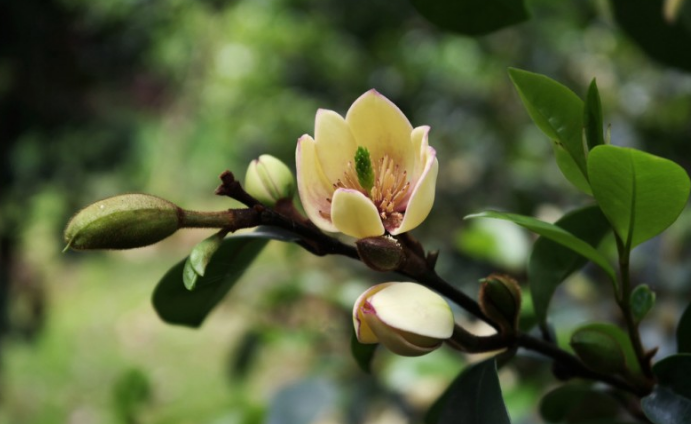
Growing methods for banana shrub:
1. Potting soil: fertile sandy soil with moderate acidity and alkalinity can be used; for the soil mix, use three parts leaf mold, three parts fertile soil, and one part river sand.
2. Repotting: because banana shrub grows fast, it should be repotted once a year. When repotting, cut out all the old roots to benefit the growth of the new plant. Repotting should be done after the flowering period.
3. Watering: banana shrub dislikes wet conditions and fears drought; do not water too much, and there must be no water accumulation in the pot, nor should it be droughty. Generally, keeping the potting soil moist is best. In spring and autumn, water once every two days; in summer, water every day; in winter, water once a week. No matter the season, spray water on the leaves every day.
4. Fertilizing: banana shrub likes fertile soil. In summer, apply fertilizer once every half month. During the flowering season, increase the supply of phosphorus fertilizer and potassium fertilizer. Watering banana shrub with rice-washing water gives even better results.
5. Light: banana shrub likes light, but the light should not be too strong. In summer, keeping 30 percent light is sufficient; in winter, full-day light is fine. At all times, the environment must be kept ventilated.
Propagation methods for banana shrub:
The propagation methods for banana shrub are divided into cutting, layering, and grafting; the simplest method is cutting.
After the banana shrub flowers fall, cut off one-year-old branches and cut them into 20—30 cm sections, leaving 2—3 buds on each section, then insert them obliquely into sandy soil, water them, and cover with plastic sheeting. Keep the soil moist at all times. If the temperature is between 25—30 degrees, they will sprout after one month.
Where can banana shrub be placed:
Place a few pots in the living room or on the coffee table. When in bloom, the fragrance is rich and heavy, and the delicate, beautiful form is intoxicating. Banana shrub leaves also have a relatively strong function of absorbing chlorine gas and carbon dioxide to purify the air.
That is all for the introduction to banana shrub. Aren't the effects of this banana shrub quite magical? Go and grow one quickly.
How does banana shrub propagate? Propagation methods for potted banana shrub / cutting propagation is the most practical
Flower lovers should be familiar with banana shrub (Michelia figo). Its flower color is pleasant, and its flower form is rich; it is not only highly ornamental, but also has beauty and medicinal effects. During cultivation, if you want one pot of banana shrub to become many pots, it is very necessary to master the propagation methods of banana shrub. So how does banana shrub propagate? Simply put, there are three methods: cutting, air layering, and grafting. Follow the editor to learn more.
1. How does banana shrub propagate: cutting / air layering / grafting
In daily care, although mastering the growing methods of banana shrub is enough, if you want better ornamental value, the best way is to propagate a few more banana shrubs. As for how banana shrub propagates, generally speaking there are three common methods: cutting, air layering, and grafting, among which cutting is the most commonly used. Let's continue reading to see exactly how to do it.
2. Propagation methods for potted banana shrub
Cutting propagation, air layering propagation, grafting propagation
(1) Cutting propagation method for banana shrub
When it comes to how banana shrub propagates, flower lovers will first think of cutting; after all, it is simple and convenient to do. In the cutting propagation of banana shrub, there are two points everyone must pay attention to: the cuttings and the soil. If these are chosen well, the entire cutting propagation can be 90% successful. The specific steps are as follows:
1. Cutting time
According to the actual practice of flower lovers, there are two choices for cutting time: 1 is in early March in spring, and 2 is from late July to early September. At this time, banana shrub is in its growth period, and the plant's branches are very vigorous.
2. Soil selection
Whether growing or propagating, soil selection is very crucial. According to the growth habits of banana shrub, we should choose loose, fertile, well-aerated, slightly acidic soil. If conditions permit, some perlite can also be added to the soil.
3. Cutting selection
In the entire cutting propagation process of banana shrub, the selection of cuttings is the most important. Flower lovers should choose relatively robust branches as cuttings; besides that, they should also be free of pests and diseases. As for length, cut them neither too long nor too short, and it is best to retain 3 to 8 leaves.
4. Starting the cutting
With the above preparatory work done, the cutting propagation of banana shrub officially begins: carefully insert the cuttings into the prepared soil, and do not break the branches. Also, the insertion depth should not be too shallow, as this will be unstable; nor should it be inserted too deep, as this is also not good.
5. Post-cutting management
Although after completing the above steps, the cutting propagation of banana shrub is basically finished, post-cutting management should not be neglected. Everyone should place it in a humid environment with appropriate shade and appropriate temperature (around 20°C). It will take about 2 to 3 months to root, and then it can be transplanted the following spring.
(2) Air layering propagation method for banana shrub
Time: April
Method: select well-developed, robust 2-year-old branches. Then make a 0.5 cm girdle at an appropriate position on the branch, then apply moist moss to the girdled part, and finally wrap the outside with plastic film, tying it tightly above and below. After 2 months, it can root. After the new roots have fully developed, cut it off and pot it for cultivation, and the entire air layering propagation is complete.
(3) Grafting propagation method for banana shrub
Time: May to June
Method: use magnolia as the rootstock; after survival, it can grow quickly. When grafting banana shrub, if the roots are thick and fleshy, it means it does not tolerate transplanting, so do not use this method at that time. But if you must transplant it, then bring more soil balls, and pruning and shaping of the plant are best done before overwintering. This method is not commonly used in the industry; everyone just needs to know about it.
Growing methods for banana shrub: how to grow banana shrub
Flower Bonsai Network: Growing methods for banana shrub: how to grow banana shrub
What environmental conditions does banana shrub require?
Banana shrub is native to southern China and is cultivated in the provinces (regions) south of the Yangtze River. In eastern Guizhou Province, the related species Michelia maudiae and Michelia floribunda are distributed. Banana shrub is a southern subtropical flower, requiring a warm, humid, well-ventilated climate environment, as well as fertile, loose, well-drained acidic loam. It is relatively shade-tolerant and not tolerant of severe cold, drought, barrenness, or blazing sun, and it fears water accumulation. In winter cultivation of banana shrub, the indoor temperature should be kept above 5°C. When the temperature drops to around 31°C, the normal physiological activities of banana shrub are affected, causing the plant, new shoots, and leaves to wilt.
How to propagate banana shrub?
It can be propagated by sowing, cutting, layering, grafting, and other methods.
(1) Grafting commonly uses Magnolia liliiflora, Michelia champaca, Magnolia amoena, and Magnolia cylindrica as rootstocks. The commonly used methods are cut grafting or cleft grafting. If performing root-collar side grafting, it is best done in April. After grafting, mound soil, leaving only one bud exposed.
(2) Layering is carried out before budding in early spring.
(3) Cutting is done after the flowers fade; select lignified branches of the current year and cut them into 8~10 cm long cuttings. The cutting bed uses well-drained, loose sandy loam or vermiculite, with a plant and row spacing of 6~10 cm. After inserting, cover with plastic film or build a shade shed, and keep the relative humidity in the cutting bed space at about 90%; too dry or too wet is unfavorable for rooting.
How to cultivate banana shrub? How to force or delay its flowering period?
Banana shrub is not cold-tolerant. In China, except in very hot areas and some wind-sheltered microclimate environments in the south where it can be cultivated in the open ground, other areas mostly use pot cultivation and keep it warm for overwintering.
(1) For potted cultivation soil, mix 5 parts garden soil, 3 parts decomposed compost, and 2 parts sand; or mix 3 parts leaf mold (leaf mold made by stacking and fermenting fallen leaves with soil and sieving) and 7 parts sandy soil. Place a few pieces of water chestnut or bone meal at the bottom of the pot as base fertilizer, then fill with soil.
Potting and repotting: pot before budding. Repot once a year, mostly after the flowers fade and before new buds sprout. When repotting, cut off rotten roots, dead roots, and some overly long roots and excessive weak branches. The size of the pot corresponds to the diameter of the plant's crown.
Fertilizer and water management: before spring flowering, apply fertilizer and water according to the plant's growth condition.
Generally, apply liquid fertilizer 2~3 times as a top dressing, mostly using diluted oil cake water mixed with phosphorus fertilizer and human and livestock manure and urine, which has been decomposed and fermented. Loosen the soil and apply top dressing once about every half month. During the bud stage, 0.2% potassium dihydrogen phosphate can be sprayed additionally.
After each thorough watering, if the potting soil still looks relatively dry, immediately water again to supplement. Banana shrub has fleshy roots and fears waterlogging, and is prone to root rot. But it is also a flower that likes warmth and humidity, so the potting soil must be kept moist and aerated. After heavy rain or torrential rain in summer, promptly drain the accumulated water in the pot. Generally in summer, water thoroughly once a day, then spray water once; in winter, the main thing is to keep it warm, keeping the room temperature where the banana shrub pot is placed above 3°C and not higher than 15°C. If the temperature is too high, it is prone to sprouting and leggy growth, consuming nutrients, which is unfavorable for bud formation and flowering the next year. After moving the pot indoors, apply less fertilizer and water. If the air is dry, just spray and moisten the leaf surfaces and the ground; note that you must not spray cold tap water, and the water temperature and room temperature should be as consistent as possible. The indoor air humidity is preferably above 60%. After moving indoors, the flower pot should be placed in a place with light. After the frost period ends, move the pot outdoors and place it in a wind-sheltered, slightly shaded, and airy place.
Shaping and pruning are done during the dormant period before budding in spring. Focus on cutting off overly dense branches, diseased and pest-infested branches, weak branches, leggy branches, and branches that disrupt the crown, so that the crown remains neat and beautiful. After flowering, cut off the remaining flower stalks and fruits to promote new branch growth.
(2) Open-ground cultivation: choose a wind-sheltered and slightly shaded site, or a sparse woodland site, with loose, fertile, organic-rich, well-drained acidic sandy loam for cultivation. Transplant before budding; first transplant and heel in on a transplant bed with a plant and row spacing of 15 cm X 20 cm, and finally dig a planting hole 50 cm deep and 50 cm wide, and plant at a spacing of 1 m x 1 m.
Prune every year during the dormant period, and dig a ring-shaped trench to apply base fertilizer, while adding a small
amount of phosphorus fertilizer. Other fertilizer and water management is the same as for pot cultivation. After autumn, control fertilizer and water early, stop growth early, and build a shed early or, when the temperature drops, burn fire piles around it for cold protection.
In order to make banana shrub bloom on National Day and Spring Festival, from August to September, water once every 1 ~2 days, and apply fermented oil cake water once a week. In most places in Jiangnan in China, it can bloom on National Day. Within 40 days before New Year's Day or Spring Festival, keep the room temperature at around the appropriate level, and for the latter two weeks keep the room temperature below 30°C, and water once every 2~3 days. With top dressing once a week or so, it can bloom on New Year's Day or Spring Festival.
What are the main pests and diseases of banana shrub? How to prevent and control them?
There are sooty mold, Atlas moth, and bagworm moth, etc.
Sooty mold prevention and control is the same as above.
Methods for preventing and controlling Atlas moth and bagworm moth include: (1) use black light traps to kill male adults;
(2) spray and kill with 90% trichlorfon crystals or 50% phoxim each at 1000-fold dilution;
(3) protect the natural enemy Carcelia excisa.