Why Do the Leaves of the Peace Tree Turn Yellow and How Much Does a Pot Cost
The peace tree is a plant that many people absolutely love to grow, because the name "peace tree" itself carries the meaning of a blessing. Why do the leaves of the peace tree turn yellow? How much does a pot cost:
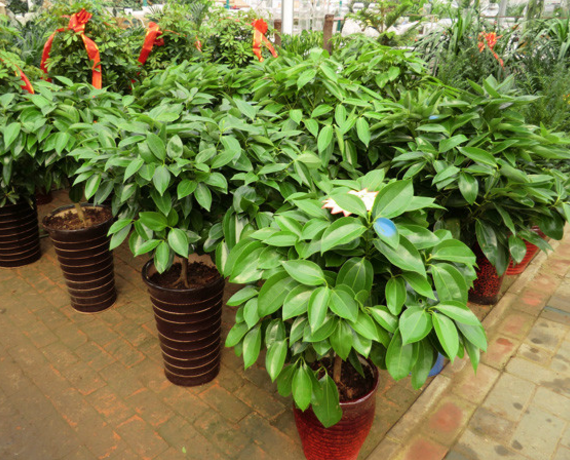
Why do the leaves of the peace tree turn yellow:
First, overwatering. After summer arrives, as the weather turns hotter and the air becomes dry, the amount of water given when watering and misting is not properly controlled. The peace tree's native environment is loose, fertile mountain humus soil with good drainage. In pot cultivation, especially in the plastic pots commonly used today, poor drainage and compacted potting soil can both cause its fine feeding roots to suffocate, necrose and rot, which in turn causes the middle and lower leaves of the plant to turn yellow and drop.
Second, fertilizer damage caused by mistakes in fertilizing, including raw fertilizer, heavy fertilizer, concentrated fertilizer and base fertilizer, especially high-concentration chemical fertilizer solution, all of which can burn and necrose its fine feeding roots, prompting the leaves to turn yellow and drop within a relatively short time.
Third, newly planted plants just shipped from the south. Because they were only recently potted or repotted, and after the jolting of long-distance transport, plus differences between the production area and the sales area in climate, water quality and other factors, their root systems have difficulty recovering within a short time, while their leaves have not been given the necessary trimming. The leaves also have trouble adapting for a time to the dry climate of the north, which leads to the leaves turning yellow and dropping.
So what measures should be taken to rescue a peace tree that has already begun to lose yellow leaves? The plant can be taken out of the pot and its root system carefully checked for rot. If the fine roots have turned brown and black and also give off an unpleasant smell, this indicates serious root rot. The rotted roots can be cut away until a fresh cut surface of root is seen, and part of the leaves removed. Then replant it in clean, fresh, loose sandy loam. Around the ring of cut root ends, first place a circle of moist plain sand, then fill the outer area with growing medium. After planting is complete, place it in a ventilated, cool, semi-shaded spot for restorative care, and stop fertilizing
How much does a pot of peace tree cost:
The price of a peace tree is 70 to 350, and this depends on the size and height of the peace tree.
That is all for the introduction to yellowing leaves of the peace tree and its price. From now on you can enjoy growing peace trees happily.
Why do the leaves of the peace tree turn yellow? How do you solve the yellowing leaves of the peace tree?
The peace tree is a foliage plant, and its flower language is praying for peace, family happiness and everything going as one wishes. Because it is named "peace," it is widely loved by the public. It is also rich in cinnamon oil, which can give off a fragrance that corrects odors and purifies the air, making it very suitable for indoor growing. Previously, some flower growers reported that the peace trees they planted had yellow leaves and they did not know how to solve it for the moment. Below, the editor will introduce the causes of yellowing leaves in peace trees and the solutions, for flower growers to reference and learn from.Causes of yellowing leaves
1. Water yellowing. Caused by watering too frequently; its characteristic is that old leaves show no obvious change while young leaves turn yellow; in this case, watering should be stopped immediately;
2. Drought yellowing. Caused by lack of water and drought; its characteristic is that old leaves turn yellow first from the bottom upward. If the water shortage lasts a little longer, the whole plant's leaves will turn yellow and it may even die, so it should be watered in time;
3. Fertilizer yellowing. Caused by fertilizing too frequently or at too high a concentration; its characteristic is that young leaves are thick, glossy and uneven; fertilizer should be withheld, the soil cultivated and water given;
4. Starvation yellowing. Caused by insufficient fertilizer, fertilizer applied at too low a concentration, and too long an interval between fertilizing; its characteristic is that yellowing starts first at the young leaves and tender stems. If fertilizer is not applied in time after this appears, it can also cause the whole plant's leaves to turn yellow and even die; for flowers lacking fertilizer, never apply a large amount of concentrated fertilizer at one time, to avoid burning the roots;
5. Iron-deficiency yellow leaves. For woody flowers in greenhouses, because soil fertility conditions vary greatly, yellow leaves often appear. The characteristic is that young leaves are obvious and old leaves are lighter, with yellow leaf tissue and green veins, forming a typical network pattern; this can be solved by applying ferrous sulfate water solution. The method is: 7 parts cake fertilizer, 5 parts ferrous sulfate, 200 parts water, mix into a diluted solution and water with it.
6. Normal seedling recovery: because from the greenhouse to the flower market to the flower grower's home, the plant is constantly disturbed, and it may also go through repotting. There is a saying that people move and thrive, while trees move and die. Moving has many effects on plants. After buying it, flower growers must choose a suitable place according to the habits of the peace tree. Never put it here today, there tomorrow, and move it around again the day after. Today you see the leaves turn yellow and think it lacks water, so you water heavily, and with operations like this, you will only kill the plant.
7. Caused by an unsuitable environment: the peace tree has certain requirements for its growing environment, and it grows better in a bright, indirectly lit and ventilated environment. If the light is rather dim and there is no ventilation, the leaves are also prone to turning yellow.
8. Problems with water quality: water in the north has high alkalinity. Watering the peace tree with alkaline water over a long period will also cause the leaves to slowly turn yellow, and after a long time they will drop.
9. Caused by disease: after the peace tree is bought, if disease occurs, it can also easily damage the roots, which may then cause the leaves to turn yellow.
For the above causes of yellowing leaves, check them one by one; only by finding the cause can you find the way to deal with it. During ordinary care, if you find the leaves turning yellow, first check whether its root system is growing normally. If part of the root system is found to be rotting, cut away the rotted part in time, and all the dead branches and leaves should also be cut away completely, then replant it.
When replanting, you can spread some moist fine sand around the cut parts of the root system to promote healing of the wounds and the sprouting of new roots. Also be careful to water less and mist more. When the newly planted plant grows new leaves, you can carry out the related fertilizing work, and may appropriately increase sunlight exposure to promote growth.
Although the above four points are not described in great detail, they basically cover it. As for fertilizer yellowing and such, in fact most flower growers' peace trees have problems during the initial period after they are bought. Those who can keep one for a year or so all understand its habits and rarely encounter this kind of problem.
Summary: The above is an introduction to knowledge about yellowing leaves of the peace tree. I hope it is helpful to friends growing peace trees.
Why do the leaves of the peace tree turn yellow?
The peace tree is a large foliage potted plant. Flower growers' peace trees are generally bought from the local flower market, with a beautiful pot, green leaves and an auspicious name. After being brought home, in as little as three to five days, or at most one or two weeks, either the leaves wilt or the leaves turn yellow and drop, which is truly frustrating. Below, the editor will introduce the causes of yellowing leaves in peace trees.
Temporary potting causes yellowing leaves
Peace trees generally grow in the ground and are then transplanted into pots. Some sellers only transplant the tree into a pot just before selling it. If later care is improper, yellowing leaves will appear.
Too little soil causes yellowing leaves
After buying a peace tree, check the soil in the pot. To save soil, some sellers place some soil residue and trash at the very bottom of the pot and cover only the top with a layer of soil. In this way, over time, the root development of the peace tree will be restricted, and yellowing and withering leaves will then appear.
An unsuitable environment causes yellowing leaves
The peace tree has certain requirements for its growing environment, and it grows better in a bright, indirectly lit and ventilated environment. If the light is rather dim and there is no ventilation, the leaves are also prone to turning yellow.
Overwatering causes yellowing leaves
If too much water is given in the pot, the soil becomes saturated with water and the excess water cannot evaporate quickly. After a long time, the leaves will turn yellow because of too much water. Therefore, watering must be moderate.
Water quality problems cause yellowing leaves
Water in the north has high alkalinity. Watering the peace tree with alkaline water over a long period will also cause the leaves to slowly turn yellow, and after a long time they will drop.