What are the care methods and benefits of Paphiopedilum (slipper orchid)?
Paphiopedilum has a peculiar shape, richly colored flowers, and a long blooming life. Grown in pots at home, it offers foliage to admire and flowers to enjoy, and cultivates the spirit! The care methods for Paphiopedilum are not as simple as you might think. Today, the editor will take you through the care methods for Paphiopedilum as well as its benefits and effects.
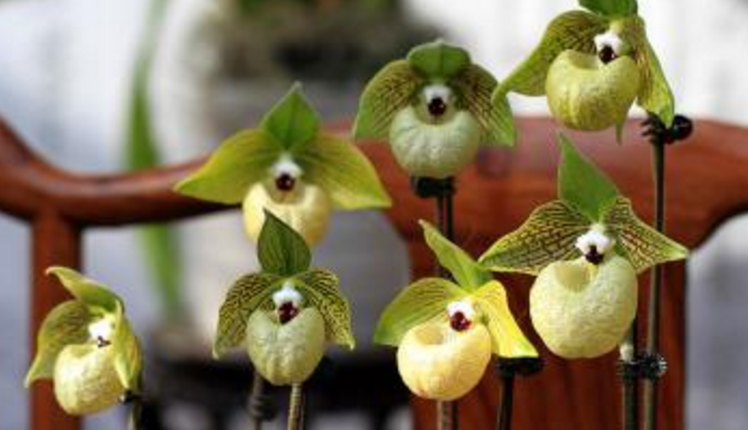
I. Care methods for Paphiopedilum
1. Soil requirements for planting
For potting, you can use a mix of 2 parts leaf mold and 1 part peat or fully rotted coarse sawdust. When potting, first lay a layer of charcoal or crushed brick and tile granules at the bottom of the pot; the thickness of this layer must be kept at about 1/3 of the pot's depth. Maintain good air permeability, water absorption and drainage capacity to meet the growth requirements of the plant's root system.
2. Light requirements
Paphiopedilum is a shade-loving plant, so when cultivating it, matching shade measures are necessary. During its growth process, its light requirements are not entirely the same. Therefore, management is relatively complex: in early spring, semi-shade is best; in midsummer, it needs light in the morning and evening and shade around noon; in winter, sunlight must be sufficient. On rainy and snowy days, artificial lighting must also be added. In short, never expose it to direct sunlight.
3. Water control
It adapts rather poorly to changes in moisture and temperature. It needs an adequate water supply and relatively high environmental humidity. During its growing period, the potting soil must be kept moist; when it is about 70% dry, water it thoroughly. In the hot, dry summer, frequently spray water on the plant and around it to lower the temperature and raise humidity.
During the plum rain and autumn rain seasons, water should be controlled appropriately, ventilation should be ensured, and temperature and humidity should be maintained. Water should not remain on the leaves for too long; high air humidity can also cause fungal diseases. Special attention must be paid to regulating the air in the growing environment. If the air is dry, the leaves will wither and fall off, which directly affects flowering. It has no pseudobulbs, so its drought resistance is relatively poor.
In late October, it needs to be moved indoors to a sunny spot, with attention paid to moderating watering; the soil must not be kept too moist. The midday sun is relatively strong, so a little shading is needed.
During the plum rain season, the humidity in the air is relatively high. Under such poorly ventilated conditions, Paphiopedilum is most prone to various diseases such as leaf spot and soft rot. Carbendazim and other fungicides need to be sprayed regularly on Paphiopedilum to prevent the occurrence of leaf spot and other diseases.
II. What are the benefits and effects of Paphiopedilum?
1. Ornamental value
The greatest benefit of Paphiopedilum is that it can be enjoyed for viewing. It is one of the indispensable natural landscapes, more or less, in natural mountain forests. This orchid family plant is elegant in appearance and has the unique allure of orchids. At the same time, its respiration is also very pronounced, and it can provide a large amount of negative ions to the air, playing a notable role in improving the air quality of scenic areas.
2. Air purification
Paphiopedilum can be made into a potted plant and placed at home. Besides beautifying the surrounding environment and purifying the air, it can also neutralize a large number of radiation sources in the air. If it is placed around a computer or television, it can fully break down the radioactive substances released by the TV, preventing these substances from causing great harm to the human body.
3. Medicinal effects of Paphiopedilum
Paphiopedilum has notable medicinal effects and is widely used as medicine in the Yunnan region of China. It can regulate menstruation and invigorate blood, reduce inflammation and relieve pain. It is mainly used for irregular menstruation, dysmenorrhea, amenorrhea, adnexitis, cystitis, hernia and other conditions, with outstanding effects. Its nature and flavor are dry and astringent, slightly sour, neutral. Usage and dosage: used as part of a formula, about 2-3 qian is appropriate.
What are the care methods for Paphiopedilum?
Soil requirements for planting
For potting, you can use a mix of 2 parts leaf mold and 1 part peat or fully rotted coarse sawdust. When potting, first lay a layer of charcoal or crushed brick and tile granules at the bottom of the pot; the thickness of this layer must be kept at about 1/3 of the pot's depth. Maintain good air permeability, water absorption and drainage capacity to meet the growth requirements of the plant's root system.
Light requirements
Paphiopedilum is a shade-loving plant, so when cultivating it, matching shade measures are necessary. During its growth process, its light requirements are not entirely the same. Therefore, management is relatively complex: in early spring, semi-shade is best; in midsummer, it needs light in the morning and evening and shade around noon; in winter, sunlight must be sufficient. On rainy and snowy days, artificial lighting must also be added. In short, never expose it to direct sunlight.
Water control
It adapts rather poorly to changes in moisture and temperature. It needs an adequate water supply and relatively high environmental humidity. During its growing period, the potting soil must be kept moist; when it is about 70% dry, water it thoroughly. In the hot, dry summer, frequently spray water on the plant and around it to lower the temperature and raise humidity.
During the plum rain and autumn rain seasons, water should be controlled appropriately, ventilation should be ensured, and temperature and humidity should be maintained. Water should not remain on the leaves for too long; high air humidity can also cause fungal diseases. Special attention must be paid to regulating the air in the growing environment. If the air is dry, the leaves will wither and fall off, which directly affects flowering. It has no pseudobulbs, so its drought resistance is relatively poor.
In late October, it needs to be moved indoors to a sunny spot, with attention paid to moderating watering; the soil must not be kept too moist. The midday sun is relatively strong, so a little shading is needed.
During the plum rain season, the humidity in the air is relatively high. Under such poorly ventilated conditions, Paphiopedilum is most prone to various diseases such as leaf spot and soft rot. Carbendazim and other fungicides need to be sprayed regularly on Paphiopedilum to prevent the occurrence of leaf spot and other diseases.
The editor has explained the care methods for Paphiopedilum up to here. If you still have any questions, the editor has also answered other related articles about Paphiopedilum for you. Perhaps the answer you want is in there. Let's go take a look together~
How to grow Paphiopedilum
1. Soil
For potted Paphiopedilum, leaf mold, peat and the like can be used in the mix. When potting, a layer of crushed brick and tile granules can first be placed at the bottom of the pot to maintain good air permeability and benefit the growth of the plant's root system.
2. Temperature
Paphiopedilum likes a warm environment, and suitable temperatures differ among varieties. Green-leaf varieties have a suitable temperature of 12-18°C, mottled-leaf varieties grow suitably at 15-25°C, the suitable winter temperature is 10-15°C, and the summer temperature must not be higher than 30°C. When the winter temperature is below 10°C, move it indoors promptly.
3. Light
Paphiopedilum is shade-loving and needs an appropriate amount of light during growth. In spring, a semi-shady environment is best; summer is hot, so a large amount of shading is needed, and it can receive light in the early morning and evening; in winter, it must get plenty of sun.
4. Water
Paphiopedilum likes a moist environment and is not tolerant of dryness. The potting soil should be kept moist; water it once it is slightly dry. In summer, also sprinkle water around the plant to increase air humidity. During the plum rain season, pay attention to ventilation and control water appropriately.