What are the cultivation methods and prices for Paphiopedilum?
Paphiopedilum is also known as the slipper orchid. It is a perennial herb in the Orchidaceae family. Most are terrestrial species, and there are many hybrid varieties. It is one of the most widely cultivated tropical orchids. Warm-growing mottled-leaf varieties of Paphiopedilum mostly bloom in summer and autumn. So what are the cultivation methods for Paphiopedilum? What is the price of Paphiopedilum? Let's take a look together.
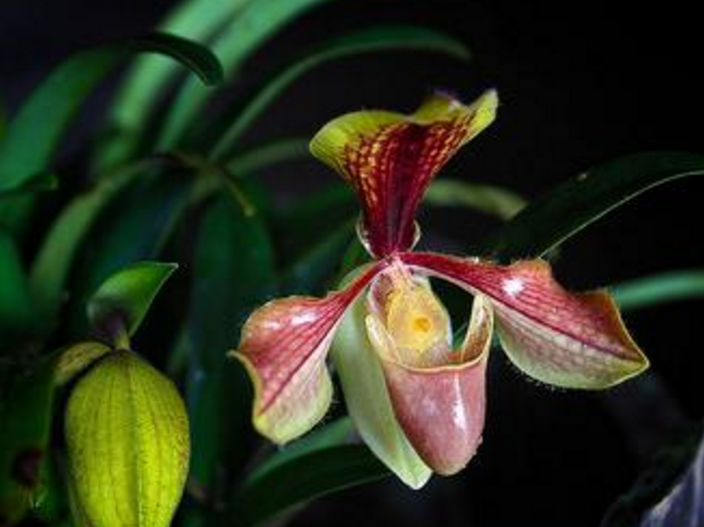
1. Cultivation methods for Paphiopedilum
Because Paphiopedilum blooms in different seasons depending on the variety, management differs from season to season. Since the native habitat of Paphiopedilum is damp regions, it enjoys moisture year-round. In spring, when the surface appears slightly dry, water promptly to keep the pot moist; water until water flows out from the bottom of the pot. While watering, also mist the leaves, which better promotes the growth of new shoots.
In summer, since sunlight is very strong, add a layer of shade netting to shade the plants and prevent sunscald on the leaves. If sunlight is too strong, growth slows, plants become stunted or develop sunscald, leaves dry up, and the entire plant may even die. But if light is too weak, flowering is also reduced or may not occur at all. Summer is the vigorous growth period for Paphiopedilum, so water thoroughly in both morning and evening, otherwise it will dry up. Besides watering the plants thoroughly, also water the surrounding area and the ground to keep the air cool. During the peak growth season of Paphiopedilum, fertilizer is indispensable; apply liquid fertilizer once a week. Besides putting fertilizer directly into the pot, it can also be sprayed on the leaves.
Autumn: Compared with summer, light is weaker in autumn, so remove one layer of the shade netting. Since Paphiopedilum has entered its growth cessation period in autumn, its absorption of moisture is not great either, so water again when the soil surface is dry, generally once every 2—3 days. However, one thing to note in autumn is that because the air is relatively dry in autumn, it often appears dry on the surface while the inner layer is still very moist, so watering at this time should not be excessive.
Winter: Since the flower buds gradually grow larger at this time and the flower stems also need to grow, water absorption is relatively high. If water supply is insufficient during this period, it is quite unfavorable for the growth of the flower stems, and growth will stop within a short time, so special care must be taken not to let them become too dry. Humidity is very important for Paphiopedilum; if humidity is insufficient, it will cause the plant to weaken. Methods to increase humidity include watering the ground to achieve the effect of increasing humidity, or misting the leaves.
Pest and disease control
Paphiopedilum is very prone to soft rot, especially in summer, so special attention should be paid to ventilation. In the early stage of soft rot, a water-soaked brown rotting phenomenon appears at the base of the orchid plant. The preventive method is, before the plum rain season arrives, to spray or drench with Daconil wettable powder at 800 times dilution, or Benlate wettable powder at 1000 times dilution, twice a month.
2. What is the price of Paphiopedilum?
The general market price is between a few dozen yuan and 200, and higher prices depend on the variety and height of the Paphiopedilum.
The above prices are all online reference prices; for actual prices, please consult your local market.
Cultivation methods for the genus Paphiopedilum
Cultivation methods: Paphiopedilum has no tissue for storing nutrients; even so, a dormant period must still be ensured for cool-growing varieties. In addition, in winter most Paphiopedilum require a relatively dry, well-lit growing environment.
·Light: Overall, the genus Paphiopedilum requires less light than other orchids. Light that is too strong or too weak will interfere with the plant's photosynthesis and harm its growth.
·Temperature: In the native habitats of Paphiopedilum, seasonal temperature differences do not affect its growth. Even so, in summer cool-growing Paphiopedilum varieties (such as the lovely Paphiopedilum P. insigne) should be placed outdoors, and artificial cooling may be considered at night. Most Paphiopedilum can be grown at room temperature. But when the temperature (in a flower room or greenhouse) exceeds 30°C, Paphiopedilum needs to be placed in a shaded spot.
The Paphiopedilum hybrid “White Queen” has as its parents Paphiopedilum bellatulum and Paphiopedilum concolor. Like almost all white-flowered varieties, it shows the characteristics of its parents. Although the parents are not easy to cultivate, the hybrid offspring are not difficult to cultivate.
·Potting mix: Paphiopedilum has high requirements for potting mix. Most Paphiopedilum native habitats receive relatively high rainfall, with only a few months of the year having relatively dry air. Therefore, Paphiopedilum requires moist potting mix year-round. In addition, to prevent root hypoxia, the potting mix should be ensured to have good drainage.
·Watering: Use soft water (ideally rainwater) to water the flowers, but water must not accumulate in the pot. Otherwise bacteria will multiply in large numbers, easily causing the plant to rot and die. In winter, the water used for watering must not be too cold. Leaves must not remain waterlogged for long periods either, otherwise the leaves easily rot. In summer, spraying or misting can achieve the relatively high air humidity required for Paphiopedilum growth.
·Fertilizing: Fertilize sparingly but frequently. Ready-made fertilizers sold on the general market are fine. If organic fertilizer is used, some Paphiopedilum varieties will grow more luxuriantly (such as Low's Paphiopedilum P. lowii). In addition, larger varieties require more fertilizer than varieties with fewer leaves. With sufficient fertilizer, new shoots develop fully and the plant will bloom; otherwise you must wait until the second year for it to bloom. Generally, all Paphiopedilum varieties should be given lime fertilizer once every six months, at a dosage of one teaspoon of calcium carbonate per 10 cm of pot diameter; lime can also be added to the watering water, so that the fertilizer can be absorbed by the plant over a long period.
·Repotting and transplanting: Repot once every two years; it is naturally even better if repotting can be done once a year. Large plants bloom more; unless necessary, do not tear or split the roots. When repotting, do not damage the plant tissue, otherwise Pythium will take the opportunity to invade. Charcoal powder can be used to prevent Pythium.
·Pest and disease control: All Paphiopedilum varieties are susceptible to red spider mite damage, especially varieties with smooth leaves. Therefore, leaves should be checked frequently. Other pests rarely harm Paphiopedilum. Common diseases of Paphiopedilum also include bacterial and fungal infections. Fresh, circulating air can play a preventive role. Some varieties can use lime to eliminate bacteria; for specific methods, consult a professional.
When cultivating Paphiopedilum, plants with large flowers and many blooms are relatively warmth-loving, and are more suitable for indoor cultivation. Paphiopedilum used for cut flowers should have large and round flowers, so one should not blindly pursue the number of flowers while ignoring their quality. Paphiopedilum concolor is native to limestone and has a wide growing range, distributed from Thailand to China,
Nowadays many orchid varieties with round and full flowers can be bought in flower shops. Their prices are not higher than those of small-flowered plants. You can choose according to personal preference between varieties with small flowers but many blooms or large flowers but few blooms. Some varieties open another flower right after one fades, so the flowering period lasts half a year. For example, Paphiopedilum ‘Pinocchio’ of the genus Paphiopedilum.
Cultivation methods for the genus Paphiopedilum
Cultivation methods: Paphiopedilum has no tissue for storing nutrients; even so, a dormant period must still be ensured for cool-growing varieties. In addition, in winter most Paphiopedilum require a relatively dry, well-lit growing environment. ·Light: Overall, the genus Paphiopedilum requires less light than other orchids. Light that is too strong or too weak will interfere with the plant's photosynthesis and harm its growth. ·Temperature: In the native habitats of Paphiopedilum, seasonal temperature differences do not affect its growth. Even so, in summer cool-growing Paphiopedilum varieties (such as the lovely Paphiopedilum P. insigne) should be placed outdoors, and artificial cooling may be considered at night. Most Paphiopedilum can be grown at room temperature. But when the temperature (in a flower room or greenhouse) exceeds 30°C, Paphiopedilum needs to be placed in a shaded spot.The Paphiopedilum hybrid "White Queen" has as its parents Paphiopedilum bellatulum and Paphiopedilum concolor. Like almost all white-flowered varieties, it shows the characteristics of its parents. Although the parents are not easy to cultivate, the hybrid offspring are not difficult to cultivate. ·Potting mix: Paphiopedilum has high requirements for potting mix. Most Paphiopedilum native habitats receive relatively high rainfall, with only a few months of the year having relatively dry air. Therefore, Paphiopedilum requires moist potting mix year-round. In addition, to prevent root hypoxia, the potting mix should be ensured to have good drainage. ·Watering: Use soft water (ideally rainwater) to water the flowers, but water must not accumulate in the pot. Otherwise bacteria will multiply in large numbers, easily causing the plant to rot and die. In winter, the water used for watering must not be too cold. Leaves must not remain waterlogged for long periods either, otherwise the leaves easily rot. In summer, spraying or misting can achieve the relatively high air humidity required for Paphiopedilum growth. ·Fertilizing: Fertilize sparingly but frequently. Ready-made fertilizers sold on the general market are fine. If organic fertilizer is used, some Paphiopedilum varieties will grow more luxuriantly (such as Low's Paphiopedilum P. lowii). In addition, larger varieties require more fertilizer than varieties with fewer leaves. With sufficient fertilizer, new shoots develop fully and the plant will bloom; otherwise you must wait until the second year for it to bloom. Generally, all Paphiopedilum varieties should be given lime fertilizer once every six months, at a dosage of one teaspoon of calcium carbonate per 10 cm of pot diameter; lime can also be added to the watering water, so that the fertilizer can be absorbed by the plant over a long period. ·Repotting and transplanting: Repot once every two years; it is naturally even better if repotting can be done once a year. Large plants bloom more; unless necessary, do not tear or split the roots. When repotting, do not damage the plant tissue, otherwise Pythium will take the opportunity to invade. Charcoal powder can be used to prevent Pythium. ·Pest and disease control: All Paphiopedilum varieties are susceptible to red spider mite damage, especially varieties with smooth leaves. Therefore, leaves should be checked frequently. Other pests rarely harm Paphiopedilum. Common diseases of Paphiopedilum also include bacterial and fungal infections. Fresh, circulating air can play a preventive role. Some varieties can use lime to eliminate bacteria; for specific methods, consult a professional. When cultivating Paphiopedilum, plants with large flowers and many blooms are relatively warmth-loving, and are more suitable for indoor cultivation. Paphiopedilum used for cut flowers should have large and round flowers, so one should not blindly pursue the number of flowers while ignoring their quality. Paphiopedilum concolor is native to limestone and has a wide growing range, distributed from Thailand to China,
Nowadays many orchid varieties with round and full flowers can be bought in flower shops. Their prices are not higher than those of small-flowered plants. You can choose according to personal preference between varieties with small flowers but many blooms or large flowers but few blooms. Some varieties open another flower right after one fades, so the flowering period lasts half a year. For example, Paphiopedilum 'Pinocchio' of the genus Paphiopedilum.