How do ferns reproduce? How to deal with yellow leaves
Ferns are something many people absolutely love to grow, and ferns are just that beautiful. How do ferns reproduce? What to do about yellow fern leaves:
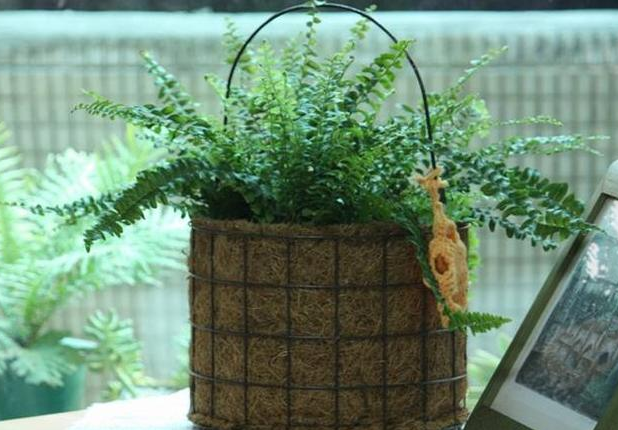
How do ferns reproduce:
I. Introduction to division propagation
Method 1: Take the new root balls growing on the outer edge of the roots directly to propagate.
Method 2: Use a sharp knife to cut and divide the larger root balls to propagate.
II. Soil selection for raising seedlings:
For soil culture propagation, it is recommended to use peat soil or ordinary potting soil.
For water culture propagation, it is recommended to use sponges specially made for cuttings or seedling raising.
III. How to propagate with a section of stem
Let the Boston fern (Nephrolepis exaltata) send out runners, and once new plants (seedlings) grow, cut them off (division) and then plant them.
What to do when fern leaves turn yellow:
Leaves appearing dry brown or brittle (so-called browning) is usually caused by air that is too dry combined with excessive salt levels.
Keep leaves away from heat sources or power outlets, because if the temperature around the Boston fern plant changes drastically, it can also cause browning.
If leaves turn yellow or wither (when it is not browning), it is usually caused by overwatering. You should immediately stop and reduce watering, cut off the damaged leaves, and check the plant's root system to see whether it has already rotted. If the vast majority of the plant's roots have turned black, the whole plant should be thrown away!
Ferns are tropical plants. Use room-temperature water when watering, and in winter avoid water that is too cold.
That is all for the introduction to fern propagation methods and how to deal with yellowing leaves. Go and grow a fern right away.
What causes yellow leaves on indoor foliage ferns?
Ferns generally refer to the phylum Pteridophyta. Pteridophyta (scientific name: Pteridophyta) is a major group of higher plants. It is also a relatively lower class among higher plants. They were often tall woody plants that formed large forests and flourished in the late Paleozoic, and by modern times most are herbaceous. Ferns can be divided into five subphyla: Psilophytina, Lycophytina, Isoetinae, Sphenophytina, and Filicophytina.
Too much sunlight, too little fertilizer, air that is too dry, and both overwatering and underwatering can all cause fern leaves to turn yellow. Ferns like bright places, but they are not suited to growing in sunlight. During the peak growth period, apply a balanced dilute liquid fertilizer once every 3-4 weeks. Some ferns, such as the Boston fern, bird's nest fern (Asplenium nidus), and maidenhair fern (Adiantum), need higher humidity to grow well.What to do about yellow leaves and rotten roots in ferns
Causes of yellow leaves and rotten roots in ferns
Lack of oxygen
Caused by too much water content in the potting soil or too high a concentration of nutrient solution, which leads to a lack of oxygen in the roots and causes them to rot.
Strong light exposure
Ferns like shade. If during normal growth they are often exposed to direct sunlight or strong light, the surrounding air will become dry and the leaves will turn yellow.
Dry air
Ferns like moisture. If the potting soil is dry or the surrounding humidity is too low, the leaves will likewise wither and turn yellow.
Improper care
If ferns are not cared for properly on a regular basis, for example if diseased leaves are not removed and dead leaves accumulate in the pot, the remaining leaves cannot absorb enough nutrients and turn yellow.
Methods to solve yellow leaves and rotten roots in ferns
Increase humidity
Ferns are moisture-loving plants. If you often forget to water them, the leaves will turn yellow and wilt. In this case, you can find a tray, fill it with water, and you can also put a few stones in it to raise the humidity.
Maintain temperature
Ferns are also warmth-loving plants. During normal growth, the temperature should not be lower than 20°C, and especially in winter the temperature must not be too low, otherwise the plant will suffer cold damage.
Water moderately
Although ferns like moist soil, remember never to water frequently, otherwise too much water will fill the soil pores, causing the roots to absorb too much water and rot or die from lack of oxygen. First, choose soil with good drainage; then, watering should be done when the temperature is around below 15°C; normally, just keep the surrounding environment moist and the potting soil moist.
Fertilize appropriately
Fertilizing should be kept to once a month and must not be too frequent. Insufficient fertilizer supply is also one of the causes of yellowing leaves. You can choose a fertilizer specially made for ferns.
Remove diseased leaves
When leaves have already withered and turned yellow, or when rotten leaves appear, do not lose confidence in this plant. Simply promptly remove the diseased or withered yellow leaves, and at the same time you can spray disinfectant and fungicide medication to prevent infection of the other leaves.