How to prevent pests and rot in houseplants? Sharing practical methods
Preventing pests in houseplants is something many people love growing plants for, but plants do get pests. What are the methods for preventing pests in houseplants? How to prevent rot in houseplants:
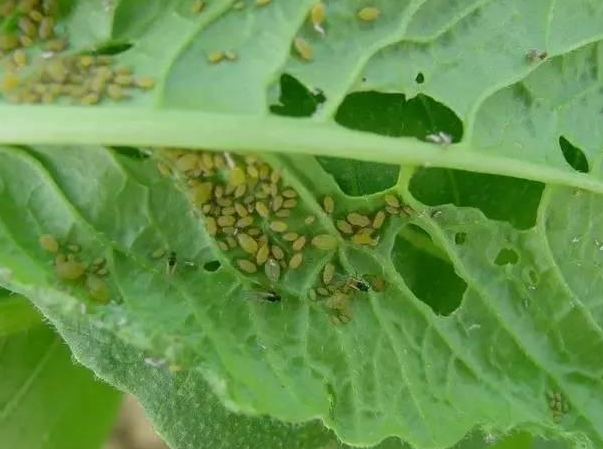
Methods for preventing pests in houseplants:
1. Peel and mash about 30 grams of garlic into a paste; then add 500 grams of water to soak the garlic paste, stir well and filter.
2. Once prepared, the garlic paste mixture can be evenly sprayed on the leaves of flowers such as chrysanthemums, cineraria, and Chinese roses, once a day for three or four consecutive days.
(Or use a brush or toothbrush to apply the garlic liquid directly onto the leaf surface.)
3. Garlic paste can effectively control flower aphids, scale insects, and especially powdery mildew and black spot on Chinese roses. If an appropriate amount of soybean powder or laundry detergent and other adhesives is added, the effect can be even better.
4. Crush the garlic and sprinkle it in the potting soil; it also has the effect of killing earthworms, ants and nematodes.
How to prevent rot in plants:
1. If the rhizome parts of woody flowers such as redbud and forsythia have dried up and rotted, we can use a sharp knife to cut them flat, deep into the xylem, and then cut the healthy bark around the diseased area into a smooth 60-degree bevel.
(It is best to expose the yellow-green alternating cambium)
2. Then use a garlic clove to apply directly to the cut wound, so that it is covered with a layer of garlic mucus, applying once every 7-10 days.
3. This way it can play an anti-rot role.
That is all for the methods of plant anti-rot and pest prevention. From now on you can happily grow flowers.
The difference between outdoor and indoor growing of succulents & introduction to some succulents
In August, I left home for 20 days in summer. After returning home, I found the succulents in all kinds of miserable states: some dried to death, some rotted, some chewed bare by insects
I always feel that these houseplants have now been completely domesticated, just like pets, and cannot be separated from people
When I was at home I did not manage them much either, but they all grew very well, with almost a 0 mortality rate
Perhaps it is because I usually pay very close attention to them; when I find insects or a poor state, I can immediately improve the environment and make adjustments
Although sometimes it is just simply moving one from one position to another, this often becomes the key to the healthy growth of the succulents
This business trip, counting the dead and injured, should be about 1/10, and quite a few pots were emptied. Right now I really have no time to tidy up and fuss over them
Most of the time is spent on the glass house, and the construction progress is much slower than expected~ But there is no rush either
Because the surrounding area as a whole is under construction, even if I tidy it up I cannot open it, as there is a lot of rebar on the construction site and it is easy to get hurt
So now my attention to the succulents is much less than before, but they are all starting to recover, perhaps because there is some human presence at home
This time I sorted quite a few pictures; some were taken earlier, but they are all within a month
I feel that whether the succulents are outdoors or in the glass room, although there will be relatively large differences due to sunlight and ventilation
The pests, diseases and mortality rates encountered are actually about the same; those grown outdoors have a higher mortality rate, after all, there are weather factors that are hard to control
Below I will start recording these processes bit by bit
==================================================================================
Although the succulents in the glass room can enjoy a relatively stable environment, due to the frame, anti-rot wood, flower stands and other shading
In fact, many of them get less than 1 hour of sunlight time, and those with slightly better sunlight get about 2 hours, so this sunlight time is far from enough
But the good thing is that the door and windows are open all year round, so ventilation is very good, and screens are installed, which can prevent mosquitoes from flying in
Especially the disgusting "Lycaenidae moth", once invaded by this guy it is troublesome, I will talk about it later~
In addition, the temperature in the glass room during the day will be about 3-5 degrees higher than outdoors; if the windows are not opened it will be very stuffy and hot
So watering is not very much; in some corners it is even watered once a month, and most watering intervals in summer are more than 2 weeks
Now the temperature has dropped to around 20-25, there is also a lot of wind every day, and the growing season has come, so watering is more frequent~
It must be watered once a week
The mortality rate is still much lower than outdoors, after all, the environment is still relatively stable, but there are also many strange cases of death
The main cause of death is still stuffiness and heat, especially in summer or autumn when the sunlight is strong, with sunlight shining directly on dark-colored flower pots
Because dark colors absorb heat, causing the temperature inside the flower pot to rise rapidly; if the local temperature is 35
The temperature inside the flower pot is even more terrifying~ At this time, if you suddenly water, it is over~
You can use some white or reflective plastic baffles to block it, as long as sunlight is not allowed to shine directly on the surroundings of the flower pot~
[Jingye]
This row of Jingye gets 0 hours of direct sunlight every day, only in a diffused-light environment, but the etiolation is not too severe
Because the ventilation here is still not bad, later on by changing position they can be moved to a place with sufficient sunlight
As long as ventilation is good enough and they can get about 3 hours of sunlight a day, they will quickly become beautiful~
[Canlan]
Really very beautiful~ But in summer the leaf drop is also quite a sight~
In hotter areas it is very normal for them to drop until they are bare stems; be sure not to think they are dead and throw them away
As long as the root system is fine, they will still grow well in autumn~ Picture 3 below is one that has not yet recovered
It is estimated that it will take more than another month to recover its state; right now it is still very ugly
[Swedish Magic South]
Hmm............ this one was very robust before I left home, but I put it in a place with a bit longer sunlight time
Plus sunlight shone directly on the flower pot, causing the temperature inside the pot to surge, and then it was sunburned to death~
Now this pot has completely disappeared, in just a short 20 days... and during this period it was not watered at all
In addition, Magic South Sedum is very afraid of high temperatures in summer; try to place it in a well-ventilated diffused-light spot
[Bear's Paw White Variegated]
I have never figured out the white bear either; I do not know whether this variety is just not suited to summer here
Every summer half of it withers and dies, then in autumn it grows full again. I remember that in its native South Africa, even with such high temperatures, it was fine
Perhaps this mutated plant needs more time for domestication~
The succulent is beautiful and the person is even more beautiful~ The Aeonium on the left is the state of the one above after recovering from sunburn
[Qianyu Crane]
I have bought this variety several times from the greenhouse master, and every time it died in summer, and the strangest thing is that before that it had been growing very well
The root system had also filled the entire flower pot; when it was hottest in summer I stopped watering, so logically it should not have turned black and dried up
There was no rotting phenomenon either, it just turned black as a whole plant directly... I tried pruning to save it before, but it was almost always ineffective
So this time I have absolutely given up on this variety~ I suggest everyone can also choose to grow some according to their own home environment
Do not blindly buy in large quantities; what suits you is the best~
This is another one placed outdoors, and it died too...
[Baocao Variegated]
My Haworthia cooperi and 12 types rarely get sun, so they all stay inside the glass room, generally placed on the lowest layer
A place with not much sunlight and not bad ventilation~ growth is average~
If etiolation is found, I will take them to a place with sunlight and give them a little sun
[Unknown Aeonium - Sowing]
Aeoniums dormancy is very pronounced in summer, especially for the mountain rose type, and there is no need to worry
Just place it in a place without direct sunlight, and choose the coolest time in a month to water a small amount
[Rusby's Echeveria Variegated]
This one was very, very small when it came home, and had no roots yet. At the time I was afraid it would not grow big or survive, but now it is fine~
Once the root system is established, do not move it again; after a few leaves grow from the center, it can be placed in a spot with good sunlight
[Unknown Name]
Although there is relatively little sunlight in the glass room, the succulents placed at the window where ventilation is best and where they can get 2 hours of sunlight a day are still very beautiful
They will not be disturbed by pests either, although occasionally a few scale insects are found; one spray of Huhuashen and they are gone
[Dance of the Qiyuan]
This one also came from leaf propagation, haha~ it has grown so big now
From their state, the outdoor succulents look more robust, especially the Echeveria types, but affected by rainy days
Some powder will still fall off the leaves, but overall they are still very beautiful, because they have the maximized ventilation environment
Plus sufficient sunlight, actually not much~ about 3-4 hours a day
The color comes up very quickly, but when the sunlight is strong it is also quite uncomfortable, which requires selecting varieties
Try to choose some with thick skin that tolerates sun; flower pot matching also needs to be chosen, light-colored flower pots are preferred
It is also fine if there are other colors; you can block sunlight by placement, avoiding direct sunlight on the flower pot that causes a stuffy, hot and humid environment
But outdoor growing is also the most terrifying, especially for those whose state is not too good, whose roots are not good and have just been repotted
Or the succulents that are sickly and want to adjust their state; outdoor growing can sometimes cause devastating blows
One rain coming will kill a large patch, and after a few Lycaenidae moths fly by, a large number of small green caterpillars will appear on the leaves within a few days
Excessively strong sunlight will burn the leaves, and even a strong wind will blow several of them to damage... Why are they so delicate! Are they not lazy-person plants!?
In view of the above unstable factors, it is best to place the sick ones separately in some relatively stable environments
In addition, you also need some understanding and selection of varieties; for example, Crassulaceae Crassula, the ones I placed outdoors almost all died
But placed indoors they will endlessly etiolate, which troubles me greatly. Where should I go... In the end I had to give up this variety
If there are consecutive rainy days it is troublesome, although succulents with well-grown roots can soak for about 10 days when the weather is cool
But it will still have an impact, so it is best to build a rain shelter; it is really very useful~~ worth having!
[Blue Echeveria]
Overall, Echeveria types are all very thick-skinned~ Pachyphytum and Graptopetalum are also like this, so these types are most suitable placed outdoors
With sufficient sunlight the color will also be very beautiful; do not underestimate these most ordinary beauties
[Violet Queen]
I feel she has not yet adapted to my home environment, especially outdoors, so her state has never come out
[Tia]
In Korea they are all red, but here they cannot turn red. Summer has just passed~ let us wait a while and see!
Another super thick-skinned variety, strongly recommended~
[Moonlight Goddess]
Who gave it such a nice name? Now I feel it is really similar to Huayueye...
[Huayueye]
This is one that was repotted before, a super large pot, because it was kept outdoors and soaked in rainwater for 10 consecutive days
The whole plant began to rot, especially the small pups beside it began to rot from the middle. When I had already given up hope on it
I pulled it all out to dry again, then dry-planted it into this flower pot, and placed it in a cool, super well-ventilated place
After a week I found that all the rotten leaves had dried up, and there were even signs of growth. It really is a miracle!!!
[Black Mage Original Species]
The following species are all sunburned, also because they were suddenly moved from the glass room to the yard on the 1st floor
With no buffer at all, facing the scorching summer sun every day, in the end they finally could not hold on...
But fortunately, after being sunburned the succulents also slowly adapted to this new environment, and new leaves kept growing from the center
After that they were completely unafraid of being burned~
[Aeonium]
These several were sunburned especially severely, but it was also expected; later, after adapting to the outdoor environment, the center leaves began to grow
It has now grown back completely~ This is just how Echeveria succulents are - they grow fast and recover quickly.
[Furong Xuelian]
Echeveria is the slowest to recover after sunburn, especially when a rainstorm after a sunny day is followed by more sunshine - this easily causes the bottommost leaves to rot all at once.
If this happens, don't hesitate - strip them all off clean~ Otherwise it can easily cause the whole plant to rot.
For something like the one below, you need to carefully clean off the bottommost leaves and wait for new growth - it really is very slow~
[Xing Wangzi]
For Crassula types like Xing Wangzi and Qianchuan, if they get sunburned outdoors it's still okay - you can behead and take cuttings.
Or just leave them as they are, and they will heal on their own. They grow much faster than Echeveria~
[Qian Zhi Ta]
This one has already been crossed off my succulent list. I fail at growing it every time. It used to be a full pot.
After coming back from a business trip, I found it had turned into what it looks like now, so I just gave up on it..
[Hei Wangzi]
The water culture effect looks pretty good so far. It suits succulents that already have roots but have pests in the roots as a first-aid station.
For example, these Hei Wangzi of mine were actually infected with root mealybugs, but I didn't have a very good way to eradicate them.
So I thought of water culture~ Just soak the root part directly in water, and after a few months of growth, trim off the old roots.
Let it dry a little, then the whole plant can be replanted~ Usually you just need to keep an eye on the water level and adjust it as needed.
As for sunlight, water-cultured plants can be sunned too~
[Unknown name]
Sometimes little visitors come to bother them. The funniest thing about this bee is that she's sunbathing!
Right?! A bee sunbathing! And rolling around!
[Lu Shi Echeveria]
Once you've enjoyed a big bloom like this, cut it off quickly~ It really consumes a lot of nutrients~
The dead leaves underneath can also be cleaned up a bit~
[Jing Ye]
The proudest Jing Ye! After being moved to a bigger pot, it exploded with growth, always kept outdoors, always rained on...
So the color has always stayed quite green, but thanks to plenty of water and good ventilation, its growth rate doubled~
Recently it hasn't been doing as well, because after I left on a business trip, a heavy rain was followed immediately by sunny days.
Water droplets still remained on the leaves, and they got sunburned directly. Only a few got damaged, so the impact isn't too big, and they can recover later.
Note: After outdoor plants are rained on, be sure to blow away the water droplets remaining in the center of rosette-type leaves~ to avoid sunburn.
For the final installment, I'll leave a few beautiful photos for everyone to enjoy... Just taken recently~ Fresh~
[Xiong Tongzi]
Little Bear has always been under key protection. On sunny days I carry it outdoors to sun it, not really full sun, just a spot where it can get about 2 scattered hours a day.
If the weather forecast says rain, I immediately carry it back into the glass room, and after the rain passes I move it out again. Anyway, it's a national-treasure-level plant that gets moved in and out.
Once the glass house is done, it won't be so tiring... Similar to Bai Xiong, it still drops leaves when summer gets hotter.
It doesn't drop too many leaves, and it recovers quickly in autumn. As long as sunlight and water keep up, it fills out again fast.
[Nü Chu]
As long as it isn't stuffy, you can leave it outdoors and let it get some sun with no problem at all. It's often a key egg-laying target for the Chow butterfly.
Every day you can see large patches of white eggs, but not many seem to hatch successfully. Maybe strong sunlight can kill some of the eggs too.
I feel Nü Chu is suited to outdoor growing. If kept indoors, it easily becomes leggy~
[Ji Qiu Li]
Only when it gets enough sunlight does Ji Qiu Li turn pink. It's very suitable for outdoor growing, but it also has one huge flaw.
These small, juicy leaves are a key target for the Chow butterfly, and small green caterpillars can easily burrow into the leaves and eat them hollow.
Also, the leaves themselves drop very easily - just a slight touch and they fall off. Fortunately, leaf propagation is very easy, and its growth rate is relatively fast.
[Bai Mudan]
A fighter among common varieties, no need to introduce it... The leaf-propagation army depends on it...
[Xin Yu Zhui]
I've always liked succulents that can trail, and there are just very few of this type~ Xin Yu Zhui feels pretty good~ Indoors or outdoors both work.
Outdoors there are more uncertainties, especially once it grows very long branches, which easily rot due to natural weather.
The leaf size also matches the Chow butterfly's taste, so like Ji Qiu Li, you need to pay extra attention.
Fallen leaves can be picked up for leaf propagation, and success is still very easy - it's just that growth is a bit slower.
[Ji Long Yue]
This is also one of my favorites, because this kind of red is very rare, especially for using in mixed succulent arrangements with other plants.
I really never thought she was ordinary~ I've always thought this was very magical.
Put it in an open, sunny spot outdoors, and the whole plant can turn red in a few days. If it rains and water accumulates in the pot,
the leaf color will also turn green due to rapid growth. Its color-changing speed is relatively faster than other succulents.
It's fairly prone to mealybugs, and it's also a key egg-laying target for the Chow butterfly, so if growing outdoors you must pay special attention~ Check often when you have time.
[Ji Wa Lian]
Understated luxury~ Haha! Among Echeveria types, I really think she stands out. Grown beautifully, she's no worse than today's imported succulents.
Super thick-skinned~ Super tolerant of rough treatment, just right for outdoor growing~ The only thing to note is to blow away the water droplets in the center of the leaves after rain.
No need to explain this one... So far I still haven't found a way to completely eradicate it.
Whether using pesticide or thoroughly trimming roots and washing, after half a year when repotting, you'll still find some.
For specific removal methods, see previous blog posts~ This time, because I took relatively clear photos, they can serve as a reference for everyone.
Everyone must look carefully~ White isn't necessarily root mealybug, but the kind below definitely is.
Especially since you can find many translucent little bugs in it~~
[Di Ya]
I introduced it before~ Here I'll talk about "aerial roots" again. I think this is really common and there's no need to be nervous at all.
However, some old-stem succulents do grow aerial roots on the stem above the soil because the stem below the soil has died.
This can be seen~ If you find it, just re-trim and take cuttings.
[Lu Shi Echeveria]
Also a very suitable fat plant for outdoor cultivation~ Only in an outdoor environment can it grow a perfect form~
[Bai Xue Ji]
This is a very fun plant. When winter temperatures are a bit low, it dies back, but the part below the roots remains.
When it warms up the next year, it grows leaves again. This year I grew some outdoors in the yard, and I'll wait to see in winter whether it can survive.
If it can, then next year it can be planted fully outdoors~ It's a variety with almost no pests, and it also blooms small pink flowers.
I've introduced mealybugs many times before~ The most annoying thing is still the liquid they secrete when chewing leaves.
It's many times more vicious than aphids! It very easily causes infection, so spray pesticide immediately when discovered.
Hua Shen continues~ BIUBIUBIU~~~
[Jin Shang Zhu]
It looks similar to string-of-pearls, but its actual growth rate is much slower. I don't know if it's just my imagination.
Since coming to my home, it has stayed like this the whole time - hasn't grown much, hasn't shrunk much either.
If growing outdoors, don't give it too much sun~ It shouldn't be a big problem.
-- Chow butterfly
I've introduced quite a few pests before, and this time because the photos are clearer than before,
and recently I've also gained some new methods for pest prevention, so I'll ramble a bit more~
First is the "Chow butterfly." I've posted about it many times on Weibo - a super-metamorphosis bug! Don't be fooled by its appearance!
This bastard can lay hundreds of eggs in one night! Each egg hatches into a tiny green caterpillar, which then burrows into leaves to feed.
As the green caterpillar grows larger, it burrows into larger leaves, and finally, once it has eaten its fill, it spins a cocoon and waits to hatch into a Chow butterfly.
The only way to deal with adults is manual elimination - use a flyswatter! Or catch some spiders and put them near the flower pots, waiting for them to weave webs...
The most annoying thing about this pest is that it remembers locations. Once it has come once, it will keep coming back, and it often brings a big group of sisters along.
For larvae, the method I currently think works well is still using "Hua Shen," spraying regularly for prevention.
The effect is still decent, much much better than not spraying. Smaller green caterpillars that have just hatched are basically all killed.
Chow butterfly larvae deal devastating damage to Crassulaceae succulents. If discovered, you must deal with them immediately.
The most terrifying thing about aphids is their reproduction speed, and their strongest destructive power is the liquid they secrete when chewing leaves.
The liquid damages the leaf surface and very easily causes infection. Many common scars and bumps on leaves
are largely caused by them, so once discovered, clean them off immediately.
Because aphids are usually found in relatively large numbers at once, spraying pesticide is still the first choice.
If you don't want to spray pesticide, you can soak the plant in water, then after 5 minutes wash it thoroughly once more.