How to grow potted cherry tomato seeds? How tall can they grow and when do they flower?
Cherry tomatoes are something many people absolutely love, and you can grow cherry tomatoes at home too. How do you grow potted cherry tomato seeds? How tall do cherry tomatoes grow before they flower:
1. Prepare the seeds
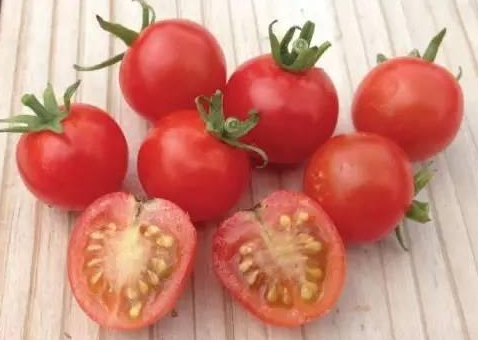
If you can buy organic cherry tomatoes, and not the kind of cherry tomatoes that have been crossbred many times, growing mature tomatoes from them for propagation is not difficult. Cut open the cherry tomato, take out the small seeds inside, and you can put them in a glass jar to keep them fresh.
2. Storage and sowing preparation
If you want to keep storing the tomato seeds, you can let the tomato seeds ferment in the glass jar for a few days, then pour them into a sieve to wash the seeds and remove all the pulp.
Once dried, they can be stored for a long time. If you want to sow them right away, you can soak the seeds in warm water at 35 degrees for 3-4 hours, and then you are ready to sow.
3. Sowing and raising seedlings
After soaking the seeds in clean water, you can prepare a moist paper towel, then sprinkle the seeds onto it, put it in a plastic bag, and finally place it in a warm, dark place for a week.
After a week the seeds will have sprouted. At this point you can transplant the seeds into soil, cover them with a thin layer of soil, keep the soil slightly moist, and maintain a warm, ventilated environment with plenty of light.
4. Seedling care
Keep plenty of sunlight, keep the ambient temperature above 18 degrees, and keep the soil slightly moist without waterlogging, and it will grow very fast. If the seedlings grow too densely, thin them out appropriately. You can also use seedling trays, keeping one plant in each small cell.
5. Later care
When the cherry tomato seedlings have grown 4 true leaves, they can be transplanted into a larger pot, transplanted with the soil. During growth and cultivation, be careful to maintain plenty of sunlight, with more than 6 hours of light per day.
For the transplanting soil, you can add plenty of decomposed organic fertilizer at the bottom of the pot as a base fertilizer. After three months of care, start applying light fertilizer frequently. During the care process, be careful to prune excessive branches.
6. Pruning and flowering and fruiting
A mature cherry tomato plant can grow to more than one meter tall. You can set up a trellis to let it grow, and when it has grown tall enough you can pinch off the top to control the plant shape.
If you want cherry tomatoes to flower and fruit, besides sufficient water and sunlight, you also need to apply light fertilizer frequently, plus appropriate pruning, so that they have the nutrition to flower and fruit.
That is all for the introduction to the methods of growing potted cherry tomatoes. Hurry up and grow them on your own balcony!
Potted tomato growing tips
In fact, all tomato varieties can be grown in pots. However, growing tomatoes indoors requires manual pollination or using flower-setting hormone solution to dot the flowers, in order to increase the fruit-setting rate. It can be said that no matter what the variety, the basic growing method is completely the same, and the growing difficulty is the same.
Seed soaking and sprouting: Soak in water at around 30 degrees for 3-4 hours. Stir several times during this time, until the seeds, when taken in hand, do not feel slippery to the touch. Wrap and cover them with a moist gauze cloth and sprout them at 25-30°C. After about 12-18 hours, when 2/3 of the seeds have sprouted white, sow them. The soil cover thickness is generally best at around 5 mm. The growing medium is best seedling soil or seedling blocks. Generally they will sprout in about a week. Tomatoes have a strong ability to adapt to temperature and can grow at 10-30°C. Different growth stages have certain differences in temperature requirements. The optimal temperature for seed germination is 25-30°C, the minimum temperature for sprouting is 15°C, and the suitable temperature during the seedling stage is 20-25°C during the day and 10-15°C at night. Basically indoors, if conditions are suitable, they can be grown in all four seasons. After sprouting, they need to be transplanted. For growing in a small vegetable garden, it is best to set up a trellis; for balcony pots, you can prune appropriately and pinch off the top. It is just that simple, and you can grow tomatoes.
Growing techniques:
The growth and development process of the tomato is the entire process from seed germination and rooting, emergence, cotyledon unfolding, true leaf appearance, seedling stem, leaf and root elongation and enlargement, flower bud differentiation, flower organ formation, flowering, pollination, fertilization, fruit development and seed formation, to fruit and seed maturity. In cultivation, the entire growth process is generally divided into the germination stage, seedling stage, flowering and fruit-setting stage, and fruiting stage.
1. Germination stage: from the start of seed germination until the heart breaks, that is, until the first true leaf shows its heart. Under normal temperature conditions it takes 7-9 days. Tomato seeds absorb water through two processes. In the first stage, the water absorption rate is fast. Under a water temperature of 20-30°C, in about half an hour they can absorb about 35% of the dry weight of the seed in water, and in 2 hours the water absorption can reach 60%-65% of the dry weight of the seed; in the second stage, the water absorption rate is slow, and it takes about 5-6 hours to absorb about 25% of the dry weight of the seed in water and approach saturation. After absorbing enough water, under 25°C, after about 36 hours or longer (if your ambient temperature is low), you can see a white radicle growing out. After another 3-5 days, the radicle can reach 4-6 cm, and on the upper part of the radicle you can see lateral roots developing. 5-7 days after germination begins, the cotyledons begin to leave the seed coat and extend out of the soil. The entire young plant body then quickly transitions from a heterotrophic mode (absorbing the seed's own nutrients) to an autotrophic mode (making nutrients through its own photosynthesis). Growth morphology of seedlings in the germination stage: Normal seedling: cotyledons broad, thick and flat, leaf veins thick and raised, color fresh green, hypocotyl about 3 cm long. Below are the mistakes that growing beginners most easily make.
Potted tomato growing methods
Many friends ask Old Zhang about wanting to grow tomatoes in a home garden or small vegetable garden, and some also want to grow potted tomatoes on the balcony. In fact, all tomato varieties can be grown in pots. However, growing tomatoes indoors requires manual pollination or using flower-setting hormone solution to dot the flowers, in order to increase the fruit-setting rate. It can be said that no matter what the variety, the basic growing method is completely the same, and the growing difficulty is the same. Here is a brief introduction.First, seed soaking and sprouting: Soak in water at around 30 degrees for 3-4 hours. Stir several times during this time, until the seeds, when taken in hand, do not feel slippery to the touch. Wrap and cover them with a moist gauze cloth and sprout them at 25-30°C. After about 12-18 hours, when 2/3 of the seeds have sprouted white, sow them. The soil cover thickness is generally best at around 5 mm. The growing medium is best seedling soil or seedling blocks. Generally they will sprout in about a week. Tomatoes have a strong ability to adapt to temperature and can grow at 10-30°C. Different growth stages have certain differences in temperature requirements. The optimal temperature for seed germination is 25-30°C, the minimum temperature for sprouting is 15°C, and the suitable temperature during the seedling stage is 20-25°C during the day and 10-15°C at night. Basically indoors, if conditions are suitable, they can be grown in all four seasons. After sprouting, they need to be transplanted. For growing in a small vegetable garden, it is best to set up a trellis; for balcony pots, you can prune appropriately and pinch off the top. It is just that simple, and you can grow tomatoes.
Below is an introduction to some detailed growing techniques:
The growth and development process of the tomato is the entire process from seed germination and rooting, emergence, cotyledon unfolding, true leaf appearance, seedling stem, leaf and root elongation and enlargement, flower bud differentiation, flower organ formation, flowering, pollination, fertilization, fruit development and seed formation, to fruit and seed maturity. In cultivation, the entire growth process is generally divided into the germination stage, seedling stage, flowering and fruit-setting stage, and fruiting stage.
1. Germination stage: from the start of seed germination until the heart breaks, that is, until the first true leaf shows its heart. Under normal temperature conditions it takes 7-9 days. Tomato seeds absorb water through two processes. In the first stage, the water absorption rate is fast. Under a water temperature of 20-30°C, in about half an hour they can absorb about 35% of the dry weight of the seed in water, and in 2 hours the water absorption can reach 60%-65% of the dry weight of the seed; in the second stage, the water absorption rate is slow, and it takes about 5-6 hours to absorb about 25% of the dry weight of the seed in water and approach saturation. After absorbing enough water, under 25°C, after about 36 hours or longer (if your ambient temperature is low), you can see a white radicle growing out. After another 3-5 days, the radicle can reach 4-6 cm, and on the upper part of the radicle you can see lateral roots developing. 5-7 days after germination begins, the cotyledons begin to leave the seed coat and extend out of the soil. The entire young plant body then quickly transitions from a heterotrophic mode (absorbing the seed's own nutrients) to an autotrophic mode (making nutrients through its own photosynthesis). Growth morphology of seedlings in the germination stage: Normal seedling: cotyledons broad, thick and flat, leaf veins thick and raised, color fresh green, hypocotyl about 3 cm long. Below are the mistakes that growing beginners most easily make.
Leggy seedling: cotyledons slender, hypocotyl slender and more than 3.5-4 cm long.
Cause: high temperature, especially high night temperature, or insufficient light, or excessive moisture in the nutrient soil.
Helmet seedling: soil compaction, insufficient soil cover after sowing, or the covering soil being too dry.
Stunted seedling: hypocotyl too short, cotyledons relatively small. Low temperature and drought inhibit growth.
2. Seedling stage: from the first true leaf showing its heart to the first flower cluster showing large flower buds. Generally it takes 40-50 days. After the seeds germinate, the root system grows very fast. 20-30 days after germination, the main root of the seedling can reach 40-50 cm, and a large number of lateral roots form. The seedling stage can be divided into two phases: one is the basic vegetative growth phase, referring to the vegetative growth before 2-3 true leaves, that is, before flower bud differentiation begins. This phase lays the foundation for flower bud differentiation and further vegetative growth. The second is the flower bud differentiation and development phase, referring to 25-30 days after sowing, when there are 2-3 true leaves and flower bud differentiation begins. At this time vegetative growth and reproductive growth proceed simultaneously, and the amount of nutrients accumulated through photosynthesis directly affects the quality of flower bud differentiation.
The main focus of the seedling stage is: promoting healthy seedling growth and normal flower bud differentiation. From flower bud differentiation to flowering takes about 30 days.
Growth morphology of seedlings in the seedling stage (8-9 leaves):
Normal seedling: root system well developed, many lateral roots, compact internodes, stem uniform in thickness from top to bottom, first flower cluster buds already showing.
Leggy seedling: the higher up the stem, the thicker it is, small root system, longer petioles on the upper leaves, internodes noticeably elongated, seedling stem becoming thinner, leaves becoming thinner, leaf color yellow-green. Causes of leggy seedlings: relatively high night temperature, high humidity, too much nitrogen fertilizer.
Aged seedling: root system not well developed, dark green leaf color, relatively short internodes, seedlings in a state of growth inhibition.
True leaves small, leaf color dark green or purple-green... the cause is low temperature during the seedling-raising period.
True leaves small, leaf color gray-yellow... soil drought or lack of fertilizer.
Leaf color yellow, leaf surface wrinkled, seedlings short, root system turning rust-colored... too much fertilizer or soil salt concentration too high.
Leaf color pale yellow, leaves strongly upright... insufficient light.
Stem thickness is an indicator for judging whether seedling vegetative growth is good or bad: the stem thickness standard when the first flower cluster begins to differentiate is 2 mm, the stem thickness standard when the second flower cluster begins to differentiate is 4-5 mm, and for the third flower cluster it is required to reach 7-8 mm.
Signs of survival at the planting stage: water droplets on the leaf tips in the morning, the top green-yellow and tender, fine hairs growing near the growing point.
3. Flowering and fruit-setting stage: from the end of the seedling stage to the first flower cluster flowering and setting fruit. The largest young fruit reaches 0.5-1.0 cm in diameter. This stage is the turning point where root, stem and leaf vegetative growth continues to dominate while gradually transitioning to reproductive growth proceeding in parallel, and it is the most important stage in tomato production management. Generally, according to the requirements of different varieties, seedling restraining is adopted, that is, through the regulation of fertilizer and water, vegetative growth and reproductive growth reach a relatively coordinated and balanced state. Generally the daytime temperature is controlled at 20-30°C, and at night at 15-20°C. Below 15°C or above 35°C is not conducive to flowering, pollination, or fruit setting.
The main focus of this stage is: promoting and accelerating seedling recovery, promoting root growth, expanding leaf area, improving photosynthetic capacity, preventing flower and fruit drop, increasing the fruit-setting rate, balancing and coordinating the relationship between the plant and the fruit, and achieving the goal of early maturity and high yield.
Growth morphology during the flowering and fruit-setting stage:
(1) Normal inflorescence flowering: the position of the inflorescence is about 20 cm from the top of the plant; above the flowering inflorescence there are inflorescences with visible buds and inflorescences still developing; the inflorescence grows compactly, the pedicels are thick, short and strong; the open flowers are large, and the flower color is deep and vivid. Leggy inflorescence: flowering is uneven, often the flower organs and ovary are unusually large, petals deep yellow. Aged inflorescence: flowering delayed, flower organs small, petals pale yellow, ovary small. Normal flower: flowering within the same inflorescence is even, flower organs medium in size, petals yellow, ovary moderate in size.
Weak flower: flower buds thin and small, pedicels slender, caused by high temperature, insufficient light, or lack of nutrition.
(2) Normal plant: stem thickness uniform and appropriate, internode length gradually increasing from bottom to top, each small leaf relatively large, somewhat palm-shaped, leaf blade large, leaf veins clear, leaf tip relatively pointed, after the fruit enlargement stage the normal plant is tower-shaped; the growing point area and the developing and elongating leaves below form an approximately equilateral triangle.
(3) Morphology of excessive vegetative growth: the upper stem is relatively thick, the tender leaves at the top are curved, the terminal bud and the new leaves below form a scalene triangle, and the small leaf petioles are relatively long.
(4) Extreme reproductive growth morphology: the flowering node moves up to near the top, the stem is thin and the leaves are small, and the top of the plant is horizontal, caused by low temperature, dryness and lack of fertilizer.
(5) Inflorescence re-greening morphology: new leaves or new shoots grow again at the top of the inflorescence, caused by high temperature, low temperature, dryness, or too much nitrogen fertilizer.
4. Tomato fruiting stage
From the fruit setting of the first cluster to the pulling up of the vines. During this stage, sufficient fertilizer and water supply must be ensured, side branches removed in time, topping done at the right time, fruit thinned appropriately, and the rational flow of nutrients ensured.
The main goals are: timely plant adjustment, reducing nutrient consumption, strengthening fertilizer and water management, promoting fruit growth, timely pest and disease control, and timely harvesting.
Leggy phenomenon: if the stem is thick, internodes long, and flowering nodes low, it is caused by conditions such as too much water and fertilizer and insufficient light, and its fruits are mostly deformed fruits and hollow fruits, with slow fruit growth. If the leaves are large and thin, internodes long, and the stem thin, it is a leggy phenomenon caused by too high a room temperature. When the plant grows too vigorously, the light at the bottom is insufficient, and the density is too high, the first and second inflorescences easily drop flowers and fruit. If the flowering node moves up and is relatively close to the top, the stem is thin, and the top of the plant is horizontal, it indicates that top elongation is inhibited, mostly caused by low night temperature, dry soil, lack of fertilizer, or too much fruit set, and such plants easily abort fruit. Yellowing and necrosis at the top are caused by boron deficiency and calcium deficiency. If the leaves are dark green or purple-green, the leaves are small, the plant is short, the internodes are short, and flower and fruit drop is severe, it is caused by too low a greenhouse temperature. Small, yellow and wrinkled leaves with a short plant indicate too much fertilizer, causing root burn. Vigorous plant growth with yellow rust spots on the leaves is caused by too much nitrogen fertilizer.
5. Tomato fruit ripening stage
(1) Green fruit stage (green fruit stage): the fruit has already fully grown, the fruit volume stops expanding, the number and volume of cells no longer increase, the physiological activity of the fruit is entirely material transformation, the fruit color changes from green to white, seed development is basically complete, and it has the ability to germinate and produce. Generally, tomatoes for long-distance transport or storage should be harvested at this stage. (2) Color-turning stage (red line stage): the top of the fruit gradually colors, reaching 1/4 of the whole fruit. After harvest, at a suitable temperature for 1-2 days, it can fully color. Generally, when the distance from the production area to the market is relatively short, they should be harvested at this stage.
(3) Mature stage (edible stage or commercial stage): the fruit has already shown the variety's characteristic color, has high nutritional value, relatively good flavor, is suitable for eating raw, and does not keep well for storage and transport. Generally only when picking and selling locally can they be harvested at this stage.
(4) Late-ripening stage: the fruit turns fully red or yellow, the flesh becomes soft, the sugar content is very high, it can be eaten raw, but it does not keep well for transport, and as a commodity it is already difficult. Generally only when saving seeds can they be harvested at this time.
Terminology explanation:
Topping: Because the tomato plant grows and bears fruit at the same time, if you do not top it, the tomato plant can indeed grow taller, but it will transport all the nutrients to the top to supply the growth of the terminal bud, thereby weakening the nutrient accumulation of the fruit. As for topping tomatoes, it is only for the indeterminate growth type; for the determinate growth type it is not needed. In the process of cultivating tomatoes, side buds also need to be removed to prevent the plant from growing too densely.