Is Camellia Impatiens the same as Impatiens? Detailed Guide to Growing It from Seed
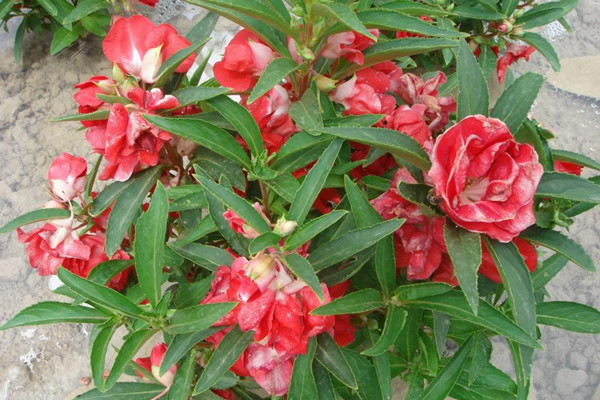
Camellia Impatiens is something many people absolutely love; this Camellia Impatiens looks quite elegant and luxurious. How do you grow Camellia Impatiens from seed? Is Camellia Impatiens the same as Impatiens:
How to grow Camellia Impatiens from seed:
1. Light and temperature
Camellia Impatiens has fairly strong adaptability. To grow Camellia Impatiens, you need to provide suitable light and temperature conditions. The suitable growing temperature for Camellia Impatiens is between 15°C and 25°C. It is not tolerant of high temperatures; when the temperature is too high, the plant's growth will be affected, and in severe cases it may stop growing. During high summer temperatures, keep the growing environment cool, provide appropriate shade, and avoid direct exposure to strong sunlight. However, be careful not to shade it excessively; if light is insufficient, it may also cause Camellia Impatiens plants to grow leggy and the leaf color to become lighter. In winter, pay attention to keeping it warm, because Camellia Impatiens is relatively intolerant of cold, and maintain sufficient light.
2. Watering and fertilizing
When growing Camellia Impatiens, water and fertilizer are of utmost importance. Water must be sufficient to keep the potting soil moist, but avoid waterlogging at all costs, otherwise the roots will rot. During care, watering must be moderate, and a certain level of air humidity should be maintained. In summer, water promptly and spray water on the ground and leaves to maintain air humidity. To give Camellia Impatiens sufficient nutrients, apply a dilute fertilizer solution once every 10 days. In the early stage of growth, you can apply more nitrogen fertilizer, but before flowering, control the use of nitrogen fertilizer.
3. Propagation methods
Camellia Impatiens can be propagated by cuttings, which can be done year-round. It generally roots easily, and in summer it can be propagated in water.
4. Pests and diseases
During the growing process, Camellia Impatiens is prone to many diseases, including damping-off, powdery mildew, southern blight and mosaic virus, all of which adversely affect the growth of Camellia Impatiens to varying degrees. When you find that Camellia Impatiens is growing poorly due to disease, you can take timely control measures.
5. Potting up
When growing Camellia Impatiens, when potting up, you need to choose sandy soil with good drainage, and it needs to be somewhat fertile. Potting up should be done when the Camellia Impatiens seedlings have grown to a certain size.
Is Camellia Impatiens the same as Impatiens:
They are not the same.
Because there are many types of Impatiens, including ordinary single-petaled types and double-petaled types.
The relationship between the two can be understood this way: Camellia Impatiens is just one type within the Impatiens family.
That is all for the introduction to growing Camellia Impatiens. Camellia Impatiens and Impatiens are not the same type.
How much does Camellia Impatiens seed cost per jin on the market? How to grow Camellia Impatiens from seed
Hearing the name, you would think it should be a very beautiful plant, and indeed, just like its name, this flower's blooms are large and grand, giving people a noble and elegant feeling, and it is loved by everyone. However, some friends say this flower is not easy to grow at all and is prone to many problems. Below, the editor will introduce its growing methods, and you can try it yourself.
How much does Camellia Impatiens seed cost per jin on the market?
Camellia Impatiens seeds cost 2-6 yuan per gram (about 120 seeds). If you buy a lot, you can also buy wholesale.
How to grow Camellia Impatiens from seed
1. Sowing time
In terms of germination rate and survival, any season can work, but different sowing times lead to different flowering periods, so you can work backward from the time you want to enjoy the flowers. Different varieties are suited to different climates, and this also needs to be distinguished.
2. Sowing method
First prepare a 128-cell sowing tray and keep the temperature at around 20°C. Pour the growing medium into the cells, scatter the seeds evenly on top, and after sowing the seeds, cover with about 3 mm of soil. Use a spray bottle to spray an appropriate amount of water on the soil to keep it moist. If the temperature is well controlled, seedlings can emerge in about 5 days to 1 week.
What to do if Camellia Impatiens wilts
1. Do not water too much. If the environment is dry, you can spray water on the flowers and leaves, and place a saucer under the flower pot with water in it. When the flowers dry out, they will absorb it themselves.
2. Camellia Impatiens is afraid of freezing, so the ground temperature should not be too low. You can place it on a flower stand and avoid direct contact with the ground.
Common diseases and control methods
1. Damping-off
Damping-off mainly harms the young stem parts of Camellia Impatiens. The main symptom is water-soaked spots on the stem, which later turn brown and become sunken and constricted, causing the seedlings to collapse from the stem and die. Control methods: disinfect the soil before sowing, reduce plant density, control water amount, and strengthen ventilation. After the disease occurs, spray with chemicals such as chlorothalonil, carbendazim and ethylicin to treat it.
2. Powdery mildew
Powdery mildew mainly occurs on the leaf surface of Camellia Impatiens plants. The main symptoms are small white powdery spots that then form layers and develop yellow round spots that progress to brown; the leaves wither and yellow, gradually spreading to other parts and causing the plant to wither and die. Control methods: strengthen management, improve ventilation, apply less nitrogen fertilizer, and clean up promptly. If the disease occurs, use triadimefon or thiophanate-methyl solution.
3. Phytophthora blight
Phytophthora blight mainly occurs on plants after transplanting. First, water-soaked green or yellow patches appear on the stem and base, then develop to dark brown, gradually spreading until the plant bends over and dies, after which white silky threads appear. Control methods: disinfect the soil promptly, improve the growing environment, and for treatment mainly use aluminum triethyl phosphonate or metalaxyl, Bordeaux mixture and other chemicals.
4. Mosaic virus
One symptom of mosaic virus is that the leaves become smaller and constricted, with dark green or yellow-white spots appearing, the leaves shrivel, the petals break apart, and the plant becomes stunted; the second symptom is that the leaf veins change from green to grayish-white, and the leaf margins curl upward. Control methods: maintain hygiene, clean up promptly, reduce human intervention, and use insecticides to eliminate the pests that spread it.
Although Camellia Impatiens is prone to many pest and disease problems, as long as we master the prevention methods, these problems can actually be avoided. On the other hand, if we want to grow Camellia Impatiens well, we must first pay attention to sowing techniques, especially temperature control, because if the temperature is too low, the seeds will definitely freeze to death.
How to grow Camellia Impatiens, how to plant Camellia Impatiens
How to plant Camellia Impatiens. Camellia Impatiens blooms in all four seasons, with abundant flowers and brilliant colors. Its plant height is suitable, and it can be used to decorate homes and venues, and can also be placed outdoors as a large flower bed. It resembles a camellia, and is very suitable for potted ornamental display. Camellia Impatiens is beautiful and blooms year-round, and is loved by people; growing it at home is also full of charm. Below, let's take a look at how to grow and plant Camellia Impatiens.
Camellia Impatiens growing method 1. Light and temperatureCamellia Impatiens has fairly strong adaptability. To grow Camellia Impatiens, you need to provide suitable light and temperature conditions. The suitable growing temperature for Camellia Impatiens is between 15°C and 25°C. It is not tolerant of high temperatures; when the temperature is too high, the plant's growth will be affected, and in severe cases it may stop growing. During high summer temperatures, keep the growing environment cool, provide appropriate shade, and avoid direct exposure to strong sunlight. However, be careful not to shade it excessively; if light is insufficient, it may also cause Camellia Impatiens plants to grow leggy and the leaf color to become lighter. In winter, pay attention to keeping it warm, because Camellia Impatiens is relatively intolerant of cold, and maintain sufficient light.
2. Watering and fertilizingWhen growing Camellia Impatiens, water and fertilizer are of utmost importance. Water must be sufficient to keep the potting soil moist, but avoid waterlogging at all costs, otherwise the roots will rot. During care, watering must be moderate, and a certain level of air humidity should be maintained. In summer, water promptly and spray water on the ground and leaves to maintain air humidity. To give Camellia Impatiens sufficient
3. Pests and diseasesThe main disease of Camellia Impatiens is damping-off. At first, water-soaked spots appear at the base of the young stem, then the lesions become light brown to brown and become sunken and constricted. After the disease occurs, use medicine promptly. 75% chlorothalonil at 600 times, 50% carbendazim at 500 times, and 40% ethylicin at 200-400 times all have very good effects. Spray once a week; when spraying, besides the stems and leaves of the potted plant, also spray the surrounding ground.
How to grow Camellia Impatiens 1. Camellia Impatiens growing method: sowing timeCamellia Impatiens can be sown in all four seasons, either by broadcasting or by dibbling. For dibbling, use a 128-cell tray. The suitable sowing temperature is around 20°C, and seedlings emerge in about 1 week. When the seedlings are 5 cm tall, transplant them for the first time into 8 cm nutrient pots. When they are about 12 cm, transplant them into 15 cm pots. The soil mix is 2 parts peat soil, 1 part vermiculite or river sand, and 1 part furnace slag.
2. Camellia Impatiens growing method: seed sowingScatter the seeds on the soil, lightly cover with about 0.3 cm of soil, and water thoroughly once. They can germinate in 5-7 days. Germination temperature: 22-30°C. April in Guangzhou is most suitable, but in May you need to watch out for high temperatures.
3. Camellia Impatiens growing method: pinchingThat is, topping. When the plant is about 10 cm tall, simply remove the top 2-3 leaves. This is the work of treating reserved main branches, basic branches or side branches. Note: if you do not pinch, it will grow very tall and the flowers will not grow well.
4. Camellia Impatiens growing method: care during the growing periodSuitable at 15-32°C. Although it is not a big problem not to fertilize, if conditions permit, you can apply compound fertilizer or organic fertilizer. By May the weather is hot, so remember the watering tips.
5. Camellia Impatiens growing method: bud stageAbout 30 days; once you see flower buds, you are halfway to success. At this time, pay special attention: 1. Do not let it be blown over by wind, during typhoon and thunderstorm season. 2. Ventilate, and do not expose it to the blazing sun. Otherwise its resistance will decline and it will easily wither and become diseased. So looking good comes at some cost.
6. Camellia Impatiens growing method: flowering periodImpatiens flowering (during the May flowering period, Impatiens needs pinching, additional fertilizing and waterlogging prevention. From June to August, pest and disease control is needed.) During the flowering period, the pinching method can be used, and at the same time remove early-opening flowers and buds, so that the plant keeps expanding and grows more flower buds.