Can nemesia be propagated by cuttings and what is its flower meaning?
Few people grow nemesia in daily life, but among nemesia it has the most flower colors: golden yellow, rose red, gradient red and white, and the petal patterns also vary widely. It is early-flowering with a compact plant habit, suitable for growing in small pots. So let us find out: can nemesia be propagated by cuttings? What is the flower meaning of nemesia?
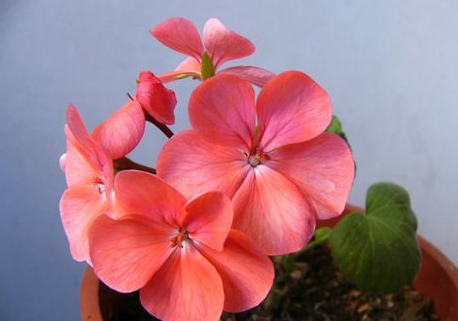
Can nemesia be propagated by cuttings:
No cuttings; it is propagated by sowing seeds.
Seed propagation:
1. Sowing time: sow from late August to early September. For flowers to be marketed at Spring Festival, sow in early to mid-August. The optimum germination temperature is 20—25°C.
2. Seedbed: refer to cineraria.
3. Sowing rate: sow 0.8-1 gram per square meter, which can raise about 2000 seedlings.
4. Seed covering depth: 4-5mm. Seedlings emerge 7—10 days after sowing.
5. Points to note in raising seedlings:
(1) Water the seedbed thoroughly before or after sowing. After sowing, water with a fine mist or water under a shade net;
(2) Keep the seedbed moist before emergence;
(3) Before emergence, cover the seedbed with a net for shade to retain moisture and lower temperature; after emergence, full-light management is required. For sowings made before August, refer to cineraria for seedbed management.
(4) Fertilize 2-3 times during the seedling stage; the fertilizer is 45% high-concentration compound fertilizer or urea at a concentration of 0.5-1‰, or cake fertilizer water diluted about 20 times.
What is the flower meaning of nemesia:
Nemesia, also known by the alias naiemeixiya, belongs to the genus Nemesia in the family Scrophulariaceae and is native to South Africa. Its flowers are elegant and charming in shape, and their colors are bright and varied; planted in masses, they are like colorful auspicious clouds spread flat on the ground, very brilliant and gorgeous. In gardens, nemesia is a good material for flowerbed arrangement; it can be planted in masses to form a landscape, and can also be used as pot flowers and cut flowers.
Nemesia has a peculiar and unique flower shape, with beautiful flowers and brilliant colors. Tall-stemmed large-flowered types can be used as cut flowers, while short types are suitable for pot flowers or for flowerbeds.
No flower meaning for nemesia has been discovered yet.
Nemesia
Other names for nemesia
Nemesia is also called nangjuhua, aimixi, and naiemeixiya.
Growth habits of nemesia
Nemesia is a plant that relatively prefers a warm climate with sufficient light. When growing nemesia, it is relatively afraid of high temperatures, so attention should be paid to cooling in summer. When choosing soil, nemesia generally chooses loose, fertile, well-drained soil rich in humus.
The role of nemesia
Nemesia flowers are delicate; in fact, its main role is ornamental.
With its peculiar and unique flowers, if it is a tall variety, it can be used as a cut flower for viewing. Dwarf varieties are more suitable for pot cultivation, or for growing in flowerbeds, and all are quite ornamental.
Care of nemesia
Nemesia is native to South Africa. Its flowers are elegant and charming in shape, and their colors are bright and varied; planted in masses, they are like colorful auspicious clouds spread flat on the ground, very brilliant and gorgeous. In gardens, nemesia is a good material for flowerbed arrangement; it can be planted in masses to form a landscape, and can also be used as pot flowers and cut flowers.
Nemesia has a certain drought tolerance, so in winter, considering controlling plant height, improving cold resistance, reducing humidity and preventing diseases, watering of nemesia under protected cultivation conditions should generally be moderate and on the dry side. But note:
1. Dry and wet are not absolute; one should grasp the “degree”. Wet but not rotten, dry but not parched.
2. One should look at the specific situation. During the vigorous growth period, sufficient fertilizer and water should be ensured, but if there is a tendency to spindly growth, then water and fertilizer should be properly controlled.
Nemesia has a medium fertilizer requirement; fertilize about once every 10 days, mainly with nitrogen fertilizer in the early stage, with 1-2 applications of phosphorus and potassium fertilizer in between. In the later stage, mainly compound fertilizer. The concentration is about 1-1.5‰.
3. Winter management: nemesia is cold-tolerant, and at the seedling stage it can tolerate a low temperature of -5°C. For commercial pot flower cultivation, in southern regions it can be grown in the open field or in a single-layer greenhouse, and in the middle and lower reaches of the Yangtze River it can be grown in a single-layer or double-layer greenhouse. In northern regions below -10°C, if grown in a greenhouse, three layers of insulation covering are advisable. The first time pot flowers are brought into the greenhouse or the greenhouse frame is covered with film should be done before the lowest temperature in autumn and winter drops to 0°C. The protected temperature should preferably be 18—20°C during the day and 0-1°C at night (when the night temperature is too low, growth is slow, the growth period is prolonged, and cultivation costs increase).