Can rooting powder be used for rose cuttings propagation? Detailed method
Roses are something many people absolutely love, and the rose is a symbol of love. What is the rose cuttings propagation method? Can rooting powder be used for rose cuttings:
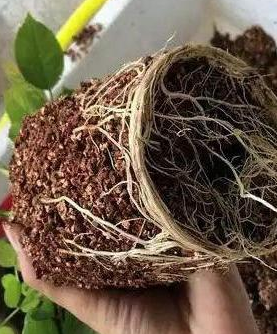
1. Branch treatment, cut the branches into lengths of about 10 cm, each branch needs to have a bud point, make a diagonal cut
Note: when buying, tell the vendor to save you cut flowers with the thorns left on; those with thorns removed usually have the bud points scraped off as well
2. Either dip them in rooting powder or soak them in rooting water
3. Medium treatment: you can use vermiculite; before use, water it through once with carbendazim water, or sun it for several days in advance to sterilize and disinfect
4. Choose a suitable container, fill it with the medium, water it thoroughly, and insert the branches dipped in rooting powder
5. Place it in a ventilated spot for care; if you want faster rooting, you can find a box to cover it, ventilate for 1 hour each day, and keep the soil moist
That is all for the introduction to rose cuttings methods. For rose cuttings, it is still better to just use a bit of rooting powder, as only then will they root quickly.
Rose propagation methods
Rose propagation methods include: division, cuttings, grafting and sowing. The most commonly used are division and cuttings; as for sowing, single-petaled roses can use it, but double-petaled roses cannot, because double-petaled roses do not bear fruit.
1. Division method
Select a robustly growing rose plant and dig it up with the roots; according to its growth condition, divide the plant into several plants from the roots and plant them separately. Division is generally carried out in spring or autumn.
2. Cuttings method
It can be done in both spring and autumn. Both hardwood and softwood rose branches can be used as cuttings. For hardwood cuttings, generally choose before the plant sprouts, select strong 2-year-old branches, cut them into sections of about 15 cm as cuttings, dip the lower end in mud slurry, and insert them into the cutting bed. Generally, cuttings can root in about 1 month, and after rooting, transplant and care for them promptly. Cuttings can be done in both spring and autumn.
3. Grafting method
Generally choose wild rose or Chinese rose as the rootstock, and in early spring in March use the cleft grafting method or cut grafting method for grafting.
4. Seed propagation
When the seeds mature in October, harvest and sow them promptly; or store the seeds in sand until sowing in the second spring.
Now that we understand rose propagation methods, we can take action and plant one after another, pot after pot of gorgeous roses in a rich variety of colors: red like fire, white like snow, yellow like gold, pink like rosy clouds... With so many roses of different colors, they should also have different symbolic meanings, right? That's right, though they all belong to the rose, the meanings symbolized by different colors are also different.
High-temperature cutting propagation method for prickly rose and wild rose
Prickly rose and wild rose both belong to the Rosaceae family as deciduous shrubs, with clustered branches and stems, and prickles. The leaf stalks sparsely bear small prickles and glandular hairs, and the stipules are lanceolate and fused with the leaf stalk. The flowers are bisexual, and the corolla is mostly purplish red, rarely yellow or white. Prickly rose is a double-petaled flower, with large flowers and no fruit, while wild rose is a single-petaled flower, with small flowers, and the fruit is a rose hip, pink or purplish red. Both have a certain horticultural ornamental value. At the same time, both can also serve as flower hedges to separate spaces and provide protection, and have a certain garden practical value. Therefore, it is necessary to accelerate the propagation of these two ornamental flowering shrubs. Through testing, the author explored a cutting propagation method suitable for the Altay region, which is relatively fast and effective. This method is introduced below for reference.
1 Cutting medium
Taking advantage of river sand's strong permeability, the lower end of the cuttings is not prone to rot, and it is easy to root. Choosing river sand as the cutting medium not only saves cost but also has a relatively high cutting survival rate.
2 Cutting bed preparation
The cutting bed should be built in a sunny, ventilated and flat place. The cutting bed is 60, 30 and 0.5 m in length, width and height respectively, and is built with red bricks that can let water seep outward. At the very bottom inside the cutting bed, spread a layer of 15-20 cm thick farmyard manure (its role is to provide heat to the medium and accelerate rooting), and on top of it cover it fully with the fine river sand medium, with a thickness of 15-20 cm. Lead a water pipe to 50 cm above the cutting bed, connect the end to a rubber hose, and connect the hose to a fine-mesh nozzle for spraying water on the cutting bed. Above the cutting bed, use steel bars as a framework and weld an arched frame, with the direction being north-south, and the top of the arch frame 2 m from the ground. Prepare 7 m wide thick plastic sheeting and 11 m of shade netting.
3 Medium treatment before cutting
Two days before cutting, fully and evenly apply feso solution (3%) into the river sand medium so that each square meter contains 0.5 kg feso4, and keep it in the medium for 2 days. On the third day, rinse it clean with clear water so that the medium is disinfected and pure. Wait for the clear water to seep down, and when the medium is slightly dry, use a smooth wooden board to scrape the surface of the medium flat:
4 Cutting selection
Select robust mother plants with thick branches and leaves and no pests or diseases, and in the high-temperature season cut branches about 7 days after flowering as cuttings. When shortening the cuttings, use sharp scissors so that the cut is smooth. Each cutting is about 10-15 cm long, with 2-3 nodes, and 2-4 small leaves are kept at the top of the cutting, with the large leaves cut off. For cutting, use a thin wooden stick to make a hole first, to prevent the cutting from being injured when inserted and affecting rooting. The cutting spacing is 4 cm, and the row spacing is 5 cm, with 500-600 plants inserted per square meter.