Can Billbergia be kept indoors? A detailed guide to care methods
Billbergia, this is something many people like to grow, and this Billbergia is not just ordinarily beautiful. How do you grow Billbergia? Can Billbergia be kept indoors:
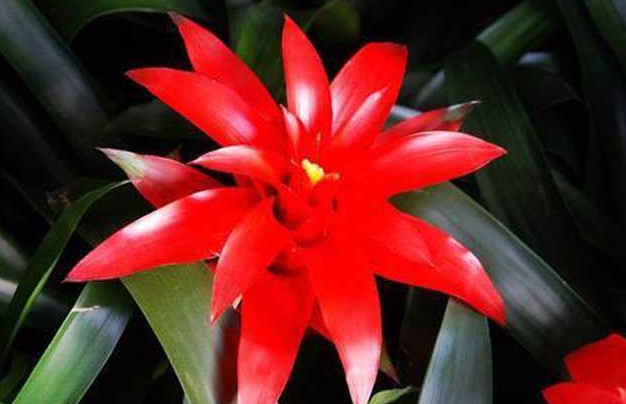
How to grow Billbergia:
1. Heart rot and root rot: Besides paying attention to the substrate, watering, and water quality, to prevent and control heart rot or root rot, after planting and during hot, humid seasons, you can use a 400x dilution of 75% oxadixyl-mancozeb or a 400x dilution of 40% fosetyl-Al to pour into the leaf cups, once a month, for 3 consecutive times. For seedlings, you can soak the seedlings in an 800x dilution of 40% fosetyl-Al for 10 minutes, take them out to dry in the shade, and then pot them.
2. Yellowing and withering of leaf tips: Irrigation water that is too alkaline or high in calcium and sodium, air humidity that is too low, overfertilization or liquid fertilizer that is too concentrated, and poor substrate drainage can all cause yellowing and withering of bromeliad leaf tips. In winter, it is best to maintain a temperature above 5°C, otherwise cold damage may occur. After the diseased parts dry, they become scorched; in severe cases of cold damage, the plant may die.
3. Scale insects: When the eggs have just hatched and the scale covering has not yet thickened, spraying pesticide gives the best control effect. Common organophosphorus pesticides such as dichlorvos, malathion, and fenitrothion can be used for control. Once the scale insects have settled, only systemic pesticides can be used for control; common pesticides include dimethoate, omethoate, and acephate. For a small number of scale insects, you can also remove them manually with your fingernails.
4. Red spider mites: Red spider mites live by piercing and abrading the leaf epidermis and then sucking the sap, causing damage to plant growth. Besides common organophosphorus pesticides such as phosmet, dimethoate, omethoate, and dichlorvos, acaricides specially used to kill red spider mites include dicofol, propargite, fenbutatin oxide, and bromopropylate.
5. Bagworms: When bagworms damage bromeliad leaves, they usually eat the mesophyll, leaving only a transparent lower epidermis; when the lower epidermis dries and falls off, it becomes holes, gaps, or breaks. There are many pesticides for controlling bagworms, such as trichlorfon, dichlorvos, dimethoate, omethoate, malathion, and fenitrothion.
6. Caterpillars: The larvae of tussock moths are often called caterpillars; they can damage leaves and flowers, eating them into notches or biting them off. Common organophosphorus or pyrethroid insecticides can be used to spray and kill caterpillars.
7. Snails: To control snails, you can scatter quicklime powder on the ground, or catch them manually, or first make lure piles with leaves, weeds, and vegetable leaves; before dawn the snails hide under the lure piles, and then you can catch them in a concentrated way.
8. Tobacco cutworm: The larvae mainly damage bromeliad flowers, feeding on petals, stamens, and pistils. They usually hide in dark places such as the potting soil and the bottom of the pot during the day, and come out to feed at dusk, but on cloudy and rainy days they can also feed outside during the day. Pesticides used to control caterpillars can all be used to control tobacco cutworm larvae.
Can Billbergia be kept indoors:
Suitable; Billbergia is originally a good indoor foliage plant
Billbergia can be kept indoors, and the cultivation methods for this Billbergia have also been introduced. Hurry and grow a few.
Billbergia Billbergia pyramidalis Billbergia illustrated guide: How to grow Billbergia / How to propagate Billbergia
Billbergia profileBillbergia Billbergia pyramidalis
Billbergia cultivation methods and precautions, an introduction to Billbergia
Billbergia (Billbergia pyramidalis), also known as flame bromeliad, Billbergia, red algae bromeliad, water tank bromeliad, and red pen bromeliad. It belongs to the Bromeliaceae family, genus Billbergia. It is a perennial evergreen herbaceous plant native to Brazil. It has been introduced and cultivated in China in recent years and is a good indoor foliage plant for indoor cultivation.
Herbaceous, with a very short stem. Leaves arranged in a rosette, 6-15 leaves, broadly lanceolate, 30-45 cm long, upright to slightly recurved, apex obtuse with a small sharp point, base broad, margin with small brown spines at least in the upper half, green above, powdery green beneath. Spike erect, slightly longer than the leaves; bracts lanceolate to elliptic-lanceolate, 5-7 cm long, pink; sepals powdery, dark red, about 1/3 the length of the petals, lobes obtuse to mucronate; petals red, about 4 cm long, twisted when flowering; stamens shorter than the petals; ovary powdery.
Mostly cultivated in greenhouses in China. Native to Brazil.
The leaf bases of this species often retain a considerable amount of water; even at the highest temperatures in tropical regions, the amount has never been seen to decrease or run short. Some mosquitoes use this specifically as a breeding site.
Billbergia is also known as red pen bromeliad, red algae bromeliad, and water tank bromeliad. It belongs to the Bromeliaceae family, genus Billbergia. Native to Brazil. It has been introduced and planted in various places in China, especially in the southern regions.
Morphological characteristics of Billbergia
Perennial evergreen herbaceous plant. Stem very short. Leaves broadly lanceolate, acute, margin finely serrate, hard leathery, bright green, with a thick cuticle and absorbing scales on the surface. Leaves grow in a spiral rosette from the rhizome, the base forming a rosette and the center forming a tube. The leaf tube can hold water without leaking, shaped like a water tower, hence the name "Billbergia." Spike erect, rising above the leaf cluster, bracts pink, corolla vermilion, petals recurved, margins tinged with purple. It mostly blooms in winter and spring. Billbergia, leaves leathery; green and glossy, growing in a rosette, dignified and beautiful; the leaf bases clasp each other, making the center of the plant
form a tube that can hold water without leaking, hence the name "Billbergia." Every September, it also sends up red torch-like inflorescences from the leaf tube; red flowers set off by green leaves make it even more lovely, and it is an indoor ornamental flower beautiful in both flower and foliage. Blooming Billbergia is an excellent choice for decorating balconies and halls. It is also suitable for placement in courtyards, rock gardens, and poolside areas.
Perennial evergreen herbaceous plant. Stem very short. Leaves broadly lanceolate, acute, margin finely serrate, hard leathery, bright green, with a thick cuticle and absorbing scales on the surface. Leaves grow in a spiral rosette from the rhizome, the base forming a rosette and the center forming a tube. The leaf tube can hold water without leaking, shaped like a water tower, hence the name "Billbergia." Spike erect, rising above the leaf cluster, bracts pink, corolla vermilion, petals recurved, margins tinged with purple. It mostly blooms in winter and spring.
Ecological habits of Billbergia
Habits: Prefers a warm, humid, semi-shaded environment. Not cold-tolerant. Slightly drought-tolerant.
Prefers a warm, humid environment with ample sunlight, requires relatively high air humidity, and avoids direct strong light. The suitable growth temperature is 20-28°C.
It has low requirements for soil quality; a slightly acidic sandy loam rich in humus and with good drainage and aeration is best, and calcareous soil should be avoided.
Billbergia cultivation techniques: temperature management
Because it is native to tropical or subtropical regions, it likes high-temperature and high-humidity environments, so it has strict temperature requirements for winter. When the temperature is below 3-6°C, it cannot overwinter safely; in summer, it can tolerate temperatures as high as above 35°C, but growth will be temporarily hindered. The most suitable growth temperature is 18-30°C. 1. In a growing environment above 34°C, the correct handling methods are: (1) Increase air convection as much as possible to help it transpire and lower its internal temperature;
(2) Spray the leaf surface, 2-4 times a day: the higher the temperature, the more times accordingly. When the temperature is lower or on cloudy and rainy days, spray less or not at all;
(3) Spray the ground around it to make it wet; this is very helpful for lowering the ambient temperature around it.
2. In a growing environment below 6°C, the correct handling methods are:
(1) Wrap it in plastic film to overwinter, but every two days at noon when the temperature is higher, uncover the film to let it breathe;
(2) Move it indoors with heating to overwinter;
Humidity management
It requires the relative air humidity of the growing environment to be above 65%. When the relative air humidity of its growing environment is too low (at this time human skin feels dry and one easily becomes thirsty), for example, when placed indoors with doors and windows often closed or in an air-conditioned environment, or on a concrete balcony, its branches will droop and soften, and the leaves will also bend downward. Over time, its entire plant shape will be ruined and lose ornamental value, and at the same time its growth will become very weak. When the relative air humidity of its growing environment is too high (above 85% for a long time; at this time people feel very humid or stuffy), it will cause its leaves to temporarily stop transpiration, weakening growth; over time, this will lead to the occurrence of various diseases. Its favorite relative air humidity is 65%-75%. When the relative air humidity is below 60%, such as in an air-conditioned environment or an unventilated indoor environment, you can regulate it by spraying the leaf surface, or you can place a dish filled with water under the flower pot.
Light management
It originally lives in the sparse shade of shrublands from temperate to warm temperate zones or on the northwest side of hillsides, where it can receive partial intermittent direct sunlight every day. In the hot summer season (daytime temperature above 33°C), if it is placed in direct sunlight for care, it will grow very slowly or enter a semi-dormant state, and the leaves will also be scorched and slowly turn yellow and fall off. Therefore, in the hot summer, it should be shaded from about 50% of sunlight. In spring, autumn, and winter, because the temperature is not very high, it can be appropriately given direct sunlight to help it photosynthesize and form flower buds and bloom.
Fertilizer and water management: It has high requirements for fertilizer and water, but it is most afraid of random fertilization, concentrated fertilizer, and one-sided application of nitrogen, phosphorus, and potassium fertilizers. It should follow the fertilization (watering) principle of "light fertilizer applied frequently, small amounts and many times, complete nutrition": spring, summer, and autumn, these three seasons are its peak growing seasons. Fertilizer and water management follows the cycle order of "Hua Bao" - "Hua Bao" - clear water - "Hua Bao" - "Hua Bao" - clear water (at the very least, ensure two "Hua Bao" applications per week). The interval period is about: 1-4 days for outdoor care; on sunny days or during high temperatures the interval is shorter, and on cloudy and rainy days or during low temperatures the interval is longer or do not water; 2-6 days for indoor care; on sunny days or during high temperatures the interval is shorter, and on cloudy and rainy days or during low temperatures the interval is longer or do not water. Try to schedule watering in the morning when the temperature is lower. Most notably, when applying fertilizer or watering, pour the fertilizer water into the rosette-shaped leaf tube. In summer, water in the morning or evening when the temperature is low, and also spray the plant frequently.
Winter management
During the winter dormant period, the main task is to control fertilizer and water well. Fertilizer and water management follows the cycle order of "Hua Bao" - clear water - clear water - "Hua Bao" - clear water - clear water. The interval period is about 7-10 days; on sunny days or during high temperatures the interval is shorter, and on cloudy and rainy days or during low temperatures the interval is longer or do not water. Try to schedule watering at noon on sunny days when the temperature is higher.
Four-season care management
Billbergia likes a warm, humid environment. The suitable growth temperature is 18-28°C, and the growing medium should be loose, fertile, and slightly acidic. At the same time, pay attention to the following technical points:
① Winter insulation. In winter, place it in a greenhouse; 5-10°C is safe for overwintering, and around 15°C it grows well. For home cultivation, during the day place the potted plant at a south-facing window indoors to receive sufficient sunlight; in the evening move the plant away from doors and windows to prevent freezing.
② Spring repotting. Repotting and soil replacement can be done in April. The potting soil should preferably be well-drained, acidic peat soil. After repotting, move it to a shade shed outdoors for the summer, and always maintain relatively high air humidity.
③ Summer heat protection. In summer, when the temperature exceeds 30°C, the plant will be in a semi-dormant state. At this time, place it under a shade shed to avoid strong sunlight, and at the same time frequently spray the ground to increase air humidity and help prevent heat and lower temperature.
④ Fertilizer and water management. During the spring and autumn growing periods, apply decomposed cake fertilizer water about once every 2 weeks; in autumn before flowering, apply 1-2 additional applications of phosphorus fertilizer to make the flower color more vivid. Fertilizer should be stopped during the hottest days of summer and in severe winter. Keep the potting soil moist at all times and always maintain relatively high air humidity, but avoid overly wet potting soil and water accumulation in the pot to prevent root rot and the death of the whole plant.
Precautions
Billbergia is a semi-shade flower and requires good ventilation. It likes acidic sandy loam rich in humus and with good drainage and aeration. You can use leaf mold, sphagnum moss, and garden soil (sand) mixed together, plus a small amount of bone meal as base fertilizer. During the growing season, apply dilute liquid fertilizer once every half month, and before flowering apply 1-2 additional applications of 0.2% monopotassium phosphate, which will make the flower color more striking. Fertilization should be stopped during the flowering period, after flowering, and during the dormant period. The suitable growth temperature is 20-28°C. When the summer temperature exceeds 30°C, do a good job of ventilation and cooling. In winter, keep it above 15°C and expose it to more light to promote strong growth.
Billbergia, leaves leathery; green and glossy, arranged in a rosette, dignified and beautiful; the leaf bases clasp each other, making the center of the plant form a tube that can hold water without leaking, hence the name Billbergia. Every September, it also sends up red torch-like inflorescences from the leaf tube; red flowers set off by green leaves make it even more lovely, and it is an indoor ornamental flower beautiful in both flower and foliage.
Billbergia is native to the tropical rainforests of South America. It is an epiphytic plant in the Bromeliaceae family and grows on tree trunks and rocks in its place of origin. The central tube of the plant stores water for use during drought. Billbergia likes a warm, humid climate and a semi-shaded environment. The suitable growth temperature is 25°C. It is not cold-tolerant, and the overwintering temperature should preferably not be lower than 10°C. It likes well-drained acidic sandy soil.
Potted Billbergia generally does not easily set seed, so division is mostly used for propagation. Every year after flowering, the plant base will sprout tillers; after they become robust and mature, cut them off during spring repotting and plant them in a substrate of half leaf mold and half sand, maintaining relatively high temperature and humidity. They will take root in about 20 days.
Billbergia is an epiphytic plant with few roots. When potting, the pot should not be large, nor deep; it is enough that the plant can be planted with a certain amount of space around it. The growing soil can be made by mixing 2 parts leaf mold and 1 part sand, or 1 part garden soil and 1 part peat, plus a small amount of superphosphate and compost. Management during the growing period is relatively simple. Billbergia does not like direct strong light; strong summer sunlight will make its leaves turn yellow. It grows better when placed in bright, diffused light. In spring, it can receive light in the morning and evening, and around noon and in summer it should be shaded.
Billbergia needs more water during the peak growing period, but the potting soil must not be overly wet. Usually, besides watering to keep the soil moist, the central tube of the plant can also be filled with water. In winter, water less, and do not add much water to the central tube either; keeping it moist is enough. Usually, frequently spray water around the plant to maintain relatively high environmental humidity, and often wipe the leaf surface with a soft cloth to keep it clean and glossy. Billbergia has low fertilizer requirements; applying cake fertilizer water once a month or sprinkling some bone meal or chicken manure into the pot is enough. Billbergia itself has epiphytic characteristics and is easy to grow hydroponically; adding a small amount of compound fertilizer or flower fertilizer tablets to the water can meet the plant's needs. In winter, place it in a sunny spot and maintain a temperature of around 10°C; if it exceeds 20°C, the plant will not get dormancy, which will affect the next year's growth.
Billbergia is a famous indoor potted flower prized for both flowers and foliage. Its leaves are green and glossy, and when it blooms, it sends up columnar bright red inflorescences from the central tube of the leaf cluster, very gorgeous. For potting Billbergia, you can use a growing soil made by mixing leaf mold, sphagnum moss, and garden soil (or coarse sand), sifting evenly, plus a small amount of bone meal as base fertilizer. During the growing season, apply dilute liquid fertilizer about once every half month, and before flowering apply 1-2 additional applications of 0.2% monopotassium phosphate, which will make the flower color more vivid. Fertilization should be stopped during the flowering period, after flowering, and during the dormant period. Billbergia often uses the scale-like hairs at the base of the tube-shaped water tower to absorb water, so during the growing period the leaf tube needs to be filled with water; when lacking water, the leaves lose their luster and gradually turn yellow. But be careful to prevent the water in the tube from becoming foul; generally about every half month, tip the flower pot once to let the stale water flow out, then add fresh water. The amount of routine watering should be based on whether the surface of the potting soil is dry; water when dry. In summer and dry seasons, spray water frequently to maintain relatively high air humidity. Never allow water to accumulate in the pot, otherwise it easily causes root rot and plant death. In winter, the plant enters the dormant period and its life activities slow down. At this time, watering should be controlled, and it is appropriate to keep the bottom of the leaf tube slightly moist. Billbergia likes a semi-shaded environment; for home cultivation, placing it in a spot with bright diffused light indoors is enough for it to grow well. If exposed to direct strong light, the leaf color easily turns yellow, affecting ornamental value. The suitable growth temperature is 20°C-28°C. When the midsummer temperature exceeds 30°C, do a good job of ventilation and cooling. In winter, the suitable temperature should be kept between 10°C-15°C; at this time, place the flower pot near a south window for care. Billbergia grown soillessly grows and develops even better.
Billbergia propagation methods: division propagation
Division propagation is mainly suitable for herbaceous flowers with clumping characteristics.
Division time: It is best to do it in early spring (February, March) after the soil thaws.
Division method: Take the mother plant out of the flower pot, shake off excess potting soil, separate the tangled root system as much as possible, and cut it open into two or more plants with a sharp knife. Each divided plant must have a considerable amount of roots, and its leaves should be appropriately pruned to help it survive.
Potting and disinfection: Soak the divided small plants in a 1500x dilution of chlorothalonil for five minutes, take them out to dry, and then pot them. You can also drench the roots with chlorothalonil immediately after potting.
Management after division: After dividing and potting, drench the roots or water thoroughly once. Because its root system is greatly damaged and its water absorption capacity is very weak, it takes about 3-4 weeks to recover and sprout new roots. Therefore, within 3-4 weeks after division, watering should be moderated to avoid root rot, but its leaves' transpiration is not affected. To maintain the water balance of the leaves, spray the leaf surface 1-3 times a day (spray more when the temperature is high, and spray less or not at all when the temperature is low). Do not apply fertilizer during this period either. After division, also be careful of overly strong sunlight; it is best to place it in a shade shed for care.
Potting or transplanting: When potting small seedlings, first place a 2-3 cm thick layer of substrate at the bottom of the pot, then continue adding substrate until about 2-3 cm from the pot rim. The substrate used for potting can be one of the following: peat : perlite : clay pellets = 2:2:1; or peat : vermiculite = 1:1; or peat : furnace slag : clay pellets = 2:2:1; sawdust : vermiculite : medium-coarse river sand = 2:2:1. After potting, water thoroughly once and place it in a shaded environment for care.
Tiller propagation
Potted propagation of Billbergia is often carried out by the tillering method, as follows:
① Cultivate tiller shoots. Every year after the plant enters the flowering period from September to October, tiller shoots will sprout from the leaf axils at the base of the plant. In winter, the room temperature needs to be kept above 15°C so that the tiller shoots continue to develop and grow.
② Separate the tiller shoots. Wait until the tiller shoots have developed to the same height as the mother plant; separating them at this time can both ensure their survival rate and achieve the result of cutting in spring and blooming in autumn. For separation in a greenhouse, as long as the temperature is 15-30°C and a certain humidity is maintained, it can be done in any season. For outdoor separation, it is generally done in spring together with repotting. Method: Cut the mature, robust tiller shoots from the base of the mother plant with a sharp knife, trim off the longer blackened root ends at the base of the tiller shoots, and make the cut smooth to help healing and rooting.
③ Potting soil preparation. Mix 60% peat soil and 40% garden soil, or mix 1 part leaf mold, 1 part garden soil, and half a part each of barnyard manure soil and rice husk ash. A fertile, loose, slightly acidic soil is suitable.
④ Plant the tiller shoots. Plant the separated tiller shoots in the pot, keep them moist, avoid strong sunlight, and maintain the temperature at 20-30°C; generally new roots will sprout in about 20 days.
Billbergia variety classification
1. Narrow-leaved Billbergia: also known as nodding Billbergia, drooping Billbergia, weeping Billbergia, and weeping bromeliad. It is a common species in the same genus. Leaves sword-shaped, slender, hard, finely serrate. Flower stem slender. The spike is short and drooping; several large bright rose-red bracts are very beautiful. Relatively cold-tolerant; a short period at 2°C will not cause cold damage.
2. Beautiful-calyx Billbergia: also known as red elegant Billbergia. It is a common species in the same genus. Leaves are copper-colored, with white and yellow spots. Flowers drooping, up to 8 cm long, blue or blue-green, bracts small.
3. Rainbow-leaf Billbergia: a cultivated variety of beautiful-calyx Billbergia. Leaves deep red, with white or yellow spots scattered on the leaf surface.
4. Variegated-leaf Billbergia: also known as Fantasia Billbergia, beautiful-leaf Billbergia, and color-changing Billbergia. It is a common hybrid in the same genus. Leaves copper-green, up to 38 cm long and 5-8 cm wide, with white and peach-red patches scattered on the leaf surface. Spike 5-8 cm long, bracts rose-red, petals blue.
Varieties
1. Torch Billbergia (var. concolor), similar to Billbergia, but the petals and bracts are all red.
2. Striped Billbergia (var. strata), with cream-yellow to green longitudinal stripes on the leaves.
3. Beautiful-leaf Billbergia (B. sanderiana), with about 20 leaves stacked, about 25 cm long and about 6 cm wide, and the leaf margins densely bearing black spine-like serrations about 1 cm long. The scape is slender and smooth, with a sparse panicle at the top, and the flowers are about 7 cm long. Petals green, apex blue, and the calyx has blue spots.
Distribution range of Billbergia
Native to tropical America, epiphytic on trees in tropical forests or in humus.
Native to Brazil, native to the tropical rainforests of South America. It has been introduced and planted in various places in China, especially in the southern regions.
Uses and purposes of Billbergia
· The Billbergia plant is short, and the central tube of the leaf cluster often stores water, just like a water tower, uniquely charming.
· The plant cluster is green and the flower color is gorgeous; it is a good potted flower.
· Blooming Billbergia is an excellent choice for decorating balconies and halls.
Landscape uses of Billbergia
Blooming Billbergia is an excellent choice for decorating balconies and halls. It is also suitable for placement in courtyards, rock gardens, and poolside areas.
Billbergia pictures
Billbergia - Billbergia cultivation methods | Billbergia pictures | How to grow Billbergia
Billbergia
Billbergia (Billbergia pyramidalis), also known as flame bromeliad, Billbergia, red algae bromeliad, water tank bromeliad, and red pen bromeliad. It belongs to the Bromeliaceae family, genus Billbergia. It is a perennial evergreen herbaceous plant. It has been introduced and cultivated in China in recent years and is a good indoor foliage plant for indoor cultivation.Billbergia
I. Basic information about Billbergia:
Billbergia (Billbergia pyramidalis) also known as flame bromeliad, Billbergia, red algae bromeliad, water tank bromeliad, and red pen bromeliad. It belongs to the Bromeliaceae family, genus Billbergia. It is a perennial evergreen herbaceous succulent plant that likes a warm, humid, semi-shaded environment. Not cold-tolerant. Slightly drought-tolerant, native to Brazil. It has been introduced and cultivated in China in recent years and is a good indoor foliage plant for indoor cultivation.
II. Morphological characteristics of Billbergia:
Perennial evergreen herbaceous plant, with a very short stem. Leaves broadly lanceolate, acute, margin finely serrate, hard leathery, bright green, with a thick cuticle and absorbing scales on the surface. Spike erect, rising above the leaf cluster, bracts pink, corolla vermilion, petals recurved, margins tinged with purple. Leaves grow in a spiral rosette from the rhizome, the base forming a rosette; the leaf bases clasp each other, and the center forms a tube. The leaf tube can hold water without leaking, shaped like a water tower, hence the name "Billbergia." It mostly blooms in winter and spring, and is an ornamental flower.
Billbergia cultivation methods
1. Soil: Billbergia has low requirements for soil quality when growing; a slightly acidic sandy loam rich in humus and with good drainage and aeration is best, but calcareous soil should be avoided.
2. Sunlight: Billbergia mainly lives in the sparse shade of shrublands or on the northwest side of hillsides, where it can receive partial intermittent direct sunlight every day. Therefore, in summer, if it is placed in direct sunlight for care, it will grow very slowly or enter a semi-dormant state, and the leaves will also be scorched and slowly turn yellow and fall off, so be careful to shade 50% of sunlight. In other seasons, because the temperature is not very high, Billbergia can be appropriately given direct sunlight to help it photosynthesize and form flower buds and bloom.
Billbergia varieties
Billbergia varieties: 1. Narrow-leaved Billbergia
Also known as nodding Billbergia, drooping Billbergia, weeping Billbergia, and weeping bromeliad. It is a common species in the same genus. Leaves sword-shaped, slender, hard, finely serrate. Flower stem slender. The spike is short and drooping; several large bright rose-red bracts are very beautiful. Relatively cold-tolerant; a short period at 2°C will not cause cold damage.
Billbergia varieties: 2. Rainbow-leaf Billbergia
A cultivated variety of beautiful-calyx Billbergia. Leaves deep red, with white or yellow spots scattered on the leaf surface.
Billbergia division propagation
Billbergia division propagation method:
Division propagation is the main propagation method for Billbergia, and it is also relatively suitable for home use. The operation is simple; as long as you understand it, you can do it correctly.
1. Billbergia division time
The best time to divide Billbergia is in early spring, in February and March, when the soil has already thawed, which is relatively good for the growth of Billbergia plants.
2. Billbergia division method
The main steps for dividing Billbergia are to take the mother plant out of the flower pot, shake off excess potting soil, separate the tangled root system as much as possible, and cut it open into two or more plants with a sharp knife. Each divided plant must have a considerable amount of roots, and its leaves should be appropriately pruned to help it survive.
Billbergia cultivation management methods
I. Temperature management
Because it is native to tropical or subtropical regions, it likes high-temperature and high-humidity environments, so it has strict temperature requirements for winter. For Billbergia, when the temperature is below 3-6°C, it cannot overwinter safely; in summer, it can tolerate temperatures as high as above 35°C, but growth will be temporarily hindered. The most suitable growth temperature is 18-30°C. 1. In a growing environment above 34°C, the correct handling methods are:
(1) Increase air convection as much as possible to help it transpire and lower its internal temperature;
(2) Spray the leaf surface, 2-4 times a day: the higher the temperature, the more times accordingly. When the temperature is lower or on cloudy and rainy days, spray less or not at all
(3) Spray the ground around it with water; this is very helpful for lowering the ambient temperature around it.
2. In a growing environment below 6°C, the correct way to handle it is:
(1) Wrap it in plastic film to overwinter, but every two days, when the temperature is relatively high at noon, uncover the film to let it breathe;
(2) Move it indoors with heating to overwinter;
Related encyclopedia
pocket scale non-woven bag rush pith bamboo shoot crab claw Redmi Note 3 YKK zipper YBS zipper Prunus sargentii climbing rosewall hedge maple winter plum pine tree wristwatch Omega Longines luxury watch children's building blocks flint Cremastra appendiculata curling iron soursop