How to grow potted pennywort (Hydrocotyle vulgaris) into a full, overflowing pot? Mix the flower soil like this
Pennywort (Hydrocotyle vulgaris) is something many people love to grow, and most households have one. How to grow potted pennywort into a full, overflowing pot:
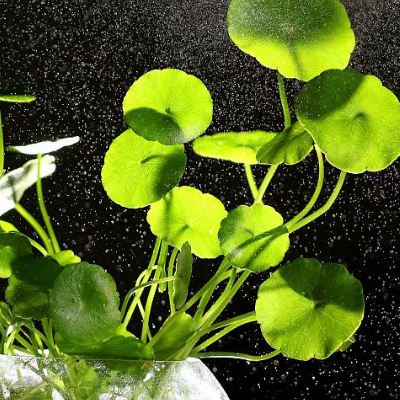
1. Flower soil selection:
The flower soil used for pennywort should be a mix of leaf mold, river mud, and garden soil in a volume ratio of 0.5:2:2. Besides soil culture, it can also be placed in a small water basin for hydroponics. For hydroponics, note to change the water once a week, and some nutrient solution can be added to the water.
2. Top dressing:
Although pennywort has strong vitality and does not demand much from the environment, with fertilizer it can fill the pot more quickly. During the growing season, apply top dressing once every half month.
If it is hydroponics, fertilize sparingly, for example with Hyponex No. 2, which is a quick-acting compound fertilizer that can maintain fertility in water for a long time.
3. Watering:
Pennywort has many leaves, so transpiration is relatively high. Therefore, in hot summer, spray water on the leaves to increase humidity. The leaves should be wiped frequently to keep them clean, which is good for photosynthesis. Tap water should be left to stand for a few days before use. During the growing season, water once every 2 days.
4. Ambient temperature:
Although pennywort has strong adaptability and vigorous life, it is most afraid of cold. Therefore, in winter, pay attention to keeping it warm. As long as the room temperature is not lower than two degrees, it can grow again the next year. If it is hydroponics, the water temperature needs to be between 22-28 degrees.
That is all for the introduction to pennywort cultivation methods. Hurry up and make your own pennywort look even better.
Introduction to 8 potted plants suitable for growing on the balcony! Purify the air and beautify the balcony
With the improvement of living standards, many people like to grow some potted plants at home, which can purify the air while also adding a little pleasure to life. At home, the balcony is undoubtedly one of the most suitable places for growing potted plants. On one hand, sunlight is relatively abundant, and on the other hand, they are easier to care for. Imagine moving a lounge chair on a summer night, lying comfortably on the balcony, looking up at the starry sky, with a slightly cool breeze rolling in with the scent of flowers, and the sound of insects chirping by your ears. How pleasant! So, which potted plants are suitable for growing on the balcony? Let's take a look.
Image: Pennywort
1. Pennywort
Pennywort has round leaves and very strong vitality. Whether grown in soil or hydroponically, its survival rate is very high. This should be an entry-level plant for many beginner flower growers, right? During care, note that pennywort is shade-tolerant, and half-day sunlight is best. However, if pennywort can receive 4-6 hours of scattered light every day, or be given 8-10 hours of artificial light, it will grow even better. If you want to save effort, you can use the half-soil, half-water cultivation method, which is simple and convenient. Just remember to add water to the pennywort, and that is enough.
Image: Clivia
2. Clivia
The most attractive part of Clivia is its neat leaves. For people with obsessive-compulsive tendencies, it is absolutely a healing remedy. During care, note that the nutrient flower soil for Clivia is mainly leaf mold, pine needles, and coarse sand. Soil prepared this way has good permeability, making Clivia less prone to root rot, and is rich in nutrients, suitable for the growth of Clivia. The specific ratio is: leaf mold 30%, pine needles 30%, coarse sand 20%, salt-free sunflower seeds (dry-fried and cooked) 10%, charcoal 5%, defatted bone meal 5%. When watering Clivia, water thoroughly. At home, the best way to water Clivia is the “pot soaking” method. That is, fill a large bucket with water, then put the Clivia in, allowing water to slowly seep in through the small holes at the bottom of the flowerpot. After the surface of the Clivia soil becomes wet, it can be taken out. When watering, everyone should also note not to pour water into the leaf core. If water accidentally enters the leaf core, immediately use highly absorbent paper or cotton to absorb the water. “Fertilizer does not leave water; apply fertilizer with water” means adding some diluted fertilizer along with the water each time you water, which is very beneficial to the vigorous growth of Clivia.
Image: Orchid
3. Orchid
Orchids have a long history of cultivation in our country, and orchids have already become a spiritual symbol. Flower lovers love not only their appearance, but also their inner meaning. The simplest soil mix for orchids is 50% leaf mold + 50% perlite. In most cases, orchids are killed by watering, so when watering normally, absolutely do not let water accumulate! It also cannot be too dry. When the potting soil is slightly moist, it should be watered. When growing orchids, be sure to pay attention to ventilation. A stuffy, hot environment is unfavorable for orchid growth, while ventilation can allow the water in the orchid soil to evaporate as soon as possible.
Image: Jasmine
4. Jasmine
Who does not know jasmine? Whether it is that catchy folk song or the beautiful posture of jasmine, both make flower lovers deeply fascinated by it. During care, jasmine likes slightly acidic soil and lives better in slightly acidic soil. You can use 4 parts garden soil, 4 parts compost, 2 parts river sand or rice husk ash, plus an appropriate amount of fully decomposed dried cake residue, chicken and duck manure, etc., and sieve out the powder and coarse particles, using the coarse particles to line the bottom and cover the surface. Jasmine is not drought-tolerant, but it also dislikes water accumulation, so usually water more. In winter, keeping the potting soil moist is enough. Jasmine's cold resistance is very poor. Basically, below 10°C it will stop growing. In winter, it is best to keep the indoor temperature at around 20°C.
Image: Cypress vine
5. Cypress vine
Cypress vine, which most people may like to call five-pointed star flower, because when it blooms it looks like little stars dotted on the green branches and leaves. Not to mention, it has a full fresh and delicate vibe! Growing cypress vine is very simple. After the surface soil dries out, water it. It is very easy. Cypress vine basically does not need fertilizing. Mixing organic fertilizer into the cultivation soil before planting is enough. However, if you want it to bloom more, you can apply diluted bean cake water during the growing season. At the same time, cypress vine likes places with ample sunlight, so usually let it get sunlight as much as possible. Of course, in summer when the sun is scorching, shade it, and in winter give it full sunlight!
Image: Chinese rose
6. Chinese rose
Chinese roses have many varieties and different colors. When Chinese roses cover the entire balcony, it is exactly the time to enjoy the flowers, turning your balcony into a small garden in minutes. The cultivation soil for planting Chinese roses can use 5 parts garden soil, 3 parts garbage soil, 2 parts rice husk ash, plus an appropriate amount of rapeseed cake. Or use 4 parts horse manure, 4 parts garden soil, 2 parts river sand, plus a small amount of rapeseed cake and bone meal. The growth and flowering of Chinese roses require a large amount of fertilizer. If fertilizer is insufficient, the flowers produced will become small. In winter, applying a little organic fertilizer at the roots can enhance overwintering cold resistance. By early March, when Chinese roses sprout, liquid fertilizers such as decomposed human manure and urine, bean cake, chicken and duck manure, and fish innards can be applied. When they are about to bloom, apply 1 light liquid fertilizer as appropriate. There is nothing particularly special about watering Chinese roses, just that potted plants cannot have water accumulation! Also, Chinese roses are relatively drought-tolerant. If you are worried about water accumulation, you can wait until the surface of the potting soil is completely dry before watering.
Image: Kalanchoe
7. Kalanchoe
Kalanchoe is not only beautiful, but also has a very good symbolic meaning. Especially for families with elderly people, it is very suitable to grow this flower. Kalanchoe has relatively strong drought resistance, so watering does not need to be too frequent. Wait until the surface of the potting soil is completely dry before watering. In winter, when the temperature is low, water less than usual. Kalanchoe has phototropism, so during the growth period, attention should be paid to frequently changing the direction of the flowerpot and adjusting the light so that the plant receives light evenly and the branches develop evenly in all directions. If the pot is not turned for a long time, the plant will grow leaning to one side, affecting the ornamental effect. When fertilizing, during the peak growing season, apply a diluted compound liquid fertilizer once every 15-20 days to promote robust growth and abundant flowering. After flower buds form in November, additionally apply 1-2 times 0.2% potassium dihydrogen phosphate or 0.5% superphosphate, and then there will be more flowers, brighter colors, and a longer flowering period.
Image: Asparagus fern
8. Asparagus fern
Just hearing the name asparagus fern, you know it must be a very elegant plant. Look at its form: light, soft, elegant, and unrestrained, and its vitality is very tenacious. It is simply a must-have for the home! When caring for asparagus fern, choose a warm, humid soil rich in humus with good drainage. Generally, it can be prepared in a ratio of 4 parts garden soil, 2 parts leaf mold, 2 parts compost soil, and 1 part sand. In the watering process, it should be determined according to the weather, growth condition, and dryness and wetness of the potting soil, achieving no watering when not dry, and watering thoroughly when watering. In winter, water less, and in hot, dry weather, you can spray water on the leaf surface to increase humidity and lower temperature. When fertilizing asparagus fern, be sure to apply thin fertilizer frequently, otherwise the leaves will easily turn yellow. Applying a decomposed thin liquid fertilizer once a month is OK. After the plant grows and takes shape, fertilization can be appropriately controlled and reduced. Asparagus fern should be placed in a cool place, and attention should usually be paid to ventilation. Now in winter, the sunlight is not strong, so on good-weather days it can appropriately be placed outdoors to receive sunlight. In winter, the temperature for potted asparagus fern should be kept above 5°C to avoid freezing.
[Editor's conclusion]Pennywort, asparagus fern, Chinese rose, etc. are all common potted plants in daily life and are very suitable for growing on the balcony. Filling a pot is a small matter; in minutes they can also give you back a balcony garden. Above, we introduced 8 kinds of potted plants suitable for growing on the balcony, hoping to help everyone!
20 popular balcony flowers, 99% of households are growing them
1. Herbaceous plant recommendations
Clivia
The most attractive part of Clivia is its neat leaves. For people with obsessive-compulsive tendencies, it is absolutely a healing remedy!
Care methods:
1. Soil. The nutrient flower soil for Clivia is mainly leaf mold, pine needles, and coarse sand. Soil prepared this way has good permeability, making Clivia less prone to root rot, and is rich in nutrients, suitable for the growth of Clivia. The specific ratio is: leaf mold 30%, pine needles 30%, coarse sand 20%, salt-free sunflower seeds (dry-fried and cooked) 10%, charcoal 5%, defatted bone meal 5%.
2. When watering Clivia, water thoroughly. At home, the best way to water Clivia is the “pot soaking” method. That is, fill a large bucket with water, then put the Clivia in, allowing water to slowly seep in through the small holes at the bottom of the flowerpot. After the surface of the Clivia soil becomes wet, it can be taken out.
When watering, everyone should also note not to pour water into the leaf core. If water accidentally enters the leaf core, immediately use highly absorbent paper or cotton to absorb the water.
3. “Fertilizer does not leave water; apply fertilizer with water” means adding some diluted fertilizer along with the water each time you water, which is very beneficial to the vigorous growth of Clivia.
Snake plant
Snake plant is recognized as an easy-to-grow plant. Not only is it shade-tolerant, it is also drought-tolerant, and its leaf shape is graceful. It is very suitable for placing indoors. Huahua has grown one and placed it in the study, where it looks high-end, elegant, and classy!
Care methods:
1. Soil. Snake plant is not strict about water, so the soil's water permeability must be good. Usually sandy soil is best. You can use 2/3 leaf mold plus 1/3 garden soil. If you are worried about poor aeration, you can mix in some large-particle river sand.
2. Light. Sufficient light can help snake plant grow more healthily. Try to place snake plant in a place with ample sunlight, such as a windowsill, balcony, or living room. However, summer sunlight is strong, so appropriate shading is also needed.
3. For watering, rainwater, river water, and well water are best. Tap water should be exposed to the sun for two days before use. At the same time, when watering, be careful not to sprinkle water on the leaf core of the snake plant, as it easily causes rot.
Asparagus fern
Just hearing the name asparagus fern, you know it must be a very elegant plant. Look at its form: light, soft, elegant, and unrestrained, and its vitality is very tenacious. It is simply a must-have for the home!
Care methods:
1. Soil. Warm and humid, rich in humus, and with good drainage. Generally, it can be prepared in a ratio of 4 parts garden soil, 2 parts leaf mold, 2 parts compost soil, and 1 part sand.
2. In the watering process, it should be determined according to the weather, growth condition, and dryness and wetness of the potting soil, achieving no watering when not dry, and watering thoroughly when watering. In winter, water less, and in hot, dry weather, you can spray water on the leaf surface to increase humidity and lower temperature.
3. Fertilizing. When fertilizing asparagus fern, be sure to apply thin fertilizer frequently, otherwise the leaves will easily turn yellow. Applying a decomposed thin liquid fertilizer once a month is OK. After the plant grows and takes shape, fertilization can be appropriately controlled and reduced.
4. Asparagus fern should be placed in a cool place, and attention should usually be paid to ventilation. Now in winter, the sunlight is not strong, so on good-weather days it can appropriately be placed outdoors to receive sunlight. In winter, the temperature for potted asparagus fern should be kept above 5°C to avoid freezing.
Kalanchoe
Kalanchoe is not only beautiful, but also has a very good symbolic meaning. Especially for families with elderly people, it is very suitable to grow this flower!
Care methods:
1. Watering. Kalanchoe has relatively strong drought resistance, so watering does not need to be too frequent. Wait until the surface of the potting soil is completely dry before watering. In winter, when the temperature is low, water less than usual.
2. Kalanchoe has phototropism, so during the growth period, attention should be paid to frequently changing the direction of the flowerpot and adjusting the light so that the plant receives light evenly and the branches develop evenly in all directions. If the pot is not turned for a long time, the plant will grow leaning to one side, affecting the ornamental effect.
3. Fertilizing. During the peak growing season, apply a diluted compound liquid fertilizer once every 15-20 days to promote robust growth and abundant flowering. After flower buds form in November, additionally apply 1-2 times 0.2% potassium dihydrogen phosphate or 0.5% superphosphate, and then there will be more flowers, brighter colors, and a longer flowering period.
Pennywort
Pennywort has round leaves and very strong vitality. Whether grown in soil or hydroponically, its survival rate is very high. This should be an entry-level plant for many beginner flower growers, right?
Care methods:
1. Light. Pennywort is shade-tolerant, and half-day sunlight is best. However, if pennywort can receive 4-6 hours of scattered light every day, or be given 8-10 hours of artificial light, it will grow even better!
2. If you want to save effort, you can use the half-soil, half-water cultivation method, which is simple and convenient. Just remember to add water to the pennywort, and that is enough!
Peace lily
The alias of peace lily is "smooth sailing," and corresponding to its name, it is very easy to grow, being both shade-tolerant and drought-tolerant.
Care methods:
1. Light. The plant is relatively shade-tolerant. As long as there is about 60% scattered light, its growth needs can be met. It can be kept indoors year-round in a place with bright scattered light. In summer, avoid direct strong light, otherwise the leaves will turn yellow, and in severe cases, sunscald will occur.
2. Watering. Do not water when not dry, and water thoroughly when watering. In summer and dry seasons, frequently spray water on the leaf surface and sprinkle water on the surrounding ground to provide higher air humidity, which is very beneficial to its growth and development. In winter, control watering, and it is suitable for the potting soil to be slightly moist.
3. The most suitable temperature is 20°C-21°C. If the peace lily is kept in a low-temperature state for a long time, it is easy to cause leaf drop or a scorched-yellow appearance!
Spider plant
Spider plant is even more common. Among ten flower lovers, nine grow spider plants!
Care methods:
1. Spider plant likes a semi-shaded environment. In winter, it should see more sunlight in order to keep the leaves tender and fresh green. Household potted spider plants should be placed in front of a south-facing window, otherwise the leaves will lose their luster or even wither.
2. Spider plant likes a humid environment. Keep the potting soil moist frequently. In summer, watering should be sufficient. Around noon, water should also be sprayed on the branches and leaves to prevent the leaves from drying out.
3. Indoors there is often a lot of dust. If a lot of dust accumulates on the spider plant, it not only affects growth but also damages the beauty of the branches and leaves. Therefore, frequently spray and wash the branches and leaves to keep them bright and beautiful.
Orchid
Orchids have a long history of cultivation in our country, and orchids have already become a spiritual symbol. What flower lovers love is not only their appearance, but also their inner meaning.
Care methods:
1. Soil. The simplest soil mix is 50% leaf mold + 50% perlite.
2. Watering. In most cases, orchids are killed by watering, so when watering normally, absolutely do not let water accumulate! It also cannot be too dry. When the potting soil is slightly moist, it should be watered!
3. Ventilation. When growing orchids, be sure to pay attention to ventilation. A stuffy, hot environment is unfavorable for orchid growth, while ventilation can allow the water in the orchid soil to evaporate as soon as possible.
2. Woody plant recommendations
Money tree
Speaking of woody plants, how can the money tree be left out? Just for the sake of this symbolic meaning, you should grow one at home!
Care methods:
1. Watering. Watering the money tree is of utmost importance. Many flower lovers' money trees die from watering. The principle of watering is to prefer dry over wet, and when watering, it must be thorough. Do not water only halfway! The money tree can even go a month without watering!
2. Soil. Generally, use loose vegetable garden soil or peat soil, leaf mold, and coarse sand, plus a small amount of compound fertilizer or chicken manure as base fertilizer.
3. The money tree likes scattered light. In winter, the light is mild, so full sunlight can be maintained, but when the sunlight is strong, pay attention to shading!
Radermachera
With the money tree, next should be the Radermachera. Growing a Radermachera at home is for the sake of family happiness!
Care methods:
1. The most suitable growth temperature is between 19°C-21°C during the day and between 18°C-20°C at night.
2. Radermachera likes ample sunlight, but it can also grow in semi-shade. If it lacks light for a long time, leaf drop or yellow leaves will occur.
3. Watering. In addition to keeping the potting soil moist, you should also frequently spray water on the leaf surface of Radermachera to increase the surrounding air humidity.
Polyscias fruticosa
Polyscias fruticosa, just listen to this name: fu and lu. Just for this name, Huahua has decided to bring one home tomorrow!
Care methods:
1. Watering. During the growing period of Polyscias fruticosa, keep the potting soil moist but not waterlogged. Frequently spray the plant with water close to room temperature to increase air humidity and keep the leaf color fresh.
2. Fertilizing. Apply a special fertilizer for foliage plants or a decomposed thin liquid fertilizer once every 2 weeks or so. If it is a variegated variety, note that the nitrogen content in the fertilizer solution should not be too high, so as to avoid the patterns on the leaves fading or even disappearing. After September, stop fertilizing so that the new branches mature and become woody, which is beneficial for overwintering.
3. Suitable for placement indoors in bright light. It is even better if it can see several hours of sunlight indoors every day. Except for summer, full sunlight is fine in the other seasons!
Gardenia
Gardenia is more suitable for growing in the south, but if cared for well, it is not impossible to grow it in the north either. In the hands of experts, gardenias grow very well!
Care methods:
1. Soil. When cultivating, choose leaf mold, peat soil, or composted sawdust plus half garden soil. The soil must be breathable.
2. During the gardenia cultivation process, when the surface of the potting soil is dry, it needs watering. In the evening, a spray bottle can be used to sprinkle water on the leaf surface. For those growing too vigorously with longer internodes, do not water in the evening; water again after the sun comes out in the morning.
3. Gardenia likes sunlight, but is afraid of heat and scorching sun. It grows best in a semi-shaded place, and 60% sunlight all day is enough to meet its growth needs.
4. In the culture soil, 3% decomposed cake fertilizer can be added as base fertilizer. During the growing season, use alum fertilizer water made by composting cake fertilizer with ferrous sulfate once a week. At the bud stage, apply 1 to 2 times a 0.1% potassium dihydrogen phosphate aqueous solution. Stop fertilizing during the hot summer period when the temperature is above 35°C and in autumn when it is below 15°C.
Azalea
Azalea flowers are bright in color and have a long flowering period. Some flower lovers say they are easy to grow, while others say they are not, but in the final analysis, you have to master their habits!
Care methods:
1. Soil: Mix leaf mold, coarse river sand and sandy loam in a 2:1:1 ratio to make the growing medium. If conditions allow, pine needle soil is even better.
2. In winter, because the sunshine is short and the light is soft, be sure to place it on a south-facing windowsill indoors or on a south-facing balcony so it receives full light.
3. "Apply light fertilizer frequently, and prefer less over more." During the growing season, dilute alum fertilizer water with clean water and apply it once every half month. Also note that you must use fully decomposed fertilizer!
Money Tree
Money Tree, Money Tree, after growing a Money Tree you will produce lots and lots of money! Cough cough cough, Huahua is joking. Keeping a Money Tree at home is really just for the symbolism!
Care methods:
1. Light: the Money Tree is rather contradictory, liking light yet tolerating shade, so it is usually best to place the Money Tree in a bright living room~
2. When choosing soil, you can use coarse sand, peat, washed coal cinder mixed with a small amount of garden soil, and adjust its pH to between 6 and 6.5, making it slightly acidic.
3. The Money Tree is relatively drought-tolerant, so do not water too much at ordinary times. It is best to keep the potting soil on the dry side! Better dry than wet!
Dwarf Umbrella Tree
Dwarf Umbrella Tree is also called Schefflera, and it is now a common plant in homes~ So how should this plant, the Dwarf Umbrella Tree, be cared for?
Care methods:
1. Potting soil: for container growing, you can generally choose leaf mold or peat soil, garden soil plus about 1/4 river sand or perlite mixed evenly. To make it fertile, add a small amount of cake fertilizer powder as a base fertilizer.
2. Keep the soil moist, and water promptly before it dries out completely. When the weather is dry, you should also mist the plant to increase humidity~ A lack of water can cause the Dwarf Umbrella Tree to drop its leaves~
3. Pruning: the Dwarf Umbrella Tree easily sprouts leggy branches, so pay attention to shaping and pruning to keep the plant's form neat and attractive. For those perennial old branches, when the plant's form grows too large, you can do heavy pruning before new buds sprout each year, combining it with repotting, cutting off the upper branches and leaves and part of the old roots.
Jasmine
Who does not know jasmine? Whether it is that catchy folk song or jasmine's beautiful posture, flower lovers are deeply fascinated by it.
1. Jasmine likes slightly acidic soil and grows better in slightly acidic soil. You can use 4 parts garden soil, 4 parts compost, 2 parts river sand or rice husk ash, plus an appropriate amount of fully decomposed dried cake powder, chicken and duck manure, etc., and sift out the powder and coarse particles, using the coarse particles to line the bottom and cover the surface.
2. Jasmine is not drought-tolerant, but it also dislikes waterlogging, so water more often at ordinary times. In winter, keeping the potting soil moist is enough.
3. Jasmine's cold resistance is very poor. Basically, below 10°C it will stop growing. In winter, it is best to keep the indoor temperature at around 20°C.
III. Recommendations for Climbing Plants
Clematis
When talking about climbing plants, how could we not recommend the "Queen of Vines," clematis? Rich in varieties, with very vivid flower colors, and also very cold-tolerant~ Are you really not going to give it a try?
Care methods:
1. Soil: use as little garden soil as possible. It is recommended to use relatively coarse granular peat mixed with some perlite, at a ratio of about 6:1. Peat has good water retention and fertility, is loose and breathable, and adding some perlite can further improve drainage and aeration.
3. Clematis likes fertilizer. Only with enough fertilizer can it bloom abundantly and beautifully! For winter fertilization, scrape off some of the surface soil from the flowerpot and pile on 2~5CM of new peat mixed with a large amount of organic fertilizer and bone meal. In spring and autumn, when temperatures are relatively high, you can use clean liquid fertilizer to water the soil or spray the leaves, just 2-3 times a month is enough. Stop fertilizing during the high-temperature period in summer.
4. Watering: there is nothing much to say. As long as the soil is prepared well, mastering the watering principle of "water when dry, stop when wet" is enough.
Periwinkle
Periwinkle, also called Vinca, blooms with small flowers, with complete five-petal flowers~ They look very neat, and the colors are also diverse, including purple, red, green...
Care methods:
1. Soil: for potted periwinkle, you can use garden soil, leaf mold and furnace slag mixed together at a ratio of 3:1:1. If there is no furnace slag, you can use relatively large particles such as river sand instead.
2. Light: periwinkle is not strict about light, but it likes semi-shaded environments best. Winter light is relatively mild, so receiving direct light is no problem, but in summer it must be shaded.
3. Watering: just master the principle of "water when dry, stop when wet." If you want periwinkle to grow well, you should keep the potting soil moist during its growing period.
4. Fertilize periwinkle once every half month. Before flowering, increase phosphorus and potassium fertilizer 2~3 times~
Cypress Vine
Cypress Vine, most people may like to call it Five-Star Flower, because when it blooms it looks like little stars~ dotted among the green branches and leaves. Not to mention, it has a full fresh and delicate vibe!
Care methods:
1. Watering: growing Cypress Vine is very simple. After the surface soil dries out completely, water it. Very easy~
2. Fertilizing: Cypress Vine basically does not need fertilizing. Mixing organic fertilizer into the growing soil before planting is enough~ However, if you want it to bloom more, you can apply diluted soybean cake water during the growing season.
3. It likes places with plenty of sunshine~ So let it get sun as much as possible at ordinary times. Of course, shade it during the scorching sun in summer, and give it full sun in winter!
Chinese Rose
Does this plant, the Chinese Rose, still need Huahua to introduce it in detail? There are many varieties of Chinese Rose, with different colors. When the Chinese Rose climbs all over the entire balcony, please be sure not to stop Huahua from going to admire the flowers!
Care methods:
1. Soil: the growing medium can use 5 parts garden soil, 3 parts garbage soil, 2 parts rice husk ash, plus an appropriate amount of rapeseed cake. Or use 4 parts horse manure, 4 parts garden soil, 2 parts river sand, plus a small amount of rapeseed cake and bone meal.
2. Fertilizing. The growth and flowering of Chinese Rose require a large amount of fertilizer. If fertilizer is insufficient, the flowers produced will become small. In winter, applying a little organic fertilizer at the roots can enhance cold resistance through the winter~ By early March, when the Chinese Rose sprouts, you can apply liquid fertilizers such as decomposed human manure and urine, soybean cake, chicken and duck manure, and fish innards. When it is about to bloom, you may apply 1 light liquid fertilizer as appropriate.
3. Watering: there is nothing particularly special about watering Chinese Rose, just that potted plants must not become waterlogged! Also, Chinese Rose is relatively drought-tolerant. If you are worried about waterlogging, you can wait until the surface of the potting soil is completely dry before watering.
Flower lovers, among these 20 kinds of flowers, are there any you like?
If you like them, hurry and take them home!