Hyacinth Bulb Propagation Methods and Flower Pot Diameter Selection
Hyacinth, this is something many people like. How can you get hyacinths to grow more and more? Then you need to understand the bulb propagation method of hyacinth. What is the bulb propagation method of hyacinth:
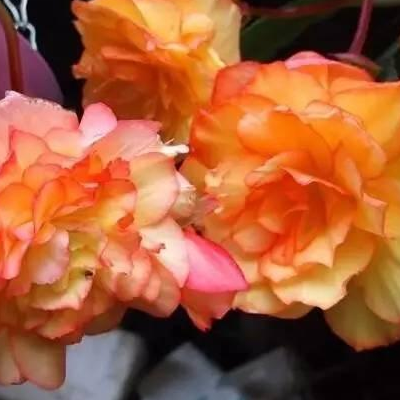
1. There are many fake bulbs on the market now, so friends must pay extra attention when buying. Do not go for cheap ones, but expensive ones are not necessarily real either.
2. Before planting, be sure to soak the bulb in a carbendazim solution for disinfection, then the soil should just cover the position of the bulb,
Pay attention to distinguishing the front and back directions. The side with a depression should face up, and the side with roots should face down.
3. Use loose, fertile potting soil. You can mix peat soil, perlite, and coarse sand in a 3:1:1 ratio. After mixing, it is best to disinfect it before use;
4. For the flower pot, a clay pot with a diameter of 15-18 cm is best. Do not plant small bulbs in a large pot, otherwise poor drainage will lead to root rot.
5. Bulb begonia likes sufficient light. If the light is insufficient, it will cause the plant to be short, the leaves to lack luster, and even no flowers or few flowers.
So ensure at least 4-6 hours of light every day; also, the temperature should not exceed 30 degrees, otherwise it can easily cause flower buds to fall off or even root and stem rot.
6. Bulb begonia needs less water before sprouting, and must not lack water before the flowering period, otherwise it will affect flower bud differentiation;
During daily care, apply a thin water-soluble fertilizer once a month. Before the flowering period, add phosphorus and potassium fertilizer to ensure plump flower buds.
7. During the growth period, if you encounter hot and humid weather, be sure to pay attention to ventilation, otherwise it will cause stem rot or root rot. You can spray a carbendazim solution monthly to disinfect the soil and root tubers.
That is all for the introduction to hyacinth bulb propagation methods. Try this method quickly. Making hyacinths grow abundantly is just that easy.
Control Methods for Cauliflower Loose Curd
Cauliflower, also known as cauliflower, cauliflower, or cauliflower, is a cruciferous vegetable and a variety of cabbage. The head of cauliflower is a white inflorescence, similar to the head of broccoli. Cauliflower is rich in B vitamins and C vitamins. These components are water-soluble and easily lost through heat decomposition, so cauliflower should not be cooked at high temperatures, nor is it suitable for boiling. Native to the Mediterranean coast, its product organ is a curd formed by the aggregation of pure white, shortened, tender flower buds, flower branches, and flower stalks. It is a vegetable with low crude fiber content, fresh and tender quality, rich nutrition, and delicious flavor that people enjoy eating.
Growth Habits of Cauliflower
Cauliflower prefers cool conditions and is a semi-cold-resistant vegetable. Its heat resistance and cold resistance are both inferior to head cabbage. It is neither tolerant of high temperature and drought, nor of frost. Its suitable growth temperature range is relatively narrow, and cultivation has relatively strict requirements for environmental conditions. This is mainly determined by the botanical characteristics of cauliflower. Because the product organ of cauliflower is a curd formed by the aggregation of shortened flower branches, flower stalks, flower buds, and so on, the curd is both a reproductive organ and a nutrient storage organ.
Biologically speaking, any organism at the reproductive stage is in its most fragile stage with the poorest stress resistance. Therefore, during the period of curd growth and development, cauliflower has poor resistance to adverse environmental conditions such as high temperature, drought, and frost; in terms of the growth habits of cauliflower, as a nutrient storage organ, the aggregated curd under suitable environmental conditions shifts from vegetative growth to reproductive growth, and must go through a process of nutrient accumulation and storage with the curd as the carrier, so that the curd fully grows and becomes compact. If at this stage the external conditions exceed its suitable range, such as high temperature and drought, the above process will be shortened, and its shortened flower branches will rapidly elongate under high temperature, resulting in small and loose curds, and satisfactory harvests will not be obtained in cultivation.
Control Methods for Cauliflower Loose Curd
Symptoms and causes of cauliflower loose curd: flower stalks and flower branches develop relatively quickly, leading to loose curd. Causes:
1) During the curd-forming period, the temperature is too high, the expansion of the curd is inhibited, while the flower stalks and flower branches grow rapidly, and elongation then leads to loose curd;
2) After the curd has fully formed, it is not harvested in time.
Control methods for cauliflower loose curd. Control methods:
1) Sow at the appropriate time, and arrange the curd growth period in months with an average daily temperature of 15-23°C, to avoid the influence of high temperature during the curd-forming period;
2) Harvest in time when the curd has fully formed, the surface is round and neat, and the edges have not yet opened.
Monadenium spinulosum Illustrated Guide: How to Grow Monadenium spinulosum / How to Propagate Monadenium spinulosum, Monadenium
Chinese scientific name: Monadenium spinulosumLatin name: Monadenium spinulosum S. Carter
Family and genus: Monadenium
Introduction: Monadenium spinulosum, native to Zimbabwe, Malawi, and Mozambique. The plant height is about 45 cm, and the suitable survival temperature is about 12 degrees.
Family name: Euphorbiaceae. Genus name: Monadenium. Latin name: Monadenium spinulosum S. Carter. Chinese name: Monadenium spinulosum. Synonym: Euphorbia spinulosa (S.Carter) Bruyns. Habitat: Zimbabwe/Malawi/Mozambique. Shape: plant height about 45 cm. Similar species: Flower: Habits: suitable survival temperature about 12 degrees.