What to Do When Fiddle Leaf Fig Leaves Turn Yellow? A Detailed Guide to Indoor Care
Fiddle leaf fig (Ficus lyrata) is a plant many people love to grow, and it is just that popular, but keeping a fiddle leaf fig in good shape is not so easy. What should you do when its leaves turn yellow? Can a fiddle leaf fig be kept in the bedroom?
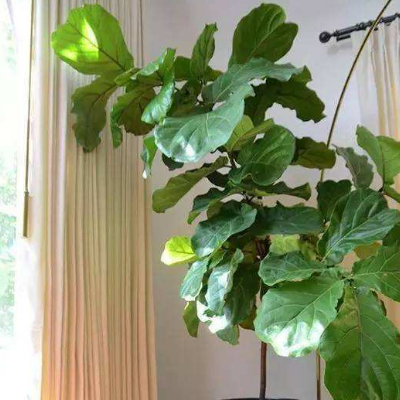
What to do when fiddle leaf fig leaves turn yellow:
1. Pay attention to potting soil and environment
For potted fiddle leaf fig care, you need soil with especially good drainage; it likes slightly acidic humus soil rich in organic matter. In nature it can grow into a large tree 10 m tall, while a potted fiddle leaf fig can have its height kept within 1 m.
The fiddle leaf fig is a plant similar to the fig, and the care methods are basically the same. It likes a warm, slightly moist environment, fears the cold in winter, and likes diffused light and a ventilated environment.
2. Why do newly bought fiddle leaf figs easily get yellow leaves?
The fiddle leaf fig simply dislikes sealed spaces where the air conditioner runs all year round, especially places where the air is relatively dry. A newly bought fiddle leaf fig that has just been moved into a new environment for care will easily have its leaves turn yellow-brown, usually starting from the leaf edges.
The leaves start turning yellow from the edges, then the whole leaf begins to wither, and if not handled properly it will keep spreading.
At this point you need to increase the ambient humidity, mist water around it, and keep it ventilated and warm.
3. Watering notes:
A potted fiddle leaf fig should be kept in a state where the potting soil is slightly moist but not waterlogged. Besides the container and the soil being loose and well-draining, you should also pay attention to the watering method. Be sure to avoid pouring water directly onto the leaves, and for the time being do not mist the leaves either, as this easily causes black spot disease or stem rot.
Can a fiddle leaf fig be kept indoors:
A fiddle leaf fig can be kept indoors, but it is best not to put it in the bedroom. This fiddle leaf fig is too big and easily takes up space; it can be placed in the living room. The fiddle leaf fig is sun-loving.
That is all for the methods of dealing with yellowing fiddle leaf fig leaves. It can be kept indoors.
What to do when fiddle leaf fig leaves turn yellow: the causes of yellowing fiddle leaf fig leaves / light is key
As for the fiddle leaf fig, everyone should have seen it. It has broad leaves and an elegant plant shape, and is currently one of the most popular indoor potted plants. As a foliage plant, what the fiddle leaf fig fears most is naturally problems with its leaves, especially yellowing leaves, which are a headache just to look at. So what should you do when fiddle leaf fig leaves turn yellow? The following are several causes of yellowing fiddle leaf fig leaves. Let's take a look together!
I. When fiddle leaf fig leaves turn yellow, find the cause
As a common foliage plant, the fiddle leaf fig is not difficult to grow, but because there are many beginners, they often fail to do well in terms of light and fertilizing, and as a result the leaves turn yellow. As for what to do when fiddle leaf fig leaves turn yellow, first of all you must not panic, but calmly find the cause and then solve it accordingly. Let's continue reading for the specifics.
II. Causes of yellowing fiddle leaf fig leaves and solutions
1. Sudden environmental change
Speaking of the causes of yellowing fiddle leaf fig leaves, if it is a newly bought potted plant, then it should be that the environmental change is great and the plant has not adapted for the moment, resulting in yellow leaves. In addition, if the pot has often been moved recently, or has just been repotted, or if it is placed next to an air conditioner blowing hot or cold air, the fiddle leaf fig may also develop yellow leaves.
Solution: Place the potted fiddle leaf fig in a ventilated, semi-shaded spot with good light, and care for it carefully for a period of time; it will then recover to health.
2. Improper light
Insufficient light: The fiddle leaf fig likes light and grows well in an environment with sufficient light. But if it is placed in a place with weak light for a long time, its leaves will do less photosynthesis and thus lack nutrients, so yellowing is inevitable. Solution: Place it in a spot with good but not strong light for care.
Too much light: In a place with good light, fiddle leaf fig leaves grow large and green, but in summer, if there is no shade and it is exposed to direct strong light, its leaves will also turn yellow and wither. Solution: Move it promptly to a cool indoor spot, let it recover for a while, then water it appropriately, and afterward gradually increase the light.
3. Improper fertilizing
Insufficient fertilizing: The fiddle leaf fig likes fertilizer, and sufficient nutrients can make its leaves large and green. So when you do not fertilize enough, especially when the amount of nitrogen fertilizer is too small, the fiddle leaf fig will develop yellow leaves due to poor growth. Solution: You can add nitrogen fertilizer, but do not apply too much at once; apply dilute fertilizer.
Too much fertilizing: Although the fiddle leaf fig's large leaves have a high fertilizer demand, too much is not acceptable. Once too much fertilizer is applied, it easily causes root burn in the plant, and the leaves will then turn yellow and wither. Solution: When root burn is not serious, flush with water to dilute the fertilizer and let it flow out along the bottom of the pot; if the roots have already rotted, you need to take the plant out of the pot, cut off the rotten roots, and then change the potting soil and replant.
4. Soil alkalization
The cause of yellowing fiddle leaf fig leaves may also be the soil. It is understood that the fiddle leaf fig likes slightly acidic soil. When it is in alkaline soil, or when long-term watering with tap water causes the soil to become alkaline, its leaves will turn yellow.
Solution: Use purified water for daily watering, or let tap water sit for a few days or expose it to the sun for a few days; this avoids the problem of soil alkalization. If the soil has already become alkaline, the simplest method is to change the potting soil so the plant becomes fresh again.
5. Pests and diseases
Besides the above points, the cause of yellowing fiddle leaf fig leaves may also be that it has become diseased or has pests. In daily care, if the environment is not ventilated, the temperature is too high, and care is improper on top of that, the fiddle leaf fig will attract pests and diseases, thus causing the leaves to turn yellow.
Solution: Move the potted plant to a ventilated place, find out exactly which pest or disease it is, and then spray accordingly to solve it. As for what to spray, you can refer to pest and disease control for fiddle leaf figs.
Overall, the fiddle leaf fig is still quite easy to grow, but if you want its leaves to stay green and not turn yellow, you must pay attention to light, water and fertilizer. Of course, do not panic when you find yellow leaves; just solve it according to the methods above. That is all for the fiddle leaf fig's yellowing leaves; I hope it can be helpful to everyone.
Why do potted fiddle leaf fig leaves easily turn yellow and develop spots? What to do when fiddle leaf fig leaves turn yellow and develop spots
Flower and Bonsai Network introduction: Today, the Flower and Bonsai Network editor will share with you an article on why potted fiddle leaf fig leaves easily turn yellow and develop spots. What should be done when fiddle leaf fig leaves turn yellow and develop spots? Let's take a look.
The fiddle leaf fig is a large-leaved plant common in tropical and subtropical regions, but it has now become a very popular potted green plant. Keeping it indoors as a distinctive potted plant is quite good; it has an elegant plant shape and broad large leaves, and its overall ornamental value is quite good.
But many flower lovers cannot grow this green plant well, and there are often cases of leaves withering and dropping. The one above is a newly bought fiddle leaf fig from a flower lover; before long the leaves all dropped off. At first, the leaf edges of the bottom leaves dried and withered, and afterward the whole plant began to drop leaves, and before long it became bare stems.
This is the consequence of not dealing with it early. The dried branches and leaves should all be cut off. This was caused by insufficient watering leading to drying out; just keep it in a spot with diffused light, and the environment is best kept ventilated.
1. Pay attention to potting soil and environment
For potted fiddle leaf fig care, you need soil with especially good drainage; it likes slightly acidic humus soil rich in organic matter. In nature it can grow into a large tree 10 m tall, while a potted fiddle leaf fig can have its height kept within 1 m.
The fiddle leaf fig is a plant similar to the fig, and the care methods are basically the same. It likes a warm, slightly moist environment, fears the cold in winter, and likes diffused light and a ventilated environment.
2. Why do newly bought fiddle leaf figs easily get yellow leaves?
The fiddle leaf fig simply dislikes sealed spaces where the air conditioner runs all year round, especially places where the air is relatively dry. A newly bought fiddle leaf fig that has just been moved into a new environment for care will easily have its leaves turn yellow-brown, usually starting from the leaf edges.
The leaves start turning yellow from the edges, then the whole leaf begins to wither, and if not handled properly it will keep spreading.
At this point you need to increase the ambient humidity, mist water around it, and keep it ventilated and warm.
3. Watering notes:
A potted fiddle leaf fig should be kept in a state where the potting soil is slightly moist but not waterlogged. Besides the container and the soil being loose and well-draining, you should also pay attention to the watering method. Be sure to avoid pouring water directly onto the leaves, and for the time being do not mist the leaves either, as this easily causes black spot disease or stem rot.