What pesticides are effective for controlling red spider mites, thrips, and whiteflies?
Growing flowers is not so easy; plants can get sick too. How do you deal with red spider mites, thrips, and whiteflies? What pesticides work best for red spider mites, thrips, and whiteflies:
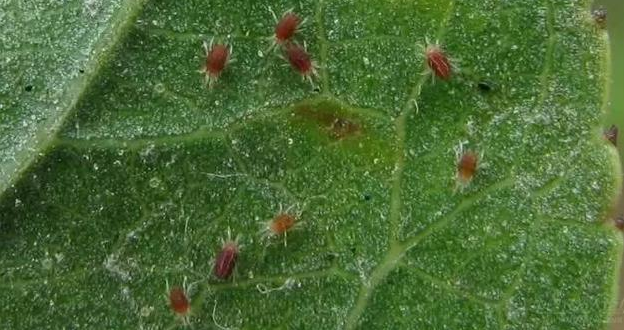
Red spider mites
Treatment methods: (1) If only a few leaves have red spider mites, you can remove the infested leaves.
(2) If there are quite a lot, then use pesticides such as propargite, dicofol, dimethoate, fenvalerate, etc.
Thrips
Treatment methods: (1) Rinse with water every few days, but do not damage the roots and stems.
(2) In severe cases, apply pesticide control. When the nymph population is large, treat once every 7-10 days, for 3-5 consecutive treatments.
For example: chlorpyrifos EC, cyhalothrin EC, deltamethrin EC, fenvalerate EC, etc., for spraying.
Whiteflies
Treatment methods: (1) Isolate other plants that have no insects; if there are only a few, pinch them off by hand, or cut them off together with the leaves.
(2) In severe cases, spray pesticide control, such as thrips-whitefly net, acetamiprid, thiamethoxam, nitenpyram, permethrin EC, cypermethrin EC, fenpropathrin, fenvalerate or fenbutatin oxide, etc.
That is all for the treatment methods for red spider mites, thrips, and whiteflies that appear during flower growing. The key is still to buy the right pesticide.
What pesticide to use for red spider mites on roses
Roses are famously heavy feeders of pesticides, and red spider mites are the most common pest. Many flower growers want to know what pesticide to use for red spider mites on roses. This article introduces a variety of chemicals, because pesticides need to be used in rotation, and each pesticide can only be used once within a three-month period, otherwise the effect will be affected, so it is best to prepare more than one pesticide.
For chemical control, you should first consider the toxicity of the pesticide to humans and its impact on the environment. It is recommended to use low-toxicity, high-efficiency pesticides as much as possible. High efficiency contains two meanings: first, good killing effect; second, long-lasting effect. I generally choose varieties with a residual effect period of more than 40 days. Low-toxicity, high-efficiency pesticides do look quite expensive per unit, but after analysis I think they are acceptable:
1. These pesticides are generally diluted more than 5000 times, while other pesticides, such as the most commonly used abamectin, are diluted 1000 times.
2. The pesticide effect lasts as long as 45 days or more, while the effect of abamectin and other general pesticides is 7 days.
When spraying, you must effectively spray the leaf backs, because red spider mites mainly reside on the leaf backs. When buying plants prone to red spider mites, such as roses, especially small seedlings, it is best to prepare pesticides in advance.
1)Spider mite control
This was the first low-toxicity, high-efficiency pesticide I used. The smallest dose was 100 ml, and the price at the time seemed to be over 60, but now it is only over 40. I am now on my third bottle, and each time it expired before I finished it, but I think for me the cost-performance ratio is very high. Please compare it with the pesticides below.
Produced by Bayer CropScience in Germany, the actual ingredient is spirodiclofen, bottled 100 ml suspension concentrate. Target pests: various mites, including the common red and white spider mites. It mainly controls eggs, nymphs, and female adults through contact and stomach toxicity (poor effect on male adults), with outstanding ovicidal effect. Dilute 4000-**** times for use.
Product characteristics:
1. Broad-spectrum acaricide.
2. Long residual effect period, up to 35-45 days. I personally usually apply another pesticide at around 40 days to continue the next stage of control.
3. The acaricidal mechanism is to inhibit fat synthesis in the pest mites and disrupt their energy metabolism, thereby killing them. This differs from the mechanism of commonly used neurotoxic acaricides, so it carries no risk of cross-resistance with existing acaricides.
4. Good crop safety, very safe under different temperature conditions.
5. Strong lipophilicity, resistant to rain washing. Generally, if it rains 3 hours after spraying, the normal performance of the pesticide effect is not affected.
6. Low toxicity, relatively safe for humans and the natural environment.
2)Acramite
My experience is that the pesticide effect is similar to Spider mite control, and it belongs to the first-class low-toxicity acaricides. The ingredient is 43% bifenazate suspension concentrate. Currently sold in 5 ml bags, used at 3000-5000 times dilution, produced by Chemtura Corporation of the United States.
Acramite is effective against all life stages of mites and can kill eggs and adult mites. This is its greatest advantage compared with several other low-toxicity, high-efficiency acaricides. It has a long residual effect period: at 25°C, the residual effect period is about 14 days; when the temperature is above 25°C, the residual effect period is as long as more than 40 days. Because red spider mites mainly occur above 25°C, I find it effective within 40 days of use.
3)Lai Fu Lu etoxazole
The active ingredient name is 11% etoxazole, and the formulation is suspension concentrate. At present there are two packages: 10 ml bags and 100 ml bottles, priced at about 7 yuan and over 50 yuan respectively.
The manufacturer of etoxazole is Sumitomo Chemical Co., Ltd. of Japan. The main performance of this pesticide is that it has a good killing effect on young nymphs of various forms, is resistant to rain washing, and has a residual effect period of 50 days, though I generally respray around the 40th day as well. During normal use, it has little impact on beneficial organisms and is safe for crops. Dilute 5000-7500 times for use, so the cost-performance ratio is extremely high.
Like Spider mite control, use it at the early peak stage of young red spider mite nymphs. If red spider mites are severe, it should be used in combination with pesticides that have adult-killing efficacy.
4)Abamectin
I will not post a picture of abamectin. This one has already been domestically produced, with multiple manufacturers producing it, and buying products from well-known manufacturers gives very good results.
This is a broad-spectrum insecticide and acaricide. Although it has a strong odor, it is actually a low-toxicity pesticide. Its effect in killing red spider mites and other pests is reliable and certain, and it is generally diluted 1000 times for use. Abamectin has stomach toxicity and contact action on mites and insects, so it cannot kill eggs.
I have always used abamectin, but the main purpose is not to kill red spider mites, because compared with the above three, abamectin's residual effect period is only one week. My main force for controlling red spider mites is the above three. I generally use abamectin to kill aphids, thrips, diamondback moths, cabbage caterpillars, whiteflies, and so on. From the perspective of broad spectrum and low price, abamectin can be called a miracle pesticide.
When red spider mites break out severely, using abamectin in combination with one of the above three has an excellent killing effect on red spider mites. If the plants you grow are not red spider mite magnets like roses, abamectin is a very good choice. When red spider mites occur, generally spraying twice can solve the problem.
5)Jinmanzhi
The active ingredient name is 20% suspension concentrate cyflumetofen, an acaricide developed by Otsuka Chemical Co., Ltd. of Japan. It is effective against eggs, nymphs, and adult mites of spider mites. It causes no phytotoxicity to various plants, and is low-toxicity to mammals, aquatic organisms, beneficial organisms, natural enemies, and other non-target organisms. Dilute 1500-2500 times for use.,The residual effect period is more than 30 days. At present there are two packages: 10 ml bags and 100 ml bottles, priced at 5-6 yuan and over 40 yuan respectively.
Because its dilution factor is about 2000, and its residual effect period is 15 days shorter than Spider mite control, Acramite, and etoxazole, I feel its cost-performance ratio is not as good as the first three. Most importantly, it increases the number of sprayings. I do not like spraying, so I use it less.
According to the introduction, Jinmanzhi, besides killing red spider mites, also has good control effects on diamondback moths, aphids, powdery mildew, downy mildew, and so on.
6)Huhuashen
I also started using pesticides with Huhuashen. Many flower growers are still using it, and this pesticide is indeed effective against red spider mites, so I will also discuss Huhuashen.
Huhuashen does not state its active ingredients. Judging from its strong odor, I think it should contain abamectin, and it can also be used to kill pests that abamectin can kill, but it can also kill fungi at the same time, so it should be a compound formulation.
Considering the safety of pesticide use, I abandoned Huhuashen long ago. It is best not to use pesticides with unknown ingredients. In addition, its dilution factor is 200 times, and judging from its price, its cost-performance ratio is also relatively low. Using it is not as good as using abamectin. As for the residual effect period, in my previous experience, it was about one week.
How to cultivate Lycaste orchids? Factory-style cultivation techniques for Lycaste orchids
Lycaste orchid is one of many orchids. Its characteristics are that the flowers are larger than those of other orchids and the flowering period is long, giving it high ornamental value. So what should be noted during the cultivation of Lycaste orchids? Follow the editor below to take a look at the factory-style cultivation techniques for Lycaste orchids.
Lycaste orchid, also known as Lycaste, is a perennial epiphytic or terrestrial orchid of the genus Lycaste in the Orchidaceae family. It is native to the tropical regions of Central America. The entire genus has about 45 native species, 12 varieties, and 6 natural hybrids. Evergreen varieties mainly grow in areas above 1500 m altitude with breezes and a moist, cool climate, while deciduous varieties mainly grow in mid-altitude areas with distinct dry and wet seasons. They can survive frost damage at night. But generally the most suitable temperatures are 18°C-21°C during the day and 10°C-15°C at night. In summer, the daytime temperature should preferably not exceed 30°C, and moderate shading is required. The cultivation medium should mainly be slightly acidic mixed planting materials.
Propagation techniques
Conventional propagation of Lycaste orchids mainly uses sterile sowing propagation and meristem tissue culture propagation. Lycaste orchids very rarely set seed naturally in the greenhouse, so artificial pollination is necessary. At flowering time, select robust mother plants for self-pollination and cross-pollination. After pollination, the fruit takes 10-12 months from pollination to maturity. Sterile sowing gives the best results when the seeds are nearly half mature. For meristem tissue culture, meristematic tissue from robust mother plants' new shoots, flower buds, or pseudobulb growth points can be selected for sterilization culture and propagation of new plants.
Cultivation techniques
Lycaste orchids belong to cool-growing temperate orchids. They fear heat but not low temperatures, so they have extremely strict requirements for growing environment conditions. The suitable temperature range for growth is 20°C-27°C, and the most suitable growth temperature during the flowering stage is 10°C-13°C; relative humidity 80%; light 12000 lx-15000 lx. The planting greenhouse should be a modern greenhouse. In southern regions, plastic greenhouses can also be used for large-scale production.
The cultivation medium should have good drainage and is preferably prepared from sphagnum moss, peat soil, leaf mold, perlite, bark, pumice, coconut shell, fern roots, osmund fiber, charcoal, etc., with a pH value of 4-6. For epiphytic types, the substrate can use sphagnum moss, bark chunks, or fern roots for cultivation. For terrestrial types, leaf mold or mountain soil mixed with an appropriate amount of river sand and perlite can be used as nutrient soil for cultivation. However, generally using sphagnum moss or bark as the cultivation substrate is better. When planting small seedlings, choosing finer bark is beneficial to plant growth.
Usually, deciduous varieties need a coarser cultivation medium, and bark of 0.7 cm-1.5 cm is generally suitable. Evergreen varieties need a finer cultivation medium, generally bark smaller than about 0.5 cm, and adding a small amount of sphagnum moss will make growth more suitable. For flask seedlings, the best transplanting period is usually from October each year to April of the following year. Before removing from the flask, they need to be acclimated at the cultivation site for 1 week (if some varieties are harder to grow, this can be extended to 14 days or 30 days depending on the condition). During the acclimation stage, the flask cap must not be opened, and infection should be avoided as much as possible. When removing from the flask, carefully take them out of the bottle and wash off the culture medium attached to the roots. Carefully separate the roots of the small seedlings, use a fine medium such as small bark; the bark must be sterilized, and use a 1.5-inch plug tray to set the plants, making sure to press the medium firmly. The cultivation depth should be such that the medium completely covers the root system. The medium filling height should preferably be 2/3. After planting, place the seedling trays neatly on the cultivation rack. Do not water immediately after planting; water after 3 days to avoid bacterial infection of wounds caused during transplanting.
Small seedlings are suitable in a greenhouse with 80% shading, maintaining relative air humidity above 75%, with daytime temperature controlled between 22°C-25°C. Night temperature at 15°C-18°C. Within the 3rd day after planting, spray clear water on the leaf surface 1-2 times daily; in dry seasons, 2-3 times, until there are slight water droplets on the leaf surface. As the small seedlings continue to adapt and grow, the amount of light can be gradually increased. Within 1 month after planting, because the root system has not yet grown normally, do not rush to fertilize. Depending on root growth, apply a thin fertilizer once every 7-10 days, mainly by spraying on the leaves. Water-soluble root-promoting fertilizers can be chosen, such as a 9:45:15 compound fertilizer, at a concentration of 3000-5000 times solution. After 1 week, apply once more, and afterward switch to a 30:10:10 compound fertilizer, applied once a week.
Lycaste orchids need repotting once a year. Usually, remove the attached medium, replace it entirely with new medium, and change to a larger pot. The best repotting time should be from early spring to mid-spring; be careful not to delay until midsummer. When repotting, carefully move the plant, remove the old cultivation medium and necrotic roots. When filling the medium, the pseudobulb should be planted in the center of the new pot to leave space for the development of new shoots.
Planting management
From October each year to April of the following year is the best planting period for Lycaste orchids. Seedlings should be selected from robust plants with good growth vigor, plump pseudobulbs, undamaged leaves, and no disease. Small seedlings are suitable in 1.5-inch pots; when repotting at the medium seedling stage, use 2-inch to 2.5-inch pots; when repotting large seedlings, it is suitable to plant them in 3-inch to 3.5-inch pots. At the same time, after planting, add a little fermented bark and activated carbon on top (fermented bark increases the potassium needed for early growth; activated carbon plays a purifying role). After planting, place them neatly on the seedling rack. Do not water immediately. Wait until the 3rd day before watering, because there may be wound infection during transplanting. If sterilized water or pure water is available, it can be used together, and on the 2nd day after watering, spray a broad-spectrum fungicide once to prevent disease.
During maintenance, do not place potted seedlings too densely. According to the growth condition of the seedlings, thin them in time. If placed too densely, the plant leaves cannot receive sufficient light. Humidity is also high, and leaves and substrate are prone to pests and diseases.
Light management
Lycaste orchids are best suited to a semi-shaded environment and scattered light. Too strong light will sunburn the leaf surface or make it yellowish, while too weak light will reduce flowering or make the plant dark green. Therefore, shading management for light intensity should be combined with temperature conditions. Generally speaking, deciduous species require stronger light than evergreen species, and shading of 50%-70% is suitable, while evergreen species are suitable with 60%-80% shading. In summer, when the temperature exceeds 27°C, use 80% black shade netting for shading; when the temperature is below 27°C, use 60%-80% shade netting. In winter, according to actual conditions, the plants should receive more sufficient light.
Humidity management
Lycaste orchids like high-humidity environments. According to seasonal temperature and weather conditions, air humidity is 70%-80% in spring and autumn, 80%-90% in summer, and 60%-70% in winter. When the weather is dry and air humidity is low, humidity can be increased through mist spraying or a wet curtain system. When air humidity is too high, ventilation should be strengthened for regulation. If the temperature is below 18°C, lower the air humidity, otherwise low temperature and high humidity can easily cause pests and diseases.
Fertilizer and water management
Watering should alternate between dry and wet. The cultivation substrate must not accumulate water; water accumulation easily causes root rot. At the same time, maintain ventilation at all times, because Lycaste orchids are water-loving plants but fear bacterial infection, so after watering they must not stay wet for too long, to relatively reduce the chance of the seedlings getting sick. In addition, the water quality must be treated slightly acidic water.
Watering must be determined according to season and temperature. Generally speaking, from June to September when the temperature is slightly higher, water more, usually watering thoroughly once every 1-3 days. In winter and spring when the temperature is lower, water less, keep the roots slightly drier, and water again when the substrate in the pot becomes dry. If the temperature is below 5°C, watering must be strictly controlled. However, winter is the flower bud growth period for deciduous Lycaste orchids. As long as the temperature is not below 18°C, water in time, with the bottom substrate moist as the standard, and never let the pot become too wet.
The root system of Lycaste orchids is fleshy, so when fertilizing, it is better to be dilute than concentrated. Generally, diluting liquid fertilizer more than 2000 times is more suitable. Apply thin fertilizer frequently, otherwise it will affect the normal growth of the orchid seedlings. During the vigorous growth periods in spring, summer, and autumn, fertilize with fertilizers having different ratios of nitrogen, phosphorus, and potassium. At the small seedling stage, the proportion of nitrogen and phosphorus fertilizer is usually higher, but do not apply heavy fertilizer. At the medium seedling stage, focus on phosphorus and potassium fertilizer to help the pseudobulb expand. After the medium seedling stage, some slow-release fertilizers can be applied, which are very suitable for rapid pseudobulb growth. During the small seedling stage, foliar fertilizer can also be applied.
When new shoots begin to grow in spring, apply a water-soluble fertilizer once a week, such as "Huabao" stock fertilizer diluted 2000 times, or "Huiyou" 25-15-10 orchid special fertilizer. Autumn is the pseudobulb enlargement period, and the fertilizer can be changed to one with a nitrogen-phosphorus-potassium ratio of 10:20:30. At the medium seedling stage, some varieties can be given heavy fertilizer or a large amount of organic fertilizer during cultivation, and slow-release fertilizers can also be used. At the large seedling stage, the fertilization concentration can be increased, mixed into a 1000 times solution, and applied once a week. After vegetative growth is completed and the plant has matured, fertilization is generally with a compound fertilizer with a nitrogen-phosphorus-potassium ratio of 10:45:20 and spraying potassium dihydrogen phosphate solution fertilizer on the leaves. For plants that shed leaves and go dormant in winter, suspend fertilization.
Pest and disease control
Lycaste orchids have many diseases caused by fungi and bacteria, such as leaf blight, soft rot, anthracnose, southern blight, pseudobulb shrinkage disease, leaf scorch, root blackening and rot, etc. Once diseased, mild cases affect vigorous vitality and reduce ornamental value, while severe cases can cause the orchid plants to wither and die, or even suffer "total annihilation," causing certain economic losses. Therefore, during production and planting, pesticides should be sprayed regularly for prevention, such as choosing imported pesticides 50% prochloraz-manganese, 50% Yi Li (benomyl), 62.5% cymoxanil-famoxadone, tetracycline, 25% Tanke, 66.5% Pukejun, 53% Kelanbao (hymexazol), 70% methyl thiophanate, 81.3% Jia C copper, 40% Dacronin, etc., and domestic pesticides such as Lanbing Bizhi, 70% zineb, 75% chlorothalonil, 70% thiophanate-methyl, and other wettable powders. Before disease onset, apply once every 7-10 days for 2-3 consecutive times; after disease onset, apply continuously 3-4 times.
Pests mainly include aphids, scale insects, thrips, whiteflies, red spider mites, moth larvae, slugs, etc. Aphids can be sprayed and killed with 10% imidacloprid 1000 times solution, 3% acetamiprid EC 1500 times solution, or 21% mieshabi 2000-3000 times solution.
Scale insects harm pseudobulbs and leaves. Lightly affected plants grow poorly and leaves turn yellow. It is caused by long-term poor ventilation. It can be sprayed and killed with 40% Supusha 3000-3500 times solution (not suitable for use during flowering), or Pumiejie 2000-3000 times solution. For long-term control, improve ventilation conditions and avoid high temperature and high humidity in the environment. Thrips occur from the growth of new tender leaves to the early flowering stage. Sticky insect paper can be hung to trap and stick adults and observe their occurrence. In time, use 10% baimaining emulsion or Jishiyashususha 1000-2500 times solution, spraying once every 5-10 days for 2-3 consecutive times. Whiteflies occur in poorly ventilated greenhouses. In severe cases, the entire leaves and pseudobulbs are covered with whiteflies, causing plant leaves to wither, fall off, and die. When harmful, yellow sticky boards can be used to trap and kill greenhouse whiteflies. Red spider mites are mainly caused by dry heat and poor ventilation. Acaricides such as Diesike, Sumieman, propargite, and pyridaben can be used, sprayed at 2000-3000 times solution, once every 7-10 days for 2-3 consecutive times. When spraying, spray the backs and recessed areas. Snails and slugs harm the tender leaves, tender shoots, root tips, flower buds, and petals of orchid plants. They hide by day and come out at night, and in one night they can eat all the new tender leaves. Therefore, once they appear, if there are few, they can be caught and killed; if there are many, slug pellets can be used as bait, or spray 10% decis 2000 times solution on the leaves for control.
Friends who like flowers and plants, do you all know Lycaste orchids? In the editor's view, their ornamental value is very high. If you like them, you can learn about their cultivation methods.