Can Podocarpus macrophyllus be grown hydroponically? Causes of yellowing leaves and solutions
Podocarpus macrophyllus is something many people absolutely love to grow, and it looks just this beautiful. Can Podocarpus macrophyllus be grown hydroponically? What to do when its leaves turn yellow:
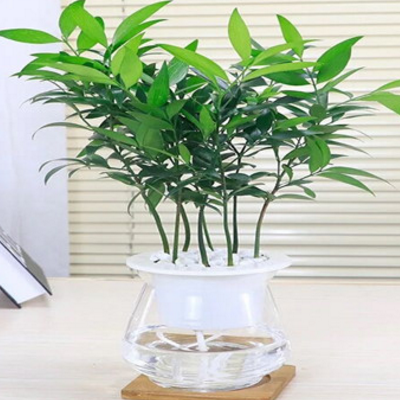
Can Podocarpus macrophyllus be grown hydroponically:
Yes, Podocarpus macrophyllus can be grown hydroponically.
What to do when Podocarpus macrophyllus leaves turn yellow:
One: Long-term water shortage in Podocarpus macrophyllus
The specific symptoms are that the leaf tips or edges of Podocarpus macrophyllus dry out and wither, while the old leaves turn yellow and drop from the bottom upward.
Solution: Water promptly to keep the soil moist, but avoid waterlogging; it is best to water thoroughly when the surface soil is slightly dry.
Two: Insufficient light for Podocarpus macrophyllus
If it lacks light for a long time, the leaves will turn yellow-white, and the branches will become thin and elongated, making it hard to bloom.
Solution: After gently rinsing the leaves clean, try to give the plant conditions ranging from filtered light to relatively good light.
Three: Too-high temperatures causing yellowing of Podocarpus macrophyllus leaves
When the temperature exceeds 35°C, the leaf surface or leaf tips of Podocarpus macrophyllus will turn yellow, dry up, or develop spots.
Solution: Move Podocarpus macrophyllus to a cool place for care, avoiding direct strong light.
Four: Low temperatures causing yellowing of Podocarpus macrophyllus leaves
When the temperature is about 10°C, Podocarpus macrophyllus enters dormancy, and if the temperature drops below 2°C, it is very prone to cold injury or death.
Solution: Move Podocarpus macrophyllus indoors to a warmer place to prevent cold wind from affecting it.
Five: Long-term fertilizer deficiency in Podocarpus macrophyllus
If the water and nutrients Podocarpus macrophyllus needs are not supplied, it is hard to keep its leaves deep green, and the leaf tips easily turn yellow.
Solution: Apply some acidic fertilizer in time, preferably as a liquid fertilizer solution, and follow the principle of applying little but often.
Six: Occurrence of pests and diseases on Podocarpus macrophyllus
Red spider mites appearing on Podocarpus macrophyllus leaves, or anthracnose, leaf spot disease, and scale insects, can all cause localized scorched-yellow areas on the leaves.
Solution: For red spider mites, spray with dicofol, hexythiazox, or similar; for scale insects, spray chlorpyrifos, methidathion, or similar for control; for anthracnose and leaf spot disease, spray carbendazim, thiophanate-methyl, or similar for control.
Podocarpus macrophyllus can be grown hydroponically, but you need to pay attention to dealing with the problem of its leaves turning yellow.
Why are Podocarpus macrophyllus leaves drying up, and can a dried-up Podocarpus macrophyllus still be saved? 3 methods can save it
Keeping a pot of Podocarpus macrophyllus indoors is the choice of many flower lovers, because it is not only good-looking and able to purify the air, but also helps resist pollution, repel mosquitoes and insects, and has medicinal uses for treating illness. But during cultivation, the leaves of many flower lovers' Podocarpus macrophyllus dry up. So why do Podocarpus macrophyllus leaves dry up? Can a dried-up Podocarpus macrophyllus still be saved? Today the editor will help everyone solve this problem.
One: Why do Podocarpus macrophyllus leaves dry up
To discuss Podocarpus macrophyllus leaves drying up, it can be analyzed in three points: 1. Podocarpus macrophyllus likes semi-shade and fears strong light; once exposed to overly strong light, the leaves will be sun-dried and withered; 2. In poor environments and with improper care, Podocarpus macrophyllus is prone to tip blight, whose symptom is dried-up leaves; 3. If it is a hydroponically grown Podocarpus macrophyllus, dried-up leaves are very likely to appear.
Two: Causes of dried-up Podocarpus macrophyllus leaves and rescue methods
1. Excessive light
Podocarpus macrophyllus likes a semi-shaded environment and grows faster in filtered light than in places with strong light. So when growing it indoors, everyone should put it in a place with good shading and let it receive filtered light. Otherwise, once the light is too strong, its leaves will be sun-dried.
Rescue method: Move Podocarpus macrophyllus to a cool place in time, increase ventilation, and afterward give it 2 hours of light each day.
2. Suffering from tip blight
To discuss the causes of dried-up Podocarpus macrophyllus leaves, everyone should also consider whether it has contracted tip blight. Symptoms: Podocarpus macrophyllus leaves first turn yellow, then slowly turn black, then gradually develop black spots, and finally progress to drying up.
Rescue method: Tip blight is mainly caused by weather on rainy and cloudy days, so after the weather clears, everyone should let Podocarpus macrophyllus get some sun, of course weak light; if it does not recover, then consider buying medicine to spray for control.
3. Dried-up leaves of hydroponically grown Podocarpus macrophyllus
When talking about dried-up Podocarpus macrophyllus leaves, this generally appears on hydroponically grown plants. It is understood that in hydroponic culture, improperly handled roots, high water-changing frequency, excessive fertilizing, and being too close to an air conditioner can all cause Podocarpus macrophyllus leaves to dry up. Specific causes have specific rescue methods; as long as everyone manages it according to science, Podocarpus macrophyllus will naturally not dry up.
① Roots not handled properly
When hydroponically growing Podocarpus macrophyllus, the leaves are usually inserted into water, and with careful care, roots generally appear in about 15 days. Moreover, as the cultivation time increases, the roots of Podocarpus macrophyllus grow more and more; if they are not pruned in time, the leaves of Podocarpus macrophyllus may dry up.
Rescue method: When Podocarpus macrophyllus has too many roots, everyone should prune them in time, because these roots do not have much effect on the growth of Podocarpus macrophyllus; only by cutting off the old roots can drying up be avoided.
② High water-changing frequency
During hydroponic care, many flower lovers like to change the water for Podocarpus macrophyllus, because clean water better sets off its beauty. But after Podocarpus macrophyllus has rooted, it is not suitable to change the water; if the water-changing frequency is too high, it can also cause the leaves of Podocarpus macrophyllus to turn yellow.
Rescue method: Control the water-changing frequency. Before Podocarpus macrophyllus roots, change the clean water once every 3-4 days; after it roots, change the water once every 10 days in the early stage, rinsing away dirt from the root base; once rooting is stable, as long as the water quality does not change, do not change the water.
③ Excessive fertilizing
When hydroponically growing Podocarpus macrophyllus, after it roots, we should apply a small amount of compound chemical fertilizer in moderation, which can keep the plant's leaves green. But if too much fertilizer is applied, it will have the opposite effect, easily causing root burn and thus causing the leaves to dry up.
Rescue method: When too much fertilizer has been applied, change the water in time, then about every 3 weeks inject a few drops of brandy into the bottle and add a small amount of nutrient solution; this can both keep the leaves green and avoid excessive fertilizing.
④ Too close to an air conditioner
Besides the above points, if a hydroponically grown Podocarpus macrophyllus is placed very close to an air conditioner or electric fan and is blown by the wind for a long time, symptoms of dried leaf tips and leaf edges easily appear.
Rescue method: After discovering dead branches, cut them off immediately and change the water in time to prevent other bamboo branches from being infected; afterward place Podocarpus macrophyllus in an indoor ventilated, light-transmitting place, and after a period of time the plant will recover its health.
Silver Heart Spider Plant Argentum cor Chlorophytum Silver Heart Spider Plant illustrated guide: how to grow Silver Heart Spider Plant / how to propagate Silver Heart Spider Plant
Silver Heart Spider Plant profileSilver Heart Spider Plant Argentum cor Chlorophytum
Aliases: Silver Heart Guilan, Silver Heart Hanging Spider Plant
Classification: herbaceous flower
Family and genus: Plantae, Angiospermae, Monocotyledoneae, Liliaceae, Chlorophytum
Full bloom period: spring
Silver Heart Spider Plant is a type of spider plant. It is named Silver Heart Spider Plant because, unlike other spider plants, it has a distinctive feature: the middle part of every green leaf has a silvery-white stripe about 1 cm wide. As an expert at purifying air, Silver Heart Spider Plant has entered the lives of more and more people as a potted plant; offices, shopping malls, banks, and homes all grow Silver Heart Spider Plant as a potted plant to purify indoor air and beautify the living environment. Silver Heart Spider Plant flowers are white, with 6 tepals, and its flowering period is spring and summer. The flowering period is May, and the fruiting period is August. The plant has the effect of purifying air, and the whole plant can be used as medicine.
How to grow Silver Heart Spider Plant and precautions Introduction to Silver Heart Spider Plant
Silver Heart Spider Plant is a type of spider plant. It is named Silver Heart Spider Plant because, unlike other spider plants, it has a distinctive feature: the middle part of every green leaf has a silvery-white stripe about 1 cm wide. As an expert at purifying air, Silver Heart Spider Plant has entered the lives of more and more people as a potted plant; offices, shopping malls, banks, and homes all grow Silver Heart Spider Plant as a potted plant to purify indoor air and beautify the living environment.
Silver Heart Spider Plant flowers are white, with 6 tepals, and its flowering period is spring and summer. The flowering period is May, and the fruiting period is August. The plant has the effect of purifying air, and the whole plant can be used as medicine.
Morphological characteristics of Silver Heart Spider Plant
Silver Heart Spider Plant is a perennial herbaceous plant. It has clustered cylindrical fleshy roots and short rhizomes. The leaves are basal, linear to long lanceolate, entire or slightly wavy; the scape is drawn out from the leaf axils, 30-50 cm long, bending downward to form new stolons. It has racemose inflorescences with small white flowers, flowering in spring and summer, and it can also bloom indoors in winter. The underground part has rhizomes, fleshy and short, creeping horizontally or growing obliquely; the leaves are slender, linear-lanceolate, with a yellow-white longitudinal stripe in the center, clasping at the base, bright green. Stolons emerge from the leaf axils, extend out of the clump, bend outward, and bear small plantlets with aerial roots at the tips.
Silver Heart Spider Plant has strong roots and a short stem, and the roots are slightly thick and fleshy. The leaves are sword-shaped, 10-30 cm long and 1-2 cm wide, slightly narrowing toward both ends. Spider plant is a perennial herb, with basal leaves, linear to linear-lanceolate, narrow and long, flexible like orchid leaves. The biggest feature of spider plant is that mature plants will from time to time send out stolons, 30-60 cm long, and small plantlets will grow at the tips; the scape is longer than the leaves, sometimes up to 50 cm long, often becoming a stolon and bearing leaf clusters or small plantlets near the top.
Flowers white, often 2-4 clustered, arranged in loose racemes or panicles; pedicels 7-12 mm long, with the joint located from the middle to the upper part; tepals 7-10 mm long, with 3 veins; stamens slightly shorter than the tepals; anthers oblong, 1-1.5 mm long, obviously shorter than the filaments, often curling after dehiscence. The capsule is triangular-oblate, about 5 mm long and about 8 mm wide, with 3-5 seeds per locule.
Silver Heart Spider Plant flowers in May and fruits in August, with 6 tepals, and its flowering period is spring and summer.
Ecological habits of Silver Heart Spider Plant
Silver Heart Spider Plant likes a warm, humid, semi-shaded environment. It is highly adaptable, relatively drought-tolerant, and not very cold-tolerant. It is not particular about soil and grows best in well-drained, loose, fertile sandy soil. It is not strict about light and is generally suitable for growing under medium-light conditions, and it also tolerates weak light. The optimum growth temperature is 15-25°C, and the overwintering temperature is 5°C. It grows fastest at 20-24°C and easily sends out stolons. Above 30°C, growth stops, and the leaves often turn yellow with dry tips. In winter, if the room temperature stays above 12°C, the plant can grow normally, produce leaves, and bloom; if the temperature is too low, growth slows or it becomes dormant; below 5°C, it is prone to cold damage.
Silver Heart Spider Plant is native to South Africa and likes to live in humid and semi-shaded environments. Its optimum growth temperature is 15°C to 20°C, and it requires fertile, soft soil with good air permeability. Stems and leaves grow rapidly, and the winter temperature must not be lower than 5°C.
Cultivation techniques and cultivation management of Silver Heart Spider Plant
Light
Spider plant likes a semi-shaded environment. In spring and autumn, avoid direct strong sunlight; in summer, when sunlight is especially strong, it can only receive some oblique light in the morning and evening, and 50%-70% of sunlight needs to be shaded during the day, otherwise the leaf tips will dry up. Variegated varieties are especially afraid of strong sunlight; Golden Edge Spider Plant grows more beautifully in weak light, with the yellow edge more obvious and the leaves more glossy. But in winter it should receive more sunlight to keep the leaves tender and bright green. Household potted spider plants should be placed in front of a south-facing window, otherwise the leaves will lose their luster and may even wither. When conditions permit, it is best to turn the flowerpot about 15° in a fixed direction every week to ensure the spider plant hangs down to the same degree.
Watering
Spider plant likes a humid environment and the potting soil should easily stay moist at all times. In summer, watering should be sufficient, and around noon and in the evening, water should also be sprayed on the branches and leaves to promptly wash off dust on the leaves and prevent the leaves from drying up. However, the fleshy roots of spider plant can store a large amount of water, so it has strong drought resistance and will not die of dryness even if not watered for several days. In winter, when the temperature is below 5°C, water less, and do not let the potting soil become too wet, otherwise the leaves will easily turn yellow.
Fertilizing
Spider plant is a foliage plant that is relatively tolerant of fertilizer. If fertilizer and water are insufficient, it easily scorches at the top and ages, and the leaves turn yellow, losing ornamental value. From late spring to early autumn, apply an organic fertilizer solution once every 7-10 days, but for variegated varieties such as Golden Edge and Golden Heart, less nitrogen fertilizer should be applied, so as to avoid the variegation fading or even disappearing and affecting the appearance. Bone meal, eggshells, and other composted organic fertilizers can be appropriately applied; after full fermentation, take an appropriate amount of diluted liquid and apply it once every 10-15 days to make the variegated leaves bright and colorful.
During the growing season, apply liquid fertilizer once every two weeks. Variegated varieties should receive less nitrogen fertilizer, otherwise the white or yellow markings on the leaves will become less obvious. Stop fertilizing when the ambient temperature is below 4°C.
Pruning
At ordinary times, cut off yellow leaves at any time. Once a year in March, repot and cut off old roots, rotten roots, and excess fibrous roots. In early to mid-May, cut off some old leaves of the spider plant, which will promote the sprouting of more new leaves and small spider plants.
The root system of spider plant is quite developed. After growing it for a period of time, the flowerpot should be replaced in time to avoid root accumulation, which can cause yellow leaves, withering, and other problems in spider plant.
Indoor cultivation
Substrate requirements
Spider plant has strong adaptability to various soils and is easy to cultivate. Fertile sandy loam, humus soil, peat soil, or fine sandy soil with a small amount of base fertilizer can be used as potting soil.
Container
Any container that can hold water can be used to grow spider plants hydroponically. It is best to use a transparent vessel for hydroponic growing, so you can admire the dazzling white roots in the water. Glass wine glasses, teacups, mineral water bottles, and the like around you are all economical and attractive containers for hydroponic spider plants.
The container for hydroponic spider plant can be single-layered or double-layered. A single-layer container is a bottomless glass bottle or plastic bottle in which the spider plant is planted directly. A double-layer container uses a plastic sieve (also called a planting basket) as the upper layer and a bottomless bottle vessel as the lower layer; the spider plant is planted in the upper plastic sieve, with its roots extending into the lower bottle vessel.
Placement
It is usually located in a north-facing room with fewer windows, where some potted decorations can eliminate the feeling of cold. Because there is little sunlight, shade-loving plants should be chosen. The kitchen is a workspace with frequent activity and scattered items, and both smoke and temperature are relatively high, so large potted plants are not suitable; hanging potted plants are more appropriate. Among them, spider plant is the best; placing a pot of spider plant in a room can absorb harmful gases such as carbon monoxide, carbon dioxide, sulfur dioxide, and nitrogen oxides from the room within 24 hours, acting as an air filter.
How to grow Silver Heart Spider Plant Key cultivation points
The potting soil should easily stay moist at all times. However, the fleshy roots of spider plant can store a large amount of water, so it has strong drought resistance and will not die of dryness even if not watered for several days. In winter, when the temperature is below 5°C, water less, and do not let the potting soil become too wet, otherwise the leaves easily turn yellow. During the growing season, apply liquid fertilizer once every two weeks. Variegated varieties should receive less nitrogen fertilizer, otherwise the white or yellow markings on the leaves will become less obvious. Stop fertilizing when the ambient temperature is below 4°C. Spider plants cultivated outdoors can also grow well under strong direct sunlight in summer. However, spider plants cultivated indoors for a long time should avoid direct strong sunlight and need 50-70% of sunlight to be shaded. The suitable temperature is above 15°C, and the winter overwintering temperature is above 4°C. To keep spider plant fresh and green, you can often spray water on the leaves to clean them. At ordinary times, cut off yellow leaves at any time. Once a year in March, repot and cut off old roots, rotten roots, and excess fibrous roots. In early to mid-May, cut off some old leaves of the spider plant, which will promote the sprouting of more new leaves and small spider plants.
Propagation methods of Silver Heart Spider Plant
Silver Heart Spider Plant can be propagated by methods such as cuttings, division, and sowing.
Cutting method
Cuttings of Silver Heart Spider Plant can be taken at any time from spring to autumn. Cut off the clustered stems and leaves on the stolon of the spider plant (actually a young new plantlet, with leaves above and aerial roots below), plant it directly into a flowerpot for cultivation, water thoroughly, and place it in a cool place for care. When taking cuttings, be careful not to bury them too deep, otherwise the center easily rots. When potting spider plants, the number of cuttings depends on the size of the pot. Generally, a small pot can hold 2-3 cuttings, a medium pot about 3, and a large pot up to 5-6.
Division method
When dividing Silver Heart Spider Plant, take the spider plant out of the pot, remove the old soil and dead roots, cut apart the old roots so that each divided plant retains three stems, and then transplant and cultivate them separately. You can also cut off the clustered stems and leaves on the stolon of the spider plant (actually a young new plantlet, with leaves above and aerial roots below) and plant it directly into a flowerpot for cultivation.
Sowing method
Seed propagation of Silver Heart Spider Plant can be carried out every year in March. Because its seeds are not large, after sowing, the covering soil should not be thick; generally 0.5 cm is enough. At a temperature of 15°C, the seeds can sprout in about 2 weeks, and after the seedlings take shape, transplant and cultivate them. When seed propagation is used for varieties with leaf variegation, the offspring will revert to all-green varieties.
Disease and pest control of Silver Heart Spider Plant
Spider plant has relatively few pests and diseases, mainly physiological diseases, with yellowing at the front end of the leaves. Waterlogging in the potting soil and poor ventilation will lead to root rot, and root rot disease may also occur, so fertilizer and water management should be strengthened.
Scale insects
Check frequently and promptly wipe off scale insects on the leaves.
Control methods:
According to the various occurrence situations of scale insects, spray pesticide during the peak nymph stage. At this time most nymphs have recently hatched, their body surface has not yet secreted wax, and the scale cover has not yet formed, so pesticide can still easily kill them. Spray once every 7-10 days, for 2-3 times in a row. You can use 40% omethoate 1000x solution, or 50% malathion 1500x solution, or 255 phosmet 1000x solution, or 50% dichlorvos 1000x solution, or 2.5% deltamethrin 3000x solution, and spray.
Whiteflies
Control methods:
Drench the roots with carbendazim wettable powder 500-800x solution, once a week, for 2-3 times in a row.
Aphids
Aphids in spring are one of them, and they should be wiped off in time.
Control methods:
Spray 1500x omethoate to kill them.
Mites
Mites in summer and autumn are secondary, and need to be killed with 1000x dicofol. Pay attention to ventilation and increasing leaf surface humidity, which can reduce mite infection.
Root rot disease
Control methods:
For prevention, a wettable powder can be used to drench the roots at 2-4 grams per sq m, or before onset or in the early stage of onset, use a 1500-3000x solution to drench the roots, with 200 ml of medicinal liquid per plant. When the disease is severe, remove the diseased plants, and at the same time use root-fixing agent to drench the roots.
Leaves turning brown
More than 20 days after the spider plant is brought indoors, an abnormal phenomenon of leaves turning yellow and brown appears, which may be a characteristic shown by cold damage to its leaves due to being brought indoors too late. Spider plant likes a warm, humid, and semi-shaded environment, is not cold-tolerant, and is somewhat less cold-tolerant than ordinary green-leaf spider plants. It fears high temperatures and strong sunlight exposure, and is also not tolerant of drought, saline-alkali soil, or waterlogging. Its optimum growth temperature is 13-28°C, and the winter ambient temperature should not be lower than 7°C.
After Frost's Descent, the minimum morning temperature may already be close to 4°C, and such temperature conditions will bring obvious cold damage to spider plant plants. Although it may not show immediately at the time, after being moved indoors, due to insufficient light, dry air, slightly high room temperature, poor ventilation, and other reasons, spider plant plants that have already suffered cold damage will inevitably show features such as green stripes turning yellow and leaf edges turning brown on the leaves. However, as long as its fleshy root system has not rotted and died due to cold damage and the like, move it to a brightly lit place, control watering of the potting soil, increase spraying of the leaf surface, and before taking it outdoors the next spring, repot it with fresh soil; at the same time, prune off the leaves that have withered and died, and strengthen water and fertilizer management. The plant can quickly recover its vigorous growth.
Leaf tip protection
When spider plants are grown in home pots, under normal circumstances they often tend to develop dry leaf tips and leaves that gradually lose their luster. To care for and manage spider plants well, the following measures should be taken.
Repotting and changing the soil
In the management of potted spider plants, to achieve lush stems and leaves, the soil and pot should be changed once every year in March. If the pot is relatively deep and the base fertilizer is sufficient, the pot can be changed once every two years. When repotting, knock the plant out of the pot, cut off dead and rotten roots and excess roots, replace with new culture soil rich in humus, and then apply livestock hoof and horn pieces or decomposed cake fertilizer as base fertilizer. After planting, place it in a semi-shaded, warm spot to recover. The optimum growing temperature for spider plants is around 25°C. Once the plant has recovered and resumed vigorous growth, hang the pot under a corridor eave or in a suitable indoor position. Generally, the height should be such that it does not bump against the head, and attention should be paid to ventilation. Dead and yellow lower leaves should be removed at any time, and when leaf tips turn yellow, use scissors to cut off the yellow tips at a slant. Normally, maintain normal humidity; it should not be too dry, nor too wet.
Distribution area of the variegated spider plant
The variegated spider plant is native to southern Africa and is widely cultivated around the world.
Dietary therapy or medicinal value of the variegated spider plant
The medical information and health dietary therapy information on Hugarden.com is for reference only and cannot be used as a basis for diagnosis or medical treatment. For any health problem, consult professional medical personnel, and for the treatment of any disease, follow the doctor's advice.
Ultimate flower-care mission: love yourself, start from reality, and strictly follow the doctor's advice. Toward illness, do not be careless, do not delay, and do not give up hope; face it bravely, warm the silent world with love, and care for the flower field in your heart with your heart.
Medicinal value
Source
Medicinal material basis: the whole plant or root of the spider plant, a plant in the Liliaceae family.
Harvesting and storage: it can be harvested throughout the year, washed and used fresh.
Nature and flavor
Sweet in taste; slightly bitter; cool in nature.
Functions and indications
Resolve phlegm and relieve cough; dissipate blood stasis and reduce swelling; clear heat and detoxify. Mainly for phlegm-heat cough; traumatic injuries; fractures; carbuncles and swellings; hemorrhoids; burns. Used for high fever in children, lung-heat cough, vomiting blood, traumatic swelling and pain, etc. [1]
Usage and dosage
Internal use: decoct in water, 6-15 grams, 15-30 grams of fresh product. External use: appropriate amount, pound and apply; or decoct in water and wash.
The role and uses of the variegated spider plant: ornamental
The spider plant is a perennial herbaceous plant with slender, drooping branches. It blooms small white flowers in summer or when temperatures are high in other seasons. The flowers are concentrated at the ends of the drooping branches, with yellow stamens, and the small tender inner leaves are sometimes purple. It can be grown in pots for ornamental display.
Purifying the environment
Spider plants are easy to grow and highly adaptable, and are one of the most traditional hanging plants for indoor rooms. Its leaves are slender and soft, and small plantlets emerge from the leaf axils, hanging down from the edge of the pot, spreading and draping like flowers, evergreen all year round.
Purifying effect
The variegated spider plant, like other spider plants, has the effect of purifying the air and beautifying the environment, and is one of the top ten indoor pollution fighters.
Nano adsorption: the pore diameter of the pores is between 0.27-0.98 nanometers, arranged in a crystal structure. It also has weak electrical properties. The molecular diameters of formaldehyde, ammonia, benzene, toluene, and xylene are all between 0.4-0.62 nanometers, and they are all polar molecules. It has the characteristic of preferentially adsorbing harmful gases such as formaldehyde, benzene, and TVOC, achieving the effect of purifying indoor air.
The spider plant has a beautiful and elegant leaf shape, and its low-drooping scapes have a graceful posture. It is often used as a potted plant hung outdoors under eaves, in front of windows, or placed in entrance halls or on high stands. First, it can be enjoyed ornamentally; second, it can also be used to decorate rockeries and cliffs. It has long been known as the "air flower." Its slender, graceful branches and leaves can effectively absorb formaldehyde released by curtains, furniture, wooden floors, and the like, and fully purify the air.
The spider plant is not only an excellent hanging foliage plant for indoor rooms, but also a good indoor air-purifying flower. The spider plant has an extremely strong ability to absorb toxic gases. Because harmful gases such as formaldehyde continue to be released continuously from newly renovated houses, environmental protection experts recommend keeping more ventilation after renovation.
Cultural background and legend of the variegated spider plant
This comes from a legend. It is said that a chief examiner who was jealous of talent, in order to let his adopted son rank high in the imperial examination, was determined to suppress that talented scholar surnamed Lin. When he was grading Lin Dexiang's paper, it happened that the emperor came in disguise for a visit. In his panic, the chief examiner hid the paper among the flourishing orchid in the pot on his desk. The emperor, who had taken a liking to this beautifully blooming pot, inadvertently saw it and learned the truth. Everyone can guess the ending: not only was the chief examiner dismissed from office, but the pot of flowers was also "bestowed" to him. The chief examiner was both ashamed and angry, and became depressed, and died not long after. From then on, the stems and leaves of this kind of orchid never stood upright again, and gradually evolved into today's spider plant, and its flower language also comes from this meaning.
Poetic lines
Enduring frost and snow, daring to outdo bamboo and cypress; willing to mourn the orchid and sweet flag with the snow and moon. - Anonymous, Song Dynasty
Rui Zhe Gu: A handful of grass from what year, whirling in the pot. Its thin leaves lightly trail green, its small flowers do not fly red. Its roots are sparse, a cup of water is bland, its character is lofty, and its cold air is rich. It has nothing to do with winter or summer, freely scattering in the wind. - "Ode to the Spider Plant"
Green cranes dance on the spring river, graceful and intoxicated in the morning sun, green vines lush and full of spiritual charm; the graceful Chang'e is shy and lazy in dressing. It drifts in the hall, quietly spreading fragrance; gathering feeling and speaking not, it fills the room with scent, clear-hearted and quietly elegant, all through marvelous hands composing splendid verses. - "Nan Ge Zi: Ode to the Spider Plant"
Flower language of the variegated spider plant
Flower language of the spider plant: helpless yet giving people hope.
Pictures of the variegated spider plant