A Detailed Guide to the Cultivation Methods and Propagation Techniques of Adenanthera pavonina
Adenanthera pavonina - don't underestimate this plant, it's not just for looking at; it has medicinal value. What are the cultivation methods for Adenanthera pavonina? How does Adenanthera pavonina propagate?
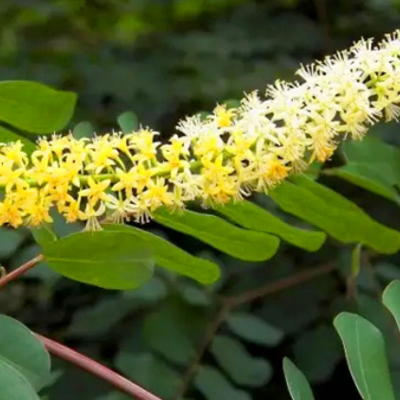
Cultivation methods for Adenanthera pavonina:
1. Temperature management
Adenanthera pavonina is native to subtropical and tropical regions. A high-temperature, high-humidity environment is more suitable for its growth. It is not cold-tolerant, so it has relatively high temperature requirements in winter. In areas where frost occurs, it cannot survive the winter safely, and the trunk needs to be wrapped in plastic film or straw to help keep it warm.
2. Light management
The Adenanthera pavonina tree is not strict about light requirements. It likes a sunny environment but is also tolerant of partial shade. For seedlings of Adenanthera pavonina, be careful not to expose them to intense sun, otherwise they easily become dehydrated and wilt; appropriate shading can be provided.
3. Water and fertilizer management
For potted Adenanthera pavonina, attention should be paid to its water and fertilizer management. When potting, organic fertilizer should be added as a base fertilizer. During routine care, appropriate water and fertilizer management should also be carried out to promote plant growth.
Spring, summer and autumn are the peak growing seasons for Adenanthera pavonina. Fertilizing and watering should be done at intervals of about 3 days. During sunny or high-temperature weather, the interval should be appropriately shortened; on rainy or low-temperature days, the interval should be longer. There should be no water accumulation.
Winter is the dormant period for Adenanthera pavonina. During this time, fertilizer application should be reduced. One fertilizing and two waterings can be treated as one cycle for water and fertilizer management, with an interval of about one week.
4. Pruning and shaping
Adenanthera pavonina should be pruned and shaped in winter, because in winter the plant enters dormancy or semi-dormancy. During this period, nutrient consumption is relatively low, so weak, dead and overly dense branches should be pruned away to allow new branches to grow the following year.
Propagation methods for Adenanthera pavonina:
I. Seed propagation of Adenanthera pavonina:
1. Seed selection for Adenanthera pavonina
The most important thing for sowing is to select the seeds. Choose seeds collected in the current year that are plump, free of defects or deformities, and free of pests and diseases. Soak the seeds in hot water at about 60°C for a quarter of an hour to disinfect them. Then disinfect the substrate used for sowing; the substrate can be placed in sunlight to bake.
2. Sowing Adenanthera pavonina
Scatter the Adenanthera pavonina seeds on the surface of the substrate, then cover the seeds with 1-2 cm of substrate. After sowing, use a sprayer to soak the sowing substrate thoroughly. Afterward, water again when the surface of the potting soil is slightly dry, but be careful with the force of watering so as not to wash the seeds out.
3. Post-sowing management of Adenanthera pavonina
If sowing in winter or early spring, pay attention to frost protection. The flowerpot can be wrapped in plastic film to create a microclimate that keeps it warm and moist. After the seedlings emerge, promptly uncover the film to let them adapt to the external environment, and pay attention to hardening the seedlings, otherwise the seedlings will grow very weak. When the seedlings have grown 3 or more true leaves, they can be transplanted.
II. Cutting propagation of Adenanthera pavonina
1. Early preparation for Adenanthera pavonina cuttings
Late spring and early autumn are good seasons for taking Adenanthera pavonina cuttings. For the cuttings, you can choose tender branches from the current year or old branches from the previous year. For the cutting substrate, materials such as nutrient soil, river sand or peat soil can be used.
2. Taking Adenanthera pavonina cuttings
After selecting the branches for cuttings, cut them into sections 10 cm long, and each section should have at least 3 leaf nodes. Note that the upper cut should be made horizontally about 1 cm above the topmost leaf node, and the lower cut should be made diagonally about 0.5 cm below the lowest leaf node. Both the upper and lower cuts should be smooth.
That's all for the introduction to the cultivation and propagation methods of Adenanthera pavonina. Hurry and grow a few plants.
Cultivation methods and precautions for Adenanthera pavonina
Chinese scientific name: Adenanthera pavoninaLatin scientific name: Adenanthera pavoninaOther names: Peacock bean, red bean, love peaKingdom: PlantaePhylum: AngiospermsClass: DicotyledoneaeSubclass: ArchichlamydeaeOrder: RosalesSuborder: RosineaeFamily: FabaceaeSubfamily: MimosoideaeTribe: MimoseaeGenus: AdenantheraSpecies: Adenanthera pavoninaDistribution area: India, Malaysia, JavaSymbolic meaning: love, marriage, peaceAdenanthera pavonina belongs to the deciduous small trees, 5-10 m tall. Young branches are slightly pubescent. Seeds are nearly round to elliptical, 5-8 mm long, 4.5-7 mm wide, bright red, and glossy. This variety was previously named as the original variety, and according to the research of Nielsen (1980) it was corrected. It differs from the original variety in that the latter has glabrous pedicels and calyx, calyx 0.8-1 mm long, petals oblong-lanceolate, 3-4.5 mm long, pods relatively broad, 13-16 mm wide, not very curled before dehiscence, seeds nearly round, 8.3-8.5 mm long, 7.1-8 mm wide.1. Morphological characteristics
Adenanthera pavonina has bipinnate compound leaves with short petioles; the petioles and leaf rachis are slightly pubescent, without glands; 3-5 pairs of pinnae, 4-7 pairs of leaflets, alternate, oblong or ovate, 2.5-3.5 cm long, about 1.5-2.5 cm wide, with rounded-obtuse apex, slightly pubescent on both surfaces.Racemes are solitary in leaf axils or arranged in panicles at the branch tips, covered with short pubescence; flowers are small, white or pale yellow, fragrant, with short pedicels; calyx less than 1 mm long, together with the pedicel covered with golden-yellow pubescence; 5 petals, lanceolate, 2.5-3 mm long, glabrous, slightly connate at the base; 10 stamens, equal to or slightly longer than the corolla; ovary pubescent, almost sessile, style filiform, stigma small.
Pods are narrowly oblong, coiled, 10-20 cm long, 1.2-1.4 cm wide, and after dehiscence the valves curl back; seeds are nearly round to elliptical, 5-8 mm long, 4.5-7 mm wide, bright red, and glossy. Flowering period is April to July. Fruiting period is July to October.
2. Origin and distribution
Native to tropical regions: Myanmar, Cambodia, Laos, Vietnam, Malaysia, Indonesia, China. In China it is distributed in Fujian, Taiwan, China, Guangdong, Hainan, Guangxi, Guizhou, Yunnan and other places. It mostly grows in mountain gullies, by streams, in forests, or is cultivated in courtyards.3. Growth habits
It prefers a warm and humid climate and sunlight, is slightly shade-tolerant, and has relatively strict requirements for soil conditions. It prefers deep, fertile, well-drained sandy loam.Cultivation methods for the "glacial ancient tree" Taxus chinensis, and appreciation of Taxus chinensis bonsai
Taxus chinensisIn landscaping and indoor bonsai, it has very broad development prospects. For example, high-end bonsai made from rare Taxus chinensis trees sell for 300,000 yuan per pot in Beijing, Shanghai, Shenzhen and other places, becoming a new favorite in urban greening and home beautification, and are vividly called precious "money trees" by people.
The "glacial ancient tree" - Taxus chinensis
[Plant profile]
——————————————————————————————————————————————
Chinese name:Taxus chinensis
Scientific name:Taxus chinensis
Other names:Yew, red cypress pine
Family:Taxaceae
Genus:Taxus
Origin:Widely distributed up to an altitude of 900 m, in southern Gansu, western Hubei and as far as Sichuan in China.
Morphological characteristics:Taxus chinensis is an evergreen tree, and planted trees can reach up to 14 m tall. Branchlets turn yellow-green or pale reddish-brown in autumn; winter bud scales are rounded or have blunt ridges on the back; sickle-shaped leaves, in two rows, 1.5-3 cm long, broader than other Taxus species, with a pointed and slender tip, and two yellow bands on the underside; flowers axillary, dioecious, female flowers with only one ovule, subtended by several scales; flat ovate seeds, each side with an inconspicuous ridge, surrounded by a red cup-shaped aril.
Taxus chinensis illustrated guide
Leaves of Taxus chinensis
The fruit of Taxus chinensis is very similar to the "love pea"
Cultivation methods for Taxus chinensis bonsai
——————————————————————————————————————————————
Care for newly purchased bonsai:
For newly purchased Taxus chinensis bonsai, it is best to spray the leaf surfaces with an 800-1000 times diluted potassium dihydrogen phosphate solution about every three or four days, generally before 10 a.m., or around 4 p.m. After spraying three to four times continuously, gradually reduce it to about once a month.
Light requirements:
Taxus chinensis is a shade-loving plant and is suitable for indoor placement, but note that it should be properly shaded in summer and should not be placed in a room with light exposure.
Soil selection:
The soil used for planting Taxus chinensis should be loose, rich in humus, fertile, and slightly acidic (PH=5-6.5).
Water requirements:
When the surface of the potting soil slightly turns yellowish-white and the leaves curl slightly, there is no need to water the potting soil; simply mist the leaf surfaces. When the soil in the pot turns white, the potting soil should be watered. Note that when watering, water thoroughly in one go so that the potting soil fully absorbs enough water.
Soil fertility:
The three essential elements for plant growth are nitrogen, phosphorus and potassium fertilizers. Nitrogen fertilizer can promote the growth of flowers, leaves and branches; phosphorus fertilizer can promote the formation of flowers and fruits; potassium fertilizer can promote the growth of stems and roots. Since newly purchased Taxus chinensis bonsai already use prepared nutrient soil, no fertilization is needed within 3 months. After that, fertilizer can be applied once every 2-3 months. Cake fertilizer is preferable. When fertilizing, care should be taken to apply it along the edge of the pot and avoid touching the bonsai roots.
Flowerpot selection:
Choose a suitably larger flowerpot, and several more holes should be made in the bottom of the pot, mainly to enhance the pot's water permeability and air permeability.
Bonsai trimming:
If the lower part of the bonsai has severe shedding of dry yellow leaves, it may be because the lower branches are growing too densely, and it is enough to prune a few of the overly dense lower branches. Pruning can create any shape, such as umbrella-shaped, tower-shaped, round-shaped and many other forms. For newly purchased Taxus chinensis bonsai of Taxus No. 3 and above, because transplanting from the planting base into the flowerpot damages part of the root system, the nutrient supply between the roots and the branches and leaves becomes imbalanced. When the leaves still curl and dry out while the potting soil remains moist, it is best to properly prune the bonsai branches and leaves to reduce excessive nutrient consumption by the branches and leaves and restore root growth.
Pest and disease control:
In high-temperature and dry seasons, individual young Taxus chinensis trees may develop leaf blight and red blight, which can be controlled by spraying 1% Bordeaux mixture.
Taxus chinensis bonsai
Taxus chinensis bonsai
Taxus chinensis bonsai
Taxus chinensis bonsai
Taxus chinensis bonsai
"Conclusion:"Love pea" - many naturally growing Taxus chinensis are regarded locally as love trees, and are excellent places for young men and women to date and talk about love. The smooth red stems of Taxus chinensis bonsai represent openness and nobility, the evergreen needles express firmness and eternity, and the red bean-like fruits resembling the "love pea" - Adenanthera pavonina - highlight love and longing. The shape is reserved without being showy, transcendent and refined, with a rich flavor of life and cultural heritage.