Crinum Lily Hydroponic Growing Methods and Solutions for Yellowing Leaves
Crinum lily (Crinum asiaticum), many people have seen this plant; this crinum lily is super beautiful. What are the hydroponic growing methods for crinum lily? What to do when crinum lily leaves turn yellow:
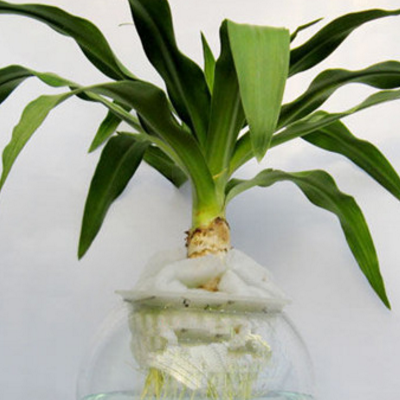
Hydroponic growing methods for crinum lily:
1. Use a transparent glass container. It is necessary to meet the nutrient and photosynthesis needs during the crinum lily's growth period. When growing hydroponically, keep the water level appropriate, not too much; no sand or soil is needed, and keep the roots white and clean.
2. During the crinum lily's growing period, water and fertilizer management is needed. Water every day, do not let the water be too little, and from May to September, add fertilizer once every 1-2 weeks; after winter begins, stop.
3. Remove spoiled shoots. During its vigorous growth period, spoiled shoots and tiller shoots often sprout from around it and need to be removed.
4. To keep the leaves emerald green and beautiful, lighting and shading are needed. In midsummer, provide sunlight from morning to noon each day, and provide shade in the afternoon.
What to do when crinum lily leaves turn yellow:
1. Crinum lily loves warm and humid areas, is slightly tolerant of shade and cold, but is not cold-hardy. The suitable growing temperature is 15-20°C. During its growing period, it needs plenty of fertilizer and plenty of water, especially before and after flowering and during the flowering period, when sufficient water and fertilizer must be supplied every day.
2. If the crinum lily's leaves grow too long, it will become top-heavy and nutrients cannot keep up. At this point, the potting soil needs to be replaced, and a larger pot should be used, so that its root development has more sufficient space and moisture, and it will grow vigorously and flourish in green clusters.
That is all for the introduction to crinum lily hydroponic methods. There is no need to panic about yellowing leaves either; there are ways to solve it.
Growing Methods for Pennywort (with Focus on Hydroponic Methods)
First, a big picture. This is pennywort!
Pennywort image
Growing pennywort hydroponically is relatively a favorite method for lazy people. Detailed introduction below.Hydroponic Growing Methods for Pennywort。
1. Pennywort's water quality requirements: Ordinary tap water is fine. Change the water frequently. In summer, change the water once every 3-4 days, with the water level at half the bottle. In winter, change the water once a week. In winter, leaf transpiration is low, so changing 1/3 of the container each time is enough.
2. Pennywort's lighting requirements:Pennywort likes light relatively much. I generally place pennywort where sunlight can reach, such as a windowsill. In summer, the lighting time can be longer. 4-5 hours is necessary. In winter, if there is little light, you can use a UV lamp or a fluorescent lamp to replace sunlight.
3. Pennywort's temperature requirements:The editor is from the south. Growing pennywort hydroponically is effortless. The southern climate is very suitable for growing pennywort. Keeping the normal temperature at 10-26 degrees is very suitable. Too hot or too cold is not suitable for pennywort growth.
4. How pennywort prevents pests:Pennywort's natural enemy is the water snail. Water snails will eat pennywort's roots and tender shoots. If you see this kind of small pest in the water, do not show any mercy. A large outbreak can put your pennywort to death.
5. Fertilizing pennywort:Personally, I do not really recommend fertilizing pennywort, because the nutrients produced by its own photosynthesis are enough. Of course, if you want it to be more lush, you can apply a moderate amount of fertilizer. You can use ordinary chemical fertilizer dissolved in a water basin and let it absorb it on its own, but be careful not to make the concentration too strong; a small amount is enough.
6. Pennywort's propagation methods:Pennywort is generally propagated by division. In summer, use scissors to cut at the position where the stolon has rooted, and transplant the front plant into another water basin to propagate. In addition, in summer pennywort will produce small flowers, and the seeds produced can also be used to propagate new plants.
Notes on Growing Pennywort
1. Get water, soil, and sunlight right:Pennywort has round leaves with wavy edges and long stems, and blooms small yellow-green flowers in summer and autumn. It can be grown in water or on land. It likes warmth and humidity. A cultivation spot with partial sun or shade is best. Avoid direct sunlight. It is not picky about cultivation soil, but loose, well-drained cultivation soil is best. Propagation can use division or cuttings. It is easy to grow. Keep the cultivation soil moist, and roots will develop in about 1-2 weeks. Because the plant can tolerate moisture and is an emergent type, it is also suitable for water basins and ponds. If growing in water, be sure to change the water once a week and add a special nutrient solution for foliage plants.
2. Choose well-drained cultivation soil:Pennywort does not need a very large pot. It can also be grown in a larger bowl, and a narcissus basin used for growing narcissus also works. Use ordinary garden soil, mix in an appropriate amount of river sand, and add a small amount of organic fertilizer as base fertilizer. When planting pennywort, you can plant it flat, covering the rhizome slightly so it cannot be seen; avoid planting too deep. Then place it in partial shade for a week and wait for new leaves to grow before exposing it to sunlight.
3. Get the temperature right:Pennywort is afraid of cold. In winter, for pennywort placed outdoors, you can pour out all the water and place it in a south-facing, sunny, wind-sheltered spot. It can overwinter safely, though some leaves will die off, and the underground root system will sprout again in spring next year. In cold northern regions, if there is no heating, you can make a cover and cover the whole pot, pour out the water, and keep it moist. As long as the room temperature is not below zero, it will continue to grow next year.
Related reading:
The uses of pennywort
Pennywort leaves turning yellow
More plants:
[Dracaena fragrans] [Dieffenbachia seguine] [Dracaena fragrans] [Fatsia japonica] [Nandina domestica] [Hedera helix] [Epiphyllum hybrid]
[Chlorophytum comosum] [Jasminum nudiflorum] [Cymbidium goeringii] [Aglaia odorata] [Crinum asiaticum] [Magnolia liliflora] [Spathiphyllum kochii] [Anthurium scherzerianum]
[Strelitzia reginae] [Hydrangea macrophylla] [Dahlia pinnata] [Pericallis hybrida] [Clematis florida] [Lantana camara] [Viola tricolor] [Daphne odora]
[Tulipa gesneriana] [Telosma cordata] [Polianthes tuberosa] [Hibiscus rosa-sinensis] [Kalanchoe blossfeldiana] [Gerbera jamesonii] [Mimosa pudica] [Campanula medium]
[Nymphaea tetragona] [Lilium 'Oriental Hybrids'] [Hydrangea macrophylla] [Acer palmatum 'Atropurpureum'] [Acer palmatum] [Salvia splendens] [Iris tectorum]
Growing Methods for Anthurium (A Summary of Successful Growing Experience)
A blooming anthurium flower, scarlet and eye-catching, with fresh green leaves; grown hydroponically in a glass bottle it looks clear and bright, pleasing to the eye. Who would not like such a flower? The shape of the anthurium flower is similar to a goosefoot, so people often call it goosefoot red, and some also call it Anthurium. It is a plant of the genus Anthurium in the family Araceae. The following text will focus on hydroponic growing methods for anthurium, householdGrowing methods for anthuriumand some common notes on growing anthurium.
>>Click the image to view How to grow potted anthurium
An open anthuriumI. Hydroponic Growing Methods for Anthurium
A blooming anthurium stands quietly in the water, with pure roots below and lively flowers above, making people feel full of joy and relaxed and happy. Among foliage hydroponic plants, hydroponic growing of anthurium is relatively more difficult. Root rot is more likely to occur. This is related to the characteristics of anthurium itself; anthurium roots are aerial roots, and aerial roots are more sensitive to the aeration of the environment. To grow anthurium well, you must control the number of water changes, the water capacity, and the dissolved oxygen content in the water.
Editor's reminder: Hydroponic anthurium must use a nutrient solution suitable for anthurium growth, and must have suitable light and temperature and be carefully maintained.
http://m.to8to.com/yezhu/1. Nutrient solution suitable for anthurium survival
It is recommended to choose a nutrient solution for foliage plants. It must be replaced once every 7-http://m.to8to.com/yezhu/10 days. Regularly changing the water for anthurium can remove the mucus secreted from the anthurium root system and some algae. In summer, when the temperature is high, change the water more frequently than in winter. It is recommended to change the water for anthurium once every 2-3 days. Do not fill the water too full, to prevent anthurium root rot. It is best to keep about half of the anthurium root system exposed above the water surface. This can ensure the roots' oxygen absorption.
2. Light and temperature required for hydroponic anthurium
Anthurium likes partial shade, and a warm, humid environment is also one of the requirements for anthurium's growing environment. It is afraid of exposure to the sun, so during growing, special attention must be paid to placement; it is best to place it in a spot that is ventilated and breathable and can avoid strong light. In summer, when growing anthurium hydroponically, note that the surrounding environment temperature cannot be higher than 28 degrees. The relative air humidity should be maintained at 80%. When the weather is relatively dry, spray an appropriate amount of water on the anthurium leaf surface. In winter, the temperature for hydroponic anthurium cannot be lower than http://m.to8to.com/yezhu/14 degrees. Below this temperature, anthurium is prone to cold damage. Pay attention to keeping it warm and increasing the temperature. Also control the air humidity at about 80%, and be sure not to place the anthurium outdoors, otherwise it is very easy to cause cold injury to the anthurium.
3. Oxygenation methods for hydroponic anthurium
The difficult problem faced by hydroponic anthurium is that if the dissolved oxygen content in the water is low, it will cause anthurium root rot, so during hydroponic growing, the oxygen content in the water must be increased in time. Among these, the simplest method is vibration: fix the flower plant with one hand and gently shake the container with the other hand more than http://m.to8to.com/yezhu/10 times. After shaking, the dissolved oxygen content of the nutrient solution can increase by about 30%. Or add http://m.to8to.com/yezhu/1% hydrogen peroxide (3% hydrogen peroxide solution) to the nutrient solution. If conditions permit, a miniature submersible pump or oxygen pump can also be used to oxygenate the nutrient solution.
Editor's reminder: When growing anthurium hydroponically, part of the original soil-grown roots can be removed; light root removal is enough. If you want to enhance the roots' aquatic adaptability, you can remove roots heavily.
>>Click the image to view treatment methods for hydroponic anthurium root rot
Passionate anthurium flowers, blooming gorgeouslyII. Common Problems in Hydroponic Anthurium Growing
http://m.to8to.com/yezhu/1 What to do when the leaves of anthurium grown in water turn yellow
Answer: The anthurium needs to be disinfected. It is recommended to buy a hydroponic acclimation solution from a flower market, used to promote rooting. After dilution, using it to grow flowers is safe. The water temperature should be close to room temperature. Do not use tap water directly. Yellowing leaves should be trimmed off. Generally, flowers will have yellow leaves; just trim them, and when the flower grows new leaves again, it shows it is healthy.
2 The leaves and flowers of my hydroponic anthurium have now dried up and died. What should I do?
Answer: Putting too much nutrient solution can cause this to the leaves and flowers. It is recommended to change the water but do not add nutrient solution for now.
3 I change the water often, but the water of the hydroponic anthurium smells bad and some leaves turn yellow?
Answer: Yellowing leaves can indicate a lack of nutrients. If the water smells bad, it is caused by root rot. It is recommended to disinfect the roots, then add a nutrient solution specially for hydroponics, and it can improve.
4 How should hydroponic anthurium be fertilized?
Answer: For hydroponic anthurium, it is best to choose a liquid fertilizer specially for anthurium, because anthurium has a high demand for magnesium, so ordinary compound fertilizers are not only mostly alkaline, but also have low magnesium content! After each water change, drip http://m.to8to.com/yezhu/1 to 3 drops into the water; it depends on the container size.
5 Reasons why hydroponic anthurium roots turn black.
Answer: Hydroponic anthurium should be placed in a bright spot in front of a window where diffused light comes through. Unlike soil-grown flowers, hydroponic flowers cannot have direct light shining on their roots, otherwise it will inhibit the roots or cause photo-oxidative damage to the roots, causing the roots to turn black and, in severe cases, rot and lose activity. The rotten roots need to be cut off, and then just let the root system be fully immersed in the nutrient solution.
>>Click the image to view the flower language of anthurium
Gently releasing fragrance in the sunlightIII. Growing Methods for Potted Anthurium
http://m.to8to.com/yezhu/1. Soil substrate for growing anthurium
The soil substrate for planting anthurium must maintain good permeability and not retain water. For household growing, you can choose to buy prepared cultivation soil at a gardening store and add some expanded clay pellets and dry tree bark mixed in (expanded clay pellets: dry tree bark = 2:http://m.to8to.com/yezhu/1) as the substrate. Before planting, the substrate needs to be disinfected to prevent anthurium from suffering pest damage in the later stages of growth.
2. Temperature requirements for growing anthurium
The most suitable growing environment temperature for anthurium should be controlled between http://m.to8to.com/yezhu/14-35 degrees. In winter, when the temperature is lower than http://m.to8to.com/yezhu/10 degrees, it is easy to cause cold damage to the anthurium. Pay attention to keeping the anthurium warm and increasing the temperature. In summer, when the temperature is higher than 35 degrees, add moisture to the anthurium in time and spray water around it. If this is done, even at high temperatures, if the humidity is high, the anthurium is not easily harmed.
3. How to fertilize anthurium
Compared with other foliage plants, anthurium has a higher demand for magnesium fertilizer. For household growing, when fertilizing anthurium, it is recommended to buy Magic-K fertilizer at a gardening store and apply it together with foliar fertilizer. Or dilute a general-purpose fully water-soluble compound fertilizer such as Huaduoduo into an 800-http://m.to8to.com/yezhu/1000 times liquid fertilizer and apply it regularly (no less than http://m.to8to.com/yezhu/1 time per week). The principle of fertilizing anthurium is to apply less thick fertilizer and frequently apply thin fertilizer.
4. Watering cycle
Water anthurium according to how dry the substrate in the pot is. In summer, when the temperature is relatively high, it is recommended to water once every 2 days, and at noon also use a spray system to spray water on the leaf surface to increase indoor relative humidity. In winter, it is recommended to water once every 5-7 days. In cold seasons, watering should be done between 9 a.m. and before 4 p.m. to avoid freezing the roots. Generally, in spring and autumn, watering once every 3 days is fine. Avoid adding water when the plant is severely short of water, as this will affect the growth and development of the anthurium. During watering, be sure to alternate wet and dry; do not water when the plant is severely short of water, as this will affect its normal growth and development.
Click to view the water requirements of anthurium at different growth stages<<<<>
5. Growing anthurium requires attention to humidity control
High temperature and high humidity are beneficial to anthurium growth. When the indoor temperature is higher than 28 degrees, the relative air humidity needs to be increased. At this time, tools such as a humidifier can be used to increase air humidity. Temperature and humidity are closely related. When the indoor temperature is lower than 20 degrees, it is enough to maintain the indoor environmental temperature and humidity. But in winter, even if the greenhouse temperature is relatively high, it is not suitable to cool and moisturize too much, because if the plant leaves are too wet at night, it will instead reduce their cold resistance, making them prone to cold injury, which is not conducive to safe overwintering.
6. Prevention and control of anthurium pests and diseases
The most common pests on anthurium are red spider mites, nematodes, cabbage caterpillars, whiteflies, thrips, snails, and scale insects, among which red spider mites, nematodes, and cabbage caterpillars are the main ones. Anthurium is very sensitive to insecticides, so the concentration must be correct when used, and the concentration is usually lower than that used for other flowers. Pay special attention that copper-containing pesticides and dimethoate, methamidophos, dichlorvos, malathion, parathion, etc. will cause toxicity to anthurium.
IV. Notes on Growing Anthurium
http://m.to8to.com/yezhu/1. Proper humidity for a beautiful posture
When growing anthurium, attention must be paid to moisturizing. If the humidity required during the anthurium growing period can be correctly controlled, the anthurium can grow robustly, with fiery red petals, exceptionally bright colors, and a very graceful posture.
2. Insufficient sunlight makes flowering difficult
Anthurium likes sunlight. If there is insufficient sunlight during the growing period, it is very difficult for it to flower, but it is also not suitable to let sunlight shine directly on it, as leaf burn will occur. The best method is to place it in a bright, shaded place, where it can avoid the scorching of strong light while still receiving diffused sunlight.
3. Unsuitable temperature makes it difficult to keep alive
When growing anthurium, attention must be paid to temperature control. Its suitable growth temperature is http://m.to8to.com/yezhu/18℃---28℃. The maximum temperature should not exceed 35℃, and the minimum temperature is http://m.to8to.com/yezhu/14℃. Below http://m.to8to.com/yezhu/10℃, cold damage can occur at any time. Therefore, in summer when the temperature is high, pay attention to ventilation and sprinkling water, and in winter, greenhouse cultivation should be carried out.
V. Feng Shui Role of Anthurium
Anthurium has relatively high ornamental value, and its feng shui role is also considerable. Anthurium has slender stems, green and thick leaves, red flowers like fire, and a golden-yellow spadix. It is relatively suitable for placement in the home. The red flower growing at the top has the meaning of good fortune and prosperity, and there is a golden-yellow strip-shaped spadix among the flowers and leaves, implying gold in hand. The feng shui meaning is very good, and it has the effect of attracting wealth. In addition, anthurium can also play a role in the transformation of the five elements, thereby resolving some unfavorable feng shui factors.
More plants:
[Dracaena fragrans] [Dracaena fragrans] [Dieffenbachia seguine] [Fatsia japonica] [Nandina domestica] [Hedera helix] [Epiphyllum hybrid]
[Chlorophytum comosum] [Jasminum nudiflorum] [Cymbidium goeringii] [Aglaia odorata] [Crinum asiaticum] [Magnolia liliflora] [Spathiphyllum kochii] [Anthurium scherzerianum]
[Strelitzia reginae] [Hydrangea macrophylla] [Dahlia pinnata] [Pericallis hybrida] [Clematis florida] [Lantana camara] [Viola tricolor] [Daphne odora]
[Tulipa gesneriana] [Telosma cordata] [Polianthes tuberosa] [Hibiscus rosa-sinensis] [Kalanchoe blossfeldiana] [Gerbera jamesonii] [Mimosa pudica] [Campanula medium]
[Nymphaea tetragona] [Lilium 'Oriental Hybrids'] [Hydrangea macrophylla] [Acer palmatum 'Atropurpureum'] [Acer palmatum] [Salvia splendens] [Iris tectorum]