How to care for Iberis during its flowering period? A full breakdown of the key methods
Iberis, this is a plant, and this Iberis is super popular with many people. When is the flowering period of this Iberis? How should Iberis be cared for during its flowering period:
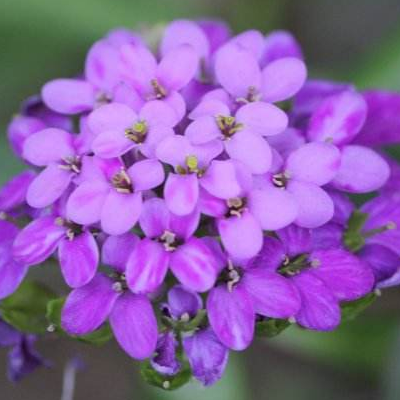
Iberis flowering period:
Iberis is a plant that blooms in spring and summer, and the flowering period is generally in May.
The flowers of Iberis are generally purple or white. It belongs to the Brassicaceae family, has 4 petals, and the flowers also give off a fragrance.
Iberis can be used as a combined potted flower for ornamental display, and can also be used to arrange flower borders and rock gardens.
Care for Iberis during its flowering period:
When growing Iberis, note that if too much fertilizer is applied, its branches and leaves will become leggy
Fertilizing, but if there is not enough fertilizer, the branches and leaves will become thin and long, the leaves will turn yellow, and it will bloom less or not bloom at all. Therefore, when fertilizing, be sure to fertilize at the right time and in the right amount. During the vigorous growth period in spring and summer, more fertilizer can be applied; when autumn arrives, reduce fertilizing; in winter, stop fertilizing.
In order for Iberis to bloom better, pruning is needed, generally after flowering, cutting off the spent flowers, which can extend its flowering period.
That is all for the introduction to the flowering period of Iberis and the care methods for Iberis during its flowering period. Why not start growing it right away?
Growing methods and precautions for Iberis
Growing methods for Iberis
Pot and soil selection
When potting Iberis, you can choose loose, fertile sandy soil rich in humus, or use garden soil and fine sand mixed together with some base fertilizer. The flower pot should be chosen to suit the size of the Iberis, and it should be replaced as the Iberis grows.
Light and temperature
Iberis likes a growing environment with plenty of sunlight, is relatively cold-tolerant, and dislikes heat. During the growing season of Iberis, it needs to receive sufficient light, and it can be placed outdoors in a sunny spot for care. The suitable temperature for Iberis growth is between 15°C and 35°C, and attention should be paid to the hot summer.
Watering and fertilizing
Iberis dislikes both drought and waterlogging, so watering should be moderate. In spring and winter, keep the potting soil moist; in summer and autumn, water once every morning and evening, and when the temperature is high and there is little rain, increase watering as well. Fertilizing should also be kept to a certain amount. If too much fertilizer is applied, the Iberis plant will become leggy; on the contrary, if too little fertilizer is applied, the Iberis plant will grow poorly, the leaves will turn yellow, and flowering will be reduced. During the vigorous growth period in spring and summer, more fertilizer is needed; when autumn arrives and growth slows, fertilizing can be reduced. In winter, the plant goes dormant, so no fertilizer is needed.
Propagation methods
For the propagation of Iberis, use bulbs to produce bulbs, and corms, scales, small bulbs and seeds can be used to cultivate bulbs.
Precautions for growing Iberis
Pruning
During the growth period of Iberis, plant adjustment should be carried out. When seedlings emerge, keep only the robust stems for layering, and during the growth process, remove part of the buds and flower buds to promote plant growth. After Iberis blooms, the spent flowers should also be cut off, which can extend the flowering period of Iberis. It is also necessary to cut off overly long branches, overly dense branches, and dead or diseased branches at any time to ensure good growth of Iberis.
Repotting
Potted Iberis needs to be repotted and have its soil changed every 2 to 3 years, which is beneficial for the further growth of the plant.
Pests and diseases
The main pests and diseases of Iberis include gray mold, black spot, rust, and damage from white grubs, aphids, etc., which require spraying treatment.
Iberis umbellata Iberis illustrated guide: how to grow Iberis / how to propagate Iberis
Iberis profileIberis umbellata
Growing methods and precautions for Iberis Introduction to Iberis
The widely cultivated horticultural ornamental plant Iberis umbellata, native to southern Europe, annual or biennial, has flat inflorescences, blooms in late summer, and is pink, violet, white, purple or red. The plant height is 40 cm, the leaves are narrow and long, and the carpels are round.
Rock candytuft (I. amara, namely Iberis) has thick leaves and deep lobes; the flowers are large, white, often tinged with pink, fragrant, and the flower stalk is 22 cm (9 in) long. It grows on chalky hillsides and in fields.
Iberis saxatilis and the larger-growing evergreen candytuft (I. sempervirens) are two kinds of spreading, evergreen, perennial, white-flowered Iberis, both native to open areas in southern Europe, and widely cultivated in gardens.
The flower language of Iberis
The temptation of the soul
Distribution range of Iberis
It is native to central Europe and the Mediterranean region, and has now been introduced and cultivated artificially.
Garden uses of Iberis
Garden uses: suitable for arranging rock gardens, flower beds, flower borders or potted plants. A small cool-toned flower with a strong wild charm, vitality, and very strong self-sowing ability. The flowering period can be controlled by adjusting the sowing time, making it highly compatible with other flowers, and suitable for use in various wildflower combinations.
Morphological characteristics of Iberis
Fragrant, plant height 20-75 cm, autumn sowing, flowering period April-June, spring sowing, flowering July-September, germination in 15 days, taproot system, mostly direct sowing, transplanting with soil, protection for overwintering in cold regions, extensive management, clustered planting in pots, flower borders, and wild gardens. A traditional cut flower material in Western Europe, seeds can be kept for 3 years.
Cultivation techniques for Iberis
A preliminary study was conducted on the in vitro rapid propagation technique of Iberis intermedia Guersent. Through orthogonal experimental design combined with analysis of variance and multiple comparisons, the key influencing factors, existing problems and solutions, optimal culture formula and culture procedure for the in vitro culture of Iberis intermedia were explored, thereby establishing a rapid propagation system for Iberis intermedia, laying a certain foundation for further research on this plant in the future, and providing a technical basis for factory seedling production. Through the research, it was concluded that: (1) The best time for collecting stem segments and leaves of Iberis is from March to May. (2) For the sterilization method of Iberis, stem segments are best treated with 0.1% HgCl2 for 5 min; leaves are best treated with 0.1% HgCl2 for 3 min. (3) Screening of primary hormone ratios: the most suitable formula combination for stem segments is: MS+6-BA0.5mg.L-1+NAA0.5mg.L-1+IBA0.1mg.L-1, with a initiation rate of 70.12%, callus formation rate of 52.65%, budding index of 5.36, and contamination rate of 36.12%; the most suitable formula combination for leaves is: MS+6-BA2.0mg.L-1+NAA0.01mg.L-1+2,4-D0.1mg.L-1, with a initiation rate of 100%, callus formation rate of 93.73%, and good callus quality. (4) Subculture proliferation culture: the optimal combination suitable for adventitious bud proliferation culture is: MS+6-BA2.0mg.L-1+IBA1.0mg.L-1, with a proliferation multiple of 5.5 times, effective seedling number of 3.4, and green and robust seedlings; the most suitable formula for callus proliferation is: MS+6-BA2.0mg.L-1+NAA0.01mg.L-1+2,4-D0.1mg.L-1, with a proliferation multiple of 3.59, and the callus is dark green in color and dense in texture; the most suitable formula combination for callus differentiation is MS+6-BA2.0mg.L-1+NAA0.01mg.L-1, with a regeneration rate of 90.48% and 7 adventitious buds. (5) Rooting culture: the best basic medium type is 1/2 modified MS, the best sucrose concentration is 25g.L-1, and the best activated carbon concentration is 2g.L-1; the best hormone formula combination is 6-BA0.01mg.L-1+NAA0.05mg.L-1+IBA1.0mg.L-1, with a rooting rate of 92.38%, rooting number of 8.19 roots, rooting length of 3.63 cm, and robust plants. (6) Hardening and transplanting: the best substrate is perlite:vermiculite:river sand 1:1:1, with a survival rate reaching 86.73%.
Disease control of Iberis
The main diseases are black spot, gray mold and rust, which can be controlled by spraying with 500 times diluted 25% carbendazim wettable powder. Pests include white grubs and aphids, which can be killed by spraying with 1000 times diluted 50% dichlorvos emulsifiable concentrate. Lilium speciosum has relatively many pests and diseases. Common diseases include soft rot, rot, mosaic disease, and anthracnose; pests include root mites and white grubs. The specific symptoms and control methods are: rot disease: the bulb first turns grayish white, then turns black and soft. Control method: pay attention to drainage and moisture prevention; after emergence, spray Bordeaux mixture once every 10 days, for 3 to 4 consecutive times. Bulb rot: the bulb shows brown lesions when affected. Control method: dress seeds with 0.5% (bulb weight) quintozene, and drench with 200-400 times diluted 50% amobam at 1 gram. Root mites: the insects are tiny, white, 1 mm long, and mainly damage the base of the bulb. Control method: apply fully decomposed base fertilizer; soak the bulb in warm water for 50 seconds before planting, with the water temperature at 50-55°C. White grubs: larvae. Control method: remove larvae from the fertilizer and catch them manually.
Propagation methods of Iberis
Propagation method: the method of cultivating Iberis is to use bulbs to produce Iberis bulbs. Bulbs are generally cultivated from corms, small bulbs, scales and seeds.
Iberis pictures