Milk Strawberry Cultivation Techniques and Pest and Disease Control Methods
Milk strawberries are something many people love to eat. Strawberries with a milk flavor, isn't that just super magical? What are the cultivation techniques for milk strawberries? What are the pest and disease control methods for milk strawberries:
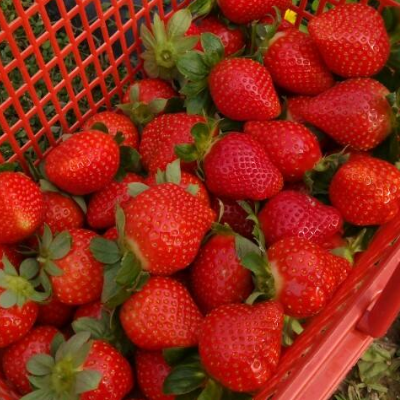
Milk strawberry cultivation techniques:
First, for the milk strawberry plantation, you must choose a location with ample sunlight and slightly higher terrain. In addition, the ground needs to be kept level, which makes irrigation and drainage easier. Fertile and loose soil is also very important for cultivating this type of fruit.
Second, before planting milk strawberries, the growers involved need to first remove weeds and eliminate pests.
Third, regarding irrigation and drainage methods during the growing process, water should be applied once each during the flowering stage and the early stage of berry growth of milk strawberries. It is recommended to use furrow irrigation. Generally, it is best to let the water fill to two-thirds of the furrow height, then allow the water to gradually seep into the bed soil, and finally drain the excess water from the furrow.
Fourth, if the weather and terrain are relatively dry, it is recommended that growers water once every 5-7 days. If it is a rainy autumn season, then timely and effective drainage of excess water from the furrows is also very important to note.
Fifth, for milk strawberry cultivation, ventilation inside the greenhouse is also very important. The soil moisture for growing this type of fruit is usually best kept at 70%-80%, while the air humidity inside the greenhouse is best kept within the range of 60%--70%. As for temperature, try not to exceed 30°C. If it does exceed that, be sure to ventilate immediately, as this can effectively lower the air humidity and temperature inside the greenhouse.
Sixth, when milk strawberries are in the flowering stage, an appropriate number of bees should be kept inside the greenhouse, and nylon mesh that meets regulations should be installed at both ends of the large and medium greenhouses. This facilitates ventilation while also preventing the occurrence of powdery mildew in strawberries.
Milk strawberry disease control:
1. Leaf spot disease: also called snake-eye disease, it mainly damages leaves, leaf stalks, fruit stalks, young stems and seeds. Dark purple small spots form on the leaves, and after expanding they form nearly round or oval lesions with purplish red-brown edges and grayish white centers, with faint fine rings, making the entire lesion look like a snake eye. No small black grains form on the lesions.
Control measures: promptly remove diseased leaves and old leaves. In the early stage of the disease, use 70% chlorothalonil wettable powder at 500x-700x dilution, then spray again after ten days. Or use 70% mancozeb wettable powder, 200 grams per mu mixed with 75 kilograms of water for spraying.
2. Powdery mildew: it mainly damages leaves, and also attacks flowers, fruits, fruit stalks and leaf stalks. Leaves curl upward into a spoon shape. Affected flower buds and petals turn purplish red, cannot bloom or cannot bloom fully, and the fruit does not expand, taking on a slender shape; young fruit loses its luster and hardens. Strawberries damaged near the ripening stage lose their commercial value.
Control measures: on the central diseased plants and around them, focus on spraying 0.3 degree Baume lime sulfur mixture. After harvest, cut all leaves in the plantation and spray 70% thiophanate-methyl at 1000x dilution, or 50% thiram at 800x dilution, and 30% triflumizole at 5000x dilution, etc.
3. Gray mold: it is the main disease after flowering, and can occur on flowers, petals, fruits and leaves. On fruits during the enlargement stage, brown spots form and gradually expand, densely covered with gray mold, causing the fruit to soften and rot, seriously affecting yield.
Control measures: carry out from bud emergence to flowering stage, spraying with 25% carbendazim wettable powder at 300x dilution, 50% captan wettable powder at 800x dilution, 50% iprodione at 500x-700x dilution, etc. Root rot: it starts from the lower leaves, the leaf edges turn reddish brown and gradually wilt upward until death. The crown begins to turn dark brown and rot in the middle, and the central column of the root turns red. Control measures: before transplanting strawberries, use 40% asparagus green powder at 600x dilution, pour it onto the bed surface, then cover with soil, level and transplant, to effectively kill pathogens in the soil, reduce the base number of inoculum in the field, and reduce chances of infection.
4. Verticillium wilt: this disease is a soil-borne disease. The main symptoms are deformed young leaves, yellowing leaves, and an extremely rough leaf surface. Subsequently the leaf edges turn brown and wilt inward until death.
Control measures: strictly introduce disease-free plants for planting; shorten the renewal period; use chloropicrin 13.5 liters to 20 liters, or solar film mulching with irrigation, for soil disinfection; affected plants must be pulled out and burned.
That is all for the cultivation methods of milk strawberries and the pest and disease control methods. Hurry and try planting them.
Key Points for Milk Strawberry Cultivation Milk Strawberry Disease Control
"Milk strawberries" are favored by many urban residents. It is said that this kind of "milk strawberry" is grown by watering with milk, so it has a strawberry flavor and tastes quite sweet. Many consumers also choose to grow milk strawberries themselves, so how do you grow milk strawberries? What should be noted? Below, let's learn about the key points of milk strawberry cultivation and milk strawberry disease control.
Key points for milk strawberry cultivation
First, for the milk strawberry plantation, you must choose a location with ample sunlight and slightly higher terrain. In addition, the ground needs to be kept level, which makes irrigation and drainage easier. Fertile and loose soil is also very important for cultivating this type of fruit.
Second, before planting milk strawberries, the growers involved need to first remove weeds and eliminate pests.
Third, regarding irrigation and drainage methods during the growing process, water should be applied once each during the flowering stage and the early stage of berry growth of milk strawberries. It is recommended to use furrow irrigation. Generally, it is best to let the water fill to two-thirds of the furrow height, then allow the water to gradually seep into the bed soil, and finally drain the excess water from the furrow.
Fourth, if the weather and terrain are relatively dry, it is recommended that growers water once every 5-7 days. If it is a rainy autumn season, then timely and effective drainage of excess water from the furrows is also very important to note.
Fifth, for milk strawberry cultivation, ventilation inside the greenhouse is also very important. The soil moisture for growing this type of fruit is usually best kept at 70%-80%, while the air humidity inside the greenhouse is best kept within the range of 60%--70%. As for temperature, try not to exceed 30°C. If it does exceed that, be sure to ventilate immediately, as this can effectively lower the air humidity and temperature inside the greenhouse.
Sixth, when milk strawberries are in the flowering stage, an appropriate number of bees should be kept inside the greenhouse, and nylon mesh that meets regulations should be installed at both ends of the large and medium greenhouses. This facilitates ventilation while also preventing the occurrence of powdery mildew in strawberries.
Milk strawberry disease control
1. Leaf spot disease: also called snake-eye disease, it mainly damages leaves, leaf stalks, fruit stalks, young stems and seeds. Dark purple small spots form on the leaves, and after expanding they form nearly round or oval lesions with purplish red-brown edges and grayish white centers, with faint fine rings, making the entire lesion look like a snake eye. No small black grains form on the lesions.
Control measures: promptly remove diseased leaves and old leaves. In the early stage of the disease, use 70% chlorothalonil wettable powder at 500x-700x dilution, then spray again after ten days. Or use 70% mancozeb wettable powder, 200 grams per mu mixed with 75 kilograms of water for spraying.
2. Powdery mildew: it mainly damages leaves, and also attacks flowers, fruits, fruit stalks and leaf stalks. Leaves curl upward into a spoon shape. Affected flower buds and petals turn purplish red, cannot bloom or cannot bloom fully, and the fruit does not expand, taking on a slender shape; young fruit loses its luster and hardens. Strawberries damaged near the ripening stage lose their commercial value.
Control measures: on the central diseased plants and around them, focus on spraying 0.3 degree Baume lime sulfur mixture. After harvest, cut all leaves in the plantation and spray 70% thiophanate-methyl at 1000x dilution, or 50% thiram at 800x dilution, and 30% triflumizole at 5000x dilution, etc.
3. Gray mold: it is the main disease after flowering, and can occur on flowers, petals, fruits and leaves. On fruits during the enlargement stage, brown spots form and gradually expand, densely covered with gray mold, causing the fruit to soften and rot, seriously affecting yield.
Control measures: carry out from bud emergence to flowering stage, spraying with 25% carbendazim wettable powder at 300x dilution, 50% captan wettable powder at 800x dilution, 50% iprodione at 500x-700x dilution, etc. Root rot: it starts from the lower leaves, the leaf edges turn reddish brown and gradually wilt upward until death. The crown begins to turn dark brown and rot in the middle, and the central column of the root turns red. Control measures: before transplanting strawberries, use 40% asparagus green powder at 600x dilution, pour it onto the bed surface, then cover with soil, level and transplant, to effectively kill pathogens in the soil, reduce the base number of inoculum in the field, and reduce chances of infection.
4. Verticillium wilt: this disease is a soil-borne disease. The main symptoms are deformed young leaves, yellowing leaves, and an extremely rough leaf surface. Subsequently the leaf edges turn brown and wilt inward until death.
Control measures: strictly introduce disease-free plants for planting; shorten the renewal period; use chloropicrin 13.5 liters to 20 liters, or solar film mulching with irrigation, for soil disinfection; affected plants must be pulled out and burned.
How do you grow milk strawberries? Milk strawberry cultivation techniques
Milk strawberries taste sweeter and more delicious than ordinary strawberries, and are currently a very popular strawberry variety on the market. So, how do you grow milk strawberries? Below is an introduction to milk strawberry cultivation techniques.
Many people think milk strawberries are grown by watering with milk, but this is actually a misunderstanding. Milk strawberries, like other strawberries, are grown through agricultural cultivation.
Site selection and land preparation
The strawberry plantation should be chosen in a place with ample sunlight, slightly higher terrain, level ground, convenient irrigation and drainage, fertile and loose soil, and a previous crop of legumes or onion and garlic vegetables. The plantation should first have weeds removed and underground pests eliminated. You can spray 50% phoxim emulsifiable concentrate at 1000x dilution (wetting the soil layer 5-6 cm) to control white grubs, mole crickets and cutworms.
After 1 week, apply per mu 5000 kilograms of high-quality decomposed farmyard manure, 100 kilograms of superphosphate and 50 kilograms of potassium chloride as base fertilizer. Combine with deep plowing of the plantation, finely prepare the land, and make beds 20 cm high and 50 cm wide, with furrows 30 cm wide. The length of the greenhouse should be limited to 20 m, with 4 beds inside.
Milk strawberry
Transplanting techniques
In order to strive for strawberries to reach the market from the end of January to early February, the time for transplanting strawberry seedlings from the propagation nursery to the greenhouse beds should be in early September. Seedlings should be lifted and transplanted as you go. Plant 2 rows per bed, with a row spacing of 27 cm and a hole spacing of 20 cm, planting 12000 plants per mu. When planting, the flower clusters of plants in the same row should face the same direction, with the arched back of the strawberry seedling facing the intended growth direction of the flower cluster, the crown exposed above the bed surface, and the root system spread flat and buried in the loose soil layer. Water promptly after planting, and bury exposed roots into the soil layer.
Planting management
1. Cultivation and fertilization. Loosening the soil by cultivation helps decompose organic matter. From November to December, shallow cultivation should be done 3 times. Apply topdressing once each at the early flowering stage and the early fruit-setting stage. Apply per mu 10 kilograms of urea, 20 kilograms of phosphate fertilizer, 10 kilograms of potassium chloride, or 35 kilograms of NPK compound fertilizer.
2. Management before flower bud differentiation. For strawberry seedlings transplanted in early September, in addition to timely water supplementation, a shade net should be added for shading. The net should be 1.2 m above the ground to facilitate worker operations. Promptly remove dead leaves, old leaves, axillary buds and stolons, keeping 5-6 leaves. Flower bud differentiation requires relatively low temperatures and short-day conditions, so straw mats (straw curtains) can be added over the shade net. Through the process of uncovering and covering the straw mats, short-day conditions and relatively low temperatures are artificially created to promote differentiation of the terminal flower cluster and axillary flower clusters, over a period of more than a month.
3. Irrigation and drainage methods. During flowering and the early stage of berry growth, irrigate once each. Furrow irrigation is preferable, filling water to 2/3 of the furrow height, allowing the water to gradually seep into the bed soil, and draining the remaining water from the furrow.
If the weather is dry, irrigate once every 5-7 days. Use a rubber hose with a section of metal pipe fitted on the front end for hole irrigation, which saves water and also keeps the bed soil loose. When there is a lot of rain in autumn, drain promptly. Drainage ditches should be prepared early around the strawberry plantation so that the water in the furrows inside the greenhouse can be fully drained.
4. Adding plastic film. From October to early November is the end of the strawberry flower cluster differentiation stage, and the shade net can be removed. In the Jianghuai region, cover with ground film after "Start of Winter," and cover with greenhouse film before "Major Snow," keeping the temperature inside the greenhouse at 28-30°C. In "warm winter" years, add medium greenhouse plastic film at the time of "Winter Solstice." In "cold winter" years, cover both large and medium greenhouse plastic film at the same time. In short, from "Minor Cold" to "Major Cold," the temperature inside the greenhouse should be kept above 25°C, and at least above 23°C. Only when the above temperatures are met can strawberries grow normally.
5. Ventilation operations. The soil moisture for strawberry seedling growth should be 70%-80% as appropriate. The air humidity inside the greenhouse is best at 60%--70%. Therefore, when the temperature inside the greenhouse exceeds 30°C, ventilate. From November to December, uncover the plastic film at both ends of the large and medium greenhouses from 10 a.m. to 3 p.m. for ventilation. When the humidity inside the greenhouse exceeds 70%, ventilate as well to lower the air humidity inside the greenhouse. During the flowering stage, keep bees inside the greenhouse, and additional nylon mesh can be made at both ends of the large and medium greenhouses to facilitate smooth ventilation. Another function of greenhouse ventilation is to prevent and control strawberry powdery mildew.
6. Harvesting. From flowering and fruit setting to the berries coloring, softening and releasing their distinctive aroma, the time is about 30 days. After the strawberry berries mature, they should be harvested in batches for market. The average yield of strawberries is 1500 kilograms per mu.
Milk strawberry
Disease control
1. Leaf spot disease: also called snake-eye disease, it mainly damages leaves, leaf stalks, fruit stalks, young stems and seeds. Dark purple small spots form on the leaves, and after expanding they form nearly round or oval lesions with purplish red-brown edges and grayish white centers, with faint fine rings, making the entire lesion look like a snake eye. No small black grains form on the lesions.
Control measures: promptly remove diseased leaves and old leaves. In the early stage of the disease, use 70% chlorothalonil wettable powder at 500x-700x dilution, then spray again after ten days. Or use 70% mancozeb wettable powder, 200 grams per mu mixed with 75 kilograms of water for spraying.
2. Powdery mildew: it mainly damages leaves, and also attacks flowers, fruits, fruit stalks and leaf stalks. Leaves curl upward into a spoon shape. Affected flower buds and petals turn purplish red, cannot bloom or cannot bloom fully, and the fruit does not expand, taking on a slender shape; young fruit loses its luster and hardens. Strawberries damaged near the ripening stage lose their commercial value.
Control measures: on the central diseased plants and around them, focus on spraying 0.3 degree Baume lime sulfur mixture. After harvest, cut all leaves in the plantation and spray 70% thiophanate-methyl at 1000x dilution, or 50% thiram at 800x dilution, and 30% triflumizole at 5000x dilution, etc.
3. Gray mold: it is the main disease after flowering, and can occur on flowers, petals, fruits and leaves. On fruits during the enlargement stage, brown spots form and gradually expand, densely covered with gray mold, causing the fruit to soften and rot, seriously affecting yield.
Control measures: carry out from bud emergence to flowering stage, spraying with 25% carbendazim wettable powder at 300x dilution, 50% captan wettable powder at 800x dilution, 50% iprodione at 500x-700x dilution, etc. Root rot: it starts from the lower leaves, the leaf edges turn reddish brown and gradually wilt upward until death. The crown begins to turn dark brown and rot in the middle, and the central column of the root turns red. Control measures: before transplanting strawberries, use 40% asparagus green powder at 600x dilution, pour it onto the bed surface, then cover with soil, level and transplant, to effectively kill pathogens in the soil, reduce the base number of inoculum in the field, and reduce chances of infection.
4. Verticillium wilt: this disease is a soil-borne disease. The main symptoms are deformed young leaves, yellowing leaves, and an extremely rough leaf surface. Subsequently the leaf edges turn brown and wilt inward until death.
Control measures: strictly introduce disease-free plants for planting; shorten the renewal period; use chloropicrin 13.5 liters to 20 liters, or solar film mulching with irrigation, for soil disinfection; affected plants must be pulled out and burned.
That is all for the introduction to milk strawberry cultivation techniques. Milk strawberries have a beautiful appearance and a milky taste, and paired with this name, they are very popular with consumers on the market. So for developing strawberry cultivation, milk strawberry is a variety worth considering.