Is Curcuma alismatifolia shade-loving or sun-loving? A detailed guide to growing it
Curcuma alismatifolia, this is a plant, and this Curcuma alismatifolia is quite beautiful when it blooms. What is the growing method for this Curcuma alismatifolia? Is Curcuma alismatifolia shade-loving or sun-loving:
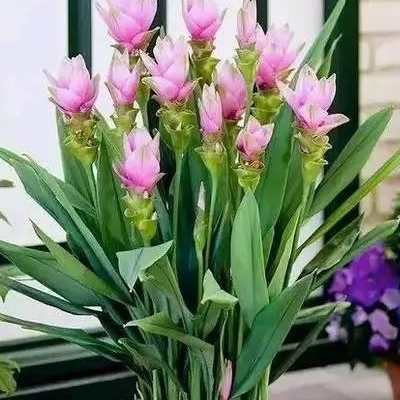
Curcuma alismatifolia belongs to the Zingiberaceae family, Curcuma genus, and is a perennial herbaceous tropical bulbous flower. Because its pink bracts closely resemble a lotus flower and it belongs to the Zingiberaceae, it is called Curcuma alismatifolia (Siam tulip).
Curcuma alismatifolia has a unique flower shape, vivid flower colors, and its flowering period is quite long, lasting as long as 3 months.
1. Bulbs: When planting, choose bulbs with a corm diameter of more than 1.5cm and with more than 3 storage roots;
2. Flower pot: Curcuma alismatifolia needs a relatively large pot, but do not use too deep a pot, as too deep a pot easily accumulates water and causes root rot;
3. Soil: Generally speaking, aside from sticky soil, which is unsuitable for Curcuma alismatifolia, it can adapt well to other soils. But for Curcuma alismatifolia to grow better, when growing potted Curcuma alismatifolia we can choose a sandy soil that can retain water but also has very good drainage, or a slightly acidic soil rich in humus, and we can also add some decomposed organic fertilizer at the bottom of the pot;
4. Water: When Curcuma alismatifolia has just been planted, the soil must be kept moist, with sufficient water. In the middle stage of Curcuma alismatifolia's growth, the soil should also be kept moist, but attention must be paid to drainage, otherwise the humid environment easily causes Curcuma alismatifolia to be infected with pathogens; when watering normally, be sure not to splash water onto the leaves and flowers.
5. Environment: The suitable growing temperature for Curcuma alismatifolia is 20°C~35°C, and it is best to place it in a half-shade, half-sun environment for growth. Under natural conditions, if the temperature drops and the days become shorter, Curcuma alismatifolia will enter a dormant state. Curcuma alismatifolia is a tropical flower, so a certain environmental humidity must be maintained to avoid dry air;
6. Fertilizing: After Curcuma alismatifolia sprouts, its growth rate increases, so its nutritional needs also increase. At this time we should fertilize appropriately, and it is best to use a compound fertilizer containing nitrogen, phosphorus, and potassium at the same time, as this provides more balanced nutrition and can simultaneously promote the growth of Curcuma alismatifolia's stems, leaves, and flowers.
That is all for the introduction to the growing method for Curcuma alismatifolia. This Curcuma alismatifolia is still quite suited to being grown in a half-shade, half-sun location.
Understanding flower and plant growing knowledge enriches daily life
Flower and plant growing is something people commonly encounter in daily life, and it has always received widespread attention from people. So what introductions are there about flower and plant growing? I believe everyone would also very much like to know the answer to this question, so now through learning about flower and plant growing knowledge, let us better apply it to daily life.
Introduction to plant growing media
1. Peat: Peat is a natural swamp product formed over thousands of years (also called grass peat or peat moss). It is the lowest degree of coalification of coal, and also the most primitive state of coal. It is sterile, non-toxic, and pollution-free, with good aeration, light weight, water retention, and fertilizer retention, and it is beneficial to microbial activity, enhancing biological performance. It is nutrient-rich, and is both a cultivation substrate and a good soil conditioner, and it contains very high organic matter, humic acid, and nutrients.
2. Coco coir: Coco coir is coconut shell fiber powder, a processed coconut by-product or waste material. It is a pure natural organic medium that falls off during the processing of coconut shell fiber. After processing and treatment, coco coir is very suitable for cultivating plants, and it is currently a relatively popular horticultural medium.
3. Garden soil: Garden soil is also called vegetable garden soil or field soil. This is ordinary cultivation soil. Because it is frequently fertilized and cultivated, it has relatively high fertility and good granular structure, and it is one of the main raw materials for preparing culture soil. Its disadvantage is that when dry the surface layer easily hardens, and when wet it has poor aeration and water permeability, so it cannot be used alone. The surface sandy loam soil that has been used to grow vegetables or legume crops is the best.
4. Akadama soil: Formed from accumulated volcanic ash, it is one of the most widely used soil media. This is also one of the most widely used cultivation media in Japan. It is a highly permeable volcanic mud, dark red round-shaped granules, with no harmful bacteria, and a slightly acidic pH. Its shape is conducive to water retention and drainage. The percentage generally mixed with other materials is 30-35%, higher than peat. Its effect can rival that of peat.
5. Vermiculite: Vermiculite is a natural, non-toxic mineral, a mineral that expands under high temperature. It is a relatively rare mineral and belongs to the silicates. Its crystal structure is monoclinic, and in appearance it looks like mica. Vermiculite is produced when certain granite hydrates. It is generally produced together with asbestos. Because vermiculite has ion exchange capacity, it has a great effect on soil nutrition. In 2000, total world vermiculite production exceeded 500,000 tons. The main producing countries are China, South Africa, Australia, Zimbabwe, and the United States.
6. Perlite: Perlite Perlite is a glassy rock formed from acidic lava erupted by volcanoes and cooled rapidly, named for its pearl-like fissure structure. Perlite ore includes perlite, obsidian, and pitchstone. The difference among the three is that perlite has arc-shaped cracks formed by condensation, called perlite structure, with a water content of 2~6%; pitchstone has a unique resinous luster, with a water content of 6~10%; obsidian has a glassy luster and conchoidal fracture, with a water content generally less than 2%.
7. Kanuma stone: Kanuma stone is waxy yellow in color, with a smooth surface and a solid structure. It is a volcanic stone, a stone formed after volcanic eruptions released large amounts of gas and heat and formed under special temperatures, porous, light in weight, able to quickly absorb nutrients and retain water, and then processed with high-tech techniques after being sterilized at a high temperature of 250 degrees. Therefore it has the characteristics of being light in weight and excellent in drainage, moisture retention, and air permeability, and after Kanuma stone gets wet, its color tends toward golden yellow, complementing elegant orchid plants beautifully.
8. River sand: River sand is produced from natural stone under natural conditions through the long-term repeated impact and friction of the force of water. It is a non-metallic ore with relatively complex composition, a certain smoothness on the surface, and high impurity content. River sand particles are round and smooth, relatively clean, and widely available; river sand has no smell, while sea sand has a salty taste.
9. Rainbow stone: Cute in color, uniform in granule, round and smooth in appearance, it does not damage roots. It has suitable bulk density, can fix plants very well, is not easily decomposed, is not easily broken, and can be used for a long time. It has both very good air permeability and relatively good water retention, and a certain fertilizer retention capacity. At the same time, imported long-acting controlled-release fertilizer has been added, containing rich trace elements and rare earth element mineral granules that are released over the long term. The pH is slightly acidic, the EC value is low, there are no weed seeds at all, it contains no pathogens, and it does not breed mosquitoes or insects.
10. Hyuga stone: Hyuga stone, like other pumice, is very dry. It is also widely used in Korea. Slightly acidic, it is suitable for plant varieties that do not like repotting and do not need repotting. Besides Oriental orchids, bonsai, foliage palms, cactus-type plants, and aquatic plants, it is also relatively suitable as cultivation soil for general potted flowers and mountain grasses.
11. Maifan stone: Maifan stone is a composite mineral or medicinal rock that is non-toxic and harmless to organisms and has a certain biological activity. The main chemical components of Maifan stone are inorganic aluminosilicates. These include SiO2, Al2O3, Fe2O3, FeO, MgO, CaO, K2O, Na2O, TiO2, P2O5, MnO, etc., and it also contains all the major elements needed by animals, such as K, Na, Ca, Mg, Cu, Mo and other trace elements and rare earth elements, as many as about 58 kinds.
12. Kiryu sand: Kiryu sand is a volcanic sand named after its place of origin, Kiryu in Japan, and contains a large amount of Fe2O3 (iron oxide), appearing as hard stone sand. It is used for planting orchids, deciduous plants, and so on. Fuji sand is also named after a place name, produced in the area of Mount Fuji in Japan. This medium has very good permeability, water retention, circulation, and drainage. It is suitable for plants such as bonsai and alpine flowers.
13. Kanuma soil: A rare substance, produced in volcanic areas, generated from lower-layer volcanic soil, in the form of volcanic sand, with an acidic pH, and with very high permeability, water retention, and air permeability. The size of Kanuma soil is not very uniform, with many pores. This soil is mainly used for bonsai, Oriental orchids, alpine flowers, and so on.
14. Pumice: Pumice has a porosity of 71.8-81% and a water absorption rate of 50-60%. It is named for having many pores, being light in weight, having a bulk density of less than 1 gram per cubic centimeter, and being able to float on water. Its characteristics are light weight, high strength, acid and alkali resistance, corrosion resistance, and being pollution-free and non-radioactive, making it an ideal natural, green, and environmentally friendly product
15. Diatomite: Diatomite is a siliceous rock, mainly distributed in China, the United States, Denmark, France, the Soviet Union, Romania, and other countries. It is a biogenic siliceous sedimentary rock, mainly composed of the remains of ancient diatoms. Its chemical composition is mainly SiO2, which can be expressed as SiO2?nH2O, and its mineral components are opal and its varieties. In China, diatomite reserves are 320 million tons, and prospective reserves reach more than 2 billion tons, mainly concentrated in East China and Northeast China. Among them, Jilin, Zhejiang, Yunnan, Shandong, Sichuan, and other provinces have larger scale and more extensive work. Although the distribution is wide, high-quality soil is only concentrated in the two regions of Changbai, Jilin, and Yunnan. Most other deposits are grade 3~4 soil, and because of their high impurity content, they cannot be directly deeply processed and utilized.
16. Rice husk: (burned black and crushed, it is called chaff ash) It can increase heat absorption, raise ground temperature and water temperature, promote plant growth, and reduce cold damage. It is loose and porous, with good aeration, increasing oxygen supply to the roots. It promotes plant absorption, improves acidic soil, reduces fertilizer loss and volatilization, and prevents invasion by types such as mollusks.
17. Sphagnum moss: A pure natural product, the material is clean and pathogen-free, and can reduce the occurrence of pests and diseases. It has good water retention and drainage performance, and excellent air permeability. It is not easily spoiled and can be used for a long time. When repotting, it is not necessary to completely replace the material. It can be used alone or mixed with other substrates, and cultivation is easy.
18. Volcanic rock: Volcanic rock (basalt) is a porous stone material formed after volcanic eruptions, and is very precious. Shanghai Yanlei volcanic rock contains rich minerals such as sodium, magnesium, aluminum, silicon, calcium, manganese, iron, phosphorus, nickel, cobalt, and so on. It can promote plant growth, increase soil air permeability, and prevent root rot.
19. Xiantu: Because Xiantu contains a variety of trace elements, and also because of its own cohesion, it does not loosen, has good water retention and air permeability, does not harden, has no bacteria, does not tangle roots, and produces many sprouts. Within two years there is no need to fertilize, and after 3-5 years a light application of thin fertilizer can be given. It is especially suitable for friends who are beginners at growing orchids; there is no need to worry about how to fertilize orchids, and it is enough to master the watering method.
20. Leaf mold: First, it is light and loose, with good water permeability and air permeability, and strong water and fertilizer retention; second, it is porous and does not harden with long-term use, and is easily absorbed by plants. Mixed with other soils, it can improve the soil and raise soil fertility; third, it is rich in organic matter, humic acid, and a small amount of vitamins, auxins, trace elements, and so on, and can promote plant growth and development; fourth, the high temperature during decomposition and fermentation can kill pathogens, insect eggs, weed seeds, and so on within it, reducing pest, disease, and weed damage
21. Orchid stone: A general term for porous stone materials used in orchid cultivation, it is a positive medium. There are naturally formed types and artificial types. These include pond cornerstone, floating stone, Kanuma stone, volcanic rock, and so on. Orchid stone is widely used in home cultivation of orchids and cymbidiums. They generally have porosity, with pores visible to the naked eye, so they have very strong water absorption and retention; and because they are granular, when piled up there are large gaps between the granules, so they also have quite good air permeability. Orchids grown with them are not easily subject to root rot, and they are clean and attractive, making them a relatively ideal medium for planting orchids.
22. Coal cinder: Coal cinder is a type of industrial solid waste, the waste residue discharged from coal burning in thermal power plants, industrial and civil boilers, and other equipment, also called furnace slag. Its main components are silicon dioxide, aluminum oxide, iron oxide, calcium oxide, magnesium oxide, and so on. It can be used for succulent plant cultivation. Because coal cinder contains various chemical elements, it can be soaked for a short time before use to reduce the content of chemical elements.
23. Pine bark: A substrate produced by fermenting the dried outer bark of trees such as pine trees. It retains water, is air-permeable, and is not prone to insects. It is a relatively good orchid cultivation substrate, and can also be used for plant topdressing and various other artistic forms.
24. Eggshell: A product obtained after removing the egg white and yolk from an egg, rinsing it, and crushing it, and it is relatively common. It can be used as a substrate for cultivating succulent plants. It is air-permeable and moisture-proof, but should not be used in too large an amount, as it easily clumps.
25. Zeolite: The general chemical formula of zeolite is: AmBpO2p?nH2O, and the structural formula is A(x/q) [ (AlO2)x (SiO2)y ] n(H2O), where: A is cations such as Ca, Na, K, Ba, Sr; B is Al and Si; q is the cation valence; m is the number of cations; n is the number of water molecules; x is the number of Al atoms; y is the number of Si atoms; (y/x) is usually between 1 and 5; and (x+y) is the number of tetrahedra in the unit cell. More than 30 kinds of zeolite have been discovered in nature. The more common ones are analcime, chabazite, gmelinite, heulandite, natrolite, mordenite, stilbite, and so on, all mainly containing calcium and sodium. The amount of water they contain changes with changes in external temperature and humidity, and they can be used to cultivate plants.
26. Ceramsite, as the name suggests, is ceramic granules. The appearance of ceramsite is mostly round or elliptical spheres, but some imitation crushed-stone ceramsite is not round or elliptical spheres, but rather irregular crushed-stone shapes. The shape of ceramsite varies depending on the process. Its surface is a hard outer shell, and this shell is ceramic or enamel, has a water-insulating and air-retaining effect, and gives ceramsite relatively high strength. The appearance color of ceramsite varies depending on the raw materials and process used. The color of fired ceramsite is mostly dark red or ochre red, and some special varieties are grayish yellow, grayish black, grayish white, bluish gray, and so on. When cultivating plants, it is generally placed at the bottom of the pot to serve a drainage and aeration function.
27. Nikko sand: Nikko sand is similar to Kanuma stone, and easily produces powder when rubbed. Its place of origin is Nikko, Japan. It is a white lightweight volcanic soil, often used as an orchid and succulent medium or topdressing, and its color is pale yellow.
Introduction to woody flowers in the classification of flowers
Woody flowers. The stems of this type of flowering plant are lignified and relatively hard, and they are generally taller and larger than herbaceous types. According to their morphological characteristics, they can generally be divided into 3 types: tree type, shrub type, and vine type (also called liana type).
Tree-type flowers. The tree body is tall and large, with an obvious trunk, upright, vigorous in growth, and with luxuriant branches. According to their evergreen or deciduous growth habit, this type of flowering plant can also be divided into evergreen tree flowers and deciduous tree flowers. Evergreen tree flowers include Magnolia grandiflora, Michelia alba, Osmanthus fragrans, Manglietia, and so on; deciduous tree flowers include Magnolia denudata, plum blossom, ornamental peach blossom, Malus spectabilis, and so on.
Shrub flowers. Without an obvious main trunk, the tree shape is low and short, often branching from the root crown, and they can also be divided into two types: evergreen shrub flowers and deciduous shrub flowers. The former include rhododendron, camellia, gardenia, Aglaia odorata, hibiscus, oleander, jasmine, and so on; the latter include rose, Chinese rose, winter jasmine, wintersweet, pomegranate flower, and so on
Vine flowers. The branches and stems are long and slender, unable to stand upright, and often climb or twine around other objects to grow, such as the evergreen ivy, Euonymus fortunei, honeysuckle, and so on; deciduous ones include trumpet creeper, wisteria, Boston ivy, and so on.
Another type is classification according to the ecological conditions of the flowers, that is, classification according to the different requirements of flowers for temperature, sunlight, and water. For example, according to temperature requirements, flowers can be divided into cold-tolerant flowers, semi-cold-tolerant flowers, and non-cold-tolerant flowers; according to sunlight requirements, they can be divided into sun-loving flowers, shade-loving flowers, and half-shade half-sun flowers; according to water requirements, they can be divided into aquatic flowers, hygrophytic flowers, xerophytic flowers, and mesophytic flowers.
There is also another type, classification according to the ornamental use of the flowers, which can be divided into five categories: flower-viewing flowers, foliage-viewing flowers, fruit-viewing flowers, stem-viewing flowers, and fragrant flowers.
Herbaceous flowers
(1) Annual flowers: They complete their life cycle within the same year, are usually sown in spring, bloom and bear fruit in summer and autumn, and in production they are also called spring-sown flowers. Such as: globe amaranth, phlox, Scutellaria barbata, impatiens, marigold, and so on.
(2) Biennial flowers: Flowers that complete their life cycle across years, usually sown in autumn, remaining only in vegetative growth in the same year, undergoing vernalization during the winter low-temperature process, and then being able to bloom, set seed, and die in the spring and summer of the following year, so they are also called autumn-sown flowers. Such as: pot marigold, daisy, stock, pansy, and so on.
(3) Perennial herbaceous flowers: They usually bloom and set seed many times, with a lifespan of more than two years. According to the morphology of the underground part, they can be divided into two types:
① Perennial root flowers: The roots persist through the winter, and in the following spring they continue to sprout and grow. The root morphology is normal and does not undergo metamorphosis. Such as: chrysanthemum, daylily, peony, hosta, wax begonia, bleeding heart, carnation, and so on.
② Bulbous flowers: The underground part has enlarged, nutrient-rich metamorphosed stems or metamorphosed roots, mainly including
a Corm type: The underground stem is shortened and enlarged, wrapped in several layers of membranous outer skin. The lower part of the corm forms ring-shaped traces, namely the shortened nodes. At the top there is an enlarged terminal bud, which sprouts to form the aboveground part, and in spring or autumn it is propagated by the enlarged corm or daughter corms. Such as: gladiolus, freesia, saffron crocus.
b Bulb type: The underground stem is shortened or forms a disk-shaped bulb plate. Such as narcissus, lily, hyacinth, tulip, amaryllis, and so on.
c Rhizome type: An underground stem that looks like a root, mostly fleshy and enlarged, with branches, obvious nodes and very short internodes, with a lateral bud at each node, located in the axil of the degenerated scalelike leaf at the node. Such as: canna, ginger lily, lily of the valley.
d Tuber type: A short but enlarged irregular tuberous-root-like underground stem with very short nodes, with bud eyes on the nodes, which can sprout branches and leaves, and it is usually propagated by tubers. Such as calla lily, gloxinia, caladium, cyclamen, and so on.
e Tuberous root type: The root swells into a tuberous root, and the top of the tuberous root has a sprouting point, from which new shoots sprout. Such as dahlia, Persian buttercup, and so on.
(4) Aquatic flowers: They grow in water all year round, and most are perennial herbaceous flowers with rhizomes and perennial roots. According to their posture when growing in water, they can be divided into four types:
Emergent type: Stems, leaves, and flowers stand above the water surface, and the root system is anchored in the mud. Such as lotus, Acorus calamus, and so on.
Floating-leaved type: Stems, leaves, and flowers float on the water surface, and the root system is anchored in the mud. Such as water lily, Victoria water lily, and so on.
Submerged type: The stems and leaves of the plant all sink in the water, and the root system is anchored in the mud. Such as hornwort, pondweed, tape grass, and so on.
Free-floating type: The root system does not enter the soil, and the whole plant floats and moves on the water surface.
(5) Cactus and succulent plant category: Stems and leaves have various metamorphoses, with developed water-storage tissue, appearing thick and fleshy and succulent. Some species have leaves degenerated into needle-like spines, and 'areoles' grow on the metamorphosed stems. The areoles, offsets, stem segments, and flowers have peculiar forms and vivid flower colors, and are quite interesting. Common ones include: cactus, ball cactus, Epiphyllum, Christmas cactus, night-blooming cereus, Echeveria, jade plant, and so on.
(6) Lawn and groundcover plants:
① Lawn: Refers to the low, short grass types that cover the ground in gardens, mostly perennial herbs. Such as grasses, sedges, legumes, and so on, including Zoysia, ryegrass, buffalo grass, bermuda grass, bluegrass, bentgrass, carpet grass, fescue, and so on.
② Groundcover plants: A general term for low plant communities that can cover the ground, mainly perennial-root herbs, including foliage types, small shrubs, and vines.
Why do families plant flowers, what are the benefits of growing flowers, little knowledge about growing flowers
1. What are the benefits of growing flowers?
With their gorgeous elegance, flowers decorate nature extraordinarily beautifully and give people enjoyment of beauty. Growing flowers can enrich and regulate people's cultural life, add fun, cultivate temperament, and improve health; it can also increase scientific knowledge and improve cultural and artistic literacy. Growing flowers can green and beautify the land of the motherland, protect and improve it, purify the air, and enable people to work and study in a beautiful environment, making life better. Growing flowers is not only for ornamental appreciation, but also has many important economic values. Flowers are an important part of Chinese herbal medicine. Honeysuckle, chrysanthemum, wintersweet, hibiscus, rhododendron, Chinese rose, lotus, and so on are all commonly used Chinese medicinal materials. Fragrant flowers are widely used in food, light industry, and other aspects. For example, osmanthus can be used as a food flavoring and for brewing wine; jasmine, Michelia alba, bitter orange, and Chloranthus can be used to scent tea; and chrysanthemum can be used to make high-grade foods and dishes. Michelia alba, jasmine, rose, wintersweet, narcissus, and so on can be used to extract essences. Growing flowers can also earn foreign exchange and accumulate funds. For example, the high-grade essence refined from roses, rose oil, is regarded in the international market as "liquid gold," and its value is even more expensive than gold.
2. What categories are flowers divided into?
Our country has long had the reputation of "Mother of Gardens of the World," with rich flower resources and a great variety of species. To facilitate cultivation, management, and use, it is necessary to understand knowledge about the classification of flowers. Because the bases of classification are different, the methods of classification also vary. According to the morphological characteristics of flowers, they are usually divided into two major categories: herbaceous flowers and woody flowers. Those with soft stem texture are called herbaceous flowers, and those with hard lignified stems are called woody flowers. According to growth habits and morphological characteristics, they can generally be divided into herbaceous flowers, woody flowers, succulent flowers, and aquatic flowers. Herbaceous flowers, according to differences in their growth and development cycles, can also be divided into annual herbaceous flowers, biennial herbaceous flowers, perennial-root flowers, bulbous flowers, and lawn plants, and so on. Woody flowers, according to differences in trunk height and crown size, can also be divided into tree flowers, shrub flowers, and vine flowers. Succulent flowers have thick, fleshy stems and leaves, store abundant water in their bodies, and some have leaves degenerated into needle-like or feather-like forms,
with peculiar morphology, and therefore form a category of their own in horticultural cultivation.
Aquatic flowers grow in water and swampy areas all year round, and most belong to perennial plants. Classified according to the ornamental part, flowers can be divided into flower-viewing types (mainly for viewing flower color and flower shape, such as chrysanthemum, Chinese rose, and so on), foliage-viewing types (mainly for viewing leaf color and leaf shape, such as croton, caladium, and so on), fruit-viewing types (mainly for viewing fruit, such as kumquat, and so on), stem-viewing types (mainly for viewing branches and stems, such as pencil cactus, Cereus, and so on), and bud-viewing types (mainly for viewing buds, such as silver willow). Classified according to use, flowers can be divided into cut flowers (such as carnation, calla lily, and so on), indoor flowers (such as clivia, Monstera deliciosa, and so on), courtyard flowers (such as Chinese rose, chrysanthemum, and so on), medicinal flowers (such as peony, honeysuckle, and so on), spice flowers (such as Michelia alba, jasmine, rose, and so on), and edible flowers (lily, daylily, pomegranate). In addition, based on the climatic conditions of the places of origin of the flowers and according to natural distribution, flowers can be divided into tropical flowers, subtropical flowers, warm temperate flowers, temperate flowers, subfrigid flowers, alpine flowers, and so on. This classification method can reflect the habits of various flowers and the conditions that need to be met for their growth and development during cultivation.
3. What are bulbous flowers?
Bulbous flowers refer to perennial herbaceous flowers whose underground stems or roots have undergone metamorphosis and become spherical or similar in shape.
According to the morphological structure of their underground stems or roots, they can be roughly divided into 5 major categories:
Bulb type: The underground stem is scalelike. Those covered externally by a papery outer skin are called tunicate bulbs, such as tulip, narcissus, amaryllis, and so on; those whose scales are not covered by an outer skin are called non-tunicate bulbs, such as lily, and so on.
Corm type: The underground stem is spherical or flattened spherical, externally covered by a leathery outer skin, such as gladiolus, freesia, and so on.
Rhizome type: The underground stem is enlarged and root-like, with obvious nodes on it, and new buds are borne at the tips of the branches, such as canna, ginger lily, lotus, water lily, hosta, and so on.
Tuber type: The underground stem is irregularly block-shaped or strip-shaped, such as calla lily, cyclamen, gloxinia, tuberose, and so on.
Tuberous root type: The main underground root is enlarged and block-shaped, and the root system emerges from the end of the tuberous root, such as dahlia, and so on.
4. What is the relationship between temperature and growing flowers? Temperature is an important condition for the survival of all kinds of flowers. No matter how suitable other environmental conditions are, if there is no suitable temperature condition, flowers will find it difficult to survive. The growth and development of each kind of flower has its optimum temperature, maximum temperature, and minimum temperature. According to the temperature conditions of the places of origin of the flowers, they can be roughly divided into high-temperature types, medium-temperature types, and low-temperature types.
(1) High-temperature type: Such as Aglaia odorata, poinsettia, cineraria, gloxinia, fuchsia, and so on. When grown in North China, the winter room temperature must be kept at 12°C or above;
(2) Medium-temperature type: Such as Michelia alba, jasmine, hibiscus, geranium, and so on, the winter room temperature must not be lower than 5°C;
(3) Low-temperature type: Such as oleander, osmanthus, kumquat, bitter orange, cycad, and so on, the winter room temperature only needs to be not lower than 0 degrees. If the temperature is too high or too low, the normal physiological activities of the flowers will be destroyed, growth will stop, and in serious cases the whole plant will die.
5. What effect does light have on the growth and development of flowers? Light is the energy source for flowers and plants to manufacture nutrients. Without the presence of light, photosynthesis cannot proceed, and the growth and development of flowers will be seriously affected. Most plants can only have abundant flowers and luxuriant leaves under conditions of sufficient light. Different types of flowers have different requirements for light. As the flower proverb says: "Shade for camellia, sun for peony, half shade half sun for the four-season orchid." According to the different requirements of flowers for light intensity, flowers can be roughly divided into sun-loving flowers, neutral flowers, and shade-loving flowers.
(1) Sun-loving flowers: Most flower-viewing and fruit-viewing flowers belong to sun-loving flowers, such as Magnolia denudata, Chinese rose, pomegranate, plum blossom, crape myrtle, citrus, and so on. Among foliage-type flowers there are also a few sun-loving flowers, such as cycad, palm, croton, and so on. Most aquatic flowers, cacti, and succulent plants also belong to sun-loving flowers. All sun-loving flowers like strong light and cannot tolerate shade. If sunlight is insufficient, it easily causes excessive vegetative growth of branches and leaves, soft and weak tissues, pale and yellowing leaf color, difficulty in blooming or poor blooming, and susceptibility to pests and diseases;
(2) Shade-loving flowers: They grow well under shaded environmental conditions, such as asparagus fern, camellia, rhododendron, hosta, pothos, lucky bamboo, ivy, gloxinia, Monstera deliciosa, begonia, and so on. If exposed to strong light for a long time, their branches and leaves wither and yellow, growth stagnates, and in serious cases they even die;
(3) Neutral flowers: They grow well under conditions of sufficient sunlight, but in summer when light intensity is high they should be slightly shaded, such as osmanthus, jasmine, Michelia alba, hydrangea, and so on. In summary, various flowers have different requirements for light, and even the same kind of flower has different requirements for light at different stages of growth and development. The amount of light needed by seedlings can be gradually increased, while sun-loving chrysanthemums require short-day conditions to form flower buds.
6. What effect does light have on flower bud differentiation? The purpose of people cultivating flowers is to make them produce more flowers, and light is the most effective external factor promoting flower bud formation. On the same flower plant, branches that fully receive light have more flower buds; branches that receive insufficient light have fewer flower buds. When there are more sunny days in summer, flowers receive sufficient light, and there will be more flowers the following year. Generally speaking, flowers and plants can carry out photosynthesis under temperature conditions of 10-35°C, among which the most suitable temperature is 20-28°C. According to the requirements of flowers for the length of light time, flowers can be divided into 3 major categories:
(1) Long-day flowers: Flowers that generally need more than 12 hours of sunlight per day to form flower buds are called long-day flowers. Many flowers that bloom in spring and summer mostly belong to long-day flowers, such as iris, China aster, impatiens, and so on;
(2) Short-day flowers: Flowers that can only form flower buds under the condition that the daily sunlight time must be less than 12 hours are called short-day flowers. Poinsettia and chrysanthemum are typical short-day flowers. Under the long-day conditions of summer they can only grow and cannot carry out flower bud differentiation. After autumn begins, only when light decreases to 10-11 hours do they begin flower bud differentiation;
(3) Day-neutral flowers: Flowers whose flower bud formation does not have strict requirements for the length of daytime sunlight are called day-neutral flowers. Such as calla lily, carnation, zinnia, Chinese rose, hibiscus, and so on. They have no obvious response to the length of light time, and as long as the temperature is suitable, they can bloom all year round.
Through the detailed introduction in this article, I hope everyone can gain something from it! Thank you all for your support of and attention to Succulent Garden!