How to Make a Caragana Bonsai and Details on Repotting Frequency
Caragana is a plant that is quite attractive, with yellow flowers. What is the method for making a Caragana bonsai? How often should Caragana be repotted:
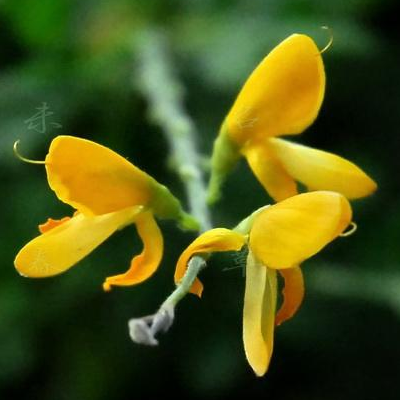
How to make a Caragana bonsai:
1. Obtaining material: The material for making a Caragana bonsai can be propagated by sowing, cuttings, division, layering and other methods. Caragana is best sown as soon as the seeds are collected; if stored dry, the seeds should be soaked and germinated before sowing the following spring.
Caragana cuttings can be taken as hardwood cuttings in February-March, or as softwood cuttings during the plum rain season. Cuttings should be cut to 8-12 cm, inserted to 1/2 their depth, then shaded with a frame after insertion, watered moderately, and once rooted the shade frame removed to give full light for robust growth, resulting in a relatively high survival rate. Caragana division propagation is carried out in spring, in February-March.
For the trunk material used to make a Caragana bonsai, besides growing from small seedlings, you can also dig up old trunks of many years from the wild, choosing material with a vigorous and elegant form. Digging can be done throughout the dormant period and the rainy season. 2. Potting: To make a Caragana bonsai, first choose a pot. For a Caragana bonsai, a round or square purple clay ceramic pot is preferable. For a cascade-style bonsai, a tall cylindrical pot is preferable; to fully display the Caragana roots, a somewhat shallower pot can be used.
Second, choose a suitable potting soil. For a Caragana bonsai, neutral or slightly acidic loam or light clay is preferable; alkaline soil should not be used, though ordinary potting soil or garden soil will also do. The best time to plant a Caragana bonsai is in early spring. Shaping: The main trunk and branches of the Caragana bonsai can be given appropriate bending shapes, but pay attention to the effect from every side; do not have bends on only one plane. For the small branches, pruning should be the main approach; do not cut them all to the same length, so as to appear uneven and well-arranged.
When changing the soil or repotting, you should make use of the Caragana's twisted and varied root system, arranging and laying out the roots, entwining them with each other, or appropriately binding them with palm fiber, so as to present the beautiful gnarled and interlocking root form.
Caragana bonsai care and management:
1. Placement: Caragana bonsai likes light and is drought-tolerant, so it is best placed in a spot with ample sunlight and good air circulation. It is also fairly cold-hardy in winter; south of the Yellow River it can overwinter outdoors, and it is best to bury the whole pot in soil.
2. Watering: For Caragana bonsai, follow the principle of "do not water until dry, and when watering, water thoroughly." Especially during the flowering period, keep the potting soil moist, which can prolong the flowering period.
3. Fertilizing: During the winter dormant period, a Caragana bonsai can be given one application of liquid fertilizer; before flowering in spring, water once with liquid fertilizer, which can prolong the flowering period; after the flowers fade, apply one more topdressing to stimulate the growth of branches and leaves. Ordinarily, a moderate application of light fertilizer is sufficient. Pruning: After leaf fall in winter, cut away all kinds of branches that affect the tree's shape; after flowering in spring, shorten the branches that have flowered to encourage new flowering branches; during the vigorous growth period, prune leggy branches at any time and pinch back appropriately to maintain the tree's graceful form.
4. Repotting: Repot once every 2-3 years, preferably in early spring. When repotting, remove about 1/2 of the old soil, replace it with fresh potting soil, trim the root system, replant, place in a spot with filtered light, water thoroughly, and frequently mist the trunk head with water; after it recovers its vigor, return to normal care.
That is all for the introduction to how to make a Caragana bonsai and how to repot it. Come and learn quickly.
How to Make a Caragana Bonsai and Caragana Bonsai Growing Methods
Caragana has fresh green leaves, and its flowers are papilionaceous, red-yellow, with a flowering period from April to May. It is mainly used for making bonsai and is very popular. Below, we will explain how to make a Caragana bonsai and the growing methods for Caragana bonsai.
How to make a Caragana bonsai
1. Obtaining material:
Caragana can be propagated by sowing, cuttings, division, layering and other methods. Sowing is best done as soon as the seeds are collected; if stored dry, the seeds should be soaked and germinated before sowing the following spring; cuttings can be taken as hardwood cuttings in February-March, or as softwood cuttings during the plum rain season. Cuttings should be cut to 8-12 cm, inserted to 1/2 their depth, then shaded with a frame after insertion, watered moderately, and once rooted the shade frame removed to give full light for robust growth, resulting in a relatively high survival rate; division propagation is carried out in spring, in February-March.
For the trunk material used to make a bonsai, besides growing from small seedlings, you can also dig up old trunks of many years from the wild, choosing those with a vigorous form and fine posture, which can achieve the effect of rapid formation. Digging can be done throughout the dormant period and the rainy season. The digging method is to first cut off most of the aboveground stems, then scrape away the surface soil, figure out the growth direction of the main root, and carefully and patiently dig along the course of the main root from far to near. This helps protect the root system and reduce damage. The dug-out roots are often very long; when cultivating, there is no need to shorten them, but place them in a shady spot, and when the roots are slightly dry, coil and shape them to use roots in place of a trunk, then pot and plant them. Never coil the roots while wet, otherwise they break easily. Handled this way, once formed the roots become gnarled and interlocking, very pleasing to the eye.
2. Potting:
Choosing a pot: For a Caragana bonsai, a round or square purple clay ceramic pot is preferable. For a cascade-style bonsai, a tall cylindrical pot is preferable; to fully display the Caragana roots, a somewhat shallower pot can be used.
Soil: For the potting soil, choose neutral or slightly acidic loam or light clay; alkaline soil should not be used, though ordinary potting soil or garden soil will also do.
Planting: Potting should be carried out in early spring.
3. Shaping:
The main trunk and branches can be given appropriate bending shapes, but pay attention to the effect from every side; do not have bends on only one plane; for the small branches, pruning should be the main approach; do not cut them all to the same length, so as to appear uneven and well-arranged. When changing the soil or repotting, you should make use of the Caragana's twisted and varied root system, arranging and laying out the roots, entwining them with each other, or appropriately binding them with palm fiber, so as to present the beautiful gnarled and interlocking root form.
For the shaping of a Caragana bonsai, those with a single trunk and twisted branches and an antique, elegant posture are best; it can also be made into a form with branches and leaves spreading and drooping; or with raised roots and exposed claws to show its aged appearance; or with branches and leaves pruned and bound into cloud-like clusters; to achieve the effect of beautiful form and brilliant flowers.
Caragana bonsai growing methods
Caragana bonsai likes light and is drought-tolerant, so it is best placed in a spot with ample sunlight and good air circulation. It is also fairly cold-hardy in winter; south of the Yellow River it can overwinter outdoors, and it is best to bury the whole pot in soil. For watering, follow the principle of "do not water until dry, and when watering, water thoroughly." Especially during the flowering period, keep the potting soil moist, which can prolong the flowering period. During the winter dormant period, apply one application of liquid fertilizer; before flowering in spring, water once with liquid fertilizer, which can prolong the flowering period; after the flowers fade, apply one more topdressing to stimulate the growth of branches and leaves. Ordinarily, a moderate application of light fertilizer is sufficient.
During the winter dormant period, a Caragana bonsai can be given one application of liquid fertilizer; before flowering in spring, water once with liquid fertilizer, which can prolong the flowering period; after the flowers fade, apply one more topdressing to stimulate the growth of branches and leaves. Ordinarily, a moderate application of light fertilizer is sufficient. After leaf fall in winter, cut away all kinds of branches that affect the tree's shape; after flowering in spring, shorten the branches that have flowered to encourage new flowering branches; during the vigorous growth period, prune leggy branches at any time and pinch back appropriately to maintain the tree's graceful form.
Repot once every 2-3 years, preferably in early spring. When repotting, remove about 1/2 of the old soil, replace it with fresh potting soil, trim the root system, replant, place in a spot with filtered light, water thoroughly, and frequently mist the trunk head with water; after it recovers its vigor, return to normal care.
The above is our introduction to how to make a Caragana bonsai and the growing methods for Caragana bonsai. We hope it can help everyone. For more home knowledge, please stay tuned.
Caragana Growing Methods and Caragana Bonsai Making
Caragana has elegant branches and leaves, gorgeous flower color, a posture like a flying sparrow, and golden-yellow flowers, so it is also called golden sparrow flower. It is suitable for bonsai making. Next, Xiao Qi will share Caragana growing methods and Caragana bonsai making.
I. Caragana growing methods
1. Placement: Caragana bonsai likes light and is drought-tolerant, so it is best placed in a spot with ample sunlight and good air circulation. It is also fairly cold-hardy in winter; south of the Yellow River it can overwinter outdoors, and it is best to bury the whole pot in soil.
2. Watering: For Caragana bonsai, follow the principle of "do not water until dry, and when watering, water thoroughly." Especially during the flowering period, keep the potting soil moist, which can prolong the flowering period.
3. Fertilizing: During the winter dormant period, a Caragana bonsai can be given one application of liquid fertilizer; before flowering in spring, water once with liquid fertilizer, which can prolong the flowering period; after the flowers fade, apply one more topdressing to stimulate the growth of branches and leaves. Ordinarily, a moderate application of light fertilizer is sufficient.
4. Pruning: After leaf fall in winter, cut away all kinds of branches that affect the tree's shape for Caragana; after flowering in spring, shorten the branches that have flowered to encourage new flowering branches; during the vigorous growth period, prune leggy branches at any time and pinch back appropriately to maintain the tree's graceful form.
5. Repotting: Repot Caragana once every 2-3 years, preferably in early spring. When repotting, remove about 1/2 of the old soil, replace it with fresh potting soil, trim the root system, replant, place in a spot with filtered light, water thoroughly, and frequently mist the trunk head with water; after it recovers its vigor, return to normal care.
II. Caragana bonsai making
1. Obtaining material: For the trunk material used to make a bonsai, besides growing from small seedlings, you can also dig up old trunks of many years from the wild, choosing those with a vigorous form and fine posture, which can achieve the effect of rapid formation. Digging can be done throughout the dormant period and the rainy season. The digging method is to first cut off most of the aboveground stems, then scrape away the surface soil, figure out the growth direction of the main root, and carefully and patiently dig along the course of the main root from far to near. This helps protect the root system and reduce damage.
2. Potting: For a Caragana bonsai, a round or square purple clay ceramic pot is preferable; to fully display the Caragana roots, a somewhat shallower pot can be used. For the potting soil, choose neutral or slightly acidic loam or light clay; alkaline soil should not be used, though ordinary potting soil or garden soil will also do. Potting should be carried out in early spring.
3. Shaping: The main trunk and branches can be given appropriate bending shapes, but pay attention to the effect from every side; do not have bends on only one plane; for the small branches, pruning should be the main approach; do not cut them all to the same length, so as to appear uneven and well-arranged. When changing the soil or repotting, you should make use of the Caragana's twisted and varied root system, arranging and laying out the roots, entwining them with each other, or appropriately binding them with palm fiber, so as to present the beautiful gnarled and interlocking root form.
The above isCaragana growing methodsandCaragana bonsaimaking introduction. We hope it is helpful to everyone for growing Caragana better.