Is Amaranthus tricolor poisonous? Detailed guide to growing methods and toxicity
Amaranthus tricolor, the leaves of this plant are a little different from the leaves of ordinary plants. Let's see how to grow Amaranthus tricolor. Is Amaranthus tricolor poisonous?
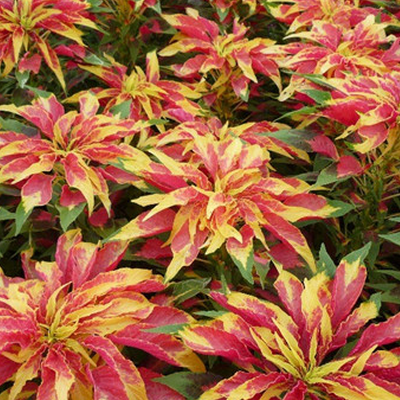
How to grow Amaranthus tricolor:
1. Soil
Amaranthus tricolor is not demanding about soil. Potted Amaranthus tricolor generally uses a mixed soil, blending garden soil, leaf mold and fine sand. It requires loose, fertile soil with good drainage, and has a certain tolerance to alkalinity.
2. Light and temperature
Amaranthus tricolor likes sunlight. During the growing period, sufficient light is needed for vigorous growth. Controlling light within a certain time range helps the formation of flower buds. As for temperature, the growing temperature should be kept between 18°C——25°C to ensure a relatively warm growing environment. Amaranthus tricolor is not cold-tolerant. In winter, the overwintering temperature needs to be kept above 10°C.
3. Watering and fertilizing
Amaranthus tricolor requires a sufficient water supply during the growing period, but watering must be controlled. Keeping the potting soil moist will make the stems and leaves of Amaranthus tricolor grow well, but it may also cause leggy growth. However, it must not lack water either. Although Amaranthus tricolor can tolerate drought, it must not be too dry, as this will make the leaves turn yellow or even fall off. Fertilizing does not need to be excessive. Amaranthus tricolor is generally given sufficient base fertilizer at planting time, and during the growing season it can be fertilized 2——3 times to meet the needs for various growth elements.
Is Amaranthus tricolor poisonous:
Amaranthus tricolor is a traditional Chinese medicine with good effects and no toxic side effects.
That concludes the introduction to the growing methods of Amaranthus tricolor. This Amaranthus tricolor is not poisonous, so get one at home right away.
Is Catharanthus roseus poisonous? What is the flower language of Catharanthus roseus?
Catharanthus roseus is suitable for potted ornamental display, and many people now grow Catharanthus roseus at home. So is Catharanthus roseus poisonous? What are the effects of Catharanthus roseus, and what is its flower language? Below, the editor will introduce whether Catharanthus roseus is poisonous, its effects and its flower language.
Introduction to Catharanthus roseus
Catharanthus roseus (scientific name: Catharanthus roseus), also called riri chun, riri cao, riri xin, sanwan hua, sishi chun, shizhong hua, yanlai hong, etc. At present, multiple cultivars have been bred in Taiwan, China, and in recent years breeding has trended toward larger flowers.
Catharanthus roseus is a perennial herb with upright, much-branched stems. Leaves are opposite, oblong, with short petioles, entire margins, smooth and hairless on both sides, and with a clearly visible white midrib. Cymes are terminal. Flowers come in many colors such as red, purple, pink, white and yellow, with a salverform corolla, 5 lobes, and a dark eye in the center of the flower. At the tip of the young branches of Catharanthus roseus, each time a leaf grows, two flowers emerge from the leaf axils. Therefore it has particularly many flowers, a particularly long flowering period, luxuriant bloom and abundant vitality. It blooms continuously from spring to autumn, hence the beautiful name "riri chun" (everyday spring).
Is Catharanthus roseus poisonous
Catharanthus roseus is a plant in the Apocynaceae family. Like oleander, its sap is poisonous, and the flowers are the most toxic part. But under normal circumstances, poisoning occurs only when a wound comes into contact with the sap or when the sap is accidentally ingested. Lightly touching the flowers and leaves of Catharanthus roseus will not harm the human body. As long as everyone is usually careful and does not casually break off branches and leaves, there is no problem. If Catharanthus roseus is accidentally eaten, it can cause symptoms such as reduced white blood cells, reduced platelets, muscle weakness and paralysis of the limbs. So the editor suggests not growing Catharanthus roseus indoors, as it is neither safe nor does it grow well.
Effects of Catharanthus roseus
1. The alkaloids isolated from the Catharanthus roseus plant mostly have antitumor effects, among which vinblastine and vincristine are the most valuable and have already been used clinically. The two have very similar chemical structures, but their antitumor spectra are not entirely the same, and there is no cross-resistance between the two drugs.
2. Hypotensive effect. Intravenous injection of total alkaloids has a hypotensive effect on anesthetized cats and rabbits, with a rapid drop in blood pressure, similar to the slow blood pressure lowering of total alkaloid preparations of Rauvolfia, and the drop in blood pressure is accompanied by deepened and larger-amplitude breathing.
3. The water extract of Catharanthus roseus leaves can also lower blood sugar in normal rabbits and dogs and in rabbits and dogs with alloxan-induced diabetes.
4. Vindolinine and others in Catharanthus roseus have a diuretic effect on saline-loaded rats.
5. The total alkaloids of Catharanthus roseus have no excitatory effect on isolated uterus and intestinal tract, and large doses have an inhibitory effect on the isolated heart. Foreign sources say it can be used as a hemostatic for uterine bleeding, and its roots can be used to induce abortion.
Flowering period of Catharanthus roseus
Catharanthus roseus is an annual evergreen herbaceous plant, clump-forming, with slender stems that are decumbent or prostrate, reaching more than 1 m in length. Leaves are opposite, elliptical or ovate, with acute tips, green and glossy, and with golden yellow and grayish-green markings between the leaf margins and veins. It generally blooms in April to May, with flowers solitary in the leaf veins, blue, and a salverform corolla. The flowering period is very long, blooming continuously from spring to autumn, hence the beautiful name "riri chun".
Flower language of Catharanthus roseus
Flower language of Catharanthus roseus: pleasant memories, eternal youth, steadfastness.
People who seek out the flower language of Catharanthus roseus are nostalgic people who value friendship, especially first loves. Although everyone now belongs to someone else, they still cannot forget. They are serious in handling matters, and their level of dedication is admirable.
Symbolism of Catharanthus roseus: steadfastness.
Legends of Catharanthus roseus
There are many legends about Catharanthus roseus around the world. Among them, it is said that the great thinker Rousseau loved flowers and plants very much. One day, while walking by the river, he discovered Catharanthus roseus, which made him recall the happy memories with his lover 30 years earlier. According to another legend, if a man and a woman eat the leaves of Catharanthus roseus together where others cannot see them, love will suddenly sprout.
After reading this article, I believe everyone has gained some understanding of Catharanthus roseus. Be sure to remember that Catharanthus roseus is poisonous and must never be eaten by mistake. The above is the relevant introduction to whether Catharanthus roseus is poisonous, its effects and its flower language. I hope it can be helpful to everyone.
Flower language of Catharanthus roseus, Catharanthus roseus pictures
Catharanthus roseus, because it blooms continuously from spring to autumn, has the beautiful name "riri chun". Precisely because of this, it is also deeply loved and pursued by flower lovers. Today, Catharanthus roseus is also widely used in indoor potted plants. As an ornamental plant flower with high ornamental value, many friends will surely ask about its growing methods, flower language and floral effects, and so on. So the editor will briefly introduce relevant information about Catharanthus roseus here.
[Plant profile]
—————————————————————————————————————————
Chinese name:Catharanthus roseus
Scientific distinction:Herba Catharanthi rosei
Aliases:riri chun, riri cao, riri xin, sishi chun, shizhong hua, yanlai hong, wuse mei, sishi hua, red Catharanthus roseus
Family:Apocynaceae
Genus:Catharanthus
Growing environment:Mostly grows in forest edges, roadsides, beaches and garden grass, mostly cultivated
Origin and distribution:Native to the Mediterranean coast, India and tropical America. It is relatively commonly cultivated in Guangdong, Guangxi, Yunnan and other provinces (autonomous regions) in China.
Morphological characteristics:Perennial evergreen herb. Clump-forming, with slender stems that are decumbent or prostrate, reaching more than 1 m in length. Leaves are opposite, elliptical or ovate, with acute tips, green and glossy, and with golden yellow and grayish-green markings between the leaf margins and veins. It blooms in April to May, with flowers solitary in the leaf veins, blue, and a salverform corolla.
【More plant encyclopedia】
Symbolic meaning of lily platycodon flower pictures how to grow flamingo flower misty grass happiness tree pictures how to grow moss radiation-resistant flowers
pengpeng xiang cactus mountain when do cherry blossoms bloom potted grapes what plants absorb formaldehyde gardenia leaves turning yellow how to grow spider plant
Flower language of calla lily growing methods of bamboo fern how to grow hyacinth potted lotus money tree flowering radiation-resistant plant begonia
[Traditional Chinese medicine properties]——————————————————————————————————————————————
[Nature and flavor]Bitter; cold in nature; poisonous
[Meridian entry]Liver; kidney meridians
[Effects]Detoxifying and anticancer; clearing heat and calming the liver.
[Indications]Mainly treats various cancers, hypertension, carbuncles, swellings and sores, and scalds.
[Medicinal source]The whole plant of the Apocynaceae plants Catharanthus roseus and yellow Catharanthus roseus.
[Usage and dosage]Internal use: decocted in soup, 5-10 g; or the extract made into
【Medicinal part]Morphology same as Catharanthus roseus, only the flowers are yellow.
[Harvesting and storage]Harvest from late September to early October of the same year. On a sunny day, harvest the aboveground parts. First cut off the lignified hard stems at the base of the plant, then cut into small sections 6 cm long and dry in the sun.
[Medication contraindications]The main toxicity of vinblastine is inhibition of bone marrow function; vincristine has more prominent toxicity to the nervous system and gastrointestinal tract, such as paresthesia, loss of knee reflex, muscle weakness, neuralgia, hair loss, abdominal colic and intestinal obstruction, while its reduction of white blood cells and platelets is much milder than that of vinblastine.
[Pharmacological effects]——————————————————————————————————————————————
1. The alkaloids isolated from the Catharanthus roseus plant mostly have antitumor effects, among which vinblastine and vincristine are the most valuable and have already been used clinically. The two have very similar chemical structures, but their antitumor spectra are not entirely the same, and there is no cross-resistance between the two drugs.
2. Hypotensive effect. Intravenous injection of total alkaloids has a hypotensive effect on anesthetized cats and rabbits, with a rapid drop in blood pressure, similar to the slow blood pressure lowering of total alkaloid preparations of Rauvolfia, and the drop in blood pressure is accompanied by deepened and larger-amplitude breathing.
3. The water extract of Catharanthus roseus leaves can also lower blood sugar in normal rabbits and dogs and in rabbits and dogs with alloxan-induced diabetes.
4. Vindolinine and others in Catharanthus roseus have a diuretic effect on saline-loaded rats.
5. The total alkaloids of Catharanthus roseus have no excitatory effect on isolated uterus and intestinal tract, and large doses have an inhibitory effect on the isolated heart. Foreign sources say it can be used as a hemostatic for uterine bleeding, and its roots can be used to induce abortion.
How to grow Catharanthus roseus?——————————————————————————————————————————————
◆ Growth habits: Likes dry, high-temperature, ventilated and sunny environments; tolerates drought but not waterlogging.
◆ Growing temperature: The suitable growing temperature for Catharanthus roseus is 18-24°C from March to July, and 13-18°C from September to March of the following year. The winter temperature should not be lower than 10°C.
◆ Placement: A sunny and slightly dry environment.
◆ Sunlight requirement: Catharanthus roseus is a sun-loving plant. Both growth and flowering require sufficient sunlight. Sufficient light also helps prevent leggy growth. In winter, insufficient sunlight and lower temperatures are not conducive to growth.
◆ Watering: Catharanthus roseus dislikes moisture and fears waterlogging. Do not water the potting soil too much; excessive moisture affects growth and development. Especially for plants overwintering indoors, watering should be strictly controlled, and it is better to keep them dry, otherwise they are very prone to freezing. For open-field cultivation, during heavy summer showers, pay attention to timely drainage to avoid waterlogging causing the death of an entire patch.
◆ Fertilizing: It prefers fertile soil with good drainage and tolerates poor soil, but must absolutely avoid slightly alkaline soil. Compacted, poorly aerated clay soil results in poor plant growth, yellowing leaves and no flowering.
◆ Potting soil: When cultivating Catharanthus roseus, the potting soil is better kept on the dry side.
◆ Pinching: Whether or not to pinch Catharanthus roseus has little effect on its own growth, but if it is pinched once or twice during the seedling stage, its plant shape will become more graceful.
◆ Pruning: Routine pruning of Catharanthus roseus should also be done well, and old, weak and damaged branches should be cut off in time, otherwise they both affect the overall appearance and waste nutrients for nothing.
◆ Disease and pest control: The Catharanthus roseus plant itself is poisonous, so it is relatively resistant to diseases and pests. Diseases during the seedling stage mainly include damping-off and gray mold, and in addition, fertilizer damage and pesticide damage at the seedling stage should be prevented. If they occur, immediately water thoroughly with clean water, strengthen ventilation, and reduce the damage. Pests mainly include red spider mites, aphids and tea moths. Prolonged rain is very unfavorable to Catharanthus roseus and makes it especially susceptible to disease. It must not be exposed to rain during production.
Growing methods of Catharanthus roseus——————————————————————————————————————————————
① Cutting propagation: The cutting branches should be tender. Pay attention to heat preservation and moisture retention during the cutting period
The cutting time for Catharanthus roseus is generally spring. We try to cut a relatively tender branch as the cutting, which can be a tender shoot on a new branch or a newly grown tender shoot on an old branch. As long as it is tender, it is fine. The top can have two or three leaves, and then insert the bottom of the branch into moist sandy soil. During the cutting period, try to keep the temperature between 20°C and 25°C. After watering, a layer of film can be covered over the potting soil and cuttings to retain moisture, and the pot should be placed in a ventilated, shady place to wait for rooting.
② Water propagation: Do it in summer. Note that water should be changed fairly frequently
The selection of cuttings for the water propagation method of Catharanthus roseus is similar to ordinary cuttings. Just insert the cut branch directly into clean water, but you must persist in changing the water frequently for the cuttings. The best frequency is once every two days to ensure the nutrient content and cleanliness of the clean water. When necessary, a few drops of nutrient solution can also be added as appropriate to promote rooting of the water-propagated branches. Generally speaking, rooting takes about 20 days.
Flower language of Catharanthus roseus——————————————————————————————————————————————
Legend: There are many legends about Catharanthus roseus around the world. Among them, it is said that the great thinker Rousseau loved flowers and plants very much. One day, while walking by the river, he discovered Catharanthus roseus, which made him recall the happy memories with his lover 30 years earlier. According to another legend, if a man and a woman eat the leaves of Catharanthus roseus together where others cannot see them, love will suddenly sprout.
Flower language of Catharanthus roseus: pleasant memories, eternal youth, steadfastness!
"Conclusion:Today, Catharanthus roseus has been widely used in indoor potted plants, but here it is worth reminding everyone that although this Catharanthus roseus, which has the beautiful name "riri chun", is a plant in the Apocynaceae family, the white milky sap that flows out when its stems and leaves are broken is highly poisonous, so it must never be eaten by mistake!