Can dichondra be grown hydroponically? This is how to grow it into a waterfall
Dichondra, this plant is super beautiful, and if you can grow it into a big pot it looks even better. How do you grow dichondra into a waterfall? Can dichondra be grown hydroponically:
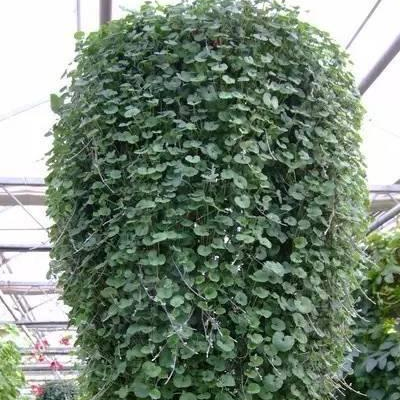
How to grow dichondra into a waterfall:
1. Environment
Dichondra growth needs to maintain enough light, it should get plenty of sunlight every day, with sufficient light and good ventilation, so that dichondra can grow vigorously and green.
Dichondra has a growth habit of both liking light and tolerating shade, and it can also grow in semi-shady and damp places.
What needs attention is that dichondra needs appropriate shading in summer.
2. Nutrition
After dichondra seedlings emerge, water them 1~2 times a week, and increase the frequency of irrigation when the weather is relatively dry.
After the plant matures, watering should be controlled in early spring and early winter, and during the peak growth period around the Spring Festival, the number of waterings should be determined according to the soil quality.
Dichondra relatively likes nitrogen fertilizer. Usually, in combination with rain or watering, apply an appropriate amount of nitrogen fertilizer as a top dressing. After fertilizing, water heavily to reduce the degree of leaf burn.
Or fertilize first, then sweep the fertilizer under the leaves, and then water. At the same time, do not fertilize during high summer temperatures.
When growing it, the soil needs to be kept moist. Be careful not to let it lack water; lack of water will cause dichondra to drop leaves, and the branches and leaves will be sparse, affecting its ornamental value.
Only with sufficient water will hanging-basket dichondra have dense branches and leaves.
You can often spray water on the dichondra plant.
3. Pruning
If you want to grow dichondra into a waterfall effect, there is another very important point, and that is pruning.
Dichondra grows relatively fast, so appropriate pruning can make its branches and leaves more numerous and dense.
And pruning can promptly cut off leaves that affect the ornamental value, and tidy up the relatively messy growing branches.#p#Subtitle#e#
Can dichondra be grown hydroponically:
Yes, it can be grown hydroponically.
1. Choice of hydroponic container
Generally speaking, any container other than metal that has no holes at the bottom and does not leak water can be used. However, in order to make it easier to observe the growth changes of the roots and the natural beauty of their form, it is best to use a transparent glass container. You can use glassware specially for hydroponics, or replace it with a water cup, beer glass, teacup, fish tank, ceramic jar, bamboo or wooden craft bucket, etc.
2. Hydroponic substrate
For hydroponic flowers, it is best to use purified water and tap water (used after being left to sit for a few hours), and try not to use river water, well water or pond water; hydroponic plants can use ceramsite as a substrate. The advantage of ceramsite is that it is beneficial to plant rooting, helping the growth of new roots while also preventing old roots from rotting, and it is also helpful for fixing the plant.
3. Hydroponic nutrient solution
Nowadays there is already a rich supply of hydroponic nutrient solutions on the market, generally divided into three major categories: nutrient solution for foliage plants, nutrient solution for flowering plants, and nutrient solution for fruit-bearing plants. When purchasing, choose the corresponding nutrient solution according to the type of plant you are growing, and read the instructions before use.
The method for growing dichondra into a waterfall is introduced here. This dichondra can be grown hydroponically, so hurry and give it a try.
Dichondra seed planting method: how to water and fertilize
Dichondra, this is also a kind of plant, and many people know about it. Quite a lot of people know about it, and it can be grown hydroponically. So what is the dichondra seed planting method? How to water and fertilize:
Dichondra seed planting method:
1. Land preparation
Prepare the land terrain well, where it should be high and where it should be low. Once the seeds are planted, it is not easy to change the terrain. After determining the terrain, clear all weeds, apply 3~5 tons of farm manure per mu, with fermented chicken manure and cow manure being best, and then plow all the surface soil once.
2. Sowing
After tidying up the land, you can sow. Dichondra seeds are relatively small, so broadcasting is mainly used. At a time when there is no wind, scatter the seeds evenly, then cover with 1~2 cm of soil and press lightly, then water and cover with plastic film or degradable non-woven fabric. If the temperature is good, they will sprout in about 10 days. After sprouting, pay attention to timely watering to accelerate the growth of the sprouts. Within 2 months of planting dichondra, manual weeding is needed. Be sure not to use herbicides; currently there is no herbicide that can be used on dichondra.
Courtyard gardens have a relatively small area, and mechanical plowing is difficult, so manual turning of the soil or spraying water before sowing is generally used. If the soil cannot be turned, then after clearing the weeds, directly scatter the seeds, but before sprouting, water every day to keep the seeds able to absorb enough water, until about half a month after sprouting.
How to water and fertilize dichondra:
Watering is the key to good dichondra growth. Dichondra is a plant with relatively fine and dense roots and is not very drought-tolerant, so the soil needs to be kept moist when growing it. Generally, when growing dichondra, it is necessary to water reasonably and often spray water on the dichondra plant. Be careful not to let it lack water; lack of water will cause dichondra to drop leaves, and the branches and leaves will be sparse, affecting its ornamental value. Only with sufficient water will hanging-basket dichondra have dense branches and leaves.
Fertilizing is also a very important step. Dichondra relatively likes nitrogen fertilizer. With sufficient fertilizer, the branches and leaves will grow more luxuriantly, and it is also relatively easy to create a hanging-basket dichondra with a waterfall effect. When growing dichondra, you can apply nitrogen fertilizer in combination with watering, but do not contaminate the leaves.
The dichondra seed planting method is introduced here. Now you know how to water and fertilize, right!