What to Do When Lantana Grows Leggy? Detailed Guide to Growing Methods and Solutions
Lantana (Lantana camara) is something many people absolutely adore, and its beautiful blooms make it wonderfully unruly just like that. What are the growing methods for lantana? What to do when lantana grows leggy:
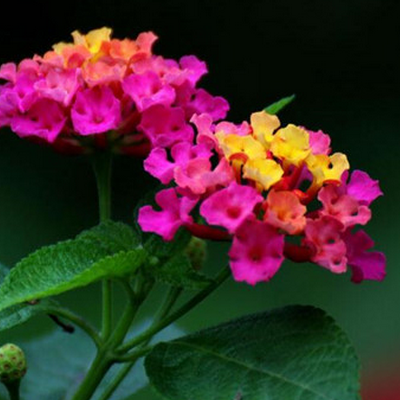
Growing methods for lantana:
1. Spring care methods
Before potted lantana is brought out in spring, it should be repotted, and sufficient base fertilizer should be applied, along with appropriate pruning of the branches. If they are small seedlings, pinch off the growing tips to encourage side branches. For established plants, thin out weak and diseased branches and shorten them appropriately to maintain a good tree shape and encourage more new shoots.
For mature plants that were not kept for seed after flowering and fruiting, remove the spent flowers in spring so that new flower spikes can emerge from the leaf axils below. Cut away dead and weak branches, prune and shape the plant to keep the new growth looking neat, making it easier to shape when new branches sprout in spring.
2. Summer care methods
Lantana is native to tropical America, and a small amount also grows wild in southern China. It likes a warm, humid environment with plenty of sunlight and is not cold-tolerant. A well-made bonsai can be kept outdoors in a sunny spot during the growing season from spring to autumn, and even in midsummer it does not need shading, but good ventilation is required. If light is insufficient, the plant will grow leggy, with thin, long stems and branches, and few flowers, seriously affecting its ornamental value.
During the growing season, keep the potting soil moist, avoid excessive dryness, and mist the leaves to increase air humidity; apply a light fertilizer mainly of phosphorus and potassium about every 15 days to provide sufficient nutrients so the plant produces more flowers.
3. Autumn care methods
Autumn is when lantana blooms most profusely. It needs to be kept in ample sunlight so the flowers can be rich and varied in color, bright and vivid, and the leaves can carry out full photosynthesis to set off the bright blooms.
During the flowering period, keep the potting soil moist and avoid dryness. If it dries out, the flowers tend to wilt and new buds are less likely to open, affecting the floral display.
4. Winter care tips
In winter, move the plant indoors to a sunny spot. If the room temperature can be maintained above 15°C, the plant can grow and flower normally, and it should be watered, fertilized and pruned appropriately. If such a high temperature cannot be maintained, reduce watering, stop fertilizing, and let the plant go dormant; it can overwinter safely at 8°C or above.
What to do when lantana grows leggy:
1. Light and water management
During the rainy days in southern China, getting sufficient sunlight is simply asking too much. At such times, you have to manage the water instead. Lantana is a plant that tolerates wet conditions, but when light is insufficient, it is still best to use less water. During continuous rain, control water promptly and just keep the potting soil slightly moist.
2. Do not apply too much nitrogen fertilizer during the flowering period
Lantana in bloom does need more nutrients, but you should apply dilute liquid fertilizer, mainly phosphorus and potassium fertilizer, with little or no nitrogen fertilizer. Special fertilizer for flowers, special fertilizer for the flowering period, either is fine, just do not apply too much nitrogen fertilizer.
3. Beheading and cuttings
Leggy growth in lantana seedlings can be remedied with light, water, fertilization, or chlormequat, but for leggy growth in mature plants, the only method is beheading and taking cuttings. Cut off the top of the plant and root it as a cutting. Roots will form in 15-30 days.
That is all for the growing methods of lantana. If your lantana grows leggy, pay attention.
What to Do When Lantana Grows Leggy: Analysis of the Causes of Leggy Growth in Lantana
Lantana loves light and prefers a warm, humid climate. It is highly adaptable and tolerant of drought and poor soil, but not cold-tolerant, and grows well in loose, fertile, well-drained sandy loam. Its flowering period is from June to October. It likes warm, humid, sunny places. It tolerates drought, is slightly shade-tolerant, and is not cold-tolerant. In the south it is basically grown outdoors, while in the north it can be kept as a potted plant for ornamental display. So what to do when lantana grows leggy? What causes leggy growth in lantana? Below, the editor of wed114 wedding website brings you the detailed content.
Causes of leggy growth in lantana
Insufficient light
The sunlight in tropical regions is so intense it seems it will not stop until it has tanned you black! So how much does lantana, native to tropical America, love light? You can see it from the growing process of flower lovers in southern China. In southern summers there are many rainy days, and at such times lantana lacks light, so it starts growing wildly, completely going off script.
Too much nitrogen fertilizer
Lantana can be seen flowering from May to October. Flower lovers worry that the flowering period consumes too many nutrients, so they fertilize lantana more frequently and in greater amounts, and even increase the amount of nitrogen fertilizer! Nitrogen fertilizer is the best at spurring plant growth. If too much nitrogen fertilizer is applied, it not only does not help produce abundant flowers, but also easily causes leggy growth.
Too much water
The climate in most of southern China is a subtropical monsoon climate, while the Guangdong and Hainan area has a tropical monsoon climate. But because it is near the Tropic of Cancer, temperatures are naturally comparable to those in regions within the Tropic of Cancer. So summer temperatures may not get absurdly high. If the temperature is not high enough and the light is not sufficient enough, while the watering amount is relatively large, it will also cause leggy growth in lantana.
What to do when lantana grows leggy
Light and water management
During the rainy days in southern China, getting sufficient sunlight is simply asking too much. At such times, you have to manage the water instead. Lantana is a plant that tolerates wet conditions, but when light is insufficient, it is still best to use less water. During continuous rain, control water promptly and just keep the potting soil slightly moist.
Do not apply too much nitrogen fertilizer during the flowering period
Lantana in bloom does need more nutrients, but you should apply dilute liquid fertilizer, mainly phosphorus and potassium fertilizer, with little or no nitrogen fertilizer. Special fertilizer for flowers, special fertilizer for the flowering period, either is fine, just do not apply too much nitrogen fertilizer.
Beheading and cuttings
Leggy growth in lantana seedlings can be remedied with light, water, fertilization, or chlormequat, but for leggy growth in mature plants, the only method is beheading and taking cuttings. Cut off the top of the plant and root it as a cutting. Roots will form in 15-30 days.
What to do when lantana grows leggy
Causes of leggy growth in lantana
Insufficient light
The sunlight in tropical regions is so intense it seems it will not stop until it has tanned you black! So how much does lantana, native to tropical America, love light? You can see it from the growing process of flower lovers in southern China. In southern summers there are many rainy days, and at such times lantana lacks light, so it starts growing wildly, completely going off script.
Too much nitrogen fertilizer
Lantana can be seen flowering from May to October. Flower lovers worry that the flowering period consumes too many nutrients, so they fertilize lantana more frequently and in greater amounts, and even increase the amount of nitrogen fertilizer! Nitrogen fertilizer is the best at spurring plant growth. If too much nitrogen fertilizer is applied, it not only does not help produce abundant flowers, but also easily causes leggy growth.
Too much water
The climate in most of southern China is a subtropical monsoon climate, while the Guangdong and Hainan area has a tropical monsoon climate. But because it is near the Tropic of Cancer, temperatures are naturally comparable to those in regions within the Tropic of Cancer. So summer temperatures may not get absurdly high. If the temperature is not high enough and the light is not sufficient enough, while the watering amount is relatively large, it will also cause leggy growth in lantana.
What to do when lantana grows leggy
Light and water management
During the rainy days in southern China, getting sufficient sunlight is simply asking too much. At such times, you have to manage the water instead. Lantana is a plant that tolerates wet conditions, but when light is insufficient, it is still best to use less water. During continuous rain, control water promptly and just keep the potting soil slightly moist.
Do not apply too much nitrogen fertilizer during the flowering period
Lantana in bloom does need more nutrients, but you should apply dilute liquid fertilizer, mainly phosphorus and potassium fertilizer, with little or no nitrogen fertilizer. Special fertilizer for flowers, special fertilizer for the flowering period, either is fine, just do not apply too much nitrogen fertilizer.
Beheading and cuttings
Leggy growth in lantana seedlings can be remedied with light, water, fertilization, or chlormequat, but for leggy growth in mature plants, the only method is beheading and taking cuttings. Cut off the top of the plant and root it as a cutting. Roots will form in 15-30 days.