Detailed Guide to Ginkgo Cutting Propagation Methods and Suitable Timing
Ginkgo, this is something many people absolutely love. The ginkgo bears fruit, and the fruit it produces is called white fruit. How do you propagate ginkgo by cuttings? When can ginkgo be propagated by cuttings:
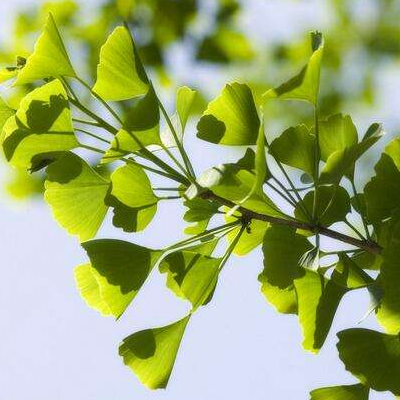
1. Timing for ginkgo cutting propagation
Ginkgo can be propagated by cuttings in both spring and autumn.
When taking cuttings in spring, you can choose tender branches of the current year. Generally, choose newly sprouted branches on the ginkgo plant, wait until they grow to a length suitable for cuttings, then remove them and insert them for propagation.
If taking cuttings in autumn, you can choose mature branches of the current year. At this time, the newly grown branches of the year have basically developed fully, so you can choose branches of moderate length as cuttings.
2. Selection of cuttings for ginkgo cutting propagation
When cultivating ginkgo, you need to choose branches with terminal buds for cuttings. Generally, they are cut into branches with 3——5 nodes, with a length of 10——15cm.
Ginkgo cuttings root rather slowly, so you can dip the part of the cutting that is to root in rooting powder to improve the survival rate of the cuttings.
3. Ginkgo cutting method
In the cutting container, put an appropriate amount of soil, not too full, generally 6——8 parts full is enough. Keep the soil moist. After inserting the cutting into the soil, place it in a semi-shaded place for care, which is beneficial to root growth.
Generally, for autumn cuttings, after about 4 weeks, you can see adventitious roots growing from the base of the cutting, and ginkgo cuttings that were soaked in rooting agent beforehand have more new roots and also a relatively higher survival rate.
That is all for the introduction to ginkgo cutting methods. Have you learned something new now?
For ginkgo propagated by cuttings in spring, the surviving plants can be moved into round pots with a diameter of 7.5cm. For ginkgo propagated by cuttings in autumn, transplanting can be done in the spring of the following year before new leaves sprout.
How to propagate ginkgo by cuttings
Timing for ginkgo cutting propagation
Ginkgo can be propagated by cuttings in both spring and autumn.
When taking cuttings in spring, you can choose tender branches of the current year. Generally, choose newly sprouted branches on the ginkgo plant, wait until they grow to a length suitable for cuttings, then remove them and insert them for propagation.
If taking cuttings in autumn, you can choose mature branches of the current year. At this time, the newly grown branches of the year have basically developed fully, so you can choose branches of moderate length as cuttings.
Selection of cuttings for ginkgo cutting propagation
When cultivating ginkgo, you need to choose branches with terminal buds for cuttings. Generally, they are cut into branches with 3——5 nodes, with a length of 10——15cm.
Ginkgo cuttings root rather slowly, so you can dip the part of the cutting that is to root in rooting powder to improve the survival rate of the cuttings.
Ginkgo cutting method
In the cutting container, put an appropriate amount of soil, not too full, generally 6——8 parts full is enough. Keep the soil moist. After inserting the cutting into the soil, place it in a semi-shaded place for care, which is beneficial to root growth.
Generally, for autumn cuttings, after about 4 weeks, you can see adventitious roots growing from the base of the cutting, and ginkgo cuttings that were soaked in rooting agent beforehand have more new roots and also a relatively higher survival rate.
For ginkgo propagated by cuttings in spring, the surviving plants can be moved into round pots with a diameter of 7.5cm. For ginkgo propagated by cuttings in autumn, transplanting can be done in the spring of the following year before new leaves sprout.
Ginkgo tree cutting seedling-raising technique
The propagation methods commonly used for ginkgo include sowing, cuttings, root suckers, and grafting. Ginkgo cutting propagation can not only save seeds and reduce the cost of raising seedlings, but also accelerate the speed of seedling propagation and retain the excellent characteristics of the variety. Hardwood cutting is a seedling-raising method that uses branches with a relatively high degree of lignification, from 1-year-old or older branches, as cuttings. The routine management after hardwood cutting is much easier than softwood cutting. To do a good job in ginkgo hardwood cutting seedling raising, the following aspects should first be grasped well:
1. Preparation of substrate: The substrates commonly used for hardwood cuttings include river sand, sandy loam, sandy soil, etc. Sandy loam and sandy soil have a lower rooting rate and are mostly used for large-area spring cuttings. River sand has a high rooting rate, and the material is extremely easy to obtain, so it is widely used in cutting seedling raising.
2. Preparation of cutting bed: The cutting bed is l0—20 meters long and l—l.2 meters wide. A layer of fine river sand about 20 cm thick is spread on the cutting bed. One week before cutting, disinfect with 0.3% potassium permanganate solution, using 5—l0 kg of medicinal liquid per square meter. Using it alternately with 0.3% formaldehyde solution gives better results. After spraying the medicine, cover it with plastic film, and two days later flush it with clear water 2—3 times by flood irrigation, then cutting can begin.
3. Collecting cuttings: Collect branches after leaf fall in late autumn and early winter, or in spring one week before cutting or in conjunction with pruning. The branches are required to be free of pests and diseases, sturdy, and with plump buds. Generally, choose l—3-year-old branches from young trees under 20 years old as cuttings. According to experiments, the rooting rate of 1-year-old seedling branches is the highest, reaching 93%. The older the branch age, the lower the rooting rate. The rooting rate of branches from seedling trees is higher than that of branches from grafted trees.
4. Treatment of cuttings: Cut the branches into l5—20 cm lengths, containing more than 3 plump buds. The upper end of the cut cutting is a flat cut, and the lower end is a slanted cut. Pay attention not to reverse the direction of the buds. Bundle every 50 branches together, align the lower ends, and soak them in l00ppm naphthalene acetic acid solution for l hour, with the lower ends immersed 5—7 cm. Branches collected in autumn and winter are bundled and stored in sand for overwintering.