How do you grow Amaryllis so it blooms big and has good color? Treat it like this after flowering
Amaryllis, this is something many people like to grow, and amaryllis is just that popular. How do you grow amaryllis so it blooms big and has good color? How to treat amaryllis after it blooms:
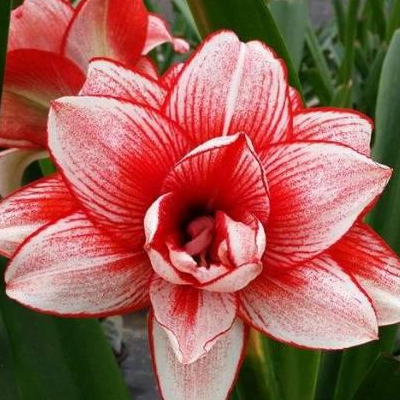
How to grow amaryllis so it blooms big and has good color:
1. Water: Amaryllis needs to keep the plant moist, and watering should be thorough. But there must not be too much water; just make sure there is enough air humidity indoors.
2. Fertilizer: During the growing period, as the leaves grow, it is best to fertilize once every half month. Stop fertilizing during the flowering period, and fertilize once about every 20 days after flowering to encourage the bulb to enlarge and produce new bulbs.
Focus on phosphorus and potassium fertilizers, reduce nitrogen fertilizer, and stop fertilizing in late autumn. For potted plants, add some superphosphate as a base fertilizer.
3. Soil: Use loose, fertile sandy loam soil; do not use heavy clay soil. You can mix 2 parts decomposed barnyard manure soil, 6 parts leaf mold soil, and 2 parts sand
4. Light: A moderate amount of direct sunlight is fine, but not for too long. It is best to place it indoors for care in a bright, well-ventilated spot; it must not be exposed to strong light.
How to care for amaryllis after flowering:
After amaryllis flowers fade, promptly cut off the flower stalk. After the flowers fade, appropriately reduce watering; there must be no standing water in the pot soil, otherwise it easily causes the bulb to rot.
That is all for the growing methods to make amaryllis bloom well. Pay attention to how to treat amaryllis after flowering.
How to treat amaryllis after flowering
For flower lovers growing amaryllis for the first time, they do not know how to treat amaryllis after flowering. Actually, it is very simple. Simply put, if you are not keeping seeds, just remove the spent flowers; if you are keeping seeds, you need to pollinate and then wait for the seeds to mature. Below we explain specifically how to treat amaryllis after flowering.
1. Treatment method if not keeping seeds:
To avoid loss of nutrients, if you do not plan to keep seeds, cut off the spent flowers after flowering. Note: cut off the flower stalk from a point 2CM from the base of the flower stalk. You do not need to cut off all the flower stalks, because the nutrients in the flower stalk will flow back, and it will wither on its own after a while.
2. Treatment method if keeping seeds:
If you plan to keep seeds, you need to pollinate. Use a cotton swab to put pollen onto the pistil. For the specific detailed method, you can refer to, click here: Amaryllis pollination (with pictures and text)
After pollination is done, just wait patiently. After flowering begins the process of growing the bulb. This process is very important for reblooming next year. If conditions allow, you can appropriately give some phosphorus and potassium fertilizer, or organic fertilizer, etc. Note: apply light fertilizer frequently; do not give too much fertilizer at one time.
After reading this, do you not feel that treating amaryllis after flowering is not that difficult?
How to grow amaryllis in winter? Can amaryllis bloom in winter?
Amaryllis is deeply loved by everyone. Many people who like plants or grow flowers should have some understanding of it. Secondly, amaryllis has a large number of aliases, such as Belladonna lily and paired red, etc. Amaryllis enters dormancy in winter, so how do you grow amaryllis in winter? Can amaryllis bloom in winter? These are questions many flower growers have. Below we will explain it for everyone. Let's take a look.
How to grow amaryllis in winter?
1. Dormancy methods for amaryllis:
Bulb overwintering, this is the more commonly used method. In October, dig out the bulb, wash it and remove rotten stems and leaves, let it dry naturally, then store it in sand indoors in a dry, bright place.
Potted overwintering, potted overwintering is the simplest method. In October, the leaves and stems of the potted plant wither. Clean up the withered parts above the ground. Move the pot soil to a greenhouse, keep the pot soil dry, and do not water too much, otherwise the underground bulb is prone to rot.
Care at the end of dormancy
The dormancy period of amaryllis is two months. You can let it wake up at any time according to your personal needs. The main method is: move the flowerpot to a warmer place (above 15°C), water thoroughly, and after a few days the new leaves of the amaryllis sprout and it wakes up and grows normally. After one week, apply a thin fertilizer solution once, and with normal care the flower buds will soon emerge.
2. Low temperature
Amaryllis is not tolerant of cold, so it enters dormancy in winter. During dormancy, the main thing is to store the bulb well. Keep the temperature at 5~10°C. Below 5°C, the bulb is easily damaged by freezing; above 15°C, the plant will grow normally, the bulb cannot rest, and this affects growth the next year.
3. Water control
Amaryllis that has entered dormancy basically stops growing. Its own growth does not need too many nutrients; it only needs to be kept from withering. During this period, strictly control water. Water about once every ten days to keep the soil surface moist. During these 10 days, even if the plant is dry, do not water; you can sprinkle some water around it to increase air humidity.
4. Light
During the dormancy period of amaryllis, only the bulb is in the soil, with no leaves. It does not need to carry out photosynthesis to provide nutrients; a little scattered light is enough. Try to place the plant on a balcony or windowsill with bright light where it can be appropriately shaded.
Can amaryllis bloom in winter?
The flowering period of amaryllis:
Amaryllis enters dormancy in November. During this period, watering is strictly forbidden. At the earliest, care needs to start in December. If you let it flower through the winter, care can start in March of the following year. The dormancy period of amaryllis lasts as long as two months, so if you want it to bloom in winter, you need to let amaryllis enter dormancy early.
Regulation of the flowering period:
1. Temperature treatment
Amaryllis cannot endure low temperatures, so the growing temperature must be strictly controlled. If you cannot provide amaryllis with a stable and suitable temperature, it may sleep through the dormancy period and never wake up. During overwintering, if the temperature is too low, it may cause the leaves to fall off and finally enter dormancy. If the temperature is too high and too few leaves wither, it will appear evergreen and will not bloom.
2. Water treatment
In November, amaryllis is about to enter dormancy. It should be placed indoors and does not need watering. Remember, even if the soil is dry, absolutely do not water. However, if you want amaryllis to bloom in winter, the grower can water normally after the plant goes dormant. When dormancy ends, watering can break the plant's dormancy and accelerate the plant's growth form. When the growing environment is suitable, amaryllis can grow vigorously. In winter, the soil requirements for amaryllis are loose, fertile soil.
3. Light treatment
Amaryllis likes sunlight and does not like extremely hot environments. During its growth stage it needs a large amount of sunlight, especially suitable for amaryllis that has just woken up. In winter, it is recommended to place amaryllis indoors on a balcony, windowsill, etc., so that the plant can receive light.
4. Notes
To better care for amaryllis, you need to keep the plant intact, unless the leaves are dry, yellowing, etc., and you have no choice but to remove leaves. Growers sometimes prune amaryllis leaves in summer; this practice is not advisable. You should know that without leaves it cannot accumulate energy and cannot better prepare for the coming cold winter. You should try to preserve the leaves of amaryllis as much as possible.