What to Do When Areca Palm Leaves Turn Yellow and Dry Up? Daily Care Tips
Areca palms are generally grown indoors as potted plants. What should you do when the leaves of an areca palm turn yellow and dry up? What are the daily care tips for areca palms:
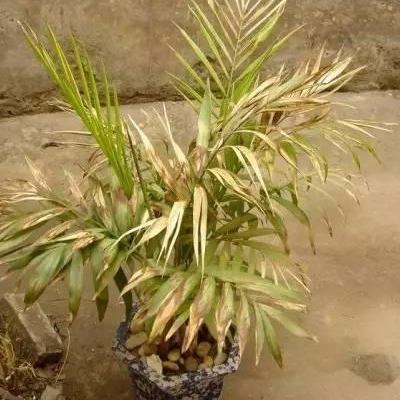
What to do when areca palm leaves turn yellow and dry up:
This comes down to the growing environment the areca palm likes. It is a tropical foliage plant that prefers a warm, humid environment. When summer temperatures are high, watering frequency can be appropriately increased, and the environment should be kept well ventilated.
When the air is dry, water should be sprayed appropriately around the plant and on the plant itself. Dry air easily causes yellowing or withering of the leaves. This way the foliage can stay emerald green and the plant can grow even better.
The same applies in winter. Indoor temperatures should be kept above 10 degrees, and watering frequency should certainly be reduced. Water can only be replenished appropriately once the potting soil has completely dried out, but occasionally spraying water to increase humidity is fine. Maintaining a certain level of air humidity is also quite important.
Daily care tips for areca palms:
1. Watering and humidity
Summer temperatures are relatively high and water is consumed quickly. For areca palms that receive a little light, watering can be appropriately increased to ensure sufficient soil moisture, and water should often be sprayed on the foliage to maintain humidity. In a state of high temperature and high humidity, it will grow better and will be less prone to yellowing and drying leaves.
2. Care temperature
It is a tropical plant and needs to stay warm and moist year-round. The minimum temperature should be kept above 7 degrees. In summer, when temperatures exceed 35 degrees, it should be cooled down appropriately. At this time, water can be sprayed on the ground and around the plant to lower the temperature. Its optimal growing temperature is between 18 and 30 degrees.
3. Other care notes:
To grow areca palms well, once you have a good grasp of environmental humidity, watering and appropriate temperature, there is basically no problem. It does not need much light, so do not expose it to direct sun. It can receive appropriate scattered light, and growing it in a bright indoor spot is also fine.
If you see any dry or yellowing foliage, you can cut it off promptly. Any weak-growing or overly dense foliage can also be pruned appropriately. Appropriate pruning can be done in winter.
Areca palms do not need frequent fertilizing. You can give a light fertilizer once each in spring and autumn, and keep the potting soil loose, fertile and well drained.
4. Pest and disease control
If you find disease spots on areca palm leaves, such as spots on the leaves or dry, withered and drooping foliage, deal with it as early as possible. Cut off the diseased leaves completely and promptly spray with a carbendazim solution.
In daily care, be careful to maintain relatively high environmental humidity, otherwise red spider mites are easily induced.
That is all for how to deal with areca palm leaves turning yellow and bitter. In daily care, they still need to be protected well.
What to do when areca palm leaves turn yellow
Cause of areca palm leaves turning yellow - unsuitable soil
Indoor potted areca palms should be planted in slightly acidic soil. If the soil is not acidic enough, it will affect the absorption function of the areca palm's root system, causing the leaves to turn yellow.
Areca palms are suited to sandy loam soil. If the potting soil is too sticky and heavy, part of the root tips will rot first, and then the leaves will begin to turn yellow. The plant will grow poorly or even die.
Cause of areca palm leaves turning yellow - improper transplanting
Transplanting into a pot is an important step in home growing of areca palms, and improper handling can cause the leaves to turn yellow. When potting, part of the outer root system needs to be removed, but the outer roots are the main roots for root respiration. If they are damaged by improper handling, the plant's nutrient supply will fail, and the plant will gradually waste away and die. The sign of death is yellowing, drooping leaves.
Cause of areca palm leaves turning yellow - overwatering
Areca palms are relatively tall, and the nutrients the leaves need must be transported by the roots. With appropriate watering, the roots can absorb quickly and keep the leaves emerald green. But if the potting soil is too wet, it will affect root respiration and affect the roots' water absorption, directly causing the leaves to turn yellow.
Cause of areca palm leaves turning yellow - underwatering
Overwatering is no good, and underwatering is no good either. During the growing period, areca palms need a sufficient water supply. When the potting soil stays dry for a long time, the plant cannot get the sufficient water it needs for growth, and the leaves will begin to turn yellow and wither.
Cause of areca palm leaves turning yellow - humidity too low
The growth of areca palms requires relatively high air humidity. When the air is too dry, the leaves will begin to slowly turn yellow. Throughout the growing period, water should be sprayed on the leaf surface and the surrounding environment 3 to 4 times a day to increase air humidity. But after the dormant period (after the start of winter), watering should be stopped.
Cause of areca palm leaves turning yellow - temperature too low
Areca palms like warmth, so in winter good insulation and freeze protection work must be done. Generally, around 10 degrees C allows it to overwinter relatively safely. If the temperature is too low, the plant will suffer cold damage, the leaves will turn yellow, the leaf tips will dry up, and the roots will be damaged, affecting the next year's growth.
Cause of areca palm leaves turning yellow - sunlight too strong
The growth of areca palms requires sufficient sunlight, but from May to September appropriate shade is needed. During this period, too strong light easily causes sunburn on the leaves, which is what we commonly call sunscald. Yellow spots appear on the leaves, and they become scorched and yellow. As time goes on, the whole plant will wilt. So in summer, the plant should be kept under a shade canopy or beneath a large tree to avoid direct sunlight.
Cause of areca palm leaves turning yellow - pest infestation
Spider mites, scale insects and the like are relatively common pests of areca palms. When spider mites or scale insects grow on areca palm leaves, the pests damage the plant, and the areca palm leaves will begin to turn yellow. If measures such as spraying pesticide are not taken, the areca palm will slowly die.
Areca palm leaves turning yellow is a relatively common problem in potted areca palm growing. There are many causes of the problem and the solutions differ, but what is needed in every case is our careful care.
What to do when areca palm leaves turn yellow - direct sun easily makes leaves turn yellow
The areca palm is a tropical plant that likes a warm, humid, semi-shaded environment. Its cold tolerance is not strong. Below 20 degrees C the leaves turn yellow, and a little carelessness can cause areca palm leaves to turn yellow. So what should be done when areca palm leaves turn yellow? Let's take a look below!
1. What to do when areca palm leaves turn yellow?
1. Improper transplanting causes areca palm leaves to turn yellow: Transplanting into a pot is something that needs to be done when growing areca palms in pots. When the plant is dug out and potted, part of the outer root system must be removed, and the outer fine roots are precisely the main roots that play an absorbing role. After this part of the root system is injured, it easily leads to problems with nutrient supply, causing the plant to gradually waste away and die. Yellowing, drooping leaves are exactly such an omen.
Solution: When transplanting, we must be careful with the areca palm's root system so as not to injure the roots.
2. Overwatering causes areca palm leaves to turn yellow (water yellowing): Overwatering is also one of the causes of areca palm leaves turning yellow. It is not that the plant can absorb and use water just because there is water in the potting soil. When the potting soil is too wet, it affects the plant's root respiration, thereby affecting the root system's absorption of water and causing the plant's leaves to turn yellow.
Solution: When watering, we should water thoroughly, and that is enough.
3. Long-term water shortage causes areca palm leaves to turn yellow (drought yellowing): Overwatering is no good, and underwatering is no good either. During the growing period, areca palms need a sufficient water supply. When the potting soil stays dry for a long time, the plant cannot get the sufficient water it needs for growth, and the leaves will begin to turn yellow and wither.
Solution: During the growing period, we must pay attention to watering the areca palm.
4. Direct sun causes areca palm leaves to turn yellow (scorch yellowing): From May to September, areca palms like a semi-shaded environment. Under direct sunlight, phenomena such as yellowing leaves and scorched tips and edges will appear.
Solution: During this period, it should be placed under a shade canopy or beneath a large tree to avoid direct sunlight.
5. Humidity too low causes areca palm leaves to turn yellow: Areca palms like relatively high air humidity. When the air is too dry, the leaves will begin to slowly turn yellow.
Solution: Throughout the growing period, water should be sprayed on the leaf surface and the surrounding environment 3 to 4 times a day to increase air humidity. But after the dormant period, watering should be stopped.
6. Temperature too low causes areca palm leaves to turn yellow: Areca palms like warmth, so in winter good insulation and freeze protection work must be done. Generally, around 10 degrees C allows it to overwinter relatively safely. If the temperature is too low, the leaves will turn yellow, the leaf tips will dry up, and the roots will be damaged, affecting the next year's growth.
Solution: In winter in the north, we should move the areca palm into a greenhouse to overwinter.
7. Excessive fertilizing of areca palms causes leaves to turn yellow (fertilizer yellowing): Too concentrated fertilizer causes reverse osmosis in the plant's root cells, making the plant lose water. In mild cases it causes scorched tips and edges on the leaves, and in severe cases it causes root rot and death.
Solution: When fertilizing, we should apply according to the amount the areca palm needs.
8. Pests and diseases cause areca palm leaves to turn yellow: Spider mites, scale insects and the like are relatively common pests of areca palms. When spider mites or scale insects grow on areca palm leaves, the pests damage the plant, and the areca palm leaves will begin to turn yellow. If measures such as spraying pesticide are not taken, the areca palm will slowly die.
Solution: Apply insecticide to save the areca palm.
2. Areca palm care experience
1. Areca palms are afraid of the cold and have weak cold tolerance. The lowest overwintering temperature must be above 10 degrees C. In its place of origin it can reach as high as 3 to 8 m. In northern China, plants grown outdoors are generally brought indoors from late September to early October and must be placed in a spot with sufficient sunlight. During the overwintering period, the room temperature should be 23 to 25 degrees C during the day and maintained at 15 degrees C at night, and must at least stay above 8 degrees C, otherwise it will suffer cold damage and die in winter or spring.
2. May to October is its vigorous growth period, and relatively sufficient water and fertilizer conditions must be provided. Generally, apply decomposed liquid fertilizer or compound fertilizer once every 1 to 2 weeks to promote vigorous plant growth and deep green leaf color. In autumn and winter, fertilize less or not at all, while keeping the potting soil in a state that is neither too wet nor too dry.