What to Do When Michelia alba Leaves Turn Yellow? A Detailed Guide to Growing It
Michelia alba is a plant whose blooms are quite attractive, with fairly large flowers. What is the growing method for this Michelia alba? What to do when Michelia alba leaves turn yellow:
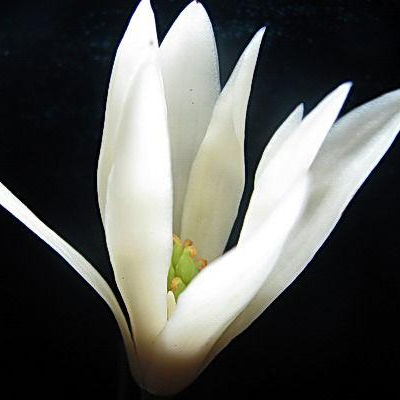
Michelia alba growing method:
(1) Since it is neither drought-tolerant nor moisture-tolerant. Therefore in summer and autumn, because temperatures are relatively high and evaporation is fairly fast, its demand for water is also very great, so we must water it promptly, and it is best to keep the potting soil slightly moist. Moreover, its roots are thick and nearly fleshy, and it fears waterlogging most of all, so the potting soil must drain freely. During the plum rain season, do not let it get rained on. If we water as soon as we see the surface soil turn white, its potting soil will stay constantly wet and the plant will die. Therefore, in winter the potting soil should be slightly dry; do not wait until the soil in the center of the pot is also dry, and never water it then.
(2) Although it likes fertilizer, we must not fertilize excessively. Besides applying enough base fertilizer when repotting every 2-3 years, we ordinarily only need to water in 1 round of decomposed soybean cake water or fishy water every 7—10 days after the plant blooms.
(3) Since it fears cold and likes sun, we must ensure it gets at least 10 hours of sunlight every day, and even in winter it should often be placed outdoors to get some sun.
What to do when Michelia alba leaves turn yellow:
1. Water appropriately
The amount of watering should be constantly adjusted according to humidity and many other aspects of the climate, to ensure the soil maintains a normal, suitable level of moisture.
2. Suitable temperature
Avoid situations with too great a temperature difference; maintaining an average temperature of 5-10°C is more suitable. When the temperature rises, pay special attention to ventilation and air movement in the growing environment, and at the same time humidify the dry air.
3. Sufficient light
To ensure sufficient light, Michelia alba needs to be placed in a courtyard or on a home balcony, windowsill or other spot that receives light for a long time, but in summer take care to avoid direct strong light, as scorching sun will likewise harm the plant.
4. Prevention and treatment of chlorosis
Use slightly acidic soil, and apply alkaline inorganic fertilizer only in small amounts. When the disease appears, spray the leaf surface with ferrous sulfate (0.2%), once a week, for 3-4 consecutive sprays, or spray with alum fertilizer water once a week, for 3-4 consecutive sprays, to relieve the condition.
5. Prevention and treatment of root rot
This disease usually occurs because of excess water. Watering should follow the rule of "no watering when not dry," and keep the soil loose to enhance its drainage. During the plum rain period and other times of heavy rain, take timely measures to shelter the plant from rain; when potting, add more broken tiles at the bottom of the pot to speed up water flow and promote drainage.
That is all for the introduction to Michelia alba growing methods and how to deal with yellowing leaves. Hurry and grow Michelia alba.
What to Do When Michelia alba Leaves Turn Yellow, How to Treat Yellowing Michelia alba Leaves
Michelia alba is a deciduous tree of the genus Michelia in the family Magnoliaceae, reaching 17—20 m tall; as a potted plant it is usually 3-4 m tall, and there are also small plants. The bark is grayish white, young branches are often green, leaves are oblong, simple leaves alternate, blue-green, leathery and glossy, long elliptical. Its flower buds resemble the tip of a writing brush, with 8 petals, white as snow, borne between the leaf axils. Flowers are white or slightly yellow, petals thick and fleshy, long lanceolate, strongly fragrant, with a long blooming period, flowering continuously from June to October.
Analysis of Michelia alba leaves turning yellowIn winter, Michelia alba sometimes develops water-induced yellowing. In winter, when Michelia alba has just been brought indoors, the respiration of the leaves is still relatively strong; if watering is not timely enough and the potting soil is dry, the roots and leaves will wither. After the winter solstice, Michelia alba begins dormancy, watering should be reduced, and too much watering will cause leaves to turn yellow or even drop.
Next there are also reasons of light and temperature. In winter, with insufficient light and too low a temperature, if it remains in this state for a long time, Michelia alba cannot carry out photosynthesis well, which will cause leaves to turn yellow.
In winter, attention must also be paid to fertilizing. Generally, after Michelia alba enters the room in winter, there is no need to fertilize, because the plant is dormant and fertilizing may cause root rot and yellowing leaves.
How to treat Michelia alba leaves turning yellowBefore Michelia alba is brought indoors in winter, it needs to be pruned first, cutting off the dead branches and diseased branches on the plant to prevent withering or even pests and diseases.
When growing it indoors, the following conditions generally need to be met: place Michelia alba in a sunny spot indoors, and raise the temperature to protect its root system, so it can resume growth in spring. At the same time, stop fertilizing, and do not water too much; keep the potting soil dry, and it can overwinter safely.
If, when growing Michelia alba at home, there is a lack of good care conditions, a relatively simple method can be used to help it overwinter safely. The method is to cover the Michelia alba with a plastic bag and tie it closed, then place the flowerpot in a sunny spot, which can likewise provide warmth and moisture retention and help Michelia alba through the winter.
How to Propagate Michelia alba and What to Do When Michelia alba Leaves Turn Yellow
Michelia alba is a small to medium-sized potted plant that likes a warm, humid environment, and its propagation methods are varied. We need to grow it carefully to avoid the phenomenon of leaves turning yellow. So, how is Michelia alba propagated? What to do when Michelia alba leaves turn yellow? A detailed introduction follows below.
How to propagate Michelia alba
Propagation: Michelia alba is mainly propagated by grafting, and can also be propagated by layering and sowing.
Grafting propagation: Grafting propagation mostly uses magnolia seedlings as rootstock, and usually there are two kinds, cleft grafting and approach grafting.
For cleft grafting, 1-2 year old sturdy Yulan magnolia can be used as rootstock, carried out on a sunny day in mid-March, and after about 20-30 days the terminal bud can sprout leaves. In the south it can also be done around the autumn equinox, or bud grafting can be done in August-September.
Approach grafting can be carried out throughout the entire growing season, from spring to autumn. It is generally done more often from April to July. The best position for the approach graft is 70 cm above the ground. For rootstock, choose Yulan magnolia with a trunk about 0.6 cm thick; select a sturdy Michelia alba branch of the same thickness as the rootstock as the scion, then cut away a 6 cm length of the bark and part of the xylem of both the rootstock and the scion; the cut surfaces should be smooth, then align the cambium of the two cut surfaces and press them tightly together, and tie them firmly with plastic tape to prevent rain from washing them apart. About 50 days after joining, the grafted part heals and can be cut away from the mother plant. Approach grafting survives easily, but does not grow as vigorously as cleft grafting.
Layering propagation: Layering propagation includes ordinary layering and air layering.
Ordinary layering is usually carried out in February-March. Cut halfway through the base of the branch to be layered, then cut upward another section, insert a piece of tile in between, then gently press it into the soil without breaking it, then fix the branch pressed into the soil with thick iron wire to prevent it from springing up, and then heap soil on top. After it sends out roots and shoots, it can be cut off and planted separately.
Air layering is generally done before the start of the dog days. Select a sturdy, disease-free two-year-old branch, and perform girdling at a point 55 cm from its tip; the width of the girdled ring is about 2.5 cm, then apply B12 injection to the cut, then enclose the girdled part with a split bamboo tube or potsherd, bind it firmly with rope, fix the bamboo tube or earthen pot in place, and add potting soil into the bamboo tube or earthen pot. Afterward, be careful to water frequently into the bamboo tube or earthen pot holding the layered branch, keeping the soil inside moist but on the dry side. After about a month, on the same branch 5-7 cm below the girdling cut, cut away a small piece of bark. At the same time, add an appropriate amount of 500-fold potassium dihydrogen phosphate aqueous solution to the potting soil. After that, cut once every 10 days or so at the same spot in a different direction, in order to gradually reduce the layered branch's nutritional and water connection with the mother plant. After cutting 3-4 times this way, the girdled part can heal and form a nodule, and root buds appear.
Sowing propagation is generally carried out at the end of September or the beginning of October. Harvest the ripe fruit, take out the seeds, soak them in plant-ash water for 1-2 days, then rub off the waxy aril by hand, rinse them clean with water, and they can then be sown. If not sown at this time, the seeds can be stored cold by the wet sand stratification method and sown indoors in pots in March of the following year; if not kept cold, the seeds easily lose their ability to germinate. About 20 days after sowing, seedlings emerge. The sowing medium must have good air permeability and water permeability, and care should be taken to keep it moist.
What to do when Michelia alba leaves turn yellow
1. Too much water: When Michelia alba's potting soil is watered too much or too little, or alternates between dry and wet, the fleshy root system cannot tolerate it, which will cause leaves to turn yellow.
Treatment method: Water appropriately. After the potting soil dries, do not water too much at one time, and do not leave it unwatered and dry for a long time.
2. Insufficient light: Michelia alba likes sun; if there is too little sunlight, it will also cause poor plant growth and yellow leaves.
Treatment method: Michelia alba is suitable for planting in courtyards or on home balconies, windowsills and similar places. It needs sufficient sunlight, but cannot be exposed to scorching sun; in summer when sunlight is fierce, take care to shade it.
3. Too high a temperature: Michelia alba leaves turning yellow is greatly related to temperature; when the temperature is too high and it is stuffy and hot, leaves will also turn yellow.
Treatment method: Keep the temperature stable, neither too high nor too low; between 5-10°C is most suitable. When the temperature rises and the environment is stuffy and hot, pay attention to ventilation and air movement, and strengthen humidity management.
4. Iron-deficiency chlorosis: This is mainly due to alkaline potting soil. Reasons for alkaline potting soil: first, the potting soil itself is alkaline; second, too much alkaline inorganic fertilizer or water is applied, so the leaves gradually change from green to yellow-white, and in severe cases the leaves turn brown, forming local necrosis.
Treatment method: For Michelia alba, use slightly acidic soil, and do not apply too much alkaline inorganic fertilizer or water. When chlorosis appears, promptly spray the leaf surface with 0.2% ferrous sulfate, once a week, for 3-4 consecutive sprays, or spray with alum fertilizer water once a week, for 3-4 consecutive sprays, to control the condition.
5. Insufficient fertilization: Long-term nutrient depletion, or not repotting or changing soil for a long time, leads to a lack of nitrogen and other nutrients in the soil, causing weak branches and leaves and thin, yellow leaves. In addition, excessive fertilization will also cause new leaves to be thick and uneven, and old leaves to dry at the tips, scorch yellow and drop.
Treatment method: When this phenomenon occurs, immediately stop fertilizing, increase the amount of watering, remove part of the old soil, replace it with new potting soil, and carry out normal management.
6. Root rot: Too much watering and failure to promptly pour off accumulated water in the pot during continuous rainy days will cause the root system to turn black and rot, and the leaves to turn yellow or even drop, leading to the death of the whole plant.
Treatment method: Therefore, ordinarily wait until the surface of the potting soil turns white before watering, and loosen the soil frequently. During plum rain days or when there is too much rain, it is best to move it under the eaves or indoors to shelter from rain; when potting, add more broken tiles and the like at the bottom of the pot to make drainage smooth, and prop the pot up on bricks to speed up water flow.
The above are some answers to how to propagate Michelia alba and what to do when Michelia alba leaves turn yellow. Is everyone clear now? For more home knowledge, please stay tuned.