The benefit of using milk for plants is that it can control aphids and other soft-bodied pests.
Milk, which many people enjoy, is great to have a bottle of every day, but what are the benefits of using milk for plants:
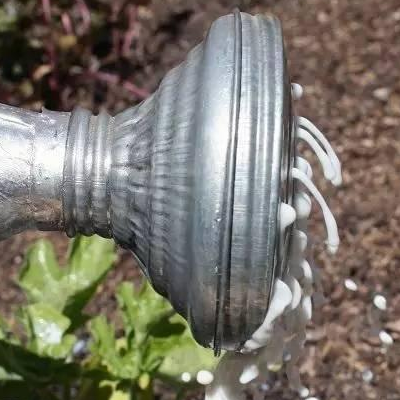
1. Milk as fertilizer
Milk is a great source of calcium, and this principle applies to plants as well. Milk can be used on some common vegetable plants, such as tomatoes, peppers and pumpkins, whose flowers often rot during the flowering period. This is usually caused by a lack of calcium, and milk can be used for it. Use diluted milk directly (50% milk and 50% water). Spray the diluted solution directly around the roots and stems of the plants, or spray it directly onto the leaf surface as a foliar spray.
2. Solving the problem of tomato rot
Among plants in the tomato family, rot after flowering is very likely to occur. At this time, milk can be used to solve it. If the growing environment is suitable, then it is caused by insufficient available calcium in the soil. Of course, if the soil is too lacking in water or too dry, it can also cause flowers to wilt.
If watering is appropriate and the flowers still wilt, then milk can be mixed with water at a 1:1 ratio, and the resulting solution can be sprayed directly.
3. Controlling soft-bodied pests such as aphids
Milk can be used to control aphids. Research conducted by Punjab University in India showed that using milk is effective for spraying and killing aphids, thrips and spider mites. According to published reports, higher concentrations of milk (full strength or 50% diluted) are harmful to aphids.
Linda Chalker-Scott, associate professor and urban horticulturist at Washington State University, also wrote: “Leaves coated with the spray may be less susceptible to aphid attack.”
4. Expired milk
Milk can be used to water flowers. If milk accidentally spoils, it can be diluted with water and used. My family also often uses spoiled milk plus water to water flowers.
Once milk spoils, add water and use it to water flowers; it is beneficial to the growth of the flowers, but milk must not be poured directly onto the flowers. Milk must be diluted with a good amount of water first. Unfermented milk is not suitable for watering flowers, because during fermentation it produces a large amount of heat, which will “burn” the roots (cause root rot).
If soybean milk and milk are fermented and fully decomposed so that their protein becomes components that plants can absorb and use, they are indeed good fertilizers. After fermentation, soybean milk can break down into more nitrogen fertilizer, which is beneficial to the growth of branches and leaves; milk, in addition to nitrogen, also has more phosphorus and potassium fertilizer, which is beneficial to flowering and fruiting.
That is all for the benefits of using milk for plants. Have you learned something new now?
The 4 major benefits of using milk for plants
In most people's understanding, milk is something for supplementing nutrition, but who would have thought it could also be used for growing flowers? Of course, most people would not be that extravagant. Below is an introduction to the 4 major uses of milk for growing flowers. See whether you agree?The 4 major benefits of using milk for plants
1、Milk as fertilizer
Milk is a great source of calcium, and this principle applies to plants as well. Milk can be used on some common vegetable plants, such as tomatoes, peppers and pumpkins, whose flowers often rot during the flowering period. This is usually caused by a lack of calcium, and milk can be used for it. Use diluted milk directly (50% milk and 50% water). Spray the diluted solution directly around the roots and stems of the plants, or spray it directly onto the leaf surface as a foliar spray.The 4 major benefits of using milk for plants
2、Solving the problem of tomato rot
Among plants in the tomato family, rot after flowering is very likely to occur. At this time, milk can be used to solve it. If the growing environment is suitable, then it is caused by insufficient available calcium in the soil. Of course, if the soil is too lacking in water or too dry, it can also cause flowers to wilt.If watering is appropriate and the flowers still wilt, then milk can be mixed with water at a 1:1 ratio, and the resulting solution can be sprayed directly.
The 4 major benefits of using milk for plants
3、Controlling soft-bodied pests such as aphids
Milk can be used to control aphids. Research conducted by Punjab University in India showed that using milk is effective for spraying and killing aphids, thrips and spider mites. According to published reports, higher concentrations of milk (full strength or 50% diluted) are harmful to aphids.Linda Chalker-Scott, associate professor and urban horticulturist at Washington State University, also wrote: "Leaves coated with the spray may be less susceptible to aphid attack."
The 4 major benefits of using milk for plants
4、Expired milk
Milk can be used to water flowers. If milk accidentally spoils, it can be diluted with water and used. My family also often uses spoiled milk plus water to water flowers.Once milk spoils, add water and use it to water flowers; it is beneficial to the growth of the flowers, but milk must not be poured directly onto the flowers. Milk must be diluted with a good amount of water first. Unfermented milk is not suitable for watering flowers, because during fermentation it produces a large amount of heat, which will "burn" the roots (cause root rot).
If soybean milk and milk are fermented and fully decomposed so that their protein becomes components that plants can absorb and use, they are indeed good fertilizers. After fermentation, soybean milk can break down into more nitrogen fertilizer, which is beneficial to the growth of branches and leaves; milk, in addition to nitrogen, also has more phosphorus and potassium fertilizer, which is beneficial to flowering and fruiting.
Which vegetables and fruits can be used to control pests in home flower growing
1. Garlic: Mash garlic, extract the juice, add 20-25 times its amount of water, stir well, filter, and spray immediately. It can control aphids, red spider mites, scale insect nymphs, gray mold, root rot and so on.
2. Scallion: Mash the outer skin and rotten leaves of scallions, add 10 times their amount of water, soak, filter, and then spray. It can control aphids and soft-bodied pests, and can also inhibit the spread of powdery mildew pathogens.
3. Onion: Take the inedible parts of onions, such as the outer skin and leaves, 500 grams, chop them into small pieces, and squeeze out the raw juice for storage. When using, dilute with 2-3 times its amount of water and spray. It can control red spider mites and other pests.
Onion
4. Sichuan pepper: Take 200 grams of Sichuan pepper, add 2 kg of water, boil it down to 1 kg of stock solution, filter, then add 4-6 times its amount of water and spray. It can control aphids, leafhoppers, whiteflies, scale insect nymphs, stem borers and so on.
5. Fresh Chinese chives: Take 500 grams of fresh Chinese chives, mash them, add 200-300 grams of water, stir well, filter, and use the filtrate to treat aphids, powdery mildew and black spot disease.
6. Citrus: Infusion. Soak citrus in clean water for 3-5 days (at a ratio of 1:5 with water), then soak flowers, trees or seedlings in the infusion for 5-10 minutes, and then sow or plant them. This will avoid damage from most pests and ants. Spraying citrus peel infusion [1:(10-20)] directly onto flowers and trees also has a repellent effect on aphids and other pests.
Citrus
7. Ginger: Mash ginger into a paste, add 20 times its amount of water, soak for 12 hours, and spray with the filtrate. It can control leaf spot disease, sooty mold, rot disease, black-brown disease and so on, and can also control aphids, red spider mites and leaf miners.
8. Bitter melon: Take 100-200 grams of bitter melon leaves, add water and mash them, add an equal amount of lime, stir evenly, and pour it around the roots of plant seedlings. It can control cutworms.
9. Tomato: Mash 50 grams of fresh tomato leaves, add 150 grams of water, soak for 6 hours, filter, and spray with the filtrate to control aphids, red spider mites and so on. It can also drive away flies.
10. Chili pepper: Take 50 grams of chili pepper, add 10 times its amount of water, boil for 20 minutes, then filter, and spray with the filtrate. It can control aphids, red spider mites, stink bugs and other pests.
In addition, mash 1.5 kg of garlic with 400 grams of water and extract the juice, add 20 grams of camphor and mix into a liquid. For every 500 grams of stock solution, add 3 kg of water and spray. It can kill red spider mites and aphids.