How to Grow Peonies (Chinese Peony) and How They Differ from Tree Peonies
Peony flowers, which many of you have seen, are just that captivating. How do you grow peony flowers? What are the differences between peony flowers and tree peonies:
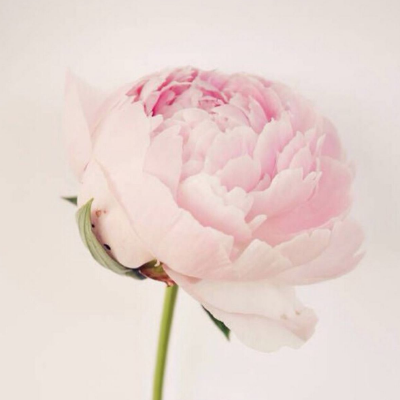
How to grow peony flowers:
1. Planting time for peonies: Peonies like sunlight and tolerate cold, and their temperature requirements favor cool conditions over heat. They grow poorly during the high temperatures of summer. Autumn is the best time to plant peonies.
2. Soil: For peonies planted in the ground, choose a sunny spot on high ground with good drainage, and never plant them in low-lying spots where water easily accumulates. Peonies have fleshy roots, so when planting, choose a loose, fertile, slightly acidic sandy soil. They should not be grown in alkaline soil. If the soil is too alkaline, it will cause the leaves to turn yellow and even shrivel and die.
3. Cultivation essentials: For open-field cultivation, apply barnyard manure, dig deep, break up the soil finely, and then form raised beds. Generally the bed height is 10-15 cm, the bed width is 70 cm, and the length is unlimited. The planting spacing is 80 cm. When planting, dig holes according to the length and size of the root system, taking care that the roots spread out and are not planted too deep. Cover with soil to a depth of 4-5 cm above the top buds. After planting, water thoroughly once, and mound soil over the plants for winter.
4. Fertilizer and water management: Apart from natural rainfall, ground-planted peonies do not need frequent watering. Usually, water appropriately only a few times around flowering, when water demand is greatest and spring drought occurs, to supplement the lack of soil moisture; each watering should not be too much. Topdressing should be controlled, with three applications per year. The first is when new shoots are rapidly emerging and the leaves and flower buds are just extending, mainly with quick-acting fertilizer, known as flower-promoting fertilizer.
5. Shaping and pruning: To make peony flowers more abundant and colorful and to keep growth vigorous, shaping and pruning are very important. Peony shaping mainly includes establishing the trunk, pruning branches, removing buds, thinning flower buds, and cutting off spent flowers. Peonies can be trained to a trunk after 2-3 years of planting. For varieties with particularly strong and vigorous growth, they can be pruned into a single-trunk peony. For varieties with weak growth and few branches, generally cut out the thin, weak branches and keep the strong ones.
6. Pest and disease control: Common peony diseases and pests include brown spot, anthracnose, rust, root rot, and root-knot nematode, as well as longhorn beetles, red spider mites, scarab beetles, and mole crickets. Among these, brown spot, anthracnose, and rust are fungal diseases. Pest and disease control should focus on early prevention. Once pests or diseases occur, according to the degree of occurrence and the above dosage, appropriately shorten the spray interval and increase the number of applications.
Differences between peony flowers and tree peonies:
1. The most fundamental difference: Tree peonies are woody plants that can grow to 2 m tall, while peonies are short (perennial tuberous) herbaceous plants no taller than 1 m.
2. Flowering period: Tree peonies bloom earlier than peonies. Tree peonies generally bloom in mid-to-late April, while peonies bloom in early-to-mid May. The difference in flowering time between the two is about 15 days, commonly called "driving the tree peony to death."
3. Flower shape: Tree peony flowers are borne at the tips of flowering branches, mostly single and terminal, with a flower diameter generally around 20 cm, and some can reach 750px; while peony flowers are borne one or several per branch tip or in the leaf axils, with a flower diameter of about 15 cm.
4. Leaves: Tree peony leaves are broad, alternate, green on the upper side and slightly yellow on the underside, hairless, with a white powder on the back, while peonies have simple leaves near the flowers, and the leaves are narrower, more glossy, dark green on both sides, and more densely arranged.
5. Stems: The stem of the tree peony is woody; it is a perennial shrub, with interconnected thick and numerous stems, and the aboveground part does not die after leaf fall, so the tree peony is also called "woody peony"; the peony stem is herbaceous and belongs to the perennial tuberous herbaceous flowering plant group, and the aboveground part dies after leaf fall. Therefore, the peony is also called "boneless flower."
That covers the growing methods for peony flowers and their differences from tree peonies. Do you want to grow one?
How much does a peony flower cost per stem, and the differences between peonies and tree peonies / comprehensive comparison pictures
In daily life, people often mistake peony flowers for tree peony flowers because they look so much alike. However, friends who know both flowers should be able to tell them apart, since on closer look their differences are quite significant. So what exactly are the differences between peonies and tree peonies? As a beautiful flower, peony flowers are also often bought as gifts, so how much does a peony flower cost per stem? Let's take a look together.
1. How much does a peony flower cost per stem, 2-3 yuan
Usually, when giving flowers, everyone chooses roses, carnations, and so on, because they are not only beautiful but also carry very good meanings. As for peony flowers, although they are also beautiful, their main value lies in medicinal use, so few people give peony flowers, which also means their price is not high. So how much does a peony flower cost per stem? According to the editor's research, generally 2-3 yuan per stem, and more than 20 yuan per bunch.
Popular science knowledge: Peony flowers have strong effects and functions, with remarkable results in beauty and skincare and in treating women's diseases, so they are generally used as medicinal material. If peony flowers were only sold as fresh flowers, it would be a huge loss! Therefore, if you want to make money from peony flowers, you had better have a very large planting area, and you also need professionals to help you with care. Because the investment risk is relatively high, the editor suggests that unless you are a professional, it is best not to invest in peony flowers.
2. Differences between peonies and tree peonies, a comprehensive comparison
For most people, peonies and tree peonies look very similar, but in the eyes of experienced flower lovers, their differences are great. As for what the differences between peonies and tree peonies are, the editor will make a comprehensive comparison from flowers, leaves, roots and stems, flowering period, and flower color. After reading this, you will be able to tell them apart!
1. Differences in flowers
To discuss the differences between tree peonies and peonies, first look at the flowers. Tree peony flowers are single and terminal, meaning one plant blooms one flower, while peonies generally bloom multiple flowers per plant. In flower shape, peony flowers are somewhat smaller than tree peony flowers, because tree peonies have many flower forms, such as single form, lotus form, chrysanthemum form, and rose form, all of which are relatively large.
2. Differences in leaves
After looking at the differences in flowers, let's look at the differences in leaves between peonies and tree peonies. Peony leaves are narrow and long and dark green, while tree peony leaves spread out and have a full, prosperous shape, with a somewhat tenderer color. As shown in the picture above, the difference is quite big!
Editor's tip: If the leaves are also hard for you to identify, you can pinch the branches. Peony flower branches are relatively soft, while tree peony flower branches are hard and firm, with a woody feel. They are not that fragile, so everyone can try it by hand, but do not let people think you are stealing flowers!
3. Differences in roots and stems
Besides flowers and leaves, the differences in roots and stems between peonies and tree peonies are also very great. If the stem is black and woody, it is a tree peony; if it is green and herbaceous, it is a peony. Another difference is that every winter, peony stems and leaves disappear completely, while tree peonies still retain woody stems.
4. Different flowering periods
Among the differences between peonies and tree peonies, their flowering periods are also different. It is understood that tree peony flowers bloom at the end of April, while peony flowers bloom in early May. So if you see flowers in April, they should be tree peonies; in May, you will need to use the methods above to tell them apart.
5. Tree peony flower colors are more varied
In addition to the points above, the differences between peonies and tree peonies also include flower color. Although both tree peonies and peonies have many varieties and very rich flower colors, tree peony flowers have more colors. As ornamental cultivated plants, tree peonies have now been hybridized into many varieties, so the characteristics may vary somewhat, but overall the differences are still as above.
How to grow tree peony flowers? Growing methods and cultivation techniques for tree peony flowers
China is the place of origin of tree peonies, and tree peonies are also deeply loved by many people. In order to better develop tree peonies and give play to their ornamental value, this article starts from the cultivation history of tree peonies, analyzes the related morphology and ecological habits of tree peonies, and discusses the cultivation techniques of tree peonies through descriptions of propagation methods, cultivation management, and flowering period regulation.
Cultivation history of tree peony flowers
Since ancient times, tree peonies have been called the king of flowers, known as "national beauty and heavenly fragrance," and called the "flower of wealth and honor." Tree peonies have a long cultivation history in China, more than 1500 years. In the Tang Dynasty, they were already precious flowers in the imperial palace, and a special tree peony garden was opened at Mount Li. By the Ming and Qing dynasties, tree peonies in the middle and lower reaches of the Yellow River, Bozhou tree peonies, Caozhou tree peonies, Jiangnan tree peonies, and Lanzhou tree peonies all shone brightly, truly pushing the tree peony to the status of "king of flowers." Now, China, the United States, Japan, the Netherlands, and other countries have bred new commercialized potted tree peony varieties through crossbreeding.
Biological characteristics of tree peony flowers
1. Morphological characteristics. Tree peonies belong to the Paeoniaceae family and are deciduous small shrubs. The stems are generally 1 m to 2 m tall, and taller ones can reach 3 m. The branches grow in clusters from the ground, with obvious nodes and leaf scars. It has a fleshy taproot system with no horizontal lateral roots. The leaves are bipinnately compound with three leaflets, dull green on the surface, hairless, with a white powder on the back, nearly hairless. Flowers are solitary at the branch tips, large, 10-30 cm in diameter. Currently cultivated varieties are mostly double-flowered, with rich flower colors including yellow, white, red, pink, purple, and green. The flowering period is April to May. The fruit is a follicle, and the seeds are black. The fruit ripening period is from mid-August to early September.
2. Ecological habits. Tree peonies are a cultivated species, and the original species comes from the area of northwestern China and the Qinling Mountains. They like cold winters that help dormancy and mild summer climate conditions favorable for flower bud differentiation. They are relatively cold-tolerant but not heat-tolerant. They can usually tolerate low temperatures of -20 degrees, but temperatures above 32 degrees have adverse effects on tree peonies. They like light, but do not like western sunlight. Their roots are fleshy, liking dryness and disliking dampness, and fearing waterlogging. They are suitable for fertile, loose, well-drained soil, with a soil PH value suitable at neutral or slightly acidic; they can also grow normally in alkaline calcareous soil, but saline-alkali soil is taboo. The plant grows slowly, and new shoots wither every year, showing the phenomenon of "branch retreat," hence the saying "a tree peony grows one chi, retreats eight cun." Seedlings generally take 5-6 years.
Cultivation techniques for tree peony flowers
1. Propagation methods
(1) Division propagation. Asexual propagation can keep the excellent traits of the mother plant basically unchanged, and the propagation of ornamental tree peonies mainly uses this method. Tree peonies have no obvious main trunk and are clustered shrubs, very suitable for division, and it is also relatively simple and easy. The method and steps are as follows:
① Choose a suitable time for division. Tree peony division is generally in late September to early October, during which the soil temperature is very suitable for the formation of new root systems in tree peonies. If divided and planted too early, because the outside temperature is still high, it is easy to cause winter buds to sprout and send out new branches, namely "autumn growth," which not only consumes nutrients but also reduces cold and drought resistance, and is very unfavorable for growth and flowering the following spring. If divided and planted too late, the new roots are weak or no new roots form, and the next year the plant growth is weaker, with few tillers, and branches are short and thin, and very likely to die in drought.
② Division method. Tree peonies can be divided and propagated after 3 years of growth, but 4-5 years old is suitable. First dig the mother plant out of the ground, dry it in the sun for 1-2 days so the roots lose water and soften, but do not dry it too much in the shade. Split it at places that separate easily. The lower part of the new division should have a good root system, and each plant should have 3-5 tiller buds. After division, pot them, and after 5-6 years they can be divided again. Before planting, the old branches on the upper part of the division seedling should be cut off 3-5 cm above the root crown. If the division seedling has no sprouting tiller buds or too few and weak sprouting tiller buds, 2-3 dormant buds should be retained below the cut. The purpose of cutting off old branches is mainly to avoid the consumption of nutrients in the roots by the leaves and flowers of the old branches, promote tillering, and enhance the growth vigor of the division seedling.
③ Planting method for division seedlings. Quickly dip the division seedlings in a mixed solution of isofenphos-methyl and Lvheng No. 1, and after drying they can be planted. At the same time, to stimulate the formation of new roots, 50-200 mg/L of rooting agents such as indolebutyric acid and naphthalene acetic acid can be added to the mixed solution, which can promote rooting and enhance growth vigor. When planting, use the "three bury, two tread, one lift" method as in forest production, that is, first place the seedling vertically into the hole, arrange its roots well, hold the seedling lightly with one hand and fill soil into the hole with the other. When the soil is filled to half the hole, gently lift the seedling upward with your hand, gently shake it left and right once so that fine soil closely contacts the roots, use a wooden stick to firm it around the seedling, then fill the hole with soil and firm it, and finally fill the planting hole completely. After planting, use loose soil to seal the planting hole into a mound, generally 15-20 cm above the ground.
(2) Grafting propagation
The main considerations are grafting time, rootstock, scion, and grafting method.
① Grafting time. Tree peonies can be grafted from late September to early October, with White Dew (September 7-8) to Autumn Equinox (September 23-24) being suitable, and especially the survival rate is highest when grafting around White Dew. This may be a response of tree peony grafting to specific temperature and humidity. Around White Dew, the air temperature is 20-25°C, the soil temperature at 30 cm depth is 18-23°C, and the graft union heals quickly and produces callus tissue, so the survival rate is high.
② Selection of rootstock. The rootstock is usually tree peony root or peony root. Using tree peony root as rootstock, because it is relatively fine and hard, grafting is not convenient, and the propagated plant grows relatively slowly at first, but the base of the scion is easier to root, and there are also more tillers, which is beneficial for later division, and the lifespan is also relatively long. Using peony root as rootstock, because its lignification is relatively weak, operation is more convenient, and the survival rate is also relatively high. However, the roots produced at the base of the scion are relatively few, the tillers are also few, and the lifespan is shorter. The rootstock should be dried in the sun for 1-2 days, and grafting should be done after it loses water and softens, so the cut is not easy to split and it is easier to operate.
③ Scion. The scion is best taken from branches grown from soil buds, as their tissue is full, their vitality is vigorous, and new roots and new branches are easily produced at the base, giving a high survival rate after grafting. If there are very few tiller branches, only one-year-old branches from the upper part of the canopy can be used as scions. The scion length is generally 5-10 cm, the thickness is more than 0.5 cm, and it bears 2-3 full and plump buds.
④ Grafting. After split grafting or cut grafting, bind with hemp rather than plastic film strips, coat with mud slurry, and plant in a deep, wide pot. The potting soil should be moist. Generally do not water after planting, and cover with soil to retain moisture.
(2) Seed propagation
This is often used when breeding new varieties of ornamental tree peonies, but not for medicinal tree peonies. When the tree peony fruit ripens, it naturally splits open and releases black seeds, so the fruit should be harvested before the follicle is about to split. Put the harvested fruit in a sieve to dry in the sun, collect the seeds in September, and sow immediately. Be careful to keep the soil moist. After the seeds overwinter in the soil, due to the stimulation of low temperature, the epicotyl elongates the second spring, and the seedlings emerge.
Management methods for tree peony flowers
1. Watering. When potted, it is best to choose tree peonies grafted onto peony roots. Because tree peonies dislike waterlogging, place more tiles at the bottom of the pot to help drainage. After planting, as long as the soil is moist, there is generally no need to water thoroughly immediately, and even less should large amounts of water be given. Water appropriately during the growing season. In arid northern regions, generally water before flowering, after flowering, and before freezing.
2. Fertilizing. Tree peonies like fertilizer. Fertilization in a year can be divided into three times: nutritional fertilizer, supplementary fertilizer, and wintering fertilizer. Nutritional fertilizer should be applied 15-20 days before flowering, generally at the end of March. Supplementary fertilizer is generally applied within 15 days after flowering. Wintering fertilizer is applied in late October, and the amount can be appropriately increased. Fertilization is generally mainly based on decomposed organic fertilizer. Fertilization methods can be combined with loosening soil, broadcasting, and hole application. For potted plants, liquid fertilizer can be applied together with watering.
3. Pruning. In the year of planting, let them grow freely. In each subsequent spring after budding, completely remove the tiller buds at the base of the plant and the adventitious buds issued from the base of the trunk, concentrating nutrients so that the next year's flowers are large and colorful. After flowering, cut off the spent flowers and do not let them produce seeds. In autumn and winter, dry branches and leaves as well as thin, weak, and non-flowering branches should be cut off. When potted, they can also be trimmed into different shapes according to your preference and needs.
4. Spraying. Tree peonies do not have many insect pests. The main diseases are black spot and violet root rot. For black spot, spray equal-strength Bordeaux mixture after flowering and in summer. If a small number of diseased leaves appear, they should be removed immediately and burned. For violet root rot, because its harm lies in the roots of the tree peony, diseased roots should be pulled out and disinfected with 20% lime water. For prevention and control, spray lime sulfur mixture before budding in early spring, and use a mixed solution of insecticides and fungicides in summer, once every 2 weeks depending on the condition. At the same time, combine with fertilization, and appropriately add chemical fertilizers and growth regulators.
Flowering period regulation of tree peony flowers
The applications of tree peonies are mainly medicinal, landscaping, and cut flowers and bonsai. The ornamental value of tree peonies was discovered
from ancient times to the present. However, the natural flowering period of a single tree peony is about 10-15 days, and it shortens as the temperature rises; at 3-8°C, it can last more than a month. Therefore, how to regulate the flowering period is also a key point in tree peony cultivation.
1. Selection of forcing plants. To add to festivals or celebration activities, tree peonies are usually forced to bloom. First, the plants must be selected. First, choose forcing varieties. For inhibitory cultivation, choose late-flowering or mid-to-late-flowering varieties with active dormant flower buds and semi-double flowers, such as Zhihong, Zi Chonglou, and Zi Xiuiqiu. For forcing cultivation, choose early-flowering varieties that bloom later and have a high flowering rate. Second, the quality of forcing seedlings. Generally speaking, forcing plants should be strong seedlings with vigorous growth, compact plant shape, thick branches, plump buds, developed roots, no pests, and flower buds that have already differentiated.
2. Measures for flowering period regulation. When forcing, depending on the variety, tree peonies can be heated about 50 days in advance, with the temperature controlled at normal temperature 10-25°C, averaging around 15°C. In the early stage, keep the plants moist; after budding, pay attention to ventilation and light; after buds form, control the temperature according to flowering period requirements. Usually apply foliar fertilizer and ensure sufficient water supply. In this way, flowers can be seen at any time in winter and spring. To prolong the viewing time, field planting can use temporary sheds to block wind and light; potted plants can be moved to places not exposed to direct sunlight; keep the temperature at 5-10°C; and there should also be a ventilated and light-permeable environment. Also water at the right time according to the moisture level of the potting soil, but note that water should not be sprinkled on the flowers, so the flowering period is longest.
Pest and disease control for tree peony flowers
What harms the normal growth of tree peonies is first disease and second insect pests. They weaken tree peony growth, cause flower color to decline, reduce cortex moutan yield, and lower quality. Therefore, timely pest and disease control is very important to ensure the normal growth of tree peonies.
1. Disease control for tree peony flowers
① Leaf spot. Leaf spot is also called "black spot." This disease is caused by infection by fungi of the genus Pestalotiopsis, and the fungi mainly infect leaves, stems, and flowers. It generally occurs 15 days after flowering and becomes increasingly serious in mid-July as humidity rises. In the early stage, the disease shows on the back of leaves as brown spots the size of grains, with slightly darker edges, forming irregular concentric ring-shaped blighted spots. In July the spots enlarge and merge with each other, and the leaves scorch and wither. On affected petioles, a dark green fuzzy layer appears, and raised diseased spots appear on the stems. Small pink spots appear on flower stalks and corollas. The control method for leaf spot should combine cleaning the garden with chemical control. Around "Start of Winter," clean up the dry leaves in the tree peony field to reduce the source of pathogens. In May, spray 1:1:160 Bordeaux mixture, once every 10-15 days, until the end of July. In the early stage of disease, spray 500-800 times zineb, once every 7-10 days.
② Violet root rot. Violet root rot is a fungal disease caused by transmission through soil and roots. At the affected area there are purple or white cottony mycelia, commonly called "black lump head." In mild cases, no new roots grow, branches wither and become thin, and leaves turn yellow; in severe cases, the entire root crown and roots rot, and the plant dies. It mostly occurs in hot, rainy seasons. The most effective way to control this disease is to choose high, dry plots with good drainage for planting; cultivate in time during the rainy season to reduce humidity; crop rotation and breeding disease-resistant varieties can all reduce the harm. Before planting, apply 500 times quintozene solution to the roots, and soaking the roots in 1000 times 5% amobam solution both have relatively good effects.
Other common ones include sclerotinia disease, anthracnose, and rust. In old tree peony planting areas, there is also nematode damage, and appropriate chemicals should be selected for control.
2. Insect pest control for tree peony flowers
Underground pests include mole crickets, white grubs, and cutworms, mainly harming root bark and tender buds. To control mole crickets, use poison bait and night light trapping. To control white grubs and cutworms, fermented organic fertilizer mixed with phoxim can be turned into the ground 20 cm deep, with good results.
Aboveground pests include scale insects and longhorn beetles, mainly harming the stems and causing the death of the whole plant. To control scale insects, use 1000-1500 times dichlorvos spray during the larval hatching period; spraying fluoroacetamide is even better, and brushing the branches and trunks with 3 degrees Baume lime sulfur mixture during dormancy or before budding in early spring also has a relatively good effect. To control longhorn beetles, use sulfur powder or Stemona to block the holes, or use cotton dipped in 20 times 50% dichlorvos to block the holes. For seedlings, sealed fumigation with aluminum phosphide is also a good method.