How to grow Dracaena fragrans? Hydroponic care methods for Brazilian ironwood
Dracaena fragrans is a plant that looks quite attractive. This Dracaena fragrans was originally called Brazilian ironwood. How to grow this Dracaena fragrans:
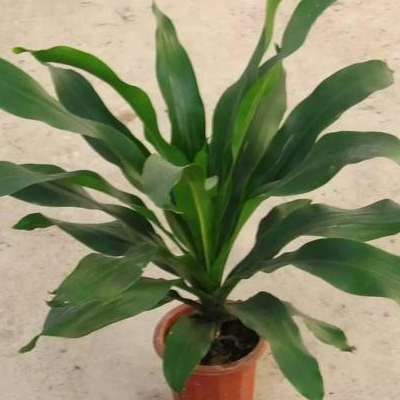
Brazilian ironwood actually originated in South America. It is not a plant of the Cycadaceae family; it belongs to the Asparagaceae family. In Greek it is called “female dragon”, so people called it dragon tree, and later its formal name became “Dracaena fragrans”.
There are nearly 40 species in the same genus as Brazilian ironwood. Besides its place of origin, it is also distributed in Asia, Africa and other places. Brazilian ironwood is a plant that likes warm and humid conditions. The plant is upright and erect, and some large potted specimens even grow to more than 2 m tall.
Brazilian ironwood can be grown in soil or hydroponically, and it is generally maintained as a potted plant. It likes a warm and humid environment and plenty of bright indirect light, and it can also be maintained indoors in shade with good ventilation.
For potted care, water thoroughly after the potting soil dries out, and avoid waterlogging in the pot. In winter, the minimum maintenance temperature should be kept above 5 degrees to avoid frost damage.
For hydroponically maintained Brazilian ironwood, take care to avoid stem rot. After roots grow, let 2/3 of the root system be submerged in water. Mist regularly to clean the leaf surface. For hydroponics, try not to expose it to too much sunlight, as green algae easily grow in the water.
Another key point is that Brazilian ironwood can also bloom. With a suitable growing environment, it can flower too. The flowers are generally reddish-brown strings of small fuzzy balls, and the flowers carry a rich fragrance.
Its flowers grow straight up past the leaves to the top, and when they wither they fall down sticky.
In daily care, it does not matter whether Brazilian ironwood has light or not. Without light, its stem will grow thinner. For indoor care in shade, it does not need frequent watering. It has strong tolerance to shade and drought. Brazilian ironwoods of different heights can be grown together in one pot, which creates a great atmosphere.
That is all for the introduction to Dracaena fragrans. Those interested can grow a few plants at home.
How to grow Brazilian wood: cultivation methods and precautions for Brazilian ironwood / Brazilian millennium wood / Dracaena fragrans
Brazilian wood is an evergreen tree in the Liliaceae family. It grows over 6 m tall, and as a potted plant is 50 cm to 150 cm tall, with branches; the leaves are clustered at the top of the stem, 40 cm to 90 cm long and 6 cm to 10 cm wide, curved in an arch shape, bright green and glossy. The flowers are small and inconspicuous, fragrant, and it is a famous new-generation indoor foliage plant. The plant shape is elegant and neat, and it is slightly shade-tolerant. It likes high temperatures, and below 13°C the plant goes dormant and stops growing. It likes loose, well-drained soil; use leaf mold or peat soil for potting. Propagate by cuttings; large numbers of cuttings are all imported from abroad. Cuttings require relatively high temperatures. It likes semi-shade sunlight and sufficient fertilizer. Commonly cultivated plants of the same genus include: Dracaena deremensis, lucky bamboo, Dracaena godseffiana and Dracaena draco, etc.
Growth habits of Brazilian wood
Brazilian wood likes a hot and humid climate. It is highly adaptable to light and can grow with slight shade or in sunlight, but in spring, autumn and winter it should receive more sunlight, while in summer it should be shaded or placed indoors in a well-ventilated spot. Brazilian wood has strong vitality; it needs only sunlight, air and very little water, and can live well on its own stored energy. Brazilian wood is drought-tolerant but not waterlogging-tolerant. During the growing season it can be watered thoroughly. Brazilian wood is sensitive to cold and frost, so in winter it should be placed indoors in a spot with plenty of sunlight, and the temperature should be maintained at 5°C~10°C.
Propagation methods of Brazilian wood
Propagation can be done by cuttings or hydroponics, with May to August being the most suitable.
After several years of planting, the Brazilian ironwood trunk may become too large or the lower leaves of the stem may fall off, reducing its ornamental value.
The stem can be cut about 10 cm above the pot surface, and then the stem can be cut into 5~10 cm sections as cuttings.
A wooden barrel or large flower pot filled with coarse sand or vermiculite can be used as a simple cutting bed.
Insert 1/3~1/2 of the cutting into the sand in an upright manner;
Or lay the entire cutting horizontally in coarse sand in a semi-lying manner, leaving about 1~2 cm exposed above the sand surface. The lower 1/3 or so of the cutting can also be soaked in water.
Mist frequently to keep the cutting bed relatively humid;
A temperature of 21~24°C is favorable for the cuttings to take root and sprout. Leafy shoot tips root relatively quickly, and can take root and be potted in 3~4 weeks;
Stem sections root somewhat more slowly, sometimes taking 2~3 months.
The mother plant whose stem has been cut off may have several dormant buds below the cut sprout into new branches.
When the shoots are more than 15 cm tall, cut them off for cuttings, and they can take root and be potted in 2~3 weeks.
Leaf cuttings are made by taking a complete leaf and inserting it into a sterilized substrate. With the same management, it can also take root in about two months. After transplanting, in about 40 days, new shoots will sprout at the junction of root and leaf, and after growing they become independent plants.
Key points for growing Brazilian wood
As long as temperature and other conditions are suitable, Brazilian wood can grow all year round.
During high summer temperatures, proper shading is needed, and in winter the room temperature must not be lower than 5°C.
But it is best to let it go dormant in winter, with a dormancy temperature of 13°C. If the temperature is too low, yellow-brown spots will appear on the leaf tips and leaf margins.
Brazilian wood placed indoors should be in a spot with plenty of light.
If the light is too weak, the markings on the leaves will turn green, the basal leaves will yellow, and it will lose its ornamental value.
During cultivation, keep the water clean and water 1~2 times a week. Do not use too much water, to prevent the trunk from rotting.
During high summer temperatures, misting can be used to increase air humidity, and water can be sprayed on the leaves to keep them moist.
Brazilian wood likes high temperatures, high humidity and plenty of sunlight; if it is too shaded, the leaf color fades.
In summer it requires semi-shade, and it dislikes alkaline soil.
For potting soil, it is best to use leaf mold or peat soil, adding about 1/4 river sand or perlite and a small amount of decomposed organic fertilizer.
Loose soil with good drainage and rich in organic matter is beneficial to its growth.
During the growing period, apply a dilute fertilizer solution mainly of phosphorus and potassium about every half month, to prevent the plant from growing leggy and the leaf colors from turning back to green.
Repot and change the soil every year in early spring, and apply sufficient base fertilizer.
Brazilian ironwood has strong adaptability and strong drought resistance; it will not die of dryness if not watered for several days.
But to grow well, it must have a sufficient water supply.
Especially in the vigorous growing summer, it must not lack water. Place the flower pot in a sunny indoor spot. If the temperature is suitable and water and fertilizer are appropriate, it can grow all year round.
Only when the temperature is below 13°C does the plant go dormant and stop growing. At this time, reduce watering, keep it alternating between moist and dry, and stop topdressing.
Low temperature is the main cause of leaf drop in winter.
Irregular watering, or insufficient nutrient supply, plus dry indoor air, or excessive fertilizing, are all physiological disorders that cause leaf tip scorch. When leaf scorch occurs, treat it according to the specific situation.
If it is caused by insufficient water and fertilizer, mist it 2~3 times a day, spray once a week with 0.1% ammonium sulfate or potassium dihydrogen phosphate solution, and sometimes move it outdoors to receive morning sun.
When the weather warms up, switch to a larger pot, replace the soil, and replant it. After that it can grow more white roots and continue to grow vigorously.
If it is caused by excessive fertilizing, immediately change the soil, rinse the roots with water close to the air temperature, and then replant.
Brazilian ironwood tolerates pruning. Simply cut off the top or upper stem, and dormant buds below the cut will grow new branches and leaves. 1~5 shoots can emerge at the same time, and then grow into individual plants.
Pest and disease control of Brazilian wood
Brazilian wood sometimes shows leaf margin scorch, leaf tip scorch and similar phenomena. These are mostly physiological disorders caused by drought, too-low temperature, improper watering and fertilizing, etc. The control method is: improve cultivation management, control temperature and humidity, fertilize reasonably, and provide proper ventilation.
Brazilian wood should be kept with clean leaves, and once pests occur, remove the pest bodies promptly. The sugarcane borer moth is quite harmful to Brazilian wood. The affected Brazilian wood can be moved to a cool outdoor spot and sprayed with 40% omethoate emulsifiable concentrate at 1000 times dilution or 90% trichlorfon at 800 times dilution, once a week for 3 consecutive times.
Common leaf spot and anthracnose damage can be sprayed with 70% thiophanate-methyl wettable powder at 1000 times dilution. Pests include scale insects and aphids, which can be killed by spraying with 40% omethoate emulsifiable concentrate at 1000 times dilution.
How to grow Brazilian wood? Hydroponic methods and care guide for Brazilian wood
Brazilian wood, also called Brazilian ironwood, Brazilian millennium wood, Dracaena fragrans, has a neat and elegant plant shape, an upright stem, and leaf margins with wavy undulations, lushly green and dripping with color, with high ornamental value! Because its stems and leaves are beautiful, and it is one of the few plants grown for its stems, it is suitable for placement in a bright spot. Below, let's learn about the hydroponic methods and care guide for Brazilian wood with the editor.
1. Hydroponic method
(1) Saw the perennial stem of a large columnar Brazilian wood into stem sections of different lengths, or cut off the leafy branches growing on the stem as material. For stem sections used as material, the upper end needs to be coated with wax.
(2) Choose a glass container with a planting cup.
(3) Cut the Brazilian wood, keep the top leaves, remove the lower leaves, and let it dry for a few days first. Then soak 1/3 of the Brazilian wood stem cutting in water, changing the water once every 3-5 days. Some carbendazim aqueous solution can be added for antisepsis and disinfection. At this time, be careful to maintain a relatively high temperature and place it in bright indirect light, which can promote rooting.
(4) In the early stage of hydroponics, appropriately add foliage plant nutrient solution at 1/2 the specified concentration, add clean water once every 7-10 days, and replace the nutrient solution once every 25-30 days, with pH 5.5-6. At the beginning, the nutrient solution level must not be too high; submerge 1/2 of the root system.
2. Care guide
(1) Light and temperature
Brazilian wood likes a hot and humid climate. It is highly adaptable to light and can grow with slight shade or in sunlight, but in spring, autumn and winter it should receive more sunlight, while in summer it should be shaded or placed indoors in a well-ventilated spot. Brazilian wood is sensitive to cold and frost, so in winter it should be placed indoors in a spot with plenty of sunlight, and the temperature should be maintained at 5-10°C.
(2) Watering
During high summer temperatures, misting can be used to increase air humidity, and water can be sprayed on the leaves to keep them moist.
(3) Pest and disease management
Hydroponic Brazilian wood sometimes shows leaf margin scorch, leaf tip scorch and similar phenomena, mostly physiological disorders caused by drought, too-low temperature, improper watering and fertilizing, etc. The control method is to improve cultivation management, control temperature and humidity, apply nutrient solution reasonably, and provide proper ventilation.
The above is the hydroponic method and care guide for Brazilian wood compiled by the editor of Huinong Network. Have you all learned it?