How to grow Clivia so its leaves are thick and glossy? A detailed guide to summer fertilizing methods
Clivia is a plant that many people love to grow. It looks beautiful and attractive, but growing it well is not easy. How do you grow Clivia so its leaves are thick and glossy? How to fertilize Clivia in summer:
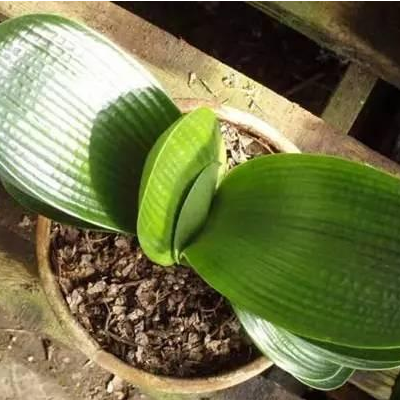
1. Keep appropriate light
Potted Clivia needs appropriate scattered light and short-day conditions. Especially in summer, when sunlight is intense, growing it outdoors easily scorches the leaves. Clivia likes the kind of scattered light found under tree shade. Clivia grown on a balcony or by a window only needs appropriate shading in summer. When the weather is extremely hot, it only needs light in the morning or evening.
2. Avoid improper fertilizing
When the weather is extremely hot in summer, Clivia should be fertilized less, or even not at all. Remember not to apply too much fertilizer, and especially not strong fertilizer. Excessive fertility easily causes root and stem rot and burns the roots and stems.
In summer care, pay attention to providing appropriate shade and watering appropriately. Avoid frequent watering and avoid waterlogging in the pot soil.
3. Watering and fertilizing in summer
In the high-temperature season, Clivia basically stops growing. At this time, if watered and fertilized too much, it easily causes root and stem rot. Especially after the temperature exceeds 30 degrees, watering should basically be controlled, and fertilizing should also stop.
4. Avoid dampness and stuffiness
In summer, the growing environment must be kept ventilated, and overly humid conditions should be avoided. Especially during the plum rain season, if the air humidity is high, then ventilation work must be done well. A stuffy, hot environment easily breeds mold, so a carbendazim solution can be watered on 1-2 times per month.
That is all for the growing methods for thick and glossy Clivia leaves. Hurry up and learn these clever tips.
Introduction to Clivia
Clivia pictures Introduction to Clivia
Scientific name/Latin name: Clivia; English name: Bush lily; aliases: large-flowered Clivia, large-leaf stone garlic, sword-leaf stone garlic, Damulan.
Taxonomic classification:
Kingdom: Plantae; Phylum: Magnoliophyta
Class: Liliopsida; Order: Liliales
Family: Amaryllidaceae; Genus: Clivia.
Origin of Clivia (the following article is translated from the South African Clivia Association)
Many friends like to grow Clivia, but they know relatively little about its origin. Now, we introduce the origin of Clivia.
In September 1815, the intrepid natural scientist William Burchell first scientifically collected Clivia at the source of the Great Fish River in the Eastern Cape Province of South Africa. Around 1820, James Bowie collected some Clivia at the same location and shipped them to England;
In 1828, John Lindley named it CLIVIA in honor of Charlotte Florentine Clive, Duchess of Northumberland, England.
At present, Clivia is divided into five major categories, namely: pendulous, large-flowered, narrow-leaved, stemmed, and miraculous Clivia. In addition, there is another unique Clivia, the swamp Clivia, which was recently discovered in KwaZulu-Natal.
Habit characteristics: It belongs to the genus Clivia in the family Amaryllidaceae. It is a perennial herbaceous flower with thick, strong fleshy roots. The stem is divided into rhizome and pseudobulb. The leaves are sword-shaped, alternate, neatly arranged, 30-50CM long;
The cyme can bear 10-60 small flowers; it blooms in winter and spring, especially in winter; the small flowers can bloom for 15-20 days, opening in succession one after another, and can last 2-3 months; each fruit contains from one seed to many seeds.
Clivia is native to southern Africa and grows beneath trees, so it fears both heat and cold. It likes a semi-shaded and humid environment and fears strong direct sunlight. The optimal temperature for growth is between 18-22. Below 5°C and above 30°C, growth is inhibited. Clivia likes a ventilated environment and prefers deep, fertile, loose soil. It is suitable for indoor cultivation.
Clivia flowers are not as magnificent as peonies, nor as fragrant as jasmine, and certainly not as colorful and graceful as Chinese roses. However, its leaves are verdant and glossy, and its flowers face upward like torches, orange-red in color, dignified and elegant. It is an ideal potted flower for beautifying the environment. The pendulous Clivia has drooping flowers, reserved and deep, elegant and solemn, with a charm all its own.Clivia leaves are broad and strap-shaped, hard and thick in texture, with gloss and veins. The leaves emerge in two rows overlapping from the shortened stem at the base. With proper management, the leaves are neatly arranged and even more beautiful. The flower scape is drawn out from the leaf axils, and it generally blooms only when it has 20-25 leaves. The full blooming period runs from New Year's Day to Spring Festival, and some also bloom in summer from June to July. After flowering, it can set a small number of seeds, requiring artificial pollination, and the seeds take 240-270 days to mature.
Clivia roots are milky white, very thick and strong, with a distinctly fleshy feel. Roots and leaves have a certain correlation. When new roots and leaves grow, new leaves also emerge along with them. If the roots are damaged or necrotic, the corresponding leaves also wither; if the leaves are damaged, it likewise affects the roots. Clivia roots are thick and fleshy. The leaf bases form a pseudobulb; the leaves are leathery and dark green. The umbel has from several to dozens of flowers; the flowers are funnel-shaped, upright, orange-red. Its variety is yellow-flowered Clivia (vae.aurea Regel). The flowering period is winter and spring. It is robust in nature and likes a warm, humid, semi-shaded environment. It requires well-drained, fertile loam. It is not cold-tolerant. In South China, Clivia can be used for flower beds or as cut flowers. In East China and areas north of the Yangtze River basin, it is grown as an indoor potted plant for foliage and flowers. Clivia is native to the tropics. It likes semi-shade, with 10 to 25 degrees being most suitable, and is suitable for growing in loose, fertile, slightly acidic organic soil.At present, China mainly uses sowing to propagate Clivia, thus forming a wide variety of cultivars.
Clivia cultivation is relatively simple. First, choose good pot soil, and it can be placed indoors near a window. Master fertilizer and water according to local temperature characteristics. During the growing period, the pot soil must be kept moist. During the high-temperature semi-dormant period, the pot soil should be on the dry side, and water should often be sprayed on the leaf surface to achieve the goal of cooling. Clivia likes fertilizer. Every 2 to 3 years, repot once in spring or autumn, adding decomposed cake fertilizer into the pot soil. Each year before the growing period, apply 5 to 40 grams of decomposed cake fertilizer beneath the pot surface soil, and apply liquid fertilizer once during growth. During management, turn the pot frequently to prevent the leaves from leaning to one side; if they lean, promptly straighten them. When the temperature is 25-30 degrees, it easily causes leggy leaf growth, making the leaves narrow and long and affecting the ornamental effect, so when cultivating Clivia, be sure to regulate room temperature.
Clivia, also known as sword-leaf stone garlic and large-leaf stone garlic, is an ornamental flower in the genus Clivia of the family Amaryllidaceae; it is a perennial herbaceous plant. Its flowering period lasts as long as 30-50 days, mainly in winter and spring, and it also blooms around New Year's Day to Spring Festival. It dislikes strong light and is a semi-shade plant. It likes coolness and dislikes high temperatures.
The suitable temperature for growth is 15-25°C, and below 5°C it stops growing.
It likes thick, well-drained soil and moist soil, and dislikes dry environments.
Clivia has very high ornamental value, and in China it is often grown in pots in greenhouses for viewing. Its propagation methods include division or seed propagation. The pendulous Clivia has the same uses and is cultivated in greenhouses in various places, with diverse flower colors. Clivia can live for decades or longer. Clivia is the city flower of Changchun City.
Roots and leaves have a certain correlation. When new roots and leaves grow, new leaves also emerge along with them. If the roots are eliminated (rotted from waterlogging or dried to death, etc.), as long as the leaves have not wilted, pay attention during care to maintaining soil moisture, and remember not to water too much, too dryly, or too frequently. Then the roots will regrow new root systems, and the plant can survive (with proper care, new roots can be seen growing in about 10 days); if the leaves are damaged, it likewise affects the roots.
Clivia, hailed as the flower of wealth and honor, generally blooms once a year after growing up under normal conditions. It is rare for it to bloom twice a year, and blooming three times is extremely rare. It generally blooms when it has more than twelve leaves. If the indoor growing temperature is suitable, it can bloom around Spring Festival. 01. Look at the leaf collar:
The leaf collar is the small fetal leaf close to the stem base of the leaf. The leaves of young seedlings grow out one by one from it. The leaf collar is wide, flat, thick, glossy, and hard. For seedlings whose shape is an inverted trapezoid, and whose leaf collar, on careful observation, has wide vertical stripes that are symmetrical and consistent from top to bottom, once grown, they will certainly be fine specimens.
02. Look at the leaves:
For leaves that are slanted upright, wide, thick, and glossy, light green in color, with black veins on a yellow ground, raised veins, and wide, few vertical vein divisions with large spacing, they are superior specimens. The head shape is round and spoon-like. When you feel the leaf with your hand, the texture is fine, and the raised veins are not rough. If it feels like satin, it is even better.
03. Look at the pseudobulb: a flat pseudobulb stem is better, while a cylindrical one is medium or inferior. 04. Choose pan-headed seedlings:
Pan-headed seedlings are seeds of the same Clivia plant, sown in the same period. Under the same cultivation conditions, the seedlings that emerge first grow more vigorously. But sometimes due to variation, a small number of seedlings that emerge later also grow into superior specimens.05. Look at the veins:
The cultivar of Clivia can be seen from the veins of the seedlings, for example: Heshang has wide vertical veins, and its horizontal veins are three long and one short. The wider the vertical veins and the greater the spacing of the horizontal veins, the more superior the specimen; Huang Jishi has wide vertical veins, and its vertical and horizontal veins form a large character ""; the difference between Youjiang and Huang Jishi is only a slight difference in veins. The "black veins" of Youjiang's vertical veins are slightly thicker than those of Huang Jishi; the horizontal veins of short-leaf vein are relatively dense, arranged in threes, and the veins at the leaf tip are extremely dense, forming "sesame veins." There are also unusual cases in selecting Clivia seedlings. For example, the first leaf of Huang Jishi is not very wide and looks as if it is thin with a pointed head shape, but as long as the color is light yellow, the veins on both front and back are raised, the leaf is flat, and the color is glossy, the seedling will mostly also become a fine specimen when mature.
How to select Clivia
Clivia leaves, flowers, and fruits are all beautiful and have ornamental value. When selecting Clivia, pay attention to the following aspects:
Look at leaf width: the leaf width of an adult Clivia is above 9-1OCM.
Those whose leaf length does not exceed 3 times the leaf width are superior specimens;
Those with leaf width 6-18CM and a length-to-width ratio of 4-6 times are relatively good specimens;
Those with a leaf length-to-width ratio above 7 times are ordinary cultivars.
Look at the leaf veins: those with clearly raised veins and large spacing between veins are fine specimens; those that are smooth and hidden with irregular veins are medium specimens. Those with straight vertical veins and flat horizontal veins are fine specimens. Fine specimens have 3 vertical veins; medium specimens have 5 vertical veins; those with more than 5 vertical veins are inferior.
Look at leaf glossiness: those with oily, bright leaf color and brightness on both sides are superior specimens; those that are bright and glossy on half the surface are medium specimens; those that are not glossy and gray are inferior.
Look at the head shape of the leaf tip: generally speaking, those whose leaf apex is rounded and blunt are fine specimens; those with a long pointed apex are medium specimens. But there are also a few superior specimens whose leaf tips are sharply pointed.
Look at leaf thickness: those with thick, fleshy leaves are excellent cultivars, and those with thin leaves are ordinary cultivars.
For large Clivia, a leaf thickness between 2-2.5MM, and for small Clivia between 1.15-1.5MM, are fine specimens.
But whether large or small Clivia, they must not be too thick or too thin. Too thick or too thin both belong to inferior grades.
Look at the leaf's light receptivity (light preference); those whose leaves are neatly arranged without disorder and whose shape does not distort no matter whether the pot faces the sun or not, and whose light preference is extremely poor, are fine specimens; those that need the light direction adjusted every 3-5 days, otherwise the central leaves show an uneven in-and-out appearance, are medium specimens; those whose flower pot must have the light direction adjusted every day, otherwise the central leaves show a very obvious uneven in-and-out appearance, and after artificial shaping still have upper leaves facing east and lower leaves facing west, are inferior.
Look at color: a light yellow ground with deep green vertical and horizontal leaf veins is a fine specimen; yellow, pale yellow, and light green are medium specimens; dark green, old green, light gray, dark gray, and gray are all inferior.
Look at flower color: deep orange-red with a milky white lining and a green central line with a gauze-like effect is a fine specimen; orange-red, rose-red, or light tea-red are medium specimens; deep yellow, light yellow, cream yellow, bright red, light red, red with mixed-color yellow or mixed-color pink, and petals with pointed tips, mixed pink, mixed color or mixed gray-white, yellow with red, or yellow with white are all inferior.
Look at flower shape: superior type with large petals, round but not scattered, with 28-45 flowers or more, and the interval between flowers not exceeding 7 days, and the flowers on one scape opening into a neat circle, is a fine specimen. Those that open unevenly, blooming in 3-5 batches and falling as they open, are medium specimens. Those whose flowers on one scape open one by one, or 2-3 flowers opening separately, with a flowering period of one month or two months, are inferior.
Look at the fruit: those with relatively large fruit, glossy color, and a raised closing point are superior specimens; those with relatively small fruit and duller color are medium specimens. The size of the Clivia plant is not a standard for judging quality. Large plant shapes displayed in public places look beautiful and dignified; placed on home desks, smaller plants with shorter leaves look more exquisite and lovely.
Clivia prices vary greatly: according to the Clivia appreciation and evaluation standards, Clivia quality can be roughly divided into six grades: treasure, premium, fine, good, ordinary, and inferior.
High-grade Clivia is extremely difficult to breed through hybridization. It is not one in a hundred or one in a thousand, but one in ten thousand. Those with a score above 90 points are hard to find even in ten thousand. Its pollen can serve as the male parent for Clivia of a certain grade, improving the quality and grade of the next generation, making it possible to breed treasures similar in grade to the male parent. Therefore, the value of its pollen as a male parent is considerable. At 1000 yuan per pollen stick (in reality, some have sold for more than 2000 yuan per stick), one mature Clivia can bloom about twenty flowers each time, and each flower has six pollen sticks (stamens), that is, each high-grade Clivia can produce about 100 pollen sticks per flowering. If all are sold, it can yield 100,000 yuan. And the seedlings it produces number at least about 100. The price of its seedlings is also above a thousand yuan. High-grade Clivia not only has extremely high ornamental value itself, but can also be used as a male parent to improve the grade of other Clivia offspring, and can also be used as a female parent to produce high-grade next generation.
The value of high-grade Clivia cannot be determined by the average socially necessary labor time required to produce it, but is determined by the principle that "things are precious when they are rare."
Only the value of low-grade Clivia is determined by the average socially necessary labor time required to produce it.
The price of ordinary goods fluctuates around its value according to supply and demand relations, but will not deviate too far.
According to China's current national economic development status, national living standards, and the supply and demand relationship of Clivia, the prices of Clivia of various grades (mature plants), ranging from several dozen yuan to several hundred thousand yuan, are understandable.