How to Grow Purple Water Lilies in a Vase in Water and from Rhizomes in Pots
Water lilies are something that many people absolutely adore, and water lilies are just that lovable. How do you grow water lilies in a vase? What are the methods for growing water lilies from rhizomes in pots:
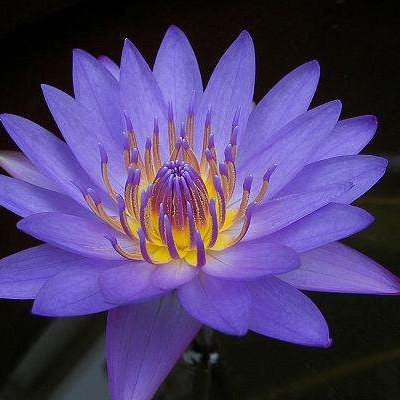
How to grow purple water lilies in a vase:
1. Water lilies are long-day plants, so the planting site must have ample light and good ventilation.
2. Water lilies have different water level requirements at different growth stages. At the initial stage, the water level should just barely cover the rim of the pot, and as the leaves grow, the water level should be gradually raised.
3. At the early growth stage of potted water lilies, the base fertilizer should be sufficient, so no additional fertilizing is needed; during the flowering period, apply a quick-acting potassium dihydrogen phosphate fertilizer.
4. Throughout the growing season, take care to remove weeds, dead leaves and algae from the water surface in the pot. If there is too much algae, spray a 0.3 to 0.5% copper sulfate solution once every half month, for several consecutive times, which can have a certain controlling effect.
5. Strengthen cultivation management and promptly remove diseased leaves. For severely affected plants, replace the soil with new soil before replanting, and do not apply excessive nitrogen fertilizer. When disease occurs, spray a 75% chlorothalonil 600 to 800 times dilution for control.
6. Overwintering management: The underground stems of water lilies must overwinter in mud. In winter, the water level must be deepened to over 1 m to prevent the underground stems from freezing. If the water is shallow and prone to freezing, the rhizomes should be dug out; potted plants can be taken out together with the pot and placed indoors to overwinter. Cold-hardy species must overwinter at around 3°C. After planting, water lilies generally need to be dug out and divided again after 2 to 3 years; they do not need to be dug out and replanted every year.
7. Summer management: The main task is to steadily maintain the water depth and keep the water clean, and the water can be changed at appropriate times. The water should preferably be changed in the early morning to prevent too great a temperature difference between the old and new pond water, which would affect the normal growth of flowers and leaves. At the same time, while scrubbing the pond, remove rotten leaves and withered petals, but do not remove the receptacle, so that seeds can form.
Methods for growing water lilies from rhizomes in pots:
For pot cultivation, choose a pot or tub with an inner diameter of 40 cm and a depth of about 60 cm, and plant from late March to early April. When planting, first place 3 to 4 cm of river mud in the bottom of the pot (tub); do not fill with too much soil, and usually leave 20 to 25 cm of space at the top for water. Then bury the cut rhizomes with the growing tips facing upward just below the soil surface, and cover lightly with soil, with the covering depth such that the growing tips are level with the soil surface; plant 5 to 7 segments per pot. Right after planting, do not add water too deep; 2 to 3 cm is suitable, to help raise the water temperature. After planting, place the pot (tub) in a well-ventilated, sunny spot for care. Later, gradually deepen the water level as the plant grows. In summer, a water depth of 25 to 35 cm is suitable, and this depth should be kept constant. After flowering, promptly remove spent flowers and dead leaves to prevent nutrient consumption and to keep things clean and attractive. During the growing period, apply fertilizer 2 to 3 times as appropriate. Before the Cold Dew solar term, pour out the water in the pot and place it in a cold room at around 3°C to overwinter, keeping the potting soil moist but not frozen. Around the Spring Equinox, repot and change the soil, and apply an appropriate amount of decomposed soybean cake liquid as base fertilizer.
That concludes the introduction to methods for growing water lilies in a vase; water lilies can also be grown as potted plants.
How to Grow Water Lilies [Water Lily Planting]How to Grow Water Lilies and the Planting Season
●▂●More great content ?Wind chime ornaments
?Colorful vases
?Sky lantern pictures
?Red Bleeding Glory-bower
If you want to learn more about soft furnishing knowledge, please click to enter"""Soft Furnishing Section
.........................................................................................................
Water lilies grow in ponds and marshes, resemble lotus flowers in appearance, and are known as the "sleeping beauty among flowers." Cold-hardy species are usually divided before germination in early spring, while cold-tender varieties must wait until the temperature rises somewhat, around mid-May, before they can be divided. When growing water lilies, pay attention to light and temperature. Water lilies like sunlight and are not cold-tolerant; when the climate is too cold, water lilies will enter a dormant period.
Water lily cultivation can be divided into tub cultivation, submerged pot cultivation, and pond cultivation according to the different planting locations.
1) For tub cultivation, choose a flower tub with as large a diameter as possible and no drainage hole; place evenly mixed nutrient soil in the tub, maintain good ventilation, add water as new leaves grow, and during the flowering season maintain a water depth of 70 to 80 cm. In winter, more water should be added, keeping the water depth above 110 cm. In the Beijing-Tianjin area, overwintering is difficult in winter, so the plants need to be moved into a greenhouse or sunk into a water pool;
2) For potted plants, choose a pot with a diameter of over 40 cm and a depth of over 60 cm, and repot and change the mud every year according to actual conditions. The rhizomes should be buried in 30 cm of fertile river mud and then placed in the pot. In the high-temperature season, the water layer should be kept clean and the water changed regularly; during the growing period, provide ample light, and after flowering promptly remove spent blooms and apply additional fertilizer. Similarly, in the Beijing-Tianjin area, plants must be moved into a cold room or to the bottom of deep water to overwinter in winter; overwintering potted plants in water is relatively more convenient than tub cultivation.
3) For water lily cultivation, choose a pond with fertile soil, with at least 30 cm of mud at the bottom of the pond. Water lily seedlings propagated in pots can be placed directly in, with the water level shallow at first and then gradually raised. The overwintering water level varies by region; keeping the rhizomes below the ice layer is sufficient for overwintering. The advantage is a better group effect and greater growth; the disadvantage is that digging them out the following year is difficult, and pests and diseases are hard to control.
Water lilies can be propagated in two ways. One is division propagation: when the buds have just sprouted, dig up the rhizomes, make sure each rhizome has more than one plump new bud, cut them into root segments 8 to 10 cm long, and plant them in the river mud in a pond or tub. The second is seed propagation: before the fruit ripens, wrap it in gauze with good air permeability to prevent the seeds from falling into the water, then select plump seeds and soak them in warm water to promote germination, changing the water every day; once they germinate, they can be moved into soil, using fertile clay loam for the potting soil, with a sowing temperature of 25 to 30°C being suitable.
Summary: When growing water lilies, pay attention to light and temperature; the water level should be adjusted according to different temperatures; the soil should be fertile, and fertilizer should be applied at appropriate times, with additional fertilizing possible during the flowering period. The sowing time is also determined by temperature. Lotus seeds can be sown in all four seasons in a suitable environment, that is, when the water temperature can be kept above 16°C, but for the growth of water lilies, sowing is generally chosen in March to April; sowing in autumn requires a longer time to flower.
▓ Recommended Reading
? Spider plant varieties ? Language of the daisy ? Aquarium fish tank wholesale ? How to grow sago palms ? How to grow kalanchoe
? Fish tank making ? Benefits of pothos ? Fast cross-stitch methods ? How to grow jade plants ? Aluminum alloy louver pictures
[Water Lily Planting]How to Grow Water Lilies and the Planting Season
●▂●More great content ✿Wind chime ornaments
✿Colorful vases
✿Sky lantern pictures
✿Red Bleeding Glory-bower
If you want to learn more about soft furnishing knowledge, please click to enter"""Soft Furnishing Section
.........................................................................................................
Water lilies grow in ponds and marshes, resemble lotus flowers in appearance, and are known as the "sleeping beauty among flowers." Cold-hardy species are usually divided before germination in early spring, while cold-tender varieties must wait until the temperature rises somewhat, around mid-May, before they can be divided. When growing water lilies, pay attention to light and temperature. Water lilies like sunlight and are not cold-tolerant; when the climate is too cold, water lilies will enter a dormant period.
Water lily cultivation can be divided into tub cultivation, submerged pot cultivation, and pond cultivation according to the different planting locations.
1) For tub cultivation, choose a flower tub with as large a diameter as possible and no drainage hole; place evenly mixed nutrient soil in the tub, maintain good ventilation, add water as new leaves grow, and during the flowering season maintain a water depth of 70 to 80 cm. In winter, more water should be added, keeping the water depth above 110 cm. In the Beijing-Tianjin area, overwintering is difficult in winter, so the plants need to be moved into a greenhouse or sunk into a water pool;
2) For potted plants, choose a pot with a diameter of over 40 cm and a depth of over 60 cm, and repot and change the mud every year according to actual conditions. The rhizomes should be buried in 30 cm of fertile river mud and then placed in the pot. In the high-temperature season, the water layer should be kept clean and the water changed regularly; during the growing period, provide ample light, and after flowering promptly remove spent blooms and apply additional fertilizer. Similarly, in the Beijing-Tianjin area, plants must be moved into a cold room or to the bottom of deep water to overwinter in winter; overwintering potted plants in water is relatively more convenient than tub cultivation.
3) For water lily cultivation, choose a pond with fertile soil, with at least 30 cm of mud at the bottom of the pond. Water lily seedlings propagated in pots can be placed directly in, with the water level shallow at first and then gradually raised. The overwintering water level varies by region; keeping the rhizomes below the ice layer is sufficient for overwintering. The advantage is a better group effect and greater growth; the disadvantage is that digging them out the following year is difficult, and pests and diseases are hard to control.
Water lilies can be propagated in two ways. One is division propagation: when the buds have just sprouted, dig up the rhizomes, make sure each rhizome has more than one plump new bud, cut them into root segments 8 to 10 cm long, and plant them in the river mud in a pond or tub. The second is seed propagation: before the fruit ripens, wrap it in gauze with good air permeability to prevent the seeds from falling into the water, then select plump seeds and soak them in warm water to promote germination, changing the water every day; once they germinate, they can be moved into soil, using fertile clay loam for the potting soil, with a sowing temperature of 25 to 30°C being suitable.
Summary: When growing water lilies, pay attention to light and temperature; the water level should be adjusted according to different temperatures; the soil should be fertile, and fertilizer should be applied at appropriate times, with additional fertilizing possible during the flowering period. The sowing time is also determined by temperature. Lotus seeds can be sown in all four seasons in a suitable environment, that is, when the water temperature can be kept above 16°C, but for the growth of water lilies, sowing is generally chosen in March to April; sowing in autumn requires a longer time to flower.