How much does it cost to propagate goldenrain tree by cuttings? A detailed guide to the method
Goldenrain tree (Koelreuteria paniculata) is grown and loved by a huge number of people; it is generally not grown as a potted plant because it is too large. What is the cutting propagation method for goldenrain tree? How much does goldenrain tree cost:
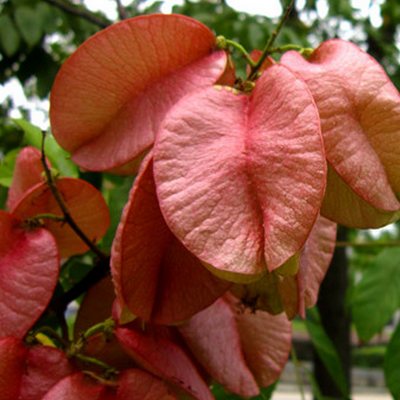
Cutting propagation method for goldenrain tree:
1. Collecting cuttings
For goldenrain tree, after the trees drop their leaves in autumn, the trunks can be collected as propagation wood, or the water sprouts of goldenrain tree can be collected as propagation wood; bury the propagation wood in wet sand or wet soil to keep it moist.
2. Cutting the cuttings
Take out the buried propagation wood, cut it into stem segments of equal length, and make the lower cut at an angle to facilitate cutting propagation.
3. Winter storage of cuttings
Choose a shaded spot that does not easily accumulate water for winter storage, place the cuttings in a dug sand trench, then cover with 0.5 m of wet sand.
4. Planting the cuttings
Choose a loamy soil rich in humus, loose and airy, and with good water retention, apply a sufficient amount of decomposed organic fertilizer as a base fertilizer; when planting, part of the cutting should be left exposed above the ground.
5. Management after planting
Keep the soil adequately moist, apply an appropriate amount of nitrogen and phosphorus fertilizer, and during the hardening period of the seedlings, control water and fertilizer to increase the degree of lignification of the seedlings.
How much does goldenrain tree cost:
5 cm goldenrain tree costs 45 yuan
6 cm goldenrain tree costs 65 yuan
7 cm goldenrain tree costs 100 yuan
8 cm goldenrain tree costs 140 yuan
10 cm goldenrain tree costs 320 yuan
12 cm goldenrain tree costs 550 yuan
15 cm goldenrain tree costs 1000 yuan.
That is all for the introduction to the cutting method of goldenrain tree; the price of goldenrain tree depends on its size.
Cutting propagation method for goldenrain tree
Cutting propagation method for goldenrain tree
Collecting cuttings
For goldenrain tree, after the trees drop their leaves in autumn, the trunks can be collected as propagation wood, or the water sprouts of goldenrain tree can be collected as propagation wood; bury the propagation wood in wet sand or wet soil to keep it moist.
Cutting the cuttings
Take out the buried propagation wood, cut it into stem segments of equal length, and make the lower cut at an angle to facilitate cutting propagation.
Winter storage of cuttings
Choose a shaded spot that does not easily accumulate water for winter storage, place the cuttings in a dug sand trench, then cover with 0.5 m of wet sand.
Planting the cuttings
Choose a loamy soil rich in humus, loose and airy, and with good water retention, apply a sufficient amount of decomposed organic fertilizer as a base fertilizer; when planting, part of the cutting should be left exposed above the ground.
Management after planting
Keep the soil adequately moist, apply an appropriate amount of nitrogen and phosphorus fertilizer, and during the hardening period of the seedlings, control water and fertilizer to increase the degree of lignification of the seedlings.
Goldenrain tree Koelreuteria paniculata Laxm. Goldenrain tree profile: how to grow goldenrain tree / how to propagate goldenrain tree
Goldenrain tree cardGoldenrain tree Koelreuteria paniculata Laxm.
Aliases: Muluan, Luanhua, Wula, Wulajiao, black-leaf tree, Shiluan tree, black-leaf tree, Mulanya
Classification: woody flowering plant
Family and genus: Plantae, Angiosperms, Dicotyledons, Sapindales, Sapindaceae, Koelreuteria
Full bloom period: summer
Goldenrain tree (Koelreuteria paniculata), aliases: Muluan, Luanhua, etc., is a plant in the genus Koelreuteria of the family Sapindaceae. It is a deciduous tree or shrub; the bark is thick, grayish brown to grayish black, and longitudinally fissured when old; the lenticels are small, gray to dark brown; the branchlets have warty dots, and together with the leaf rachis and petiole they are covered with crumpled short pubescence or are glabrous. Goldenrain tree grows in calcium-based soils produced by the weathering of limestone and is cold-tolerant; in China it is only distributed in the Yellow River basin and the lower reaches of the Yangtze River basin, is rarely seen north of the Hai River basin, and cannot grow in silica-based acidic laterite areas. Goldenrain tree sprouts relatively late in spring and drops its leaves early in autumn, so each year...
How to grow goldenrain tree and points to note; an introduction to goldenrain tree
Goldenrain tree (Koelreuteria paniculata), aliases: Muluan, Luanhua, etc., is a plant in the genus Koelreuteria of the family Sapindaceae. It is a deciduous tree or shrub; the bark is thick, grayish brown to grayish black, and longitudinally fissured when old; the lenticels are small, gray to dark brown; the branchlets have warty dots, and together with the leaf rachis and petiole they are covered with crumpled short pubescence or are glabrous.
Goldenrain tree grows in calcium-based soils produced by the weathering of limestone and is cold-tolerant; in China it is only distributed in the Yellow River basin and the lower reaches of the Yangtze River basin, is rarely seen north of the Hai River basin, and cannot grow in silica-based acidic laterite areas. Goldenrain tree sprouts relatively late in spring and drops its leaves early in autumn, so its annual growth period is relatively short and growth is slow; the wood can only be used to make some small utensils, and the seeds can be pressed for industrial oil.
Morphological characteristics and appearance of goldenrain tree
Goldenrain tree is a deciduous tree or shrub; the bark is thick, grayish brown to grayish black, and longitudinally fissured when old; the lenticels are small, gray to dark brown; the branchlets have warty dots, and together with the leaf rachis and petiole they are covered with crumpled short pubescence or are glabrous.
Leaves
The leaves of goldenrain tree are clustered on current-year branches, flat, once pinnate, incompletely twice pinnate, or occasionally twice pinnate compound leaves, up to 50 cm long; leaflets (7-)11-18 (the terminal leaflet is sometimes fused with the uppermost pair of leaflets below the middle), sessile or with a very short stalk, opposite or alternate, papery, ovate, broadly ovate to ovate-lanceolate, (3-)5-10 cm long, 3-6 cm wide, apex shortly acute or shortly acuminate, base obtuse to nearly truncate, margin irregularly obtusely serrate, the tooth tips with small apicula, sometimes the teeth near the base are distant and appear notched, or pinnately parted to the midrib forming twice pinnate compound leaves; the upper surface has scattered crumpled short pubescence only on the midrib, the lower surface has bearded hairs in the vein axils, and sometimes the underside of the leaflets is covered with down.
Flowers
The goldenrain tree has a cymose panicle 25-40 cm long, densely covered with fine pubescence, the branches long and widely spreading; the cymose inflorescences on the last branches have 3-6 flowers, densely arranged in heads; the bracts are narrowly lanceolate, covered with small coarse hairs; the flowers are pale yellow, slightly fragrant; the pedicels are 2.5-5 mm long; the calyx lobes are ovate, the margin with glandular cilia, erose; the petals are 4, reflexed outward when flowering, linear-oblong, 5-9 mm long, the claw 1-2.5 mm long, covered with long pubescence, the scale at the base of the petal blade initially yellow and orange-red when flowering, irregularly deeply parted, covered with warty crumpled hairs; stamens 8, 7-9 mm long in male flowers and 4-5 mm long in female flowers, the lower half of the filaments densely covered with white, spreading long pubescence; the disk is oblique, with rounded obtuse small lobes; the ovary is triangular, glabrous except for cilia on the angles, the abortive ovary densely covered with small coarse hairs.
The flowering period of goldenrain tree is June-August.
Fruit
The capsule is conical, 3-angled, 4-6 cm long, apex acuminate, the valves ovate, the outside with a network pattern, the inside smooth and slightly glossy; the seeds are nearly spherical, 6-8 mm in diameter. The fruiting period of goldenrain tree is September-October.
Ecological habits of goldenrain tree
Goldenrain tree is a light-loving plant that tolerates slight semi-shade; it is cold-tolerant but not tolerant of waterlogging, so pay attention to the soil when planting; it is tolerant of drought and barren conditions, has strong adaptability to the environment, likes to grow in calcareous soil, and tolerates salinity and short-term waterlogging. Goldenrain tree has a deep root system, strong sprouting ability, and medium growth speed; young trees grow relatively slowly, then gradually faster, and it has strong resistance to smoke and dust. It is widely planted in the Central Plains region, especially in Yucheng and Yanling, Xuchang.
Goldenrain tree has strong wind resistance, can withstand low temperatures of minus 25°C, and has strong resistance to dust, sulfur dioxide and ozone. It is mostly distributed in low mountains and plains below 1500 m elevation, up to a maximum of 2600 m elevation.
Cultivation techniques for goldenrain tree
Goldenrain tree has few pests and diseases and is easy to cultivate and manage; the most suitable cultivation soil is deep, moist soil. It is mainly propagated by sowing, and division or root cuttings are also possible; when transplanting, appropriately shorten the main root and thick lateral roots, which can promote the development of many fibrous roots and make survival easier. Harvest when the fruit ripens in autumn, and dry it promptly to remove the husk. Because the seed coat is hard and not easily permeable to water, if untreated, spring sowing the following year often fails to germinate; therefore sow in autumn after removing the husk, or use wet sand stratification treatment before spring sowing. Ridge sowing is generally used, with a ridge spacing of 60-70 cm; because the seed germination rate is low, the seeding rate is large, at 30-40 kg/mu.
Seed propagation
The fruit of goldenrain tree matures in September-October. Select excellent individual trees that are growing well, with straight trunks, open crowns, plump fruit, and in the prime age stage as mother trees for seed collection; collect promptly when the fruit shows reddish brown or orange-yellow and the capsule has not yet split, otherwise it will fall off on its own. However, collecting too early is also not advisable, otherwise the seed germination rate will be low.
After collecting the fruit, remove the peel and fruit stalk, and dry it promptly in the sun or spread it out in the shade to dry; after the capsule splits, knock it to thresh the seeds, and clean the seeds by sieving. The seeds are black, spherical, about 0.6 cm in diameter, with a seed yield of about 20%, a 1000-seed weight of about 150 g, and a germination rate of 60%-80%.
The seed coat of goldenrain tree seeds is hard and not easily permeable to water; if not subjected to germination-promoting management, spring sowing the following year often fails to germinate or has a very low germination rate. Therefore, sowing in autumn of the same year allows the seeds to complete the germination-promoting stage in the soil, saving the steps of seed storage and germination promotion. After a winter, in the spring of the second year, the seedlings emerge early and uniformly and grow robustly.
In late autumn, choose a high, dry, well-drained, wind-sheltered, sunny spot and dig a pit. The pit is 1-1.5 m wide, deep above the groundwater level and below the frozen layer, about 1 m; the length of the pit depends on the quantity of seeds. At the bottom of the pit, spread a layer of gravel or coarse sand about 10-20 cm thick, and insert a bundle of straw in the pit for ventilation. Mix the disinfected seeds with wet sand and place them in the pit, with a seed-to-sand volume ratio of 1:3 or 1:5, or alternate one layer of seeds and one layer of sand. Each layer is about 5 cm thick. The sand moisture should be such that it can be squeezed into a ball by hand without releasing water and crumbles when touched after releasing the hand. Fill to about 20 cm from the ground, then cover with 5 cm of river sand and 10-20 cm of straw, etc., and dig drainage ditches around.
Goldenrain tree is generally raised in field seedling beds. The sowing site requires loose, airy soil, and the land should be leveled and finely prepared; in dry, rain-scarce areas, it is advisable to water thoroughly before sowing. The germination rate of goldenrain tree seeds is relatively low, so the seeding rate should be large, generally 50-100 g per sq m.
Sow in March in spring, take out the seeds and sow directly. Apply base fertilizer on the selected plot, and scatter 3000 g to 4000 g per mu of carbofuran granules or phorate granules for insect control. Use wide-row drilling, which is good for ventilation and light for the seedlings and also convenient for management. For dry-stored seeds, about 45 days before sowing, use wide-row drilling. After sowing, cover with a layer of 1-2 cm of loose, finely crushed soil to prevent the seeds from drying out and losing water or being damaged by birds and animals. Then water once with a small amount of water, and cover with materials such as grass and straw to raise the ground temperature, maintain soil moisture, prevent weeds from growing and soil from crusting; after about 20 days the seedlings emerge completely, then remove the rice straw.
Cutting seedling raising
Collection of propagation wood: after the trees drop their leaves in autumn, in combination with coppicing 1-year-old seedlings, collect trunks with a basal diameter of 0.5-2 cm as propagation wood, or collect the current-year sprout shoots and water sprouts of multi-year-old goldenrain trees as propagation wood, bundling them while collecting. After sorting, immediately bury them in wet soil or wet sand so they do not lose moisture, to be used as cuttings.
Cutting of cuttings: take out the buried propagation wood, cut into small segments of about 15 cm, with the upper cut made flat, 1.5 cm from the bud, and the lower cut made near below the bud, at an angle.
Winter storage of cuttings: the winter storage site should be chosen in a shaded place that does not easily accumulate water; the trench is about 80 cm deep, and the width and length depend on the cuttings. At the bottom of the trench, spread a layer of wet sand about 2-3 cm deep, and place the cuttings upright in the sand storage trench. Note that the leaf buds face upward, placed in a single layer, then cover with 50-60 cm of wet sand.
Cutting: the cutting medium should preferably be loamy soil rich in humus, loose, well-aerated and with good water retention, with decomposed organic fertilizer applied. Prepare the cutting medium in autumn, deep plow and harrow finely, level and refine it, and cut in spring of the following year. The row spacing is 30 cm x 50 cm; first make holes with a wooden stick, insert straight, with 1-2 buds of the cutting exposed.
Management after cutting: maintain soil moisture, appropriately build a shade shed and apply nitrogen fertilizer and phosphorus fertilizer, carry out appropriate irrigation and topdressing; during the seedling hardening period, control water and fertilizer to promote lignification.
Field management
Shading
The shading time and degree of shading should be determined according to the temperature and climatic conditions at the time and place, to the extent of ensuring that the seedlings are not harmed by sunscald. Entering autumn, gradually extend the light duration and light intensity until full light is received, to increase the degree of lignification of the seedlings.
Thinning and filling in seedlings
When the seedlings grow to 5-10 cm tall, thin them; after thinning to a plant spacing of 10-15 cm, apply topdressing together with watering, leaving about 12 seedlings per sq m. Thinning requires removing the small and keeping the large, removing the inferior and keeping the superior, removing the dense and keeping the sparse, with all seedlings evenly spaced, and it is best done on cloudy and rainy days. Along with thinning, fill in gaps where plants are missing to ensure the seedlings are evenly distributed.
Daily management
Frequently loosen the soil, weed, and water to keep the bed surface moist; after leaf drop in late autumn, most seedlings can reach 2 m tall with a ground diameter of about 2 cm. Dig up the seedlings and grade them, transplant in the following spring; before transplanting, shorten the roots slightly; after transplanting, cut off the seedling stem from the root crown, that is, coppice at the ground surface, then water thoroughly. After sprouting, frequently remove buds, keeping only the strongest bud to train as the trunk. During the growing period, frequently loosen the soil, hoe weeds, water, and apply topdressing; by autumn a straight trunk can be formed.
Transplanting
Transplanting sprouted seedlings can promote well-developed root systems, with 1-year-old seedlings 50-70 cm tall. Goldenrain tree is a deep-rooted tree species, and it is advisable to transplant several times to form a good effective root system. Seedlings from sowing can be dug up after leaf drop in the same autumn and heeled in trenches, then planted separately the following spring.
Because the trunk of goldenrain tree is not easy to grow straight, at the first transplanting, coppice and cut the stem, and strengthen fertilizer and water management. In spring, sprouts emerge from the base; select and keep the straight, robust ones to train as the trunk, and then the trunk grows quickly and straight. If the first stem cutting does not meet requirements, stem cutting can be done again in the spring of the following year. Thereafter, transplant once every 3 years or so; when transplanting, appropriately shorten the main root and thick lateral roots to promote new roots. Young goldenrain trees grow slowly; the first two transplantings should be appropriately dense, which is good for training a straight trunk and saves land. After that, it should be appropriately thinned to train a well-formed crown.
Fertilizing
Fertilizing is an important measure for raising strong seedlings. After the seedlings emerge and grow roots, it is advisable to fertilize frequently together with watering. During the annual peak growth period, apply quick-acting fertilizer mainly of nitrogen to promote vegetative growth of the plant. In autumn, stop applying nitrogen fertilizer and increase phosphorus and potassium fertilizer to improve the degree of lignification of the plant and increase the cold resistance of the seedlings. In winter, it is advisable to apply farmyard organic fertilizer as a base fertilizer, which both provides sustained nutrients for seedling growth and plays a role in heat preservation and soil improvement. As the seedlings grow, gradually increase the amount of fertilizer to meet the nutrient needs of seedling growth. The first topdressing amount should be small, 2500 g to 3000 g of nitrogen chemical fertilizer per mu; thereafter apply fertilizer once every 15 days, and the amount can be slightly larger.
Transplanting
For large seedling cultivation, generally when the trunk height reaches the branch point height, keep the main branches, and they can leave the nursery in 3 to 4 years. If the 1-year-old seedling stem is not straight or does not meet the trunk-setting standard, coppice and retrain the following year. Generally after two transplantings and 3 to 6 years of cultivation, the diameter at breast height can reach 4-8 cm.
Planting density: about 600 trees per mu for those with a diameter at breast height of 4-5 cm, and 200 to 300 trees per mu for those with a diameter at breast height of 6-8 cm; select and keep 3 to 5 main branches, cut back to 40 cm, and keep 2 to 3 lateral branches on each main branch, with a crown-to-height ratio of 1:3.
To cultivate full-crown seedlings with a trunk diameter of 8-12 cm, plant 160-170 trees per mu, that is, a row spacing of 2 m x 2 m; to cultivate large seedlings with a trunk diameter above 12 cm, plant 130 trees per mu, that is, a row spacing of 2 m x 2.5 m. In combination with tending management, prune sprout branches below 1.5 m of trunk height to promote straight trunk growth.
Seedling shaping and pruning: the crown of goldenrain tree is nearly spherical, and a natural tree form is generally used. Because of different uses, the shaping requirements also differ somewhat. Street tree seedlings require a straight trunk, a first branch height of 2.5-3.5 m, and a complete, full crown with evenly distributed, spreading branches. Courtyard shade trees require a large, dense crown, with the first branch height lower than that of street trees. During the cultivation process, corresponding pruning measures should be taken around the above requirements. Generally it can be done in winter or at transplanting.
Disease control of goldenrain tree: gummosis
This disease mainly occurs on the trunk and main branches, and can also occur on the branches. In the early stage of the disease, the affected part is slightly swollen, dark brown, and wet on the surface; later the affected part sinks and splits, exuding a pale yellow, translucent soft gum block, which finally becomes an amber-like hard gum block with a smooth, shiny surface. The tree grows weakly, and when severe, it can cause some branches to dry up.
Control methods
(1) Scrape the scars and apply medicine. Use a blade to scrape off the gum-like substance on the branches and trunk, then apply a combing agent and a chemical agent to the wound.
(2) Strengthen management, pay attention to cold protection and frost protection in winter, and apply whitewash or a combing agent. In summer, pay attention to sunscald prevention, promptly control branch and trunk pests and diseases, and try to avoid mechanical damage.
(3) Before bud break in early spring, spray lime sulfur mixture once every 10 days, twice in succession, to kill overwintering pathogens. During the disease period, spray chlorothalonil or carbendazim at 800 to 1000 times dilution.
Aphid infestation
The goldenrain tree aphid belongs to Homoptera, Aphididae, and is a major pest of goldenrain tree; it mainly harms the tender shoots, tender buds and tender leaves of goldenrain tree. When severe, the tender branches are covered with the insects, affecting branch growth, causing the tree to weaken, and even dying.
Control methods
(1) Starting from the early hatching period of nymphs, spray 2000 times dilution of imidacloprid aphid-psyllid net, 40% omethoate emulsifiable concentrate, soil-applied aphid kill emulsifiable concentrate, or imidacloprid-type chemicals.
(2) At the initial outbreak stage, promptly cut off the severely infested sprout branches on the trunk to eliminate the newly appeared aphids that have not yet spread.
(3) Pay attention to protecting and utilizing natural enemies such as ladybugs and lacewings.
(4) For young trees, in late April, bury and apply 15% aldicarb granules at the roots, using 1-2 g of chemical per cm of trunk diameter, then cover with soil and water; or drench with dimethoate emulsifiable concentrate, using about 1.5 kg of chemical solution per cm of trunk diameter.
1. For trees with many overwintering eggs, before the trees sprout in early spring, spray No. 20 petroleum emulsion at 30 times dilution. In early April, starting from the early hatching period of nymphs, begin spraying 2000 times dilution of imidacloprid aphid-psyllid net, or 2000 times dilution of 10% imidacloprid.
2. At the initial outbreak stage, promptly cut off the severely infested sprout branches on the trunk to eliminate the newly appeared aphids that have not yet spread. Pay attention to protecting and utilizing natural enemies such as ladybugs and lacewings.
Six-spotted black-dotted leopard moth
One generation per year, overwintering as larvae. In early April, overwintering larvae begin to become active and cause damage; in mid-May they pupate successively; in early June adults emerge, mate and lay eggs; in late June larvae hatch. The larvae can bore into the branches from the base of the petiole, behind the main vein of the leaf, or directly; the tips of the infested branches wither. The larvae can move to cause damage and can also turn around within the tunnel; in October the larvae bore into 2-year-old branches to overwinter. When this insect bores and causes damage, it discharges a large amount of granular wood chips. Affected plants show a large number of dead branches in August and September, seriously damaging the landscape.
Control methods
The most effective control method is to manually cut off infested branches and dead branches. Contact insecticides can also be sprayed during the period when larvae hatch and bore in, such as 1000 times dilution of Jianchongsha, or systemic chemicals such as 2000 times dilution of imidacloprid.
Peach red-necked longhorn beetle
It mainly harms the xylem. Eggs are mostly laid in the bark crevices of weakened branches and trunks; after the larvae hatch, they bore downward and feed on the phloem. After the larvae resume activity the following spring, they continue downward, gradually boring from the cortex to the surface layer of the xylem, initially forming short, shallow oval tunnels with a sunken middle. After June, they bore from the middle of the tunnel into the xylem, and the tunnels are irregular. Subsequently the larvae bore and feed from top to bottom, forming curved, irregular tunnels in the trunk, some tunnels up to 50 cm long. On careful observation, large amounts of expelled reddish-brown frass are often found outside the boreholes on the trunk and on the ground.
Control methods
Using chemicals for trunk injection is relatively effective for controlling the peach red-necked longhorn beetle; systemic insecticides can be selected.
Japanese wax scale
Japanese wax scale (Ceroplastes japonicus Gr) belongs to Homoptera, Coccidae, also known as Japanese wax scale, jujube pack-armor wax scale, commonly known as jujube louse. When it breaks out on a large scale on goldenrain tree, in severe cases the whole tree's branches and leaves are covered with the insects, and the female insects attached to the branches look like snow from a distance; the nymphs suck sap on the leaves, and their excrement covers the whole tree, causing the tree to weaken and also seriously affecting the greening landscape. Through two years of investigation and research, the occurrence pattern of this insect was clarified, and a satisfactory control method was found.
Control methods
1. Manual control: from November to March of the following year, scrape off the overwintering female adults, and in combination with pruning, cut off infested branches.
2. Knock off ice stalactites to eliminate overwintering female adults; in severe winter, if there is rain or snow and there are relatively thick icicles on the branches, promptly tap the branches to shake off the icicles, which can shake off the overwintering insects along with the icicles.
3. During the major outbreak period of nymphs, spray 40% omethoate + 40% isocarbophos at 1000 to 1500 times dilution, spraying 2 to 3 times, with an interval of 7 to 10 days.
4. Carbofuran root drenching: use 25% wettable powder at 200 to 300 times dilution and drench the roots twice in May, which has a very good effect on killing nymphs.
Japanese wax scale
Control measures
1. During the peak outbreak period of the nymphs, spray a mixed solution of 2000 times Losban and 1000 times washing powder, spraying 2 to 3 times with an interval of 7 to 10 days. Use 25% carbofuran wettable powder at 200 to 300 times dilution to drench the roots twice in May, which has a very good effect on killing nymphs.
2. From November to March of the following year, the overwintering female adults can be scraped off, and the scraped insect bodies should be collected in plastic bags and buried deep, combined with pruning to cut off infested branches. Knock off ice stalactites to eliminate overwintering female adults.
Double-toothed bostrichid beetle
Occurrence pattern
The double-toothed bostrichid beetle is a relatively serious boring pest damaging garden trees. Both adults and larvae damage the trunk and branch parts of trees. Newly hatched larvae bore longitudinally along branches to feed on primary xylem, and as the instar increases they gradually bore into the heartwood. After adults bore into branches and trunks, they feed in a ring closely against the phloem, forming ring-shaped tunnels, and have the habit of repeated feeding. Adults and larvae bore into tree branches and trunks. In the early stage of damage there is no obvious external sign of infestation. In autumn and winter when strong winds come, the damaged new branch tips are broken off by wind at the ring-shaped tunnels, and the following year side shoots sprout in clusters. This repeats, and the crown easily becomes broom-shaped, affecting tree growth and form; in summer and autumn, it causes young trees to wither and die and large trees' branches to wither or break in wind, posing a serious threat to urban landscaping.
Control methods
1. Strengthen quarantine: strengthen quarantine of nursery stock, guard strictly, and prevent the spread and proliferation of the double-toothed bostrichid beetle. Main quarantine measures include origin quarantine, transport quarantine and re-inspection.
2. Control: the double-toothed bostrichid beetle is small in size, its bore holes are concealed, and all stages live concealed lives, making it difficult to detect. It mainly damages nursery stock and branches, not fruits or leaves, so comprehensive control measures should be adopted.
3. Physical control:
① Clear away dead branches and damaged trees to reduce the pest source.
② During the adult egg-laying period and adult emergence period, they have the habit of going outside to activity; manually capture adults.
4. Biological control: Sclerodermus guani can parasitize the larvae and pupae of the double-toothed bostrichid beetle. Release Sclerodermus guani in mid-to-late May, and the control rate can reach 40 to 50%.
5. Chemical control:
① Spraying: from late March to mid-to-late April during the adult mating period when they go outside, and from late June to early August during the adult activity period when they go outside, spray 20% fenvalerate at 3000 times dilution or 12% matrine nicotine EC at 1000 times dilution, etc. Because adults emerge unevenly, choose pesticides with long efficacy.
② Plug bore holes: use 20% fenvalerate-monocrotophos EC at 800 times dilution, add sawdust and mix into a paste to make a toxic agent, and from mid-to-late April to early October plug the bore holes of the double-toothed bostrichid beetle.
Goldenrain tree powdery mildew
Control methods
1. Agricultural measures: first, plant disease-resistant varieties; second, rational close planting and rational fertilization.
2. Chemical control: first, for plots with severe disease in autumn seedlings, seed dressing with chemicals can be used, the method being the same as for wheat loose smut; second, in autumn or spring, when the field incidence rate is 3%-5% (for adult plant stage investigation, the incidence rate is calculated from the flag leaf to the 2nd leaf below the flag leaf), use 20% triadimefon EC 20-30 milliliters or 15% triadimefon wettable powder 50 grams per 666.7 sq m, spray with 50-60 kilograms of water, or low-volume spray with 10-15 kilograms of water. Alternatively, use 25% bingchongling EC 50 milliliters per 666.7 sq m, add 50 kilograms of water, and spray evenly.
Distribution range of the goldenrain tree
The goldenrain tree is produced in most provinces of northern and central China, and is cultivated around the world. From Liaoning in the northeast through central China to Yunnan in the southwest, it is more common in central and eastern China. Main propagation bases include Jiangsu, Zhejiang, Jiangxi and Anhui, and Henan is also one of the goldenrain tree production bases.
The goldenrain tree is also distributed in Japan and Korea.
Medicinal or dietary therapeutic value of the goldenrain tree
The medical information and health dietary therapy information on Huahua Network is for reference only and cannot be used as a basis for diagnosis or medical treatment. Any health problem should be consulted with professional medical personnel, and treatment of any disease should follow doctor's advice.
Ultimate flower-protecting task: to love yourself, start from reality and strictly follow doctor's advice. For illness, do not be careless, do not delay, do not give up hope, face it bravely, warm the silent world with love, and care for the flower field in your heart with your heart.
Functions and indications
Clears the liver and improves eyesight. Mainly for red, swollen and painful eyes; excessive tearing.
① "Ben Jing": mainly for eye pain with tears, damage to the canthus, and dispersing eye swelling.
② "Tang Ben Cao": decoct with Coptis chinensis to treat red and eroded eyes.
Landscape uses of the goldenrain tree
The goldenrain tree is cold-resistant and drought-resistant, and is often cultivated as a garden ornamental tree.
In spring the young leaves of the goldenrain tree are mostly red, in summer yellow flowers cover the tree, in autumn the leaf color turns yellow, and the fruits are purple-red, shaped like lanterns, very beautiful; the goldenrain tree has strong adaptability and obvious seasonal changes, and is an ideal greening and foliage tree species. It is suitable as a shade tree, street tree and landscape tree, and the goldenrain tree is also a good tree species for planting in industrial pollution areas. Ornamental characteristics: the goldenrain tree is viewed for its leaves in spring, flowers in summer, and fruits in autumn and winter. It has been widely used as a shade tree, street tree and landscape tree, and also as a greening tree species for residential areas, factory areas and village surroundings.
Uses and purposes of the goldenrain tree
The goldenrain tree can be used to extract tannin extract, the flowers can be used as yellow dye, and the seeds can be pressed for oil. The wood is yellow-white, easy to process, and can be made into furniture; the leaves can be used as blue dye, and the flowers are used medicinally and can also be used as yellow dye.
Chemical composition of the goldenrain tree
The fruit contains sterols, saponins, flavonoid glycosides, anthocyanins, tannins and polyglucuronic acid. From the saponins, koelreuteria saponins A and B were isolated. Dry seeds contain 9.4% moisture, 17.5% crude protein, 0.045% lecithin phosphorus, 7.0% starch, 9.0% ash, and 20.9% lipids. The seed kernel contains 38% oil, and after saponification sterols and palmitic acid were isolated. The leaves contain methyl gallate, which has inhibitory effects on various bacteria and fungi.
The leaves contain quercitrin-2''-gallate.
Cultural background of the goldenrain tree
The Huangshan area of Anhui has many goldenrain trees, and local folk still call the goldenrain tree "dafu tree". The most original source of this saying can be seen in Ban Gu's "Baihu Tong De Lun", which says: "The Spring and Autumn 'Han Wen Jia' says: the emperor's grave is three ren high, planted with pines; the feudal lords half that, planted with cypresses; senior officials eight chi, planted with goldenrain; scholars four chi, planted with pagoda trees; commoners have no grave, planted with willows and poplars." This means that from the emperor to ordinary common people, burials were divided into five grades according to the Rites of Zhou, and different trees could be planted on them respectively to show status. The graves of scholar-officials were mostly planted with goldenrain trees, so this tree also got the alias "dafu tree".
The goldenrain tree can occupy ten months of spring in a year. In spring its branches and leaves are luxuriant and beautiful, and the leaves are tender red and lovely; in summer the leaves gradually turn green, while yellow flowers cover the tree, truly resplendent; in autumn the summer flowers have all fallen, and capsule fruits hang all over the branches, like lanterns after lanterns, brilliant and colorful. Such a fine tree is truly a first-class landscaping scenery tree.
Besides being used as an urban landscape tree, the goldenrain tree is also often planted in temples because its fruits can be used to make Buddhist prayer beads.
Goldenrain tree pictures