How to grow jasmine to extend the flowering period? Timing of fertilization matters
Jasmine, this is something many people absolutely love; as soon as jasmine blooms, it is incredibly fragrant. How to grow jasmine to extend the flowering period? When to fertilize jasmine:
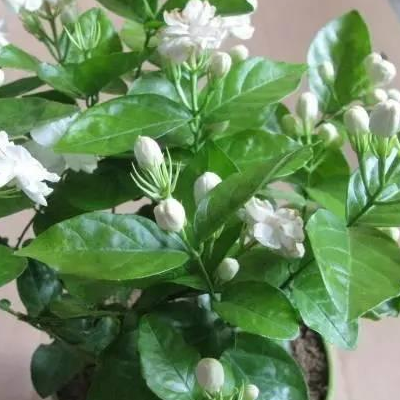
How to grow jasmine to extend the flowering period:
Besides the usual light but frequent fertilizing to make the plant grow stronger, environmental ventilation and appropriate light are what allow jasmine to bloom normally.
If during the jasmine flowering period the environment is not ventilated, there is too much watering, there are too many flower buds, or there is insufficient phosphorus and potassium fertilizer, all of these easily trigger bud drop.
After jasmine has fully opened, the flowers must not be fully exposed to the blazing sun, otherwise the flowering period will be shortened. If you want the jasmine flowers to be enjoyed for longer, you can temporarily move it to a slightly shaded place for care, which can appropriately extend the flowering period.
However, this method will reduce the fragrance of the flowers, because the light it receives becomes less.
When to fertilize jasmine:
Jasmine care requires light but frequent fertilizing. During the growing season, generally give 1 to 2 times a month of dilute organic fertilizer to ensure sufficient nutrients for growth, so that it has enough nutrients to develop flower buds.
Before June to September, appropriately give a little phosphorus and potassium fertilizer to promote flower bud development.
The methods for extending the jasmine flowering period and the fertilization methods are introduced here. Has this broadened your knowledge?
How to extend the jasmine flowering period
How to extend the jasmine flowering period 1. Use loose soilWhen planting jasmine, you must pay attention to one point: use loose soil for cultivation. In short, no matter what flower you plant, you must use loose soil, because drainage and ventilation are both better. For flowers whose roots do not grow well, it is relatively easy for them to grow. At the bottom of the pot, put a small amount of pond mud.
2. Maintain sufficient lightJasmine is a flower species that likes sufficient light and does not like shade. As long as it is daytime, it should be placed outdoors to let it get some sun and light, but in summer it must not be placed in direct blazing sun.
3. Water frequentlyWhen watering jasmine, pay attention: when watering, you must water it thoroughly, and water until it is thoroughly soaked. You cannot wait a few days and then water again. You must ensure watering 2 times a day, preferably once in the morning and once in the evening.
4. Prune frequentlyIf you want jasmine to bloom more, you must prune frequently. In summer, jasmine grows very quickly, with luxuriant branches and leaves. If new branches grow too quickly, they need to be trimmed. Counting from the tip of the branch, cut off about 10CM, so that more side branches can grow.
5. Repot reasonablyIf a home-grown jasmine has been kept for more than one or two years, it needs to be repotted. The roots have already become tangled for several years, and their ability to absorb water and air is not as good as in previous years, so changing to a larger flowerpot and refilling it with loose soil is what allows the jasmine to regain a “second spring.”
6. Supplement nutrients in timeTo grow jasmine, you must fertilize reasonably. During the flowering period, less nitrogen fertilizer should be applied, because the effect of nitrogen fertilizer is to promote leaf growth. Too much nitrogen fertilizer will make the branches and leaves grow very luxuriantly, but it will not bloom, only grow leaves. Therefore, nitrogen fertilizer is more suitable for use at the seedling stage. During the flowering period, applying organic fertilizer is more effective, as it can promote flowering and extend the flowering period.
How to grow jasmine, jasmine cultivation methods and precautions / Give it more sun
Jasmine, needless to say, everyone must have seen it. It is a relatively common potted flower in daily life, and its biggest feature is undoubtedly its pure white flower color. How to grow jasmine? Generally speaking, it is the same as other plants, but during the growing process, the points that need attention are different. Below is a very comprehensive collection of jasmine cultivation methods and precautions compiled by the editor. You might as well try growing them according to what is said inside.
1. How to grow jasmine, sunlight and watering
Generally speaking, jasmine cultivation methods are relatively simple compared with flowers such as Phalaenopsis and peonies, but if you want to grow jasmine well and extend the flowering period, it still takes some effort. Light, watering, temperature, soil, and so on are all things we need to pay attention to. Next, let us discuss them specifically.
2. Jasmine cultivation methods and precautions
1. Loose soil
In jasmine cultivation methods, the most important thing to pay attention to is soil. Jasmine is especially sensitive to soil permeability, so choosing loose soil is more suitable. For a flower like jasmine whose root system is relatively underdeveloped, it is relatively easy to grow.
Precautions: Slightly alkaline potting soil will cause the leaves to turn yellow. When the leaves turn yellow, apply 1 time of dilute alum fertilizer water every 5 to 7 days. Before long, the yellowing leaves on the plant can turn from yellow to green and gradually return to normal. After that, combined with fertilization, apply 1 time of dilute alum fertilizer water every 7 to 10 days, which can keep the leaves fresh green and growing normally.
Soil selection: Mix and prepare 5 parts leaf mold (or peat soil), 4 parts garden soil, and 1 part cake fertilizer residue. When potting, put a small amount of bone meal at the bottom of the pot as base fertilizer. It is best to repot once every year or every other year, changing to new culture soil. After repotting, water thoroughly, and pay attention to loosening the soil. Keep the temperature between 22-24℃, which can accelerate the sprouting of new buds.
2. Sufficient light
Jasmine is a light-loving flower. During the growing season, it prefers relatively strong direct light. During the bud formation and flowering period, if it receives more than 8 hours of sunlight per day, the flower buds will be full and white. Therefore, as long as it is daytime, flower lovers should place it outdoors so it receives sufficient light, but in midsummer it should not be placed in direct blazing sun.
Precautions: If there is insufficient light, jasmine branches and leaves will grow leggy, the leaf color will be pale, the branches will be thin, there will be few flowers, and the fragrance will be faint. Therefore, to ensure sufficient light, placing jasmine on a balcony or rooftop is a good choice.
3. Water frequently
Because planting jasmine is suitable with loose soil, and this kind of soil has good drainage, so when watering, you must pay attention. Watering must be thorough, until water just seeps out from the bottom of the pot. But this does not mean it is enough. Flower lovers should at least ensure watering 2 times a day, preferably once in the morning and once in the evening.
Precautions: Once watering is insufficient, jasmine will not grow well, and symptoms of yellowing and sparse leaves will appear, so flower lovers must water frequently. As for when to water, there are two methods: 1. Look at the potting soil and aim for dry-wet alternation; see whether the potting soil is dry enough to show a white surface and not wet enough to become mud; 2. Tap the flowerpot with a finger and listen to the sound. A crisp and pleasant sound indicates the potting soil is already dry, while a dull and muffled sound indicates the potting soil still contains water.
4. Temperature: 25℃-35℃
Jasmine is a long-day, somewhat sun-loving plant, and grows best at 25℃~35℃. It is afraid of cold and cannot withstand low-temperature freezing. Below 3℃, its young branches and leaves will suffer cold damage. At a minimum temperature of 0℃ with slight frost, most of the leaves will fall off; at around minus 3℃, the branches are at risk of freezing damage, so jasmine must be grown in a place with a higher temperature.
Precautions: When the temperature drops to 5℃-10℃, jasmine should be moved indoors and placed at a sunny window; when the temperature is below 0℃, at night move the potted flower away from the window to prevent cold wind from blowing in through window cracks and freezing the jasmine; when freezing occurs indoors, at night you should also use a polyethylene film bag to cover the potted flower together with the bottom and tie the bag opening tightly, then place the potted flower in a warmer place. To avoid the danger of the jasmine being suffocated, you can also poke a few small holes in the bag.
5. Fertilize reasonably
Jasmine likes fertilizer and is suitable for growing in fertile, loose, well-structured sandy loam and loam with a pH value of 5.5-7. However, during the flowering period, less nitrogen fertilizer should be applied, because the effect of nitrogen fertilizer is to promote leaf growth. Too much nitrogen fertilizer will make jasmine branches and leaves grow very luxuriantly but it just will not bloom, so nitrogen fertilizer is more suitable for use at the seedling stage. During the flowering period, applying organic fertilizer will be more effective, as it can promote flowering and extend the flowering period.
Precautions: Sometimes jasmine will show the phenomenon of only growing leaves and not blooming. The main reasons are, first, insufficient light, and second, too much nitrogen fertilizer. Because jasmine needs at least 6 hours of sunlight every day, at the same time pinch the tips of branches that do not bloom; second, use less nitrogen fertilizer and more phosphorus fertilizer.
6. Prune frequently
In jasmine cultivation methods, learning to prune is a very important part. Necessary and appropriate pruning of jasmine can not only ensure the storage of the jasmine's own nutrients, benefiting the growth of new branches and the sprouting of new flower buds, but also ensure a beautiful tree shape. You can also use the robust branches cut off for cutting propagation, ensuring what is needed for replacing old jasmine with new.
Precautions: In suitable weather, jasmine grows very quickly, with luxuriant branches and leaves. If new branches grow too quickly and too long, cut off about 10CM counting from the tip of the branch, to encourage more side branches to grow.
7. Repot reasonably
For jasmine that has already been planted for more than 2 years, repotting is relatively necessary. At this time, the jasmine roots have already become tangled and disordered, and their ability to absorb water and air has greatly declined. Simply loosening the soil can no longer solve the practical problem. Changing to a larger flowerpot and refilling it with loose soil is what allows the jasmine to regain a second spring.
Precautions: When jasmine planted in a pot grows from small to large and its root system fills the entire pot, the plant needs to be moved from a small pot to a large pot. Generally, before jasmine sprouts, prune the root system and then move it into a larger pot.
8. Pest and disease control
Jasmine is a flower not easily affected by pests, but if you want it to bloom well, it is still necessary to take some necessary preventive measures. Red spider mite is one of the more common pests when growing jasmine. The corresponding insecticides are easy to buy, so I will not elaborate. The specifics are introduced in the pest and disease control section for potted jasmine.
Precautions: When spraying the liquid medicine, do not only focus on spraying the jasmine leaves and flowers; the soil must also be sprayed, otherwise the pest problem will not be treated thoroughly. For leaves that have already been infected, they should be removed in time.