Boxwood Bonsai Creation Methods and Watering and Fertilizing Techniques
Boxwood is a kind of tree, and this boxwood can be seen in many places, such as parks. What are the methods for making boxwood bonsai? How to water and fertilize boxwood:
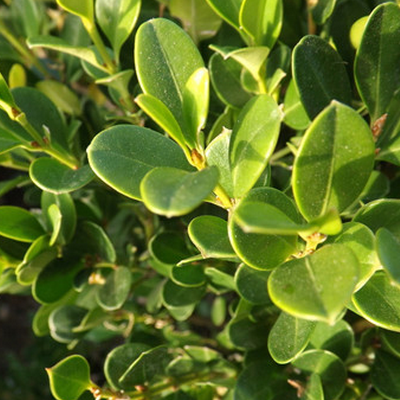
Boxwood bonsai creation methods:
I. Obtaining materials
The plants selected for making boxwood bonsai can be branches obtained from seed propagation or cutting propagation that have been cultivated for many years and then potted and transplanted, or old stumps of already mature plants can be selected for bonsai creation. For old stumps, they should first be dug out and pruned, cutting away long roots and dense branches, then cultivated in the open ground for one to two years before they can be potted. Special attention should be paid here to judging the size of the bonsai pot when selecting plants and pruning roots.
II. Potting
1. Selection of bonsai pot
For boxwood bonsai, the best pot choice is a purple clay ceramic pot, and the pot color is best purple or light yellow, because this can complement the oil-green color of the boxwood, making it very beautiful. The shape of the bonsai pot should be determined according to the plant's form; cascade style and slanting trunk style require different bonsai pots.
2. Potting soil
For boxwood bonsai, it is best to choose fertile, loose soil with good drainage and aeration. Generally, aged garden soil or leaf mold mixed with chaff ash is used as the growing medium. Note that old stumps should be potted with their original soil.
III. Planting
Generally, planting is done before spring bud break, then the plant is placed in a semi-shaded area. Also note that excessively long roots must be pruned to avoid coiling in the pot, which affects nutrient transport and is detrimental to healthy growth.
IV. Shaping
Before shaping, the main trunk should first be cut off to allow new branches to grow, then branches are wired and bent according to different shaping requirements, mainly into cloud-pad or bun shapes, or a natural tree form, with the main trunk growing in its natural direction. Since boxwood has strong sprouting ability, it must be pruned frequently to maintain the tree shape.
How to water and fertilize boxwood:
1. How to water boxwood
Boxwood likes water, and when watering boxwood, the principle of "prefer wet over dry" should be followed. When boxwood is still a seedling, its root system is relatively shallow, so water in small amounts but frequently, keeping only the surface soil moist. During the rapid growth of seedlings, a large amount of water is needed, so irrigation should be increased, watering thoroughly each time.
In the later stage of seedling growth, to prevent excessive vegetative growth, watering should begin to be controlled. Each watering is best done in the morning or evening, avoiding midday.
Boxwood likes humidity and can adapt to a continuous month of rainy weather, but it cannot tolerate prolonged waterlogging. When transplanting in summer or during new bud emergence, care should be taken to avoid prolonged sun exposure and prevent the potting soil from becoming too wet.
2. How to fertilize boxwood
Boxwood seedlings need a large amount of phosphorus, need more nitrogen during rapid growth, and have a relatively large demand for potassium when growth stops in autumn. After boxwood is planted, 0.4% monopotassium phosphate can be sprayed on the leaves in the morning or evening, avoiding midday when sunlight is strong, three to four times a month.
For newly transplanted boxwood, early fertilization work should be done promptly, but the concentration must not be too high to avoid burning new roots.
During the stage of rapid seedling growth, increase the amount and frequency of fertilization, at least once a month. In addition, nitrogen fertilizer should be applied in spring and summer, and the last application should not be later than "Start of Autumn." To avoid excessive vegetative growth and weakened winter hardiness, in August-September phosphorus and potassium fertilizers should be the main focus to promote lignification and root development of boxwood and enhance cold resistance.
That concludes the introduction to boxwood bonsai creation methods. Has this broadened your knowledge? Pay attention to the methods of watering and fertilizing boxwood.
How to grow boxwood bonsai: Boxwood bonsai creation methods
Boxwood bonsai has an elegant tree posture, stays evergreen through the four seasons, and can be enjoyed year-round, making it loved by many people. Many people like to grow boxwood bonsai at home. So how do you grow boxwood bonsai? And how do you make one? Next, Xiao Qi will share how to grow boxwood bonsai and boxwood bonsai creation methods.
Boxwood bonsai images
I. How to grow boxwood bonsai
1. Watering: Boxwood likes moisture, and bonsai need frequent watering to keep the potting soil moist, but not waterlogged. During high-temperature summer periods, water in the morning and evening, and spray water on the leaves.
2. Fertilizing: During the growing period from May to August, apply 2-3 times of decomposed dilute cake fertilizer water. In winter, apply 1 time of base fertilizer, using decomposed manure or dried cake fertilizer crumbs.
3. Pruning: During the growing period, cut off excessive growth branches, overlapping branches, and surplus branches that affect the tree shape at any time. Boxwood sprouts relatively quickly. Generally, after new shoots emerge, cut off the first 1-2 nodes at the tip to prevent excessive growth. After boxwood bears fruit, remove it promptly to avoid consuming nutrients and affecting tree vigor growth.
4. Repotting: Generally done once every 2-3 years, with the best time being before spring bud break. When repotting, prune some old roots and excessively long or dense root systems, replace 1/2 of the old soil, and fill with fertile, loose growing medium to promote root development.
Boxwood bonsai images
II. Boxwood bonsai creation methods
1. Obtaining materials: Use seedlings propagated by seeding or cutting, cultivate for several years, then transplant into pots for processing. Old stumps can also be selected from mountain fields. After digging up, prune excessively long roots and dense branches, first cultivate in the open ground for 1-2 years, then pot and add soil.
2. Potting
① Selecting a pot: Boxwood is oil-green year-round, so a purple clay ceramic pot is suitable, with purple or light yellow being good pot colors. The pot shape is determined by the styling form. Cascade style should use a deep cylindrical pot, while slanting trunk style or curved trunk style should use an oval or rectangular pot.
② Soil: The soil for bonsai uses aged garden soil or leaf mold mixed with appropriate chaff ash as the base growing medium. Fertile, loose filler soil with good aeration and water permeability is best; old stumps should be potted with their original soil.
③ Planting: Boxwood is relatively cold-tolerant and can be planted before spring bud break. When planting, prune excessively long and dense roots, and never let the roots coil in the pot. Newly planted boxwood should be placed in a semi-shaded area.
3. Shaping: Boxwood has strong sprouting ability. Before shaping, the main trunk can be headed back to let new shoots sprout around or below the cut surface, then according to artistic shaping requirements, wire and bend the branches and trunk. Wiring with palm fiber in spring is best. Coarse wiring and fine pruning can also be used to create cloud-pad or bun shapes, or processed into a natural tree form. The main trunk follows its natural tendency, shaped into slanting trunk style or prostrate style. If the boxwood stump is accented with ornamental stones, it becomes a "boxwood overlooking" scene. Boxwood is very tolerant of pruning and has strong sprouting ability. To maintain a beautiful tree shape, it must be shaped and trimmed regularly.
Boxwood bonsai images
The above ishow to grow boxwood bonsaiandboxwood bonsai creationmethods introduced. Friends who like boxwood bonsai can make one by hand. Hope the above content is helpful to everyone.
Recommended reading:
① Masson pine bonsai cultivation methods: Masson pine daily care and management experience
② Asparagus fern bonsai creation and care: Asparagus fern bonsai styling images
③ How to grow Norfolk Island pine bonsai: Norfolk Island pine cultivation methods and precautions
④ Can flowering almond fruit be eaten: Flowering almond bonsai creation
⑤ How to grow nandina bonsai: Nandina cultivation methods
How to make large-leaf boxwood bonsai? Creation and care of large-leaf boxwood bonsai
Large-leaf boxwood, also known as Masaki, because its leaves stay green year-round and do not wither through winter, is also called "wintergreen" in many places in our country. It is an evergreen shrub or small tree of the Celastraceae family, Euonymus genus, with a height of up to 3 to 4 m. The branchlets are green, slightly angular, and the leaves are leathery, narrowly elliptical, ovate, or obovate, with a deep green and glossy color and blunt serrations along the edges. Flowers are 5 to 12 in cymes, borne in the leaf axils of the upper branches, and the small flowers are white-green; the capsule is flattened-spherical, light pink, splitting when ripe to reveal an orange-red false seed coat, very beautiful. Large-leaf boxwood is native to southern Japan and is now widely cultivated as a garden ornamental plant. It is robust in habit and tolerant of pruning, often used as hedges or clipped into spheres to decorate lawns and other areas. Using it for bonsai has the characteristics of easy material acquisition, suitability for mass production, and extensive management.Large-leaf boxwood used for making bonsai is generally propagated by cutting or seeding; in addition, old tree stumps discarded by landscaping departments can also be used to make bonsai, which has the advantage of short time to completion. Transplanting can be done in all four seasons, with a higher survival rate especially in spring and summer. When transplanting, excessively long roots should be cut off, and the upper branches and leaves should also be properly pruned, removing branches not needed for shaping to reduce water evaporation. After planting, water thoroughly, take care to prevent scorching sun exposure, and frequently spray water on the plant to increase air humidity and improve the survival rate.
Large-leaf boxwood bonsai can be processed into different forms according to the stump shape, such as straight trunk style, slanting trunk style, curved trunk style, double trunk style, cascade style, waterside style, and rock-clinging style. Because its leaves are relatively large, small and medium bonsai crowns mostly use an elegant natural shape, while large bonsai can also use a neat round-pad shape. Shaping is mostly done during the growing season, often using the "coarse wiring and fine pruning" method: first wire out the basic form, then prune carefully until the shape is achieved. Seedlings, because their branches are soft, can also be shaped from a young age. The method is to first wire the main trunk, then the main branches and side branches, and pay attention to promptly cutting off surplus branches. Large-leaf boxwood wounds heal very quickly. This characteristic can be used to carve the trunk, making it look aged and antique.
Large-leaf boxwood likes a warm, humid environment with ample sunlight, is slightly shade-tolerant, cold-tolerant, and not strict about soil requirements; ordinary garden soil can be used for planting. Usually it can be placed outdoors in a ventilated, sunny place for care. Water so that it alternates between dry and wet. Apply dilute alum fertilizer water once a month to provide sufficient nutrients, making the leaf color deep green and glossy, but avoid excessive fertilizer and water, otherwise it will cause excessive vegetative growth, larger leaves, and affect ornamental value. Because large-leaf boxwood has strong sprouting ability, during care it should be frequently pinched back and the growing tips removed to control plant growth and make the leaves dense and small. Branches and new buds on the trunk that affect the tree shape should be removed promptly to maintain the beauty of the bonsai. In winter, place the flower pot outdoors in a wind-sheltered, sunny place or overwinter in a cold room. Do not fertilize. When the potting soil is too dry, water appropriately. Repot once every 1 to 2 years in spring. When repotting, remove 1/3 to 1/2 of the original soil and add new growing medium.