Lantern Tree Seed Propagation Methods and Aphid Control Tips
The lantern tree is a plant that a huge number of people love, especially when it blooms, it really is beautiful. What are the seed propagation methods for the lantern tree? What should you do if the lantern tree gets aphids:
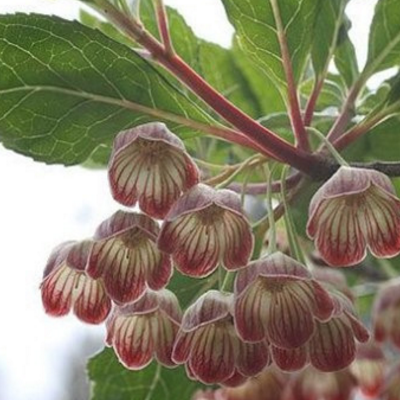
Lantern tree seed propagation methods:
1. Seed treatment
Collect the seeds of the lantern tree in autumn when the fruit ripens, and carry out timely sun-drying and shelling. This is because the seed coat of the lantern tree is relatively hard, and if it is not treated, the germination rate of the seeds will be very low when sown in spring.
2. Shading at the seedling stage
The duration of shading for young seedlings is determined by the local temperature and climatic conditions, and is used to protect the seedlings from sunscald damage. After entering autumn, the duration and intensity of light should be gradually extended, which can effectively increase the degree of lignification of the young seedlings.
3. Thinning management
When the young seedlings grow to five to ten cm, thinning can be carried out. The requirements for thinning are to thin out the small and keep the large, and to thin out the dense and keep the sparse, and it is best done on rainy days. At the same time, missing plants should be replanted to ensure that the seedlings are evenly distributed.
4. Transplanting of sprouted seedlings
When transplanting sprouted seedlings, cut back to the base and truncate the trunk, and at the same time strengthen the management of fertilizer and water. During transplanting, the main root and lateral roots should be properly pruned to promote the sprouting of new roots.
5. Fertilization management
After the lantern tree seedlings emerge from the soil and grow roots, they should be fertilized frequently in combination with watering. During the vigorous growth period of the plant, nitrogen fertilizer should be applied to promote the growth of the plant.
After entering autumn, stop applying nitrogen fertilizer and increase the application amount of phosphorus and potassium fertilizer, which can improve the degree of lignification of the plant.
In winter, farmyard organic fertilizer can be applied as a base fertilizer, which not only provides nutrients for the growth of the seedlings but also improves the cold resistance of the seedlings.
What should you do if the lantern tree gets aphids:
Cut off the young branches with insects to eliminate the aphids that have not yet spread.
You can use natural enemies such as ladybugs and lacewings to eliminate aphids, or you can spray aldicarb granules, dimethoate emulsifiable concentrate, or pirimicarb emulsifiable concentrate for control.
That is all for the introduction to the seed propagation methods of the lantern tree and the methods for dealing with aphids. Come and grow one right away!
Lantern Tree Enkianthus chinensis Franch. Lantern Tree Guide: How to grow the lantern tree / How to propagate the lantern tree
Lantern Tree ProfileLantern Tree Enkianthus chinensis Franch.
Cultivation methods and precautions for the lantern tree, and an introduction to the lantern tree
The lantern tree is a deciduous shrub of the Ericaceae family. It grows in the central part of China. It is only 2-6 m tall. Every summer, more than a dozen flesh-red bell-shaped flowers hang on both sides of the ends of its branches, so it is also called the hanging bell flower. The fruit of the lantern tree ripens in October, is oval-shaped, and brown. Interestingly, its fruit stalk hangs completely downward, while the tip curves upward, so the fruit it bears is upright. Seen from a distance, it looks as if the branches are holding up little lanterns one after another, hence the name. The lantern tree not only has beautiful flowers and fruit, but its leaves also turn deep red after autumn, unlike maple leaves yet even better than maple leaves, so it is a garden ornamental tree with great prospects.
It glows
In the Jinggangshan area of China, there is a tree that can sparkle and glow, and the local people call it the "lantern tree."
It is an evergreen broadleaf tree, and its leaves contain a large amount of phosphorus.
Because the lantern tree has a strong ability to absorb phosphorus from the soil, this phosphorus is distributed on the leaves and releases a small amount of phosphine gas. This gas has a low ignition point and can spontaneously ignite in the air, emitting a pale blue flame -- a very low-temperature cold light. On clear, windless nights, this cold light gathers together, just like street lamps in the mountains.
Other names of the goldenrain tree
The goldenrain tree is a tree species with a well-proportioned form and dense, elegant branches and leaves. In spring, the young leaves are mostly red; in summer, the tree is full of yellow flowers; in autumn, the leaves turn yellow and the fruit is purplish red and lantern-shaped, so the goldenrain tree is also called the lantern tree.
Notes on this species
This species is a toxic plant included in the database of the Chinese Plant Atlas. Its toxicity is as follows: mice died 16 hours after intraperitoneal injection of 1000 mg/kg of chloroform extract from flowers and leaves.
Morphological characteristics of the lantern tree
Deciduous shrub or small tree, 3-6 m tall, rarely up to 10 m; young branches grayish green, hairless, old branches dark gray; buds cylindrical, 8-10 mm long, bud scales broadly lanceolate, about 5 mm long, about 1.5 mm wide, slightly red, with a small pointed tip at the apex, and ciliate margins. Leaves often clustered at the branch tips, papery, oblong to oblong-elliptic, 3-4 (--5) cm long, 2-2.5 cm wide, apex obtuse-acute, with a short protruding tip, base broadly cuneate or cuneate, margin obtusely serrate, hairless on both surfaces, midvein concave on the upper surface, together with the lateral veins inconspicuous on the upper surface, conspicuous on the lower surface, and the fourth-order veins conspicuous on the lower surface; petiole stout, 0.8-1 (--15) mm long, grooved, hairless. Flowers mostly forming an umbel-like raceme; pedicels very slender, 2.5-4 cm long, hairless; flowers drooping; calyx 5-lobed, lobes triangular, about 2.5 mm long, ciliate; corolla broadly bell-shaped, 1 cm long and wide, flesh-red, 5 shallowly lobed at the mouth; stamens 10, inserted at the base of the corolla, filaments 4.5 mm long, enlarged below the middle, pubescent, anthers 2-lobed, 1.5 mm long, awns about 1 mm long; ovary spherical, with 5 longitudinal stripes, sparsely covered with white short hairs, style about 5.5 mm long, sparsely pubescent. Capsule ovoid, 6-9 (--8) mm in diameter, loculicidal into 5 valves, valves about 6 mm long, about 3.2 mm wide, with a slight longitudinal groove in the middle of the valve. Seeds about 6 mm long, slightly shiny, wrinkled, winged, numerous per locule, seeds attached to the upper part of the central axis. Flowering period May, fruiting period June-October.
Ecological habits of the lantern tree
The goldenrain tree is a heliophilous tree species, liking light and slightly tolerating semi-shade; cold-resistant (Huangshan goldenrain tree is less so); tolerant of drought and barrenness, and also tolerant of low moisture, saline-alkali land, and short-term waterlogging. Deep-rooted, with strong roots and strong sprouting ability, medium growth rate, slower when young and gradually faster afterward, widely adaptable, not strict about soil requirements, able to grow in slightly acidic and alkaline soils, and preferring to grow in calcareous soil. It has relatively strong wind resistance, can withstand low temperatures of minus 25°C, and has strong resistance to dust, sulfur dioxide, and ozone. Few pests and diseases, and easy cultivation and management.
Distribution area of the lantern tree
Produced in Anhui, Zhejiang, Jiangxi, Fujian, Hubei, Hunan, Guangxi, Sichuan, Guizhou, and Yunnan. Grows in sparse forests on mountain slopes at an altitude of 900-3,600 m. The type specimen was collected in western Yunnan.
The lantern tree is a deciduous shrub of the Ericaceae family. It grows in the central part of China. It is only 2-6 m tall. Every summer, more than a dozen flesh-red bell-shaped flowers hang on both sides of the ends of its branches, so it is also called the hanging bell flower. The fruit of the lantern tree ripens in October, is oval-shaped, and brown. Interestingly, its fruit stalk hangs completely downward, while the tip curves upward, so the fruit it bears is upright. Seen from a distance, it looks as if the branches are holding up little lanterns one after another, hence the name. The lantern tree not only has beautiful flowers and fruit, but its leaves also turn deep red after autumn, unlike maple leaves yet even better than maple leaves, so it is a garden ornamental tree with great prospects.
This species is one of the more widely distributed species in this genus. The shape and size of leaves, flowers, and fruit, as well as indumentum characteristics, vary considerably. This species is extremely similar to Enkianthus deflexus (Griff.) Schneid., but the latter often has pubescence on the pedicels, petioles, and the back of the leaves, especially densely covered with appressed coarse hairs on the veins and vein axils on the back of the leaves; the leaves are often larger, the awn on the anther is as long as the anther, and the calyx is lanceolate-triangular, so it is not difficult to distinguish.
Cultivation techniques for the lantern tree: cultivation management
Cultivation and management of the goldenrain tree is relatively simple. During transplanting, properly shorten the main root and thick lateral roots, which can promote the production of more fibrous roots and make it easier to survive.
Propagation: use the sowing method.
Key cultivation points: deep, moist soil is most suitable as the cultivation medium. It likes light, can tolerate semi-shade, and is cold-resistant. It is deep-rooted, has a strong ability to produce sprouts, is tolerant of drought and barrenness, can tolerate short-term waterlogging, and has relatively strong resistance to smoke and dust.
Seedling stage management
(1) Shading: the shading time and shading degree should be determined according to the local temperature and climatic conditions at the time, to ensure that the seedlings are not harmed by sunscald. After entering autumn, gradually extend the light duration and light intensity until full light is received, so as to improve the degree of lignification of the seedlings.
(2) Thinning and replanting: when the seedlings grow to 5-10 cm tall, thin them. After thinning at a plant spacing of 10-15 cm, apply topdressing in combination with watering, leaving about 12 seedlings per sq m. Thinning requires thinning out the small and keeping the large, removing the inferior and keeping the superior, thinning out the dense and keeping the sparse, with all seedlings evenly spaced, and it is best carried out on rainy days. In combination with thinning, replant missing plants to ensure that the seedlings are evenly distributed. (3) Daily management: often loosen the soil, weed, and water to keep the seedbed surface moist. After leaf fall in late autumn, most seedlings can reach 2 m tall, with a ground diameter of about 2 cm. Dig up the seedlings and grade them, transplant in the following spring, shorten the roots a little before transplanting, and after transplanting cut off the seedling trunk from the root crown, that is, cut back to the base at ground level, then water thoroughly. After sprouting, frequently remove buds, keeping only the strongest bud to cultivate into the main trunk. During the growing period, often loosen the soil, hoe weeds, water, and apply topdressing, and by autumn a straight trunk can be developed.
(4) Transplanting: transplanting sprouted seedlings can promote a well-developed root system of the seedlings, and one-year-old seedlings reach 50-70 cm tall. The goldenrain tree is a deep-rooted tree species, and it is suitable to transplant multiple times to form a good effective root system. After leaf fall in the same autumn, sown seedlings can be dug up and heeled in trenches, and planted separately the following spring.
Because the trunk of the goldenrain tree is not easy to grow straight, during the first transplanting it should be cut back to the base and the trunk truncated, and fertilizer and water management should be strengthened. In spring, branches sprout from the base; select and keep the straight and robust ones to cultivate into the main trunk, and then the main trunk will grow quickly and straight. If the first trunk truncation does not meet the requirements, trunk truncation can be carried out again in the following spring. After that, transplant once every 3 years or so, and during transplanting properly shorten the main root and thick lateral roots to promote new roots. Young goldenrain trees grow slowly, and the first two transplantings should be properly densely planted, which helps cultivate a straight main trunk and saves land. After that, they should be properly thinned to cultivate a well-formed crown.
(5) Fertilization: fertilization is an important measure for cultivating strong seedlings. After the seedlings emerge from the soil and grow roots, fertilize frequently in combination with watering. During the annual peak growth period, apply quick-acting fertilizer mainly based on nitrogen to promote the vegetative growth of the plant. In autumn, stop applying nitrogen fertilizer and increase the application of phosphorus and potassium fertilizer to improve the degree of lignification of the plant and enhance the cold resistance of the seedlings. In winter, it is suitable to apply farmyard organic fertilizer as a base fertilizer, which not only provides sustained nutrients for seedling growth but also plays a role in heat preservation and soil improvement. As the seedlings grow, gradually increase the amount of fertilization to meet the nutrient demands of seedling growth. The first topdressing amount should be small, 2500 g to 3000 g of nitrogen chemical fertilizer per mu, and thereafter fertilize once every 15 days, with a slightly larger amount.
For large seedling cultivation, generally when the trunk height reaches the branch point height, keep the main branches, and they can leave the nursery in 3 to 4 years. If the one-year-old seedling trunk is not straight or does not meet the trunk-setting standard, cut back to the base the following year and cultivate again. Generally after two transplantings and 3 to 6 years of cultivation, the diameter at breast height can reach 4-8 cm.
Planting density: about 600 trees per mu for those with a diameter at breast height of 4-5 cm, and 200 to 300 trees per mu for those with a diameter at breast height of 6-8 cm. Select and keep 3 to 5 main branches, shorten them to 40 cm, keep 2 to 3 lateral branches on each main branch, and the crown-to-height ratio is 1:3.
To cultivate full-crown seedlings with a trunk diameter of 8-12 cm, plant 160-170 plants per mu, that is, a plant-row spacing of 2 m x 2 m; to cultivate large seedlings with a trunk diameter of more than 12 cm, plant 130 plants per mu, that is, a plant-row spacing of 2 m x 2.5 m. In combination with tending management, prune sprouting branches below 1.5 m on the trunk to promote straight growth of the main trunk.
Seedling shaping and pruning: the crown of the goldenrain tree is nearly spherical and the tree form is well-proportioned, generally adopting a natural tree form. Because of different uses, the shaping requirements also differ somewhat. Street tree seedlings require a straight main trunk, a first branch height of 2.5-3.5 m, a complete and full crown, and evenly distributed and spreading branches. Shade trees require a large, dense crown, and the first branch height is lower than that of street trees. During the cultivation process, corresponding pruning measures should be taken around the above requirements. Generally it can be carried out in winter or during transplanting.
Maintenance management and pruning points to note:
1. When planting the goldenrain tree, trunk truncation is generally carried out, and the trunk height is set at 2.5 m to 3.5 m according to demand. In the winter of the planting year, among the branches sprouting above the branch point, select and keep 3 to 5 robust and evenly distributed branches as main branches, and remove all the rest.
2. Shorten the retained branches to about 45 cm. In the second summer, keep 6 to 9 buds on the selected main branches. The distribution direction of the buds should be reasonable, not crossing, and evenly distributed, thereby forming lateral branches.
3. When pruning in early winter, shorten the lateral branches again, with a shortening length of about 50 cm. Pruning in this way can form a basic tree form after 3 years. After that, promptly remove dead branches, pest- and disease-damaged branches, inner-canopy branches, crossing branches, and water sprouts.
Watering and fertilization
The goldenrain tree likes a moist environment. In addition to watering thoroughly three times when planting, afterward water once or twice thoroughly in each of May, June, September, October, and November, so as to keep the soil moist as appropriate, and in early December water thoroughly for freezing. In early March of the following year, promptly water for greening-up, and water thoroughly once in each of April, May, June, September, October, and November. July and August are the two months with abundant rainfall, so if the weather is not too dry, watering may be omitted, and in early December water thoroughly for freeze protection as well. In the third year, irrigate according to the method of the second year. From the fourth year onward, it is sufficient to water thoroughly for greening-up and freezing in early spring and early winter, and in other seasons, if it is not too dry, watering may be omitted and growth can rely on natural rainfall. After heavy rain in the summer rainy season, accumulated water should also be drained promptly to prevent root rot from excessive water.
Propagation methods of the lantern tree
Mainly by seed propagation; tillering or root cuttings are also acceptable. Collect in autumn when the fruit ripens, and promptly sun-dry and remove the shells. Because the seed coat is hard and not easily permeable to water, if untreated, spring sowing in the following year often does not germinate. Therefore, sow in autumn after shelling, or stratify with wet sand and then sow in spring. Ridge sowing is generally used, with a ridge spacing of 60-70 cm. Because the seed emergence rate is low, the seed quantity used is large, with a sowing rate of 30-40 kg/mu.
Disease control of the lantern tree
Gummosis: this disease mainly occurs on the trunk and main branches, and can also occur on branches. In the early stage of the disease, the affected part swells slightly, turns dark brown, and the surface is moist; later the affected part sinks and cracks, exuding a pale yellow translucent soft gum block, which finally becomes an amber-like hard gum block with a smooth and shiny surface. The tree grows weakly, and in severe cases it can cause some branches to dry up.
This disease can be caused by many reasons, broadly divided into physiological gummosis, such as freezing damage, sunscald, wounds caused by mechanical injury, wounds caused by insect damage, etc.; and infectious gummosis, which can be caused by both bacteria and fungi. At present, the pathogenic bacteria are still unclear.
Control measures:
(1) Scrape off scars and apply medicine. Use a blade to scrape off the gum-like substance on the branches and trunk, then apply a combing agent and a pesticide to the wound.
(2) Strengthen management. In winter, pay attention to cold and freeze protection, and whitewash or apply a combing agent. In summer, pay attention to preventing sunscald, promptly control pests and diseases on branches and trunk, and try to avoid mechanical injury.
(3) Before bud break in early spring, spray lime-sulfur mixture once every 10 days for two consecutive sprays to kill overwintering pathogens. During the disease period, spray chlorothalonil or carbendazim at 800 to 1000 times dilution.
Goldenrain tree aphid: the goldenrain tree aphid belongs to Homoptera, Aphididae, and is a major pest of the goldenrain tree. It mainly damages the young shoots, young buds, and young leaves of the goldenrain tree. In severe cases, the young branches are covered with insects, affecting branch growth, causing tree decline, and even death. Occurrence pattern: several generations a year, overwintering as eggs in bud crevices and bark cracks. In early April of the following year, when the goldenrain tree has just sprouted, the overwintering eggs hatch into nymphs, which mostly inhabit the bud crevices at this time and are similar in color to the tree buds. In mid-April, wingless female aphids form and begin to give live birth to small aphids; in late April, a large number of winged aphids appear, migrate and spread, and the population increases greatly; from late April to May, the damage is most severe, with young shoots and young leaves covered with insects, sucking tree nutrients, affected shoots bending, leaves curling, and many honeydew droplets falling on branches, trunks, and the ground, affecting both tree growth and environmental sanitation; after mid-June, the insect population gradually decreases; by mid-to-late October, winged aphids migrate back to the goldenrain tree and give live birth to large numbers of small aphids. After damaging for a period, they produce winged live-bearing male aphids and wingless live-bearing female aphids, which after mating lay eggs to overwinter.
Lantern tree pictures
Lantern tree
The lantern tree is a deciduous shrub or small tree, 3-6 m tall, rarely up to 10 m; young branches grayish green, hairless, old branches dark gray; buds cylindrical, 8-10 mm long, bud scales broadly lanceolate, about 5 mm long, about 1.5 mm wide, slightly red, with a small pointed tip at the apex, and ciliate margins. Leaves often clustered at the branch tips, papery, oblong to oblong-elliptic, 3-4 (--5) cm long, 2-2.5 cm wide, apex obtuse-acute, with a short protruding tip, base broadly cuneate or cuneate, margin obtusely serrate, hairless on both surfaces, midvein concave on the upper surface, together with the lateral veins inconspicuous on the upper surface, conspicuous on the lower surface, and the fourth-order veins conspicuous on the lower surface; petiole stout, 0.8-1 (--15) mm long, grooved, hairless. Flowers mostly forming an umbel-like raceme; pedicels very slender, 2.5-4 cm long, hairless; flowers drooping; calyx 5-lobed, lobes triangular, about 2.5 mm long, ciliate; corolla broadly bell-shaped, 1 cm long and wide, flesh-red, 5 shallowly lobed at the mouth; stamens 10, inserted at the base of the corolla, filaments 4.5 mm long, enlarged below the middle, pubescent, anthers 2-lobed, 1.5 mm long, awns about 1 mm long; ovary spherical, with 5 longitudinal stripes, sparsely covered with white short hairs, style about 5.5 mm long, sparsely pubescent. Capsule ovoid, 6-9 (--8) mm in diameter, loculicidal into 5 valves, valves about 6 mm long, about 3.2 mm wide, with a slight longitudinal groove in the middle of the valve. Seeds about 6 mm long, slightly shiny, wrinkled, winged, numerous per locule, seeds attached to the upper part of the central axis. Flowering period May, fruiting period June-October.
Cultivation methods of the lantern tree
Propagation methods
Mainly by seed propagation; tillering or root cuttings are also acceptable. Collect in autumn when the fruit ripens, and promptly sun-dry and remove the shells. Because the seed coat is hard and not easily permeable to water, if untreated, spring sowing in the following year often does not germinate. Therefore, sow in autumn after shelling, or stratify with wet sand and then sow in spring. Ridge sowing is generally used, with a ridge spacing of 60-70 cm. Because the seed emergence rate is low, the seed quantity used is large, with a sowing rate of 30-40 kg/mu.
Cultivation management
Cultivation and management of the lantern tree is relatively simple. During transplanting, properly shorten the main root and thick lateral roots, which can promote the production of more fibrous roots and make it easier to survive.
Propagation: use the sowing method.
Key cultivation points: deep, moist soil is most suitable as the cultivation medium. It likes light, can tolerate semi-shade, and is cold-resistant. It is deep-rooted, has a strong ability to produce sprouts, is tolerant of drought and barrenness, can tolerate short-term waterlogging, and has relatively strong resistance to smoke and dust.
Seedling stage management
(1) Shading: the shading time and shading degree should be determined according to the local temperature and climatic conditions at the time, to ensure that the seedlings are not harmed by sunscald. After entering autumn, gradually extend the light duration and light intensity until full light is received, so as to improve the degree of lignification of the seedlings.
(2) Thinning and replanting: when the seedlings grow to 5-10 cm tall, thin them. After thinning at a plant spacing of 10-15 cm, apply topdressing in combination with watering, leaving about 12 seedlings per sq m. Thinning requires thinning out the small and keeping the large, removing the inferior and keeping the superior, thinning out the dense and keeping the sparse, with all seedlings evenly spaced, and it is best carried out on rainy days. In combination with thinning, replant missing plants to ensure that the seedlings are evenly distributed. (3) Daily management: often loosen the soil, weed, and water to keep the seedbed surface moist. After leaf fall in late autumn, most seedlings can reach 2 m tall, with a ground diameter of about 2 cm. Dig up the seedlings and grade them, transplant in the following spring, shorten the roots a little before transplanting, and after transplanting cut off the seedling trunk from the root crown, that is, cut back to the base at ground level, then water thoroughly. After sprouting, frequently remove buds, keeping only the strongest bud to cultivate into the main trunk. During the growing period, often loosen the soil, hoe weeds, water, and apply topdressing, and by autumn a straight trunk can be developed [5].
(4) Transplanting: transplanting sprouted seedlings can promote a well-developed root system of the seedlings, and one-year-old seedlings reach 50-70 cm tall. The lantern tree is a deep-rooted tree species, and it is suitable to transplant multiple times to form a good effective root system. After leaf fall in the same autumn, sown seedlings can be dug up and heeled in trenches, and planted separately the following spring.
Because the trunk of the lantern tree is not easy to grow straight, during the first transplanting it should be cut back to the base and the trunk truncated, and fertilizer and water management should be strengthened. In spring, branches sprout from the base; select and keep the straight and robust ones to cultivate into the main trunk, and then the main trunk will grow quickly and straight. If the first trunk truncation does not meet the requirements, trunk truncation can be carried out again in the following spring. After that, transplant once every 3 years or so, and during transplanting properly shorten the main root and thick lateral roots to promote new roots. Young lantern trees grow slowly, and the first two transplantings should be properly densely planted, which helps cultivate a straight main trunk and saves land. After that, they should be properly thinned to cultivate a well-formed crown.
(5) Fertilization: fertilization is an important measure for cultivating strong seedlings. After the seedlings emerge from the soil and grow roots, fertilize frequently in combination with watering. During the annual peak growth period, apply quick-acting fertilizer mainly based on nitrogen to promote the vegetative growth of the plant. In autumn, stop applying nitrogen fertilizer and increase the application of phosphorus and potassium fertilizer to improve the degree of lignification of the plant and enhance the cold resistance of the seedlings. In winter, it is suitable to apply farmyard organic fertilizer as a base fertilizer, which not only provides sustained nutrients for seedling growth but also plays a role in heat preservation and soil improvement. As the seedlings grow, gradually increase the amount of fertilization to meet the nutrient demands of seedling growth. The first topdressing amount should be small, 2500 g to 3000 g of nitrogen chemical fertilizer per mu, and thereafter fertilize once every 15 days, with a slightly larger amount.
For large seedling cultivation, generally when the trunk height reaches the branch point height, keep the main branches, and they can leave the nursery in 3 to 4 years. If the one-year-old seedling trunk is not straight or does not meet the trunk-setting standard, cut back to the base the following year and cultivate again. Generally after two transplantings and 3 to 6 years of cultivation, the diameter at breast height can reach 4-8 cm.
Planting density: about 600 trees per mu for those with a diameter at breast height of 4-5 cm, and 200 to 300 trees per mu for those with a diameter at breast height of 6-8 cm. Select and keep 3 to 5 main branches, shorten them to 40 cm, keep 2 to 3 lateral branches on each main branch, and the crown-to-height ratio is 1:3.
To cultivate full-crown seedlings with a trunk diameter of 8-12 cm, plant 160-170 plants per mu, that is, a plant-row spacing of 2 m x 2 m; to cultivate large seedlings with a trunk diameter of more than 12 cm, plant 130 plants per mu, that is, a plant-row spacing of 2 m x 2.5 m. In combination with tending management, prune sprouting branches below 1.5 m on the trunk to promote straight growth of the main trunk.
Seedling shaping and pruning: the crown of the lantern tree is nearly spherical and the tree form is well-proportioned, generally adopting a natural tree form. Because of different uses, the shaping requirements also differ somewhat. Street tree seedlings require a straight main trunk, a first branch height of 2.5-3.5 m, a complete and full crown, and evenly distributed and spreading branches. Shade trees require a large, dense crown, and the first branch height is lower than that of street trees. During the cultivation process, corresponding pruning measures should be taken around the above requirements. Generally it can be carried out in winter or during transplanting.
Pest and disease control of the lantern tree
Overview of insect pests
Lantern tree gummosis: this disease mainly occurs on the trunk and main branches, and can also occur on branches. In the early stage of the disease, the affected part swells slightly, turns dark brown, and the surface is moist; later the affected part sinks and cracks, exuding a pale yellow translucent soft gum block, which finally becomes an amber-like hard gum block with a smooth and shiny surface. The tree grows weakly, and in severe cases it can cause some branches to dry up.
This disease can be caused by many reasons, broadly divided into physiological gummosis, such as freezing damage, sunscald, wounds caused by mechanical injury, wounds caused by insect damage, etc.; and infectious gummosis, which can be caused by both bacteria and fungi. The pathogenic bacteria are still unclear.
Lantern tree aphid: the lantern tree aphid belongs to Homoptera, Aphididae, and is a major pest of the lantern tree. It mainly damages the young shoots, young buds, and young leaves of the lantern tree. In severe cases, the young branches are covered with insects, affecting branch growth, causing tree decline, and even death. Occurrence pattern: several generations a year, overwintering as eggs in bud crevices and bark cracks. In early April of the following year, when the lantern tree has just sprouted, the overwintering eggs hatch into nymphs, which mostly inhabit the bud crevices at this time and are similar in color to the tree buds. In mid-April, wingless female aphids form and begin to give live birth to small aphids; in late April, a large number of winged aphids appear, migrate and spread, and the population increases greatly; from late April to May, the damage is most severe, with young shoots and young leaves covered with insects, sucking tree nutrients, affected shoots bending, leaves curling, and many honeydew droplets falling on branches, trunks, and the ground, affecting both tree growth and environmental sanitation; after mid-June, the insect population gradually decreases; by mid-to-late October, winged aphids migrate back to the lantern tree and give live birth to large numbers of small aphids. After damaging for a period, they produce winged live-bearing male aphids and wingless live-bearing female aphids, which after mating lay eggs to overwinter.
Control measures
(1) Scrape off scars and apply medicine. Use a blade to scrape off the gum-like substance on the branches and trunk, then apply a combing agent and a pesticide to the wound.
(2) Strengthen management. In winter, pay attention to cold and freeze protection, and whitewash or apply a combing agent. In summer, pay attention to preventing sunscald, promptly control pests and diseases on branches and trunk, and try to avoid mechanical injury.
(3) Before bud break in early spring, spray lime-sulfur mixture once every 10 days for two consecutive sprays to kill overwintering pathogens. During the disease period, spray chlorothalonil or carbendazim at 800 to 1000 times dilution.