Can Bird's Nest Fern Be Grown in the Bedroom? A Detailed Guide to Care Methods
Bird's nest fern (Asplenium nidus), this plant is quite interesting, surprisingly connected to bird nests. What are the care methods for bird's nest fern? Can bird's nest fern be grown indoors:
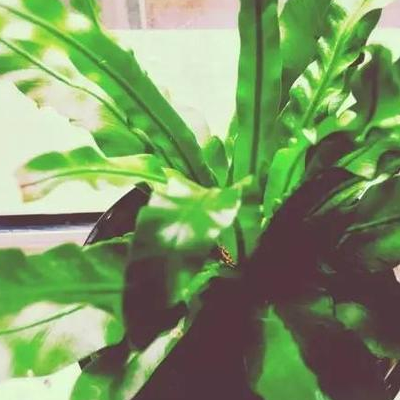
Care Methods for Bird's Nest Fern:
1. Pot Cultivation
It is a green plant very suitable for pot cultivation. Choose a flower pot with good breathability and drainage. The soil can be peat soil or leaf mold directly, appropriately add some river sand, and lay some decomposed organic fertilizer at the bottom of the soil. This ensures sufficient nutrients, keeps the growing medium breathable and loose, and provides good drainage.
2. Light and Temperature
Bird's nest fern is a plant that likes a shady environment. In summer, be sure to avoid exposure to the sun, do not let direct sunlight hit it, and maintain a ventilated and shaded environment. Only then can its leaves stay emerald green.
During care, maintain a warm environment. Temperatures between 20 and 30 degrees are its peak growing season. The minimum temperature should be above 5 degrees to avoid frost damage. When summer temperatures exceed 35 degrees, spray water around it appropriately to cool it down, and maintain good ventilation. Muggy conditions with water accumulation can easily cause the plant or leaves to rot.
3. Water and Fertilizer
For watering, just pay attention to replenishing water when the potting soil is slightly dry, avoiding soil that is too dry. Next is to ensure environmental humidity and avoid dry air.
Bird's nest fern does not have a great demand for fertilizer. During the growing season, ensuring 1 to 2 times a month of diluted liquid fertilizer is enough to maintain a good growth state.
Note:
Try not to let water accumulate in the leaf center for long periods, especially in the hot and muggy environment of summer, otherwise the core is prone to rot. If leaf spots appear on the leaves, promptly spray thiophanate or chlorothalonil to prevent it, and cut off diseased leaves to avoid leaf rot.
Can Bird's Nest Fern Be Grown Indoors:
Bird's nest fern can be grown indoors. It is said to be able to release oxygen 24 hours a day.
That is all for the care methods of bird's nest fern. Hurry and grow one.
Care Methods and Precautions for Bird's Nest Fern, and the Benefits of Bird's Nest Fern
Bird's nest fern has fresh, tender green leaves that are large and long, with strong ornamental value. Many friends like to grow it in pots indoors. So how do you care for potted bird's nest fern? What are the benefits of bird's nest fern? Let's learn together about the care methods and precautions for bird's nest fern and its benefits.
I. Care Methods for Bird's Nest Fern
1. Soil: Bird's nest fern prefers fertile peat soil and humus soil. After growing for two to three years or more, bird's nest fern's plant shape will fill an entire pot, so it should be divided and repotted in time. Repotting is generally done in spring. Some leaf mold and moss can be added to the new soil, along with a little gravel, to improve soil breathability.
2. Watering: Summer is the period of rapid growth for bird's nest fern. At this time, spray water more to increase air humidity and help lower the temperature. As the plant grows, the leaves will cover the entire flower pot. When watering, be sure to water thoroughly, so the leaves do not dry out or curl due to dryness.
3. Temperature and Light: The most suitable growth temperature for bird's nest fern is around 22-27°C. Bird's nest fern is not tolerant of high temperatures or frost. In the high-temperature summer season, necessary shading should be provided. When grown outdoors, choose a bright place with good scattered light. Reasonable temperature and light will make bird's nest fern's leaves oily green and glossy.
4. Fertilizer: The special form and structure of bird's nest fern help it absorb water and nutrients. Its rhizome is short and densely covered with scales, and it produces large clumps of sponge-like fibrous roots that can absorb more water. For potted bird's nest fern, during its vigorous growing season, it is advisable to apply a thin fertilizer with balanced nitrogen, phosphorus, and potassium once every half month, which can promote continuous growth of large amounts of new leaves. If the plant lacks fertilizer, the leaf edges will also turn brown. When summer temperatures are above 32°C, or winter greenhouse temperatures are below 15°C, all forms of top dressing should be stopped.
II. Precautions for Growing Bird's Nest Fern
When bird's nest fern grows larger, small branches will appear. In late spring, a small knife can be used to separate the roots for separate planting. When dividing and transplanting roots, note that the potting soil must not be too wet, otherwise root rot will occur. For newly transplanted bird's nest fern, some leaves can be cut off to help it survive. As the bird's nest fern grows, the leaves will gradually return to their original appearance. Bird's nest fern leaves are delicate, so prevent exposure to sun and frost, but do not keep it without light for long periods. It can be placed in a place with good scattered light.
Benefits of Bird's Nest Fern
1. Ornamental Value: Bird's nest fern is a relatively large shade-loving foliage plant. It has a full plant shape, verdant and glossy leaf color, is elegant and generous, and has a rich wild flavor, deeply favored by people. Hanging it indoors also gives a unique tropical mood. Planted under tropical garden trees or on rockery stones, it can add wild charm. Small potted plants used to decorate bright living rooms, meeting rooms, studies, and bedrooms also appear small and exquisite, dignified and beautiful.
2. Medicinal Value: Bird's nest fern is rich in vitamin A, potassium, iron, calcium, dietary fiber, and more. Bird's nest fern tastes bitter and is warm in nature, entering the kidney and liver meridians. It has the effects of strengthening muscles and bones and invigorating blood to remove stasis. It can also be used for traumatic injuries, fractures, blood stasis, headache, bloody strangury, impotence, and gonorrhea.
3. Edible Value: The edible part of bird's nest fern is its tender shoots. After picking bird's nest fern, rinse it clean with water, then blanch it briefly in boiling water, remove it and drain the water, add various seasonings and serve as a cold dish, or stir-fry it with other ingredients.
4. Air Purification Effect: Bird's nest fern can absorb formaldehyde. Placing ferns such as bird's nest fern indoors can purify the air. Generally, spider plant is a plant commonly used by citizens to absorb formaldehyde, while ferns absorb formaldehyde noticeably better than it. Under specific experimental conditions, the measured formaldehyde absorption capacity was: spider brake > Boston fern > bird's nest fern > maidenhair fern > Dryopteris bissetiana.
The above isthe care methods and precautions for bird's nest fernas well asthe benefits of bird's nest fernintroduced. Friends who still do not understand the care methods and benefits of bird's nest fern can take a look and save it.
Care Methods for Bird's Nest Fern (with the Benefits of Bird's Nest Fern)
Bird's nest fern (Latin scientific name: Asplenium nidus), also known as shansu flower, is a species under the genus Asplenium in the family Aspleniaceae, and is a perennial shade-loving herbaceous foliage plant. So, what are the care methods for bird's nest fern? Let's take a look below.
I. Care Methods for Bird's Nest Fern
When the temperature is high, water more frequently, either daily or every other day. Under low-temperature environmental conditions, it can be done once every 3 to 5 days. Be sure to be flexible! When the temperature is between 15 and 26°C, diluted fertilizer water can be applied, which is extremely beneficial for growth.
Note: Bird's nest fern likes a warm and humid environment and is not tolerant of high temperatures or cold. When above 30°C, spray more water and ventilate more! It likes a high-humidity environment and is not tolerant of dryness! Please spray water frequently to increase air humidity! In addition, although bird's nest fern has relatively strong shade tolerance, it still needs scattered light to grow better! Do not place it in a place without light for long periods! Of course, when the sunlight is strong, also prevent exposure!
1. Planting For potted bird's nest fern, peat soil or leaf mold is best. For bird's nest fern grown for 2-3 years, the plant shape opens up and the roots fill the pot stand. It can be removed from the pot, part of the residual roots and withered spore leaves at the base removed, the plant taken out, and each replanted separately into pots. When repotting in spring, add leaf mold and moss to the pot, and add a little gravel.
2. Temperature and Light The suitable growth temperature for bird's nest fern is 22-27°C. In summer, shade it, or place it in a sparse shady spot under a large tree, avoiding direct strong sunlight. This is beneficial for growth and makes the leaves glossy. Indoors, place it in a bright place and do not keep it in a dark place for long periods. In winter, move it into a greenhouse and keep the temperature above 16°C so it continues to grow, but the minimum temperature must not be below 5°C.
3. Watering and Fertilizing Under high-temperature and humid conditions in summer, new leaves grow vigorously and need more spraying, fully spraying the leaf surface to maintain relatively high air temperature, which is beneficial for spore germination. As the leaves enlarge, the leaves often cover all the culture soil in the pot. When watering, be sure to water thoroughly through the pot, so the plant does not dry out and cause the leaves to dry up and curl.
Bird's nest fern can be propagated by spores and by division. Spore propagation has been widely used as commercial mass production. Generally, division propagation can be used. When the plant grows larger, small branches often appear. In late spring and early summer, before new buds grow, use a sharp knife to slowly cut off the part of the plant that needs to be separated, then plant separately. Bird's nest fern produces relatively few branches, so the common method of separating daughter plants is rarely used. Usually, a robust plant is cut from the base into 2-4 pieces in late spring, and the leaves are cut shorter by 1/3-1/2, so that each piece has some leaves and rhizome, and then each is potted separately to become a new plant. After potting, place it in a place with a temperature above 20, semi-shade, and relatively high air humidity for care, so the wounds heal as quickly as possible. The culture medium in the pot should be slightly moist, not too wet, otherwise it is prone to rot. After new leaves grow, it can gradually recover its original shape.
II. Bird's Nest Fern Leaves Turning Yellow
There are many reasons for bird's nest fern leaves turning yellow, and the main one is improper care. Only by treating the cause and providing careful care can bird's nest fern leaf yellowing be completely solved.
Reasons for Bird's Nest Fern Leaves Turning Yellow
Bird's nest fern often grows epiphytically on tree trunks in rainforests or monsoon forests or on rocks under the forest, and it is not tolerant of strong light. It is a shade-loving plant. If the light is too strong, the leaves of bird's nest fern will turn yellow. Bird's nest fern leaves turning yellow can also be caused by reasons such as the growing environment and improper care. Especially in the north, where the air is dry and the light is strong, bird's nest fern will show dry leaf edges and cracked leaves.
Solutions for Bird's Nest Fern Leaves Turning Yellow
Once you know the reasons, you can know how to avoid bird's nest fern leaves turning yellow. First, try to ensure the care environment is shady and humid. It can be placed in a shady place for care, not in bright light such as a balcony or windowsill. Especially in summer, absolutely avoid direct sunlight and spray water frequently to ensure humidity. Liking shade does not mean you can water without limit. Ensuring the bird's nest fern growing medium is moist is enough! Also understand the growth habits of bird's nest fern. Once you understand its habits, adjusting your plant care habits according to those habits can avoid bird's nest fern leaves turning yellow.
III. Benefits of Bird's Nest Fern
1. Ornamental Value Among the Benefits of Bird's Nest Fern
Ferns, in recent years, can be said to stand out among foliage plants, deeply loved by people. Internationally, they are popular for making large hanging or wall-mounted potted plants, used for hanging decoration in spacious halls, or single clumps of bird's nest fern are fixed epiphytically at different heights on a section of tree trunk to form the appearance of a thick ancient tree. Placed in a hall or corridor, it is like a row of ancient trees. An interior decorated with bird's nest fern has a unique tropical scenery mood and can add a touch of vivid natural wild charm. It gives people great visual enjoyment and has strong ornamental value.
2. Decorating the Home Among the Benefits of Bird's Nest Fern
Bird's nest fern is a relatively large shade-loving foliage plant. It has a full plant shape, verdant and glossy leaf color, is elegant and generous, and has a rich wild flavor, deeply favored by people. Hanging it indoors also gives a unique tropical mood. Planted under tropical garden trees or on rockery stones, it can add wild charm. Small potted plants used to decorate bright living rooms, meeting rooms, studies, and bedrooms also appear small and exquisite, dignified and beautiful.
3. Purifying the Air Among the Benefits of Bird's Nest Fern
It is said that placing bird's nest fern in a room may release more oxygen than other plants. It cannot absorb cigarette odor, but it can absorb harmful gases such as nicotine in smoke, and has a certain air-purifying effect.
4. Market Value Among the Benefits of Bird's Nest Fern
Bird's nest fern has emerald green and glossy leaves, verdant and glossy leaf color, is elegant and generous, and has a rich wild flavor. It is a commonly used leaf material in flower arranging, and bird's nest fern leaves are also excellent floral materials.
5. Edible and Medicinal Value Among the Benefits of Bird's Nest Fern
The benefits of bird's nest fern are mainly reflected in medicinal use and potted plants. Bird's nest fern can be used as a potted and epiphytic ornamental plant, and its leaves are excellent floral materials, but bird's nest fern also has edible value and medicinal value. The curled tender leaves of bird's nest fern can be stir-fried, boiled, or made into pickles. Bird's nest fern is slightly bitter in nature and flavor and can be used to clear heat and detoxify.
The above is the introduction to the care methods for bird's nest fern. I hope it can help you. For more related information about bird's nest fern, please continue to follow us.