How to Make a Tree Stump Bonsai and an Introduction to Its Price
Tree stump bonsai is also a type of bonsai, and this tree stump bonsai is not just ordinarily beautiful. What is the method for making a tree stump bonsai? What is the price of a tree stump bonsai:
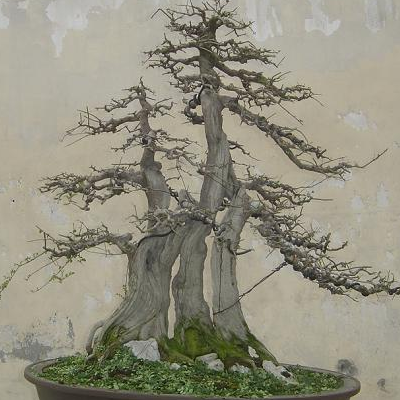
Methods for making a tree stump bonsai:
1. Wiring method
Tree stump bonsai come in various shapes, and the curved forms of their branches and trunks are also highly varied. This is mainly achieved by adjusting and fixing the shape through wiring techniques. The wiring method is mainly divided into metal wire wiring and palm fiber wiring.
Metal wire wiring method: Before wiring a tree, the tree should first be planted at a 30-40° angle, and depending on the tree species, wait several months or about 1-2 years. Next, observe whether the resin and the base of the tree roots are on the same vertical line to ensure the stability of the tree; if the standard is not met, the tree needs to be replanted. After the tree species has been planted, first wire the main trunk with large bends, then the primary branches and then the secondary branches. As for the degree of bending in the wiring, if the main trunk is thicker, the bend should be larger; if the branch growth angle is small, a larger bend is needed; and vice versa.
Palm fiber wiring method is a relatively difficult wiring method, but it protects the bark well, so it is widely learned and used, for example, the Su style bonsai prefers this wiring method. Palm fiber wiring is divided into full wiring and half wiring. The full wiring method wires the entire main trunk and branches, also following the method of first wiring the main trunk and then the branches. Before wiring, the front of the tree should first be determined, then the requirements of the design for the branches and foliage should be determined; when wiring the main trunk, the order should be from bottom to top. The half wiring method refers to when the main trunk has already been fixed and only the main branches are wired.
2. Pruning
In addition to wiring, pruning trees is also an important method of shaping. The main contents of pruning include pinching, leaf removal, bud removal, branch thinning, branch truncation, branch shortening, carving, wounding and other steps. During pruning, mature branches and leaves should be pruned, while tender, immature branches and leaves should not be pruned too early.
Prices of tree stump bonsai:
The prices of tree stump bonsai are divided into high and low levels according to different grades such as tree species, ranging from several hundred yuan to over ten thousand yuan. If you are not yet familiar with cultivating tree stump bonsai, it is recommended to buy lower-priced tree stump bonsai to grow, and after you have figured out certain methods, you can buy other higher-grade tree stump bonsai within the range your funds allow.
That is the introduction to the methods for making a tree stump bonsai. The prices of tree stump bonsai also vary greatly, so pay attention.
How to Make Lingnan Bonsai and What Is the Price
Lingnan bonsai, this is a bonsai association, that is, one that specializes in bonsai, and it is liked by many people. What is the method for making Lingnan bonsai? What is the price of Lingnan bonsai:
Methods for making Lingnan bonsai:
(1) Identify the quality of the tree shape: The tree form is naturally and gradually reduced from bottom to top, and the base, roots, and trunk shape must match properly. The most taboo is swelling in the middle, which loses natural proportion. If the roots are exposed and growing outside the soil on three or four sides, keep the size at about 1 cm.
(2) Artistic conception: The key to shaping the entire bonsai is to process it according to its natural form, striving for simplicity and not forcibly changing it. First conceive according to the tree shape or draw a sketch and then trim it, maintaining the tree's style and unique charm.
(3) Select the trunk: The height and thickness of the trunk should conform to the proportions of the overall bonsai, achieving harmony and naturalness. On a smooth trunk, bark can be chiseled with a knife to form classical scars; when pruning branches, leave about one cun so that branch claws form more quickly.
(4) Arrange the roots: When pruning roots, retain the original fibrous roots and shorten the thick roots. If it is in the original tray, the thick roots should be correspondingly shortened; if it is in a square tray, the thick roots can extend slightly left and right to expose the soil, forming a sense of rugged strength.
(5) Arrange the branches: Branches located at one third of the trunk must be carefully pruned, with density, thickness, length, and the distance between branches all well balanced. If branches do not meet these requirements, they can all be cut off, leaving only the trunk to let it sprout and grow again.
(6) Cultivation: A newly pruned and shaped tree stump head must be cultivated promptly before it sprouts, and work such as promoting rooting, shortening the time the tree stump is out of the soil, sealing cuts, water transport, and fertilizing must be done well.
Lingnan bonsai prices:
(1) Lingnan style premium plum bonsai stump landscape, large living room courtyard green plant potted plant, reference price: 48000 yuan/pot.
(2) Small-leaf red sandalwood tree stump bonsai, Lingnan style, reference price: 488 yuan/pot.
(3) Shange wood rare tree bonsai, Lingnan style, reference price: 1088 yuan/pot.
That is the introduction to the methods for making Lingnan bonsai and the prices. This has broadened your knowledge, right!
Making a Tree Stump Bonsai (Photo)
Selection of Tree Blank Material
No matter what type of tree species is chosen as the material for a tree stump bonsai, the blank material should first be screened. The selection of tree blanks comes from two sources, namely digging wild tree blanks in the mountains and fields and cultivating saplings, because our requirements for tree stumps mainly emphasize aged ruggedness and plainness. Therefore, tree blanks with a long tree age, beautiful form, and a certain degree of plastic shape from natural growth are generally selected. If one simply starts from artificial cultivation of small plants as material and then processes them, the shaping time is long and the formation is slow, so bonsai workers mostly dig wild blank material from the natural mountains and fields for processing.
When digging wild tree blanks, it is better to choose blanks with a long tree age, vigorous growth, and a form generally aged, peculiar, vigorous and winding, with suspended roots and exposed claws. At the same time, attention must be paid to determining the digging process and digging time according to the growth characteristics of the specific blank material. We believe it is more appropriate to dig after the tree enters dormancy, such as from early winter to early spring. Digging in winter requires attention to protecting the tree blank from freezing, so as not to make survival difficult the following year. In spring, when the tree is sprouting, digging is better, as it can avoid injury from freezing and increase the difficulty of maintenance and management, and also allows one to determine whether to keep branches and trunks according to their sprouting posture. Of course, because our country has a vast territory and relatively large climate differences, this should be determined according to the climate characteristics of each place.
Because tree blanks dug from the mountains and fields generally have a longer tree age, the primary purpose in the excavation procedure must be to ensure their survival. For example, when digging, depending on the tree species, determine the retention of the main root or lateral roots and fibrous roots, as well as the retention of excess branches. Usually, a portion of the main shaping branches and trunks should be retained and shortened to make them sprout. Consider their future shaping according to the specific condition of the tree blank, but note that when cutting tree species with weaker sprouting ability, a suitable number of branches should be left. If soil can be kept at the roots during excavation, keep as much as possible; if soil truly cannot be kept, dip the roots in mud paste and wrap and tie them with straw or baskets and crates, adding moss to protect the tree blank from excessive water loss during transport. Tree blanks are generally best buried deep underground for maintenance. After they survive, shape and raise the roots year by year. At the same time, pay attention to timely watering, spraying, and drainage during dry and waterlogged weather to avoid root and trunk rot caused by water loss or flooding. Therefore, when burying deep, it is best to raise ridges and build banks. Of course, pests and diseases should also be checked and prevented promptly.
For tree blanks cultivated from a young age, when the main trunk and branches have grown to a certain extent, they can then be sawed and shaped, with roots raised and claws exposed, and after processing they can be planted in pots. However, the soil nutrients in the pot must keep up. To make them sprout quickly, they can also be planted in the ground in raised banks. But according to the shaping, prune frequently and supplement frequently.
Shaping of Tree Blank Material
The shaping of tree blanks must be conceived according to the material and shaped according to the material, especially for natural-style tree stump shaping. Do not rigidly apply the shaping methods of regular-style tree stumps. The processing and shaping methods for tree blanks are roughly divided into two types: the wiring method and the pruning method.
(Schematic diagram of the branch-storing and trunk-cutting pruning method)
Pruning method
Pruning is generally carried out after the basic shaping by wiring, and includes flat pruning, selective pruning, and so on. However, there are also those that use purely pruning methods for shaping, such as Lingnan style bonsai shaping, which uses the purely pruning method of "storing branches and cutting the trunk." This is influenced by the "chicken-claw branch" and "deer-horn branch" shapes in Chinese painting methods. "Storing branches" refers to cultivating branches after selecting branch positions, including the parts that will become the trunk and the root system. "Cutting the trunk" refers to shortening or removing trunks, branches, and roots that do not meet the shaping requirements. It is used throughout the entire process of Lingnan bonsai cultivation and shaping. After a tree blank is dug up, the trunk and roots are cut according to the required length, height, and shortness for shaping. When new branches sprout after planting, branch positions are selected, the direction of the guided branch form is corrected, and when they are cultivated to an appropriate thickness, they are promptly pruned according to the required length, shortness, thickness, and thinness for shaping. Then new branches sprout and are pruned again, and so on repeatedly, storing branches and cutting the trunk, until the "deer-horn" and "chicken-claw" branches are formed. The pruning methods of some other bonsai schools in our country are "heavy wiring and light pruning," or "light wiring and heavy pruning," or "heavy wiring and heavy pruning," and so on.
(Palm fiber wiring)
Wiring method
The wiring method uses palm fiber or metal wire to shape tree stumps. Palm fiber wiring is a traditional shaping method for bonsai tree stumps. Generally, the trunk or branches are made into semicircular bends, repeated or varied in shape, and these bends are called "Hanwen bends." In the shaping of Sichuan style tree stump bonsai, palm fiber operations include laying fiber, turning fiber, stealing fiber, and leaving knots. Laying fiber is divided into back, winding, and hooping; turning fiber is divided into single-strand upper turn, single-strand lower turn, double-strand opposite turn, double-strand lower turn, and double-strand upper turn; stealing fiber is divided into upper-hanging steal, lower-hanging steal, flat steal, half-bend steal, and wrapped steal; leaving knots is divided into slip knot, fixed knot, upper knot, lower knot, and flat knot; bends include half bend, crescent bend, one-cun three-bend, and rice bend.
(Two ways of winding metal wire)
Trunk correction method
Metal wire wiring uses copper wire or lead wire to shape tree blanks. This method is simple and easy to carry out, and bends and stretches freely, but removal is troublesome. Lead wire is generally used, while copper wire is more expensive. The thickness of the metal wire is determined according to the thickness of the trunk and branches. No. 14 to No. 20 wire is more commonly used. When wiring, first fix one end of the metal wire at the base or crossing point of the branch or trunk, then wrap it tightly against the bark. While twisting the branch (trunk), wrap left or right, with the wire at a 45-degree angle to the trunk (branch). Apply force evenly to prevent damaging the cambium and bark of the trunk (branch). If it is a tree species that sheds bark easily or a thick trunk, the branch or trunk can first be wrapped with hemp, palm bark, and the like before wrapping.
Whether using palm fiber or metal wire wiring, sometimes when wiring a thicker main trunk that is not easy to bend, the trunk can also be opened longitudinally or transversely to make it easier to bend. Longitudinal openings include the dragon-force method and the rolling-knife method; transverse ones include the single-cut method or continuous-cut method; in Sichuan style tree stump shaping, the "lever bending method" is generally used for wiring large trees.
Related Articles