What are the methods for making an asparagus fern bonsai and how much does it cost?
Asparagus fern, a plant that many people like, can be made into a bonsai, and it is really super good-looking. What are the methods for making an asparagus fern bonsai? How much does an asparagus fern bonsai cost:
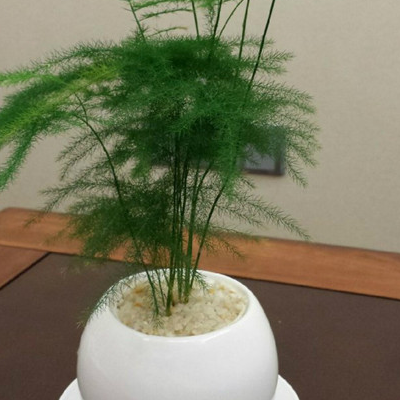
Methods for making an asparagus fern bonsai:
(1) Prepare the bonsai materials. Generally choose one well-grown asparagus fern about 20cm tall or two asparagus ferns about 10cm tall, several decorative rocks, and an appropriate amount of soil and moss.
(2) Spread soil at the bottom of the pot, and plant the selected asparagus fern in an appropriate position. Generally, the orientation of the asparagus fern should be coordinated and uniform.
(3) On top of the soil and below the asparagus fern, add rocks and moss as decoration to achieve an artistic effect. Appropriately spray the asparagus fern and moss with clean water to keep the soil moist.
Asparagus fern bonsai price:
The price of an asparagus fern bonsai depends on factors such as quality, features, and size, so its price varies. Generally, around 50 yuan can buy a very good asparagus fern bonsai. Of course, there are also cheaper ones, costing only around ten yuan. The specific choice depends on the consumer's actual situation and the actual area where it will be placed.
That is all for the methods and price of making an asparagus fern bonsai. Hurry and get one for your home.
Methods for making a Murraya paniculata bonsai and Murraya paniculata price
Afterreading the introduction, friends may find it strange: are Qi Li Xiang and Jiu Li Xiang not two different plants? Actually, that is not the case. The plant introduced in this article, Jiu Li Xiang, is also known by the alias Qi Li Xiang, while aliases such as Qian Li Xiang and Wan Li Xiang all refer to the same plant, Jiu Li Xiang.
Methods for making a Murraya paniculata bonsai and Murraya paniculata price
——————————————————————————————————————————————
[Plant profile]
——————————————————————————————————————————————
Chinese name:Jiu Li Xiang (Murraya paniculata)
Scientific name:Murraya exotica L.
Alias names:Shi La Jiao, Jiu Qiu Xiang, Jiu Shu Xiang, Qi Li Xiang, Qian Li Xiang, Wan Li Xiang, Guo Shan Xiang, etc.
Family:Rutaceae
Genus:Murraya
Origin and distribution:Murraya paniculata is produced in Yunnan, Guizhou, Hunan, Guangdong, Guangxi, Fujian, Hainan, Taiwan, China, and other tropical and subtropical regions of Asia.
Morphological characteristics:Small tree, branches white-gray or light yellow-gray, but current-year branches green. Leaflets obovate or obovate-elliptic, often asymmetrical on both sides. Flowers numerous, clustered into umbel-like, shortened paniculate cymes; flowers white, fragrant, petals 5, oblong, 10-15 mm long, reflexed when in full bloom.
Growth habits of Murraya paniculata
——————————————————————————————————————————————
Murraya paniculata is a sun-loving tree species that likes warmth and is not cold-tolerant. Its most suitable growth temperature is 20-32°C. It should be placed in a place with sufficient sunlight and good air circulation to have lush leaves, abundant flowers, and give off fragrance. When the minimum temperature drops to about 5°C, move it indoors to a sunny place for overwintering, but not too early, otherwise it is not conducive to exercising its cold tolerance. In winter, the indoor temperature should be maintained at 5-10°C. If too low, Murraya paniculata easily loses leaves and may even freeze to death; if too high, it cannot enter good dormancy and may even sprout indoors. When taken outside, once exposed to cold wind, the buds retract again, and when new buds grow again, it affects the growth of Murraya paniculata that year.
Methods for making a Murraya paniculata bonsai
——————————————————————————————————————————————
▲ Seedling source: Murraya paniculata can be propagated by artificial propagation methods such as sowing and cuttings. During the plum rain season, choose one-year-old strong branches or semi-ripened branches 8-12cm long as cuttings, keep several leaves at the upper part, and have a heel at the base. The seedbed soil should be fertile, loose, and well drained. After inserting, firm the soil, water thoroughly, and promptly build a shed for shade. After Murraya paniculata takes root, keep it in the bed for one year, then divide and transplant it for cultivation.
▲ Potting: Murraya paniculata mostly uses glazed ceramic pots with good water permeability, and the pot shape is preferably a medium-deep rectangle or oval. For potting soil, generally choose loose, well-aerated leaf mold or garden soil mixed with an appropriate amount of sand and rice husk ash. Murraya paniculata is suitable for potting in spring from April to May. When planting, spread a layer of vermiculite at the bottom of the pot, and fill the root system with fertile loose soil to facilitate drainage.
▲ Shaping: Murraya paniculata is suitable for shaping by pruning, and its trunk can be slightly bent and tied before pruning. The pruning period is best in spring from April to May. Generally, the "branch-storing and trunk-cutting method" is adopted, that is, when the main branches of the trunk are cultivated to a suitable thickness, cut off a section of each branch. If these cut branches are called "first-section branches," then the secondary branches later growing on them are called "second-section branches." When the "second-section branches" grow to a suitable thickness, cut off another section to make them produce "third-section branches," and so on for shaping. Usually, only 1-3 branches with differences in length are kept on each section of branch. After years of pruning, the branches can achieve a naturally winding and vigorous effect, with well-balanced density and a rich painterly quality.
Murraya paniculata price
——————————————————————————————————————————————
The price of Murraya paniculata depends on factors such as tree shape and tree age. The transaction price for high-branching ones (over 120cm) is around 6000-8000. Murraya paniculata bonsai range from several hundred to several thousand yuan.
" Conclusion:After Murraya paniculata blooms, its fragrance is very rich. If the wind is favorable and there are no obstacles or other air pollution, it may spread its fragrance for several li. Flower lovers who like strongly fragrant flowers can grow Murraya paniculata for enjoyment.
【More plant encyclopedia】
Poppy Night-blooming jasmine Rose Azalea Lavender Pothos Asparagus fern Peperomia Hyacinth Anthurium Cherry blossom Calla lily
African jasmine Rose Spring Festival flowers Succulents Tropical plants Rosa rubus Agave Canna Red spider lily Forget-me-not Dandelion
Dendrobium officinale Yew Kapok Osmanthus Begonia Hydroponic plants Home feng shui plants Bedroom feng shui plants Plum blossom Aloe
Jasmine Radiation-resistant plants Pennywort Potted plants Bonsai making Drug plants Mistletoe Indoor flowers Money tree Lucky bamboo Lucky bamboo
Potted plant making Anthurium Mint Lithops Geranium Garden Christmas cactus Peace lily Snake plant Kunlun snow chrysanthemum Water lily Blue enchantress
Murraya paniculata bonsai, methods for making Murraya paniculata bonsai, Murraya paniculata price
Afterreading the introduction, friends may find it strange: are Qi Li Xiang and Jiu Li Xiang not two different plants? Actually, that is not the case. The plant introduced in this article, Jiu Li Xiang, is also known by the alias Qi Li Xiang, while aliases such as Qian Li Xiang and Wan Li Xiang all refer to the same plant, Jiu Li Xiang.
[Recommended reading] Lily, Kalanchoe, Globe amaranth, Gardenia, Clivia, Guzmania, Balloon flower, Mulberry, Winter jasmine, Mimosa
Methods for making a Murraya paniculata bonsai and Murraya paniculata price
——————————————————————————————————————————————
[Plant profile]
——————————————————————————————————————————————
Chinese name:Jiu Li Xiang (Murraya paniculata)
Scientific name:Murraya exotica L.
Alias names:Shi La Jiao, Jiu Qiu Xiang, Jiu Shu Xiang, Qi Li Xiang, Qian Li Xiang, Wan Li Xiang, Guo Shan Xiang, etc.
Family:Rutaceae
Genus:Murraya
Origin and distribution:Murraya paniculata is produced in Yunnan, Guizhou, Hunan, Guangdong, Guangxi, Fujian, Hainan, Taiwan, China, and other tropical and subtropical regions of Asia.
Morphological characteristics:Small tree, branches white-gray or light yellow-gray, but current-year branches green. Leaflets obovate or obovate-elliptic, often asymmetrical on both sides. Flowers numerous, clustered into umbel-like, shortened paniculate cymes; flowers white, fragrant, petals 5, oblong, 10-15 mm long, reflexed when in full bloom.
Growth habits of Murraya paniculata
——————————————————————————————————————————————
Murraya paniculata is a sun-loving tree species that likes warmth and is not cold-tolerant. Its most suitable growth temperature is 20-32°C. It should be placed in a place with sufficient sunlight and good air circulation to have lush leaves, abundant flowers, and give off fragrance. When the minimum temperature drops to about 5°C, move it indoors to a sunny place for overwintering, but not too early, otherwise it is not conducive to exercising its cold tolerance. In winter, the indoor temperature should be maintained at 5-10°C. If too low, Murraya paniculata easily loses leaves and may even freeze to death; if too high, it cannot enter good dormancy and may even sprout indoors. When taken outside, once exposed to cold wind, the buds retract again, and when new buds grow again, it affects the growth of Murraya paniculata that year.
Methods for making a Murraya paniculata bonsai
——————————————————————————————————————————————
▲Seedling source: Murraya paniculata can be propagated by artificial propagation methods such as sowing and cuttings. During the plum rain season, choose one-year-old strong branches or semi-ripened branches 8-12cm long as cuttings, keep several leaves at the upper part, and have a heel at the base. The seedbed soil should be fertile, loose, and well drained. After inserting, firm the soil, water thoroughly, and promptly build a shed for shade. After Murraya paniculata takes root, keep it in the bed for one year, then divide and transplant it for cultivation.
▲Potting: Murraya paniculata mostly uses glazed ceramic pots with good water permeability, and the pot shape is preferably a medium-deep rectangle or oval. For potting soil, generally choose loose, well-aerated leaf mold or garden soil mixed with an appropriate amount of sand and rice husk ash. Murraya paniculata is suitable for potting in spring from April to May. When planting, spread a layer of vermiculite at the bottom of the pot, and fill the root system with fertile loose soil to facilitate drainage.
▲Shaping: Murraya paniculata is suitable for shaping by pruning, and its trunk can be slightly bent and tied before pruning. The pruning period is best in spring from April to May. Generally, the "branch-storing and trunk-cutting method" is adopted, that is, when the main branches of the trunk are cultivated to a suitable thickness, cut off a section of each branch. If these cut branches are called "first-section branches," then the secondary branches later growing on them are called "second-section branches." When the "second-section branches" grow to a suitable thickness, cut off another section to make them produce "third-section branches," and so on for shaping. Usually, only 1-3 branches with differences in length are kept on each section of branch. After years of pruning, the branches can achieve a naturally winding and vigorous effect, with well-balanced density and a rich painterly quality.
Murraya paniculata price
——————————————————————————————————————————————
The price of Murraya paniculata depends on factors such as tree shape and tree age. The transaction price for high-branching ones (over 120cm) is around 6000-8000. Murraya paniculata bonsai range from several hundred to several thousand yuan.
"Conclusion:After Murraya paniculata blooms, its fragrance is very rich. If the wind is favorable and there are no obstacles or other air pollution, it may spread its fragrance for several li. Flower lovers who like strongly fragrant flowers can grow Murraya paniculata for enjoyment.
【More plant encyclopedia】
Poppy, Night-blooming jasmine, Rose, Azalea, Lavender, Pothos, Asparagus fern, Peperomia, Hyacinth, Anthurium, Cherry blossom, Calla lily
African jasmine, Rose, Spring Festival flowers, Succulents, Tropical plants, Rosa rubus, Agave, Canna, Red spider lily, Forget-me-not, Dandelion
Dendrobium officinale, Yew, Kapok, Osmanthus, Begonia, Hydroponic plants, Home feng shui plants, Bedroom feng shui plants, Plum blossom, Aloe
Jasmine, Radiation-resistant plants, Pennywort, Potted plants, Bonsai making, Drug plants, Mistletoe, Indoor flowers, Money tree, Lucky bamboo, Lucky bamboo
Potted plant making, Anthurium, Mint, Lithops, Geranium, Garden, Christmas cactus, Peace lily, Snake plant, Kunlun snow chrysanthemum, Water lily, Blue enchantress