How much does it cost to learn Podocarpus bonsai cultivation techniques
Podocarpus bonsai is something many people like. It turns out Podocarpus bonsai has so many styles. What are the cultivation techniques for Podocarpus bonsai? How much does Podocarpus bonsai cost:
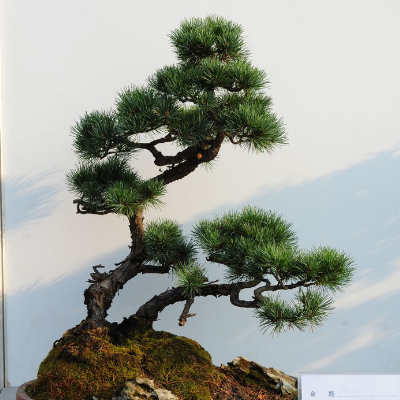
Podocarpus bonsai cultivation techniques:
(1) Environment: Podocarpus is a subtropical tree species, native to the Yangtze River basin and the provinces and regions south of it. It likes semi-shade, and grows well in warm, humid, fertile, loose, well-drained, slightly acidic sandy soil. In colder regions it is only suitable for pot cultivation.
(2) Light: Mature Podocarpus develops a better tree form and leaf shape under strong light, so shading is not necessary. However, young Podocarpus seedlings are tender and should not be exposed to strong light for long periods. They should be kept under a shade net, or moved to a shaded spot after a period of direct sunlight.
(3) Watering: Podocarpus is not drought-tolerant, so during its growing period you should water the potted plant regularly, but do not let it become waterlogged. In summer, when temperatures are high, water once in the morning and once in the evening, and also spray the leaves frequently to keep the foliage fresh and green. Summers in the south are rainy and the rainy season is long, so when growing it outdoors, be careful to avoid water accumulation.
(4) Fertilizing: Podocarpus needs fertile soil to grow, so fertilizing is a very important step. The principle of fertilizing is light fertilizer applied frequently. Use mainly nitrogen fertilizer, adding an appropriate amount of black alum, and ferment it into liquid fertilizer before applying. During the growing period, fertilize once every 1-2 months. Fertilizing and watering can be done together, with a water-to-fertilizer ratio of 9:1.
(5) Pest and disease control: Podocarpus pests and diseases mainly occur in summer (May-September). Watch out for red spiders, which gather on the leaves in the form of various mites and suck the sap. The damaged leaf surface shows many powdery green spots, which later turn grayish white. In this case, just buy some insecticides, such as fenbutatin oxide, pyridaben, etc. Spray once every 10 days to kill the pests.
How much does Podocarpus bonsai cost:
The price of Podocarpus bonsai varies according to the size of the bonsai, its style, and the maturity of the tree.
The price of small Podocarpus potted plants at the seedling stage is generally around 10 yuan per pot. They are suitable for placing on desks, office tables and other places that can hold small items, and serve to purify the air and give the eyes a rest.
The common medium-sized Podocarpus potted plants generally cost 40-70 yuan each. Large Podocarpus potted plants that can be placed in pavilions and courtyards have exquisite styling and are quite expensive. According to crown width, 50-60cm costs 300-400 yuan per pot; 80-100cm costs 680-750 yuan per pot; 120cm-150cm generally costs around 1000 yuan per pot. Generally speaking, small and medium-sized Podocarpus potted plants can meet the needs of decoration and purifying indoor air.
That is all for the cultivation techniques and prices of Podocarpus bonsai. Hurry up and grow one!
Podocarpus bonsai making and Podocarpus cultivation techniques
The author mainly introduces Podocarpus bonsai making and Podocarpus cultivation techniquesPodocarpus is an evergreen small tree of the Pinaceae family. It stays green all year round, has narrow long needles and dark green color, with sturdy branches and a long lifespan, and is a commonly used tree species for making bonsai. Among them, the sparrow-tongue Podocarpus has leaves only 2 cm long and a graceful tree shape, and is a precious tree species for making bonsai. Podocarpus likes a warm and humid environment, is fairly shade-tolerant, and prefers fertile, loose, well-drained, slightly acidic sandy loam. Its bonsai making method is as follows:
I. Seedling sources and propagation
Small Podocarpus bonsai seedlings are usually obtained by artificial propagation methods such as sowing and cuttings. There are also wild Podocarpus in the mountains and fields, generally growing in stone crevices. You can select and dig up ones with short plants, antique-looking branches, and graceful posture. Propagation methods: the cutting method is commonly used, and the sowing method and grafting method can also be used for propagation. Cuttings are taken in mid-March in early spring or during the plum rain season in June-July. When taking cuttings, the cuttings must have a heel, and the seedbed needs shading. For transplanting, March in spring is the most suitable. For sowing, collect the seeds in late August and sow them immediately after collection, or store them in sand until March of the following year to sow. Because rice-leaf Podocarpus grows slowly from cuttings, it is advisable to use large-leaf or small-leaf Podocarpus as rootstock; grafting in early spring in March gives a higher survival rate.
II. Styling
1. Potting
Podocarpus is usually potted before it sprouts in spring. The potting soil should be loose, well-drained, slightly acidic sandy loam. Because Podocarpus has a simple and elegant posture, it is advisable to choose a purple clay pot or glazed pottery pot for cultivation, and the pot shape is determined by the tree shape.
2. Styling
Podocarpus is mostly styled during the dormant period, mainly by wiring and bending, with pruning as a supplement. Because Podocarpus branches are soft and easy to wire and bend, and can also be pruned, its styles are diverse. Common forms include curved-trunk style, slanting-trunk style, lying-cloud style, cliff style and exposed-root style, etc. The branches and leaves can be pruned into flat layers or bun shapes.
3. Cultivation and maintenance
Podocarpus can be grown both in the ground and in pots, and its maintenance and management requirements are not strict. During the spring and autumn growing seasons, it is enough to apply 1-2 topdressings mainly of nitrogen; excessive phosphorus and potassium fertilizer are not needed. For bonsai that has already been styled, you must pay attention to pinching and pruning to prevent the branches and leaves from growing excessively, so as to maintain the original posture. Pruning and pinching are best done during the spring and autumn growing periods. For household potted Podocarpus, it should be kept outdoors in a ventilated place all year round, and should not be kept indoors for long, otherwise the leaves will turn yellow and fall off, leading to death. In summer, high temperatures make exposure to the sun unsuitable, so it needs to be kept in a semi-shaded place. During the growing season, the water can be slightly more; in the hot summer, water promptly when the potting soil is dry, and water thoroughly and generously; in autumn and winter, the water can be appropriately reduced. In East China, in winter when the temperature drops to 5°C, it should be moved indoors to overwinter, and the amount of watering should be controlled, with the potting soil better kept on the dry side.
(1) Location
In summer, Podocarpus should be placed in a warm, humid, well-ventilated place, and in winter it should be placed indoors at above 5°C. But the temperature should not be too high, so as not to affect its dormancy.
(2) Watering
Podocarpus likes moist soil. During the growing season it should be watered frequently to keep the potting soil moist, but the pot must not become waterlogged. In summer, frequently spray water on the leaves or the ground to keep the leaf color bright and beautiful.
(3) Fertilizing
Podocarpus that has already taken shape should not be fertilized much. Usually during the growing season, apply a thin, fully decomposed liquid fertilizer once every 1 month, and stop fertilizing after the beginning of autumn.
(4) Pruning
Podocarpus should be pruned frequently to maintain its tree shape. When it blooms, it is best to remove the flower buds promptly to avoid consuming nutrients.
(5) Repotting
Podocarpus is usually repotted once every 2—3 years. This is generally done in March—April.
(6) Pest and disease control
Pay attention to pest and disease control, especially in summer and hot seasons, and watch out for scale insects and red spiders. Common diseases include sooty mold and leaf spot, which can be controlled with 0.5%-1% Bordeaux mixture, sprayed once every 10 days for 3 consecutive times one month before the plum rain season. The main pests include bagworms, red wax scale insects, red spiders, etc., which can be killed by spraying with 1200-1500 times diluted dichlorvos solution, or with 1500 times diluted 40% dimethoate solution.
How to make Podocarpus bonsai? Sharing of Podocarpus bonsai styling techniques
Image: Podocarpus bonsai
[Common question] How to make Podocarpus bonsai? Sharing of Podocarpus bonsai styling techniques
[Expert answer]
1. Potting
Podocarpus is usually potted before it sprouts in spring. The potting soil should be loose, well-drained, slightly acidic sandy loam. Because Podocarpus has a simple and elegant posture, it is advisable to choose a purple clay pot or glazed pottery pot for cultivation, and the pot shape is determined by the tree shape.
2. Styling
Podocarpus is mostly styled during the dormant period, mainly by wiring and bending, with pruning as a supplement. Because Podocarpus branches are soft and easy to wire and bend, and can also be pruned, its styles are diverse. Common forms include curved-trunk style, slanting-trunk style, lying-cloud style, cliff style and exposed-root style, etc. The branches and leaves can be pruned into flat layers or bun shapes.
3. Purpose
The purpose of Podocarpus artistic styling is to "style according to the tree" and "apply skills according to the material", using superb artistic expression techniques to draw out the highest artistic realm from an ordinary tree shape and maximize its ornamental value.
4. Techniques
Commonly used techniques include clipping, tying, pressing, bundling and hanging, etc. Pruning and styling is relatively simple, while styling techniques such as tying, pressing, bundling and hanging are more difficult, and place higher demands on the stylist's artistic imagination, operating skills, and the condition of the tree's trunk and branches. During the styling process, artistic processing must be carried out according to the natural beauty of the seedling itself, that is, it must be adapted to the tree, making beauty even more beautiful, so that the styling is strong and powerful with clear layers.
(1) Clipping: The characteristics of Podocarpus being tolerant of pruning and having small leaves can be used to make various shapes, such as spherical, conical, multi-layered spherical, etc. You only need to prune according to the pre-designed shape. For example, when pruning a three-layer sphere, first choose a seedling with an obvious trunk and a relatively good upright form. If the pruning design is a three-layer sphere with a total height of 2 m, then the lower layer is about 50 cm high, the middle layer is about 40 cm high, and the top layer is 30 cm high. All branches on the trunk between the first and second layers for 45 cm and between the second and third layers for 35 cm need to be cut off, and then the three spheres are pruned. It is best for the three spheres, top, middle and bottom, to gradually increase in size, so as to seek coordinated proportions and better ornamental value. Generally, pruning is suitable when new shoots have grown 20-30 cm, and multiple prunings are needed to make each layer of spheres round, full and compact.
(2) Tying: For the tying method of styling, you can choose sturdy bamboo sticks and strong hemp rope, tie the bamboo sticks and branches tightly and firmly with the hemp rope, then fix one end of the bamboo stick to the main trunk, so that by adjusting the direction of the bamboo stick, the branches grow in a specific direction according to the stylist's wishes, achieving the purpose of styling. Note that the tying method of styling is suitable for younger Podocarpus, while older Podocarpus, because its branches are thick and sturdy, is difficult to style and the effect is poor.
(3) Pressing: The pressing method of styling mainly uses the method of bending and tilting the main trunk, so that the tree body on a slanted plane presents an artistic beauty completely different from that of an upright plane. Because Podocarpus branches resemble human arms, and the leaves clustered in hemispherical shapes at the top of the branches resemble human palms, together with the bent tree body, it looks like a greeter bending at the waist and arms to welcome guests, very vivid and lifelike. Note that after bending the tree body, wooden stakes must be used to support the tilted end to prevent the tree body from falling over due to excessive tilting, and straw of moderate thickness should be placed between the contact surface of the wooden stake and the tree body to avoid injuring the tree body.
[Editor's comments] Podocarpus has a simple and elegant tree shape, and with just a little pruning it can be made into a bonsai with unique styling, very lovable. The above is "Podocarpus Bonsai Making Techniques" compiled and organized for you by the First Agricultural Economics editor. We hope it is helpful to you.