Trident Maple Bonsai Pruning Methods and Price Guide
Trident maple is a tree that can grow very tall and looks quite attractive. How do you prune a trident maple bonsai? What is the price of a trident maple bonsai?
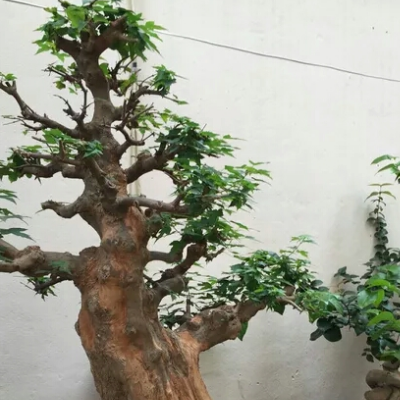
How to prune a trident maple bonsai:
Normally, the branches of a trident maple will grow to around one meter long by late May. At this time, you need to select and set the branches for styling. Because the trident maple itself grows relatively fast, its branches will grow straight upward, so at this point you need to manually pull the branches to the ideal angle. When the plum rain season arrives, the new branches will grow to about one cm, and to prevent them from being broken by strong wind and heavy rain, they need to be secured. At the same time, useless branches should be pruned so that all nutrients are concentrated on supplying the branches you need. When pruning, be sure to pay attention to the trunk and watch for places all over the tree that tend to produce small buds. You need to trim and cut frequently to maintain the tree's shape.
Price of trident maple bonsai:
Trident maple bonsai does have a certain collectible value. It is judged based on factors such as the trident maple's survival time, trunk thickness, and wood quality. Better trident maple bonsai can fetch tens of thousands of yuan at auction.
That covers the pruning methods and prices of trident maple bonsai. Hurry and get one for your own home.
Trident Maple Price Summary and Essential Knowledge for Buying Trident Maple
Introduction: The trident maple has dense branches and leaves, casting heavy shade in summer, and in autumn its leaves turn dark red, a beautiful sight to behold. It is suitable for solitary planting or group planting as a shade tree in courtyards, and can also be used as a street tree or bank-protection tree. It is very suitable for planting along lakeshores, streamsides, valleys, and lawns, or as an accent among pavilions, corridors, and rocks. Its old stumps are often made into bonsai, with twisted and raised trunks that are quite unusual. In addition, in the Jiangnan region some are planted as hedges, and after many years the branches interlock and connect densely, giving a distinctive flavor. Add one pot to your home decor and it instantly feels much more upscale. Come and take a look with Little Rabbit - how much does a trident maple actually cost?
Getting to Know Trident Maple Trident maple, also known as: three-toothed maple, Latin name: Acer buergerianum Miq. A deciduous tree in the order Sapindales, family Aceraceae, genus Acer. The bark is brown or dark brown, rough, with lobes extending forward, entire or with irregular serrations. The seed kernel is prominent, and the seed wings spread at an acute angle. It likes light, tolerates slight shade, prefers a warm and humid climate, tolerates slight cold, is relatively tolerant of waterlogging, and tolerates pruning. Autumn leaves are dark red or orange. It is native to the middle and lower reaches of the Yangtze River in China, and is cultivated in the Yellow River basin. It is suitable as a courtyard shade tree, street tree, and bank-protection tree species. It can also be planted as a hedge.
Price of Trident Maple The trident maple has an elegant tree form and beautiful bark. It produces yellow-green flowers in spring, and its leaves turn red in autumn. It is a fine landscaping tree species and foliage tree species. It is more suitable for use as a street tree or courtyard shade tree, as well as for accent planting in lawns.
Trident Maple Plant PricesGenerally, 5 cm diameter - 30 yuan , 8 cm diameter - 150 yuan , 10 cm diameter - 250 yuan, 15 cm diameter - 500 yuan, 20 cm diameter - 850 yuan, 25 cm diameter - 1200 yuan, 30 cm diameter - 1800 yuan, 35 cm diameter - 3500 yuan, 40 cm diameter - 6000 yuan, 50 cm diameter - 8000 yuan.
Trident Maple Bonsai Prices20-22 cm diameter 3400 yuan/tree, 24-28 cm 4500 yuan/tree, 29-33 cm 6500 yuan/tree , 34-36 cm 9000 yuan/tree, 40 cm 13000 yuan/tree, 50 cm 18000 yuan/tree. Specific prices are determined by the specific tree form.
After spending so much money to buy a trident maple, how to manage it is of course very important
Trident Maple Bonsai Care
(1) Location: Trident maple likes ample sunlight, so it should be grown in a sunny spot. During the high-temperature period in summer, attention should be paid to shading, and in winter it should be moved indoors to overwinter.
(2) Watering: Trident maple likes plenty of water, so the potting soil should be kept moist regularly. After autumn arrives, when the leaves turn red, it can be slightly drier.
(3) Fertilizing: Trident maple grows rapidly, so it has a high fertilizer demand. During the peak growth seasons of spring and summer, apply diluted cake fertilizer once every half month, and appropriately supplement phosphorus and potassium fertilizers to make the autumn leaves more brilliant.
(4) Repotting: Every spring in February to March is the best time to change the pot. The trident maple has a well-developed root system and grows rapidly, so it can be repotted once a year.
A good potted plant with good management is guaranteed to make your home look upscale. It is said that in winter the tree's leaves change from green to pink, purple-red, or a mix of red and green, and other colors, and then turn green again the following spring. People call it the "treasure tree." Those who want to get one - do you have a clear idea now? Hurry and buy one to take home as a courtyard shade tree, and experience the cool shade beneath it.
Tree Stump Bonsai Prices and Management Methods
As people's living standards get better and better, many friends now have the means to cultivate their own hobbies, and many of them have developed an interest in growing flowers. They also place many flowers and plants in their homes, and some friends also keep bonsai at home. Currently, the most popular among everyone is tree stump bonsai. Tree stump bonsai is not only beautiful, but also very effective at purifying the air. However, many friends are not very familiar with tree stump bonsai, so next the editor will share detailed knowledge about tree stump bonsai with everyone. We hope our sharing will be helpful to you.
Tree Stump Bonsai Prices
Tree stump bonsai, abbreviated as stump scenery, is called tree bonsai in English. It is a type of bonsai. It often uses woody plants as the production material, with rocks, figures, birds and animals as embellishments, and through methods such as wiring, pruning, and shaping for long-term artistic processing and horticultural cultivation, it presents in a pot the scene of a vast wilderness with lush giant trees. These are collectively called tree stump bonsai. Select plants with graceful posture, short stature, small leaf shapes, long lifespan, tolerance to pruning, strong resistance, and ease of shaping; without violating the trees' growth habits, inhibit their growth and carry out shaping. Tree stump bonsai is divided into forms such as straight-trunk style, lying-trunk style, and slanting-trunk style. There are as many as 7 types of forms. Generally, tree stump bonsai is 2000 yuan/plant (price source, for reference only).
Types and Characteristics of Tree Stump Bonsai
Tree stump bonsai is divided according to the types and characteristics of the trees used, as well as the features of the design and production, into forms such as straight-trunk style, lying-trunk style, slanting-trunk style, curved-trunk style, cascade style, root-on-rock style, and weeping-branch style.
Straight-trunk style: The trunk is upright or basically upright. This type of trunk is allowed to grow to a certain height before pinching, achieving a clear layered effect with well-spaced density. There are usually single-trunk, double-trunk, three-trunk, and multi-trunk distinctions.
Lying-trunk style: The trunk lies horizontally, and the whole plant appears to be lying flat, with a unique posture and an antique, elegant demeanor.
Slanting-trunk style: The trunk leans but does not lie down, and the canopy is biased to one side, with a relaxed tree momentum. Commonly seen in plum stumps with sparse shadows slanting across.
Curved-trunk style: The trunk bends, and the tree shape is rich in variation. The commonly seen one adopts the "three-bend style," shaped like the character "Z".
Cascade style: The trunk leans outside the pot, and the canopy hangs down as if suspended. Among these, according to the degree of the trunk hanging upside down, there are large cascade, small cascade, and semi-cascade distinctions.
Root-on-rock style: Trees are planted on rocks, making them root into the crevices of the stone, imitating rock-dwelling plants.
Weeping-branch style: Suitable for tree species with many and long branches, such as winter jasmine, weeping willow, weeping peach, etc., using their naturally drooping branches for appropriate processing.
Tree Stump Bonsai Management Methods
Watering Methods
Watering is one of the most important and most frequent measures in tree stump bonsai management. Tree stumps are planted in pots; whether deep pots or shallow pots, the soil is always limited, and the water it contains is also limited. If water is not added for a long time, the tree stump will wither due to lack of water. Therefore, observe promptly and water according to the dryness or moisture of the soil to maintain soil moisture. Of course, watering should not be excessive either. If watering is excessive and the potting soil remains too wet for a long time, it can easily cause root oxygen deficiency and rot. At the same time, the amount of watering also depends on the specific tree species, seasonal changes, and whether the weather is cold or warm. Generally speaking, in summer or during drought, it is best to water once in the morning and once in the evening. In spring and autumn, water once a day or every other day. In spring, when the tree stump begins to sprout, you can also water once in the morning and once in the evening depending on the situation. During the plum rain season or on rainy days, there is no need to water, and attention should also be paid to drainage. Sandy soil can be watered more, while clay soil should be watered less. Watering can be done by spraying the leaves or by watering the roots. Generally, the two are combined: first spray the leaves, then water the roots thoroughly. Be careful not to give "half watering," which causes the pot surface to be wet while the inside of the pot is dry. Also, leaf spraying should not be excessive, as it can easily cause leggy growth of branches and leaves.
Fertilizing
The soil in the pot of a tree stump bonsai is limited, so nutrients are also limited, and attention should be paid to supplementing fertilizer. Because of its artistic characteristic of expressing the large within the small, tree stump bonsai should not be fertilized too much or too frequently. You must grasp the fertilizer content, types, and seasonal timing of fertilizing. The three key elements of plant growth nutrients are nitrogen, phosphorus, and potassium fertilizers. Nitrogen fertilizer can promote the growth of branches and leaves of the tree stump; phosphorus fertilizer can promote the formation of its flowers and fruits; potassium fertilizer can promote the growth of stems and roots. Therefore, the choice of fertilizer should be determined according to the type of tree stump and its growth condition. If you need the tree stump to have luxuriant branches and leaves, you can apply more nitrogen fertilizer; if you need the tree stump to produce more flowers and fruits, you can increase the phosphorus fertilizer content; if you need the roots and trunk to be thick and well developed, you can apply more potassium fertilizer. Fertilization methods are generally divided into slow-release fertilization and quick-release fertilization. Slow-release fertilization generally involves crushing and composting organic fertilizer, then mixing it into the soil in a certain proportion. When changing the soil, mix it into the pot and let it slowly provide nutrients. Quick-release fertilization involves diluting organic fertilizer or chemical fertilizer and applying it according to the seasonal growth needs of the tree stump, but be careful not to make it too concentrated. Newly planted tree stumps are not suitable for this type of fertilization. Fertilizing on rainy days causes the fertilizer effect to leach away, giving poor results.
Repotting and Changing Soil
After a tree stump bonsai has grown for a period of time, the root system fills the potting soil, crisscrossing, so that its ability to absorb fertilizer and water weakens. At the same time, the nutrient elements in the potting soil become fewer and fewer, which is unfavorable for the growth of the tree stump, so repotting and changing the soil must be carried out.
Repotting is generally carried out in September in autumn or from early spring to Qingming. For tree species with rapid root growth, such as pomegranate and trident maple, repot once every 1-2 years; for slower-growing tree species, such as pines and cypresses, repot once every 3-4 years.
The raw material for potting soil is generally leaf mold, which can be made by composting mountain soil, garden soil, and fallen leaves. The specific method is: after the trees shed their leaves in late autumn, dig a pit 1 m deep in an open and convenient place, pile the fallen leaves with mountain soil or garden soil layer by layer, and pour on some human and animal urine. Pile it 20 cm high, seal it around with mud, and let it ferment. Turn the pile once about every 1 month. After 3 months, when the leaves have rotted, it can be sifted and used as potting soil.
The above is the detailed knowledge about tree stump bonsai shared by the editor. Friends who like growing bonsai should learn more about tree stump bonsai. Tree stump bonsai often uses trees, birds, and rocks as accompanying elements. Tree stump bonsai not only has good cold resistance, but is also very tolerant of pruning and relatively easy to maintain. The posture of tree stump bonsai is also very majestic, and there are many types, among which the most common are the slanting-trunk style and the lying-trunk style. The above sharing of knowledge about tree stump bonsai is also very detailed. We hope friends interested in tree stump bonsai can pay more attention to our shared content.