Reasons Why Mimosa Does Not Bloom and Withers, and How to Fix It
Mimosa, which many people love to grow, closes its leaves as soon as you touch it, making it super fun. Why does this mimosa not bloom? What should you do if the mimosa withers:
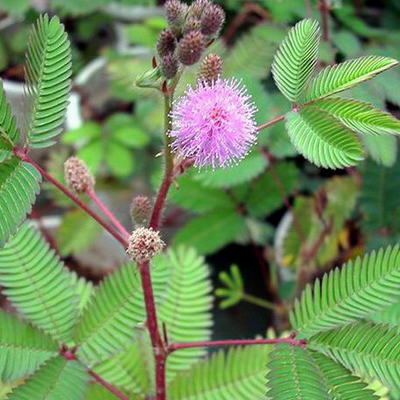
Why mimosa does not bloom:
The usual reason a mimosa does not bloom is that its light requirements have not been met. So it is best to give it a fixed amount of light every day, as this is what allows it to bloom.
What to do if the mimosa withers:
A mimosa in winter is naturally going to wither, but if it is kept indoors it may also survive, so when keeping it indoors, place it often in a spot with light, then water and fertilize it, and most importantly keep the temperature above 10°C.
That is all for the reasons why mimosa does not bloom; withering in winter is normal.
Does Mimosa Bloom? What Season (Which Month) Does Mimosa Bloom?
Judging by its name, mimosa is very much like a young girl just awakening to love: not only shy and unable to bear being touched, but also very green, and if you get too close it can easily cause some harm. Yet a young girl also has her own unique charm, so does mimosa also bloom in the wind like a young girl?
Does mimosa bloom?
Does mimosa bloom? You should know that mimosa usually blooms in midsummer; among the green grass, its pale purple-pink flowers, downy and soft, look especially shy and delicate, and its slender branches and leaves set off the full, round blossoms to make them even more charming and vivid.
What season does mimosa bloom?
The flowering period of mimosa is between July and October; it takes about 5 days from bud to bloom, and after flowering it forms pods in autumn, which contain seeds that fall off at the joints when ripe.
How to grow mimosa
1. Do not water mimosa before the seedlings emerge; cover with plastic film to keep it warm and moist. If the temperature inside the pot is too high, use a reed curtain as shade to moderate the temperature of the seedbed.
2. Once all the mimosa sprouts have emerged, if no wilting or withering has occurred, try not to water again in order to harden the seedlings and prevent leggy growth of the mimosa's leaves and stems.
3. If the mimosa's potting soil is too dry and needs watering, it is best to choose the time after sunset, using a watering can to sprinkle water. When watering, wet and soak the mimosa's growing medium thoroughly. Do not water at noon when the light is ample and the sun is strong. Water mimosa once each morning and evening, keeping to a certain amount each time; do not water too much, and do not let the potting soil dry out. It is best to sprinkle water from above the mimosa.
4. When lifting the mimosa seedlings, thin them twice so that each seedling is about 4-5 cm apart; when the sprouts have grown to more than about 8-10 cm, move them out of the pot and place them in the open ground to continue growing, or move them into new flower pots for final planting.
5. Mimosa actually has fairly strong vitality and needs watering every day, but does not need fertilizing; after about three months of watering, the seedlings will grow up and bloom and bear fruit, so do not rush the growing process.
6. During growing, watch out for the troubles of various pests and diseases, and try not to use pesticides on mimosa.
Is mimosa toxic?
The whole mimosa plant is mildly toxic, but it does not have much effect on people. The mimosa herb contains a substance called mimosine, which is somewhat harmful to the human body; if you come into contact with mimosa often, it can cause numbness and tingling in the eyebrows, yellowing of the hair, and even hair loss. So it is best not to take mimosa internally and not to come into contact with it for long periods; short-term contact is not very harmful as long as you do not eat it.
Therefore, try not to put mimosa in the bedroom. Mimosa generally does not harm the human body during the day, but at night, since it cannot carry out photosynthesis, it releases toxic substances. In other words, mimosa is actually toxic, so it is recommended to keep mimosa outside on the balcony as much as possible rather than indoors, to avoid harm to the body. At the same time, growing it on the balcony and adding pink mohair pom-poms as decoration makes it even more fun; it is now mostly grown as an ornamental plant for home courtyards.
Mimosa does bloom, but after blooming the mimosa is still shy. It is like a young girl's cheeks flushing red. So mimosa is, in most people's eyes, a very interesting plant, but the editor here suggests that you had best not come into contact with mimosa too frequently.
Does Mimosa Bloom? How to Grow Mimosa? How Long Can Mimosa Be Kept?
Mimosa is a highly ornamental plant, and very interesting too. Moreover, it is easy to plant and suitable for the balcony, or indoors as a potted flower. Because of its tenacious vitality, in the past many countries treated mimosa as a weed. Today we are going to learn: Does mimosa bloom? How long can mimosa be kept? How to grow mimosa? Let's take a look together. How much is bluestone per square meterMimosa introduction:
Mimosa is a perennial herb or subshrub of the Fabaceae family. Because its leaves respond to heat and light and close immediately when touched by an external force, it is named mimosa. It originated in the tropical regions of South America, likes warmth and moisture, and has no strict soil requirements. The flowers are pink and shaped like fluffy balls, lovely and appealing. After flowering it forms pods, and the fruit is flat and round. The leaves are feather-like compound leaves arranged alternately, in a palmate arrangement. The flowers, leaves and pods of mimosa all have good ornamental value, and it is relatively easy to keep alive, suitable as a potted flower for the balcony or indoors, and can also be planted in courtyards and other places. Unlike ordinary plants, when mimosa is touched by the outside world, its leaf stalk droops and its leaflets close; this action is understood by people as "shyness," hence the names mimosa, zhixiu cao and pa chou cao.
Does mimosa bloomMimosa does bloom; the flowers are a pale purple-pink and downy. The flowering period of mimosa is between July and October; from bud to bloom takes about 5 days, and after flowering it forms pods in autumn, which contain seeds that fall off at the joints when ripe.
Mimosa not only blooms, it also has many uses.
1. Mimosa can forecast the weather. Mimosa is a wonderful plant that can foretell changes between sunny and rainy weather. If you touch it with your hand and its leaves close very quickly, but open slowly, this means the weather will turn clear; if when you touch the mimosa its leaves contract slowly and droop sluggishly, or even close a little and then reopen, this means the weather will turn from clear to overcast or that it is about to rain.
2. It can also predict earthquakes. Several hours before a strong earthquake occurs, mimosa leaves, which are sensitive to external touch, will suddenly shrivel and then wither. In earthquake-prone Japan, scientists have found through research that under normal conditions, mimosa leaves open during the day and close at night. If mimosa leaves show the abnormal phenomenon of closing during the day and opening at night, this is a precursor to an earthquake.
3. It has a special ornamental use. The mimosa plant has a loose form, and its feathery leaves are slender and elegant; its leaves close as soon as they are touched. The mimosa has many flowers and is delicate and lovely, giving people an impression of frail refinement. It can be planted in the ground at a courtyard wall corner, or potted on a windowsill or desk. When giving it as a gift, gently cover the pot with pink gauze and tie on a pink ribbon bow. If you can also add pink mohair pom-poms as decoration, it will be even more fun.
4. Mimosa's medicinal value is also considerable. Mimosa is also a medicine. Collect it in summer and autumn, remove weeds, wash it, cut it into sections, and dry it in the sun or use it fresh. Soaking the mimosa root in liquor and taking it, or decocting it together with liquor, can treat rheumatic pain, neurasthenia, insomnia, and so on; stewing and eating it with lean pork can treat hot, swollen and painful eyes, hepatitis and nephritis; the fresh leaves, pounded into a paste, can be applied to treat swelling and pain and shingles, and have quite a good effect of relieving pain and reducing swelling, clearing heat and promoting urination, resolving phlegm and relieving cough, calming the nerves and relieving pain, detoxifying, dispersing blood stasis, stopping bleeding, and astringing; used for colds, high fever in children, acute conjunctivitis, bronchitis, gastritis, enteritis, urinary stones, malaria, and neurasthenia; applied externally to treat bruises and swelling, sores and swellings, hemoptysis, and shingles.
How to grow mimosaHow to grow mimosa, part one
It needs frequent watering. Mimosa is originally a tropical plant and likes a moist environment, so the potting soil should often be kept moist. In summer, water according to the condition of the potting soil, about once a day; do not let the soil dry out, and you can often spray water on the plant. In winter, to prevent cold damage, reduce the amount of watering.
How to grow mimosa, part two
Choose fertile, loose soil. Mimosa has low soil requirements; ordinary garden soil will do, but if you want the mimosa to grow better, choose relatively loose and fertile soil; you can mix leaf mold and sandy soil, or use only leaf mold; humus soil is also a good choice.
How to grow mimosa, part three
Ensure sufficient sunlight. Mimosa likes sunlight, so it is best to place it on a sunny balcony or by a window; full exposure to sunlight is good for mimosa's growth, whereas too little sunlight may hinder its growth.
How to grow mimosa, part fourPrevent cold damage. Mimosa is suited to growing in a warm environment, with 20°C to 28°C being suitable; if the temperature is too low it stops growing. In winter, because the temperature is too low, water less to avoid cold damage to the roots and stems; watering should be chosen at the time of day when the temperature is higher. If the temperature is below 10°C, it is best to give some protective measures.
How to grow mimosa, part five
Prevent pests and diseases. Mimosa generally has very few pests and diseases; the most common pest is the slug. If found, you can sprinkle some lime powder to control it. If the plant is not growing well, check whether the light source is insufficient or the water is not enough.
How to grow mimosa, part six
Fertilize according to your own situation. Mimosa only needs fertilizing once a month, but some people think that a potted mimosa that grows too large is not attractive; those who think this way should not fertilize it.
How long can mimosa be keptHow long mimosa can be kept depends on the person; if you are an expert grower, keeping it for several decades is possible; if you are a novice at growing mimosa, then it is hard to say. After the above learning, do you not think mimosa is very easy to grow? Mimosa is actually very easy to grow; it has no strict requirements for climate, sunlight or soil, but fertile, loose sandy loam is best, and it likes a warm, moist environment. Good luck.
The above is Shengduoduo Decoration Network's editor's introduction to whether mimosa blooms, how to grow mimosa, and how long mimosa can be kept; I hope it can be of help to you. Want to learn more about decoration? Come to Shengduoduo Decoration Network to find it; there is plenty of decoration experience, decoration prices and basic knowledge about decorating a new home, which will surely meet your needs.