How to grow globe amaranth? Detailed guide to growing it from seed
Globe amaranth blooms in summer, for roughly a little over three months, so how do you grow globe amaranth? How do you plant globe amaranth seeds?
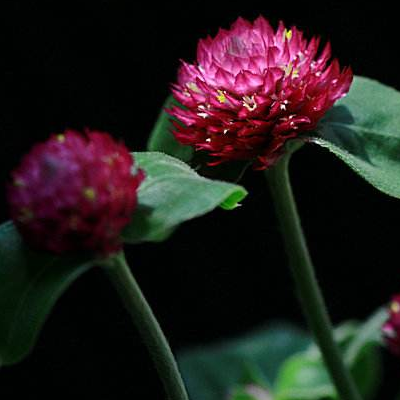
How to grow globe amaranth:
1. Light requirements
Globe amaranth likes a sunny environment; during care, make sure it gets no less than 4 hours of direct sunlight per day. The growing spot must not be too shady, otherwise the plant grows slowly and the flower color is dull. If the globe amaranth seedlings happen to hit a cloudy day, you can supplement light with a fluorescent lamp.
2. Water and fertilizer requirements
Globe amaranth likes slightly moist, on the dry side soil conditions and is fairly drought tolerant; when watering, err on the side of dry rather than waterlogged. During the seedling growth stage, especially when it is growing leaves, control watering appropriately; after flower bud differentiation you can increase watering appropriately to ensure normal flower growth.
Globe amaranth likes fertilizer. Besides adding sufficient base fertilizer to the soil at planting time, during the vigorous growth period apply a phosphorus-potassium fertilizer once every half month; this not only promotes plant growth but also boosts resistance and reduces disease infection.
3. Shaping and pruning
Globe amaranth grows quickly. When the seedlings reach 15 cm, pinch once to encourage branching. After that, decide whether to pinch a second time based on the plant's growth, to control plant shape and blooming period. In addition, during growth promptly cut off yellowing and wilting leaves, and thin out branches and leaves appropriately to keep the plant shape attractive.
4. Blooming period management
After it blooms, this is the stage people easily overlook. Mainly keep the potting soil slightly moist; when watering, do not water from top down, to avoid getting water on the flowers. Stop fertilizing during the blooming period and ensure sufficient light. After blooming, promptly cut off the flower stems to encourage new shoots and flowers.
5. Pest and disease control
Globe amaranth often yellows due to Rhizoctonia damping-off, so prevention must be done well; disinfect promptly before planting, and when disease occurs drench the roots with a fungicide.
How to plant globe amaranth seeds:
1. Sowing time
Globe amaranth is usually harvested for seed in September to October, sown in April to May, and planted out in June. The seedlings grow slowly. In spring, sow in April to May in an open-air seedbed. The suitable sowing temperature is 20 to 25°C.
2. Seed treatment
Because globe amaranth seeds are covered with fuzz, they emerge slowly. To speed up emergence, treat the seeds before sowing: soak them in warm water for one day or in cold water for two days, then squeeze out the water, let them dry slightly, and mix with plant ash or fine sand at 2 to 3 times the amount of the seeds, so they separate easily for sowing.
3. Sowing method
Globe amaranth seeds are fairly large, about 400 seeds per gram. You can use an ordinary sowing bed; choose a sandy loam plot with sufficient sunlight, a high water table, good drainage, and loose, fertile soil as the seedbed.
4. After-sowing management
After sowing globe amaranth, cover lightly with soil and keep the temperature at 20 to 25°C; seedlings emerge in about 10 to 15 days. Once the seedlings are all up, thin them once so they have some space to grow and do not shade each other; after thinning, water with 1000 times diluted urea solution, and after fertilizing promptly spray the leaves to prevent the fertilizer from burning the seedlings.
Well, that is all for the introduction to globe amaranth. Friends, you all understand it clearly now, and know how to plant it, right.
Globe amaranth origin, how to grow globe amaranth
Globe amaranth, also known as thousand-year red, fireball flower, and red fireball, comes in purple, pink, and white, and is an herbaceous flowering plant. Globe amaranth's flowering season is summer, with a blooming period from July to September; this plant has a very long ornamental period, so it is very popular. It is an annual herbaceous plant, with a plant height of 45--60 cm; flower colors are divided into white, purple, and red, and the blooming period is August--October. So, where is globe amaranth's origin?
I. Globe amaranth origin
Annual herb, 20--60 cm tall. The whole plant is densely covered with white long hairs. Stem erect, branched, nearly four-angled, with grooves, nodes swollen, tinged purplish red. Leaves simple, opposite; petiole 1--1.3 cm long, upper leaves almost sessile, with gray long soft hairs; leaf blade oblong to elliptic, 5--10 cm long, 2--4 cm wide, apex obtuse and pointed, base cuneate, with small spots on both surfaces, margin wavy. Head inflorescence spherical or oblong, usually solitary at the top of branches, sometimes 2--3 inflorescences borne together, often purplish red, sometimes light purple or white; involucre 2, leaf-like; at the base of each flower there is 1 dry membranous ovate bract and 2 triangular-lanceolate bracteoles, purplish red, with obvious fine serrations on the dorsal keel; tepals lanceolate, densely covered with white cottony hairs on the outside; filaments united into a tube, with 5 lobes at the apex; stigma 2, forked. Utricle nearly spherical. Seeds kidney-shaped, brown, shiny. Flowering and fruiting period June--September.
Globe amaranth is a common flower in tropical and subtropical regions, also known as yuanzai flower, hundred-day red, and fireball flower. So where is globe amaranth's origin? Globe amaranth's origin is related to its habits. Globe amaranth likes sunlight, is robust by nature, matures early, tolerates dry heat and drought, and is not cold hardy; it prefers loose, fertile soil, and its blooming period is July--October. At present there are many places of origin for globe amaranth; it originated in tropical America in Brazil, Panama, and Guatemala, and is now widely cultivated south of the Yangtze River in China, and has also escaped into a semi-wild state.
II. Side effects of globe amaranth
The fruit of globe amaranth, white flat seed, contains safflower seed oil, which can lower cholesterol and high blood lipids; soften and dilate blood vessels, prevent aging, and regulate the endocrine system; it is also an excellent-flavored herbal tea. Globe amaranth can be used as medicine; it can clear the lungs, remove phlegm, and relieve asthma, and has a therapeutic effect on lung diseases and respiratory diseases.
Although globe amaranth is a medicinal Chinese herbal material, it will more or less cause some uncomfortable reactions, but there is nothing serious. The gomphrenin in globe amaranth will make people without asthma feel drowsy after drinking it. People without asthma will feel a bit numb and sluggish after drinking it. So generally, people without asthma should not consume too much.
Globe amaranth flower tea is also not suitable to be consumed together with other flower teas. When using globe amaranth injections, pay attention to reactions such as increased heart rate and fainting during injection.
III. How to grow globe amaranth
Globe amaranth originates in China and India; it likes sunlight and a hot, dry climate, and is suitable for growing in loose, fertile, well-drained soil. Globe amaranth seedlings are fairly sturdy; they can be transplanted once before potting up, or sown directly in plug trays, then potted up 4--6 weeks after emergence. The potting soil should be mainly peat; completely using a soilless medium is also feasible.
Globe amaranth is a sun-loving flower, but at the seedling stage it should not be exposed to direct sunlight; 2--3 weeks after potting up it can grow in a sunny environment. During cultivation, be careful to maintain sufficient spacing between plants and rows, otherwise, due to crowding and lack of light, the plant shape will be poor. Globe amaranth grows vigorously; generally apply dilute liquid fertilizer once to twice at the seedling stage, and during the growth period do not water or fertilize too much, otherwise the stems and leaves will grow excessively and flowers will be sparse.
Globe amaranth is suitable for loose, fertile soil and likes sufficient sunlight and a hot, dry climate. Its blooming period is very long, from June all the way until before the frost in November; after blooming, the flowers dry but do not fall, and successive inflorescences cluster on one plant, lush and full of variety. Globe amaranth has strong branching ability; to dwarf the plant and encourage more branches and flowers, pinch the growing tips several times during the seedling stage, that is, each time keep two pairs of new leaves and pinch off the growing tip; when pinching, pay attention to shaping the plant into a neat and attractive form. The planting distance for globe amaranth seedlings is about 40 cm; in the early stage, water appropriately and hoe and weed 1--2 times. After frost, pull out all the plants, select mature inflorescences, dry them, and rub out the densely fuzzy seeds.
Globe amaranth is not strict about environmental requirements, but by nature it likes sunlight and a hot, dry climate, and is suitable for growing in loose, fertile, well-drained soil. Globe amaranth is propagated by seed; harvest seed in September--October, sow in April--May, and plant out in June. The seed is a brittle fruit with the perianth attached, and the surface is hairy. Soaking the seeds in cold water for 1--2 days before sowing can increase the emergence rate. Let the soaked seeds dry slightly, mix with plant ash, and then sow. After the seeds germinate, pinch and prune the seedlings several times during the seedling stage, which can encourage more branching and more flowers and dwarf the plant. Then select plants with short, dense internodes to cultivate, in order to maintain a superior variety. During the growth period, fertilize and water appropriately, and pay attention to hoeing and weeding and draining waterlogging in the rainy season.
Finally, few flowers can bloom for a hundred days before fading; the long blooming period shows the uniqueness of globe amaranth, thus giving it the flower language of immortality. Globe amaranth tastes sweet and bitter; its fruit, white flat seed, has good medicinal value and can relieve cough and asthma. But medicine always has some toxicity, so it should still be used with caution.
Globe amaranth, Globe amaranth illustrated guide: how to grow globe amaranth / how to propagate globe amaranth
Globe amaranth profileGlobe amaranth
Globe amaranth cultivation methods and precautions, introduction to globe amaranth
Globe amaranth, Caryophyllales, Amaranthaceae, Gomphrena genus, also known as yuanzai flower, hundred-day red, and fireball flower, is a common flower in tropical and subtropical regions. It originated in Brazil, Panama, and Guatemala in the Americas, and is widely cultivated south of the Yangtze River in China. Globe amaranth is an annual erect herb, about 20 to 60 cm tall, with white stiff hairs all over. Its blooming period is July to October; the flowers are purplish red, arranged in terminal spherical head inflorescences; the bracts are mostly purplish red. As a medicinal plant, globe amaranth has the effect of relieving cough and asthma.
Globe amaranth's other names are hundred-day red, thousand-gold red, hundred-day white, thousand-day white, thousand-year red, Luzon chrysanthemum, rolling-water flower, boiling-water chrysanthemum, long-life flower, and dragonfly red. It is an annual flower of the Amaranthaceae family, Gomphrena genus. It originated in tropical America in Brazil, Panama, and Guatemala. It can be used in flower beds and flower borders, and is also a natural dried flower. The inflorescence can be used as medicine to remove phlegm, and is used to relieve cough and asthma, calm the liver, and improve eyesight. It symbolizes eternal love and immortal romance.
Morphological characteristics of globe amaranth
Annual herb, 30--60 cm tall; stem erect, branched, round, slightly ribbed, hairless or hairy when young, nodes obvious. Leaves papery, narrowly elliptic or nearly oblong-obovate or narrowly lanceolate, 3--8 (13) cm long, 9--40 mm wide, apex acute or obtuse-rounded, with a mucro, base gradually narrowed, with appressed long soft hairs and marginal hairs on both surfaces; petiole 1.5 cm long, with appressed soft hairs. Head inflorescence terminal, many-flowered, densely clustered, 3--2 cm in diameter, often pale red, sometimes light purple or white or red; bracteoles triangular-lanceolate, 1 cm long, concave on the inner side, boat-shaped, apex gradually pointed, densely white cottony hairy on the outside; stamens 5, filaments united into a tube, with 5 shallow lobes at the apex; style linear, shorter than the stamen tube, stigma 2, forked. Utricle nearly spherical; seeds kidney-shaped, brown, shiny.
Annual erect herb, about 15 to 60 cm tall; stem erect, upper part much branched. The whole plant is covered with white stiff hairs. Leaves opposite, papery, elliptic to obovate, 5 to 10 cm long, apex obtuse or nearly shortly pointed, base gradually narrowed; petiole short or upper leaves nearly sessile. Head inflorescence spherical, 1 to 3 borne at the top of branches, with a long peduncle, flowers small and densely clustered, membranous bracts glossy, not fading after drying, color not fading. Flowers open in summer and autumn, purplish red, arranged in terminal, spherical or elliptic-spherical head inflorescences 1.5 to 3 cm long; bracts and bracteoles purplish red, pink, milky white, or white, bracteoles about 7 mm long, with small teeth on the dorsal rib; sepals 5, about 5 mm long, not becoming hard after flowering; stamens 5, filaments united into a tube, apex 5-lobed, lobes obcordate, anthers borne in the notches of the lobes, linear, 1-loculed. Utricle indehiscent.
It is a common flower in tropical and subtropical regions, originating in tropical America in Brazil, Panama, and Guatemala; it is widely cultivated south of the Yangtze River in China, and has also escaped into a semi-wild state. Its blooming period is July to October. Harvest when the flowers open in summer and autumn, and dry in the sun. The inflorescence is nearly spherical, formed by many densely clustered small flowers. At the base there are often 2 leaf-like involucral bracts, green, densely covered with fine long soft hairs on the lower surface; at the base of the small flowers there are 3 bracteoles, the outer whorl 1 ovate, the inner whorl 2 triangular-lanceolate, purplish red; tepals 5, purplish red, densely covered with white fine long soft hairs on the outside; stamens 5, filaments united into a tube; ovary ovoid, stigma 2-lobed. Utricle nearly spherical. Slight odor, mild taste.
Ecological habits of globe amaranth
Likes sunlight, tolerates dry heat, is not cold hardy, and prefers loose, fertile, neutral soil.
Cultivation techniques for globe amaranth
Globe amaranth is not strict about environmental requirements, but by nature it likes sunlight and a hot, dry climate, and is suitable for growing in loose, fertile, well-drained soil. The seedlings are fairly sturdy; when sowing, use a relatively dense seedling tray, and they can be transplanted once before potting up, or sown directly in plug trays and potted up 4 to 6 weeks after emergence. Use pots 10 to 14 cm in diameter. The potting soil should be mainly peat; the proportion of garden soil should preferably be less than 15%; completely using a soilless medium is also feasible.
Globe amaranth is a sun-loving flower; except at the seedling stage, it should not be exposed to direct sunlight, and 2 to 3 weeks after potting up it can grow in a sunny environment. Sufficient light helps form a rounded, low plant shape; during cultivation, be sure to maintain sufficient spacing between plants and rows, so they do not crowd each other and lack light, resulting in a poor plant shape.
It likes warmth, tolerates sunlight, is robust by nature, and is suitable for growing in loose, fertile, well-drained soil. Globe amaranth grows vigorously and is not strict about fertilizer, water, or soil, and is simple to manage. Generally apply dilute liquid fertilizer once to twice at the seedling stage; during the growth period do not water or fertilize too much, otherwise the stems and leaves will grow excessively and flowers will be sparse. Globe amaranth grows in the warm season, and should not be fertilized much. Generally apply a light fertilizer once every 8 to 0 days, together with watering, adding 1 gram of fertilizer per liter of water; a compound fertilizer with N-P-K-mg of 1.0-0.5-2.0-0.3 is best; the soil pH value is 6.0, and the EC value should be controlled at 0.8 to 1.2. In the later growth stage of the plant, the phosphorus and potassium content can be increased, and the EC value can also be slightly higher, at 1.6. During the growth period, water and hoe at the right time to keep the soil moist. In the rainy season, drain waterlogging promptly. During the blooming period, apply a liquid fertilizer rich in phosphorus and potassium 2 to 3 more times, and then the flowers will be abundant and the leaves lush, brilliant and full of variety. After the spent flowers fade, do not let it set seed; you can prune and shape it, and it will still sprout new branches and bloom again in late autumn.
Globe amaranth's branches grow from the leaf axils. To encourage a low plant with more branches and flowers, pinch the growing tips several times during the seedling stage.
The core of globe amaranth cultivation management is to develop a good plant shape; this goal is best achieved by maintaining sufficient sunlight, using a dwarfing agent, and negative DIF values (day temperature minus night temperature value of 2 to 3°C) and other measures.
This flower tolerates heat but not cold, and cannot withstand frost.
Potted globe amaranth should be kept moist after potting up, and shaded. During the growth period, fertilize together with watering. This flower is not strict about fertilizer, water, or soil, and can be managed relatively extensively. After the spent flowers fade, prune and shape it, and it will still sprout new branches and bloom again in late autumn, but it needs more light fertilizer.
Globe amaranth originated in China and India. It is not strict about environmental requirements, but by nature it likes sunlight and a hot, dry climate, and is suitable for growing in loose, fertile, well-drained soil.
Variety classification of globe amaranth
Good Brothers series
Needs covering when sowing; the seed germination temperature is 25°C, and the number of days needed for germination is 10 to 14 days. Growth requires full sun. An extremely dwarf variety, 15 cm tall, with a compact, tufted plant shape, high branching, robust growth, heat and drought tolerant, many-flowered, purplish red.
Dwarf series
Needs covering when sowing; the seed germination temperature is 21 to 24°C, and the number of days needed for germination is 10 to 14 days. Growth requires full sun. Plant height 15 cm, flower diameter 2 cm, optimum growth temperature 15 to 30°C, blooms 9 to 12 weeks after sowing, can still maintain plant shape and flower color under drought and high temperature, and the blooming period lasts until the frost period.
Distribution area of globe amaranth
A common flower in tropical and subtropical regions, originating in tropical America in Brazil, Panama, and Guatemala; it is widely cultivated south of the Yangtze River in China, and has also escaped into a semi-wild state.
Propagation method of globe amaranth: seed propagation
Spring sowing. Sow in March to April in an open-air seedbed. Before sowing, first carry out seed soaking: soak the seeds in cold water for 1 to 2 days, take them out, squeeze out the water, mix with plant ash or fine sand, then rub the seeds apart before sowing. At a temperature of 20°C to 25°C, seedlings emerge about 10 to 14 days after sowing. Dwarf varieties have a low germination rate. The optimum growth temperature is 15 to 30°C, and they bloom 9 to 10 weeks after emergence. When the seedlings have 2 to 3 true leaves, transplant once, and in early to mid-June they can be planted out in flower beds at a spacing of 30 cm; if grown in pots, they can be potted up in the early bud stage. Globe amaranth grows vigorously and is not strict about fertilizer, water, or soil, and is simple to manage. Generally apply dilute liquid fertilizer once to twice at the seedling stage, and apply a liquid fertilizer rich in phosphorus and potassium 2 to 3 more times during the blooming period, and then the flowers will be abundant and the leaves lush, brilliant and full of variety. During the seedling stage, pinch the growing tips several times, that is, each time keep two pairs of new leaves and pinch off the growing tip, but when pinching, take care to keep the plant shape neat and attractive. After the spent flowers fade, do not let it set seed; you can prune and shape it, and it will still sprout new branches and bloom again in late autumn, but it needs more light fertilizer.
Globe amaranth is mainly propagated by sowing: sow in April to May in an open-air seedbed. If sown in March to early April, because the temperature is not high, germination is poor and growth is slower; the germination temperature is 16°C to 25°C, and germination occurs 7 to 10 days after sowing. The seedlings grow slowly at first, then grow faster after June. When the seedlings have 3 pairs of true leaves, transplant them, and after mid-June plant them out in the open at a spacing of generally 30 cm. For pot cultivation, they can be potted up when 3 pairs of true leaves have grown, into pots 10 cm in diameter, and later transferred to pots 16 cm to 20 cm in diameter.
Globe amaranth seeds germinate rather difficultly; soak the seeds in warm water for half a day, then sow, and keep the growing medium moist, and they can germinate earlier.
Although globe amaranth grows robustly, to make the flower color bright, care should include frequent loosening of the soil and weeding; during the growth period apply decomposed cake fertilizer water once every 10 days, with a fertilizer-to-water ratio of 20%; in dry summer days pay attention to watering against drought; when there are many showers, prevent water accumulation in the planting site and in pots; during the blooming period, promptly trim away spent flowers and withered branches to keep the plant neat and fresh.
When collecting seed from globe amaranth, select plants with short internodes and dense growth; generally, plants with slender internodes often have a poor and unattractive plant shape. Because its blooming period is long, it can be harvested in batches; after drying slightly, thresh the seeds, store them in a cool, dry place, and sow the following spring. [2]
Cutting propagation
1. Cuttings
In June to July, cut healthy shoot tips about 4 to 6 cm long, that is, with 3 to 4 nodes being suitable. Cut off the leaves on the internodes that will be inserted into the soil layer to reduce water evaporation from the leaf surface. Insert into a sand bed, keep the temperature at 20°C to 25°C, and 18 to 20 days after insertion they can be transplanted and potted up. If the temperature is below 20°C, the number of days to rooting will be delayed by 5 to 7 days. If cuttings are treated with the rooting agent "Root Sun", the rooting effect will be about 10 to 12 days faster.
From the table above it can be seen that treating cuttings with the rooting agent "Root Sun" has a remarkable effect; 7 to 8 days after insertion they can be transplanted. Cuttings not treated with any agent need about 18 to 21 days after insertion before they can be transplanted. So in recent years the author has used "Root Sun" for cutting propagation; the seedling stage is short, which can greatly save manpower and material resources, and the survival rate can reach over 95%.
2. Management after insertion
①. Moisture
Before inserting the cuttings, first water the seedbed thoroughly, in order to avoid damaging the cuttings and increase the survival rate. When inserting, the cutting depth should not be too deep; one internode into the soil is enough. After insertion, water thoroughly promptly so the cuttings fit closely with the soil, and thereafter water normally to keep the soil moist, or spray 1 to 2 times a day, each spray for 1 to 2 minutes, or spray once a day.
②. Light
The seedbed should be set up in a covered place; in summer the shading rate should reach 80% to 90%, and in spring and autumn a shading rate of about 70% to 80% is enough.
③. Temperature
The optimum temperature for rooting of cuttings is 20°C-25°C. When the temperature is below 18°C, rooting is affected to a certain extent and the survival rate is low. When the temperature is below 10°C, the cuttings
will suffer cold damage; if you want to propagate by cuttings, you must have greenhouse facilities.
3. Management after transplanting and potting up
Transplanting
When the root system of the cuttings grows to 0.5 to 1.0 cm, they can be transplanted and potted up. If potted up too late, the seedlings will grow weakly in the nutrient-free sand, affecting later growth and development. When the sown seedlings grow 3 to 4 true leaves, they can be transplanted and potted up. For pot selection, clay pots should be chosen, as clay pots drain better than plastic pots. Generally use
6 to 7 inch clay pots for planting, with 3 plants per pot. Because globe amaranth is not strict about environmental requirements, but by nature likes sunlight and a hot, dry climate, and is also relatively sensitive to water and fertilizer, in cultivation management you should do a good job with watering, fertilizing, pinching, and light and temperature based on its growth characteristics. Watering: water at the right time, in the right amount, and reasonably, according to changes in the weather; generally water less or not at all on cloudy and rainy days, water more when the temperature is high and evaporation is large, and less otherwise; when watering, water thoroughly, and usually check whether there is 1.0% compound fertilizer in the pot. After fertilizing, immediately sprinkle water lightly on the leaf surface to avoid fertilizer damaging the leaves. During the growth period, apply less nitrogen fertilizer and more fertilizer based mainly on phosphorus and potassium, such as chicken manure, peanut bran, and similar fertilizers. When fertilizing, be careful not to apply too much; too much easily burns the roots and causes the plant to die. At the same time, each fertilization should wait until the potting soil is dry or the soil is loosened, and after application promptly spray water to prevent the fertilizer from burning the leaves and causing the leaves to turn yellow and rot.
Pinching
When the globe amaranth seedlings grow to 10 to 12 cm tall, the first pinching can be carried out; at the first pinching, keep 1 to 2 nodes on the main stem. Later, when three pairs of true leaves have grown, pinch a second time. The purpose of pinching is to encourage more branching and effectively control plant height and shape, so it grows stocky.
Light
Globe amaranth is a sun-loving flower; except at the seedling stage, it should not be exposed to direct sunlight, and one week after potting up it can grow in a sunny environment. Sufficient light helps form a rounded, low plant shape; during cultivation, be sure to maintain sufficient spacing between plants and rows, so they do not crowd each other and lack light, resulting in a poor plant shape.
Temperature
After the seedlings germinate, they can continue to grow at a temperature of 20°C or above. Globe amaranth is a high-temperature-tolerant species, suitable for spring sowing and autumn flowering, but it is not cold hardy, so autumn sowing is generally not used; otherwise, heating in winter would make the cultivation cost very high.
Pest and disease control of globe amaranth: globe amaranth leaf spot
[Symptoms]The disease spots on the leaf surface are nearly circular, with diameters of 2 mm to 6 mm, 7 mm, and so on, grayish brown to grayish white, with a darker edge forming a purplish brown halo ring. Spots at the leaf tip or leaf margin are semi-circular to irregular, dirty brown to grayish brown, larger than the round spots, and the spot surface easily ruptures and falls off.
[Control methods]
① Collect diseased residues and burn them.
② Apply more phosphorus and potassium fertilizer; do not apply only or excessive nitrogen fertilizer.
③ Spray promptly at the early stage of disease to control it. In addition to referring to the control of Pentas leaf spot for medication, you can also spray 15% imibenconazole (also called Meiningling) wettable powder 2500 times solution, or 25% myclobutanil emulsifiable concentrate 8000 times solution 2 to 3 times, once every 15 days.
Damping-off
Can be sprayed with 50% wettable thiophanate-methyl or 50% carbendazim 800 to 1000 times solution.
Globe amaranth viral disease
Symptoms: At first it damages the mosaic, gradually worsening, forming nearly circular necrotic spots, leaves yellowing and falling off early.
Disease pattern: The globe amaranth virus is transmitted by sap. Besides damaging globe amaranth, it also damages Nicotiana glutinosa; Cleveland tobacco, datura, zinnia, and Chenopodium quinoa and other plants.
Control methods: Pay attention to both insect prevention and sap transmission of the virus.
Pests
Aphids: for aphids, spray with 800 times solution of Supracide.
Food therapy or medicinal value of globe amaranth
The medical information and health food therapy information on Hugarden is for reference only and cannot be used as a basis for diagnosis or medical treatment. Any health problem should be consulted with professional medical personnel, and the treatment of any disease should follow a doctor's advice.
Ultimate flower-protecting mission: Love yourself, start from reality, and strictly follow a doctor's advice. Toward illness, do not be careless, do not delay, do not give up hope; face it bravely, use love to warm the silent world, and use your heart to care for the flower field within.
Medicinal value
[Other names]Hundred-day red, thousand-gold red, hundred-day white (Chinese Medicinal Plant Journal), thousand-day white, thousand-year red (Jiangsu Medicinal Plant Journal), Luzon chrysanthemum (Luchuan Materia Medica), fresh-water flower (Nanning City Drug Journal), boiling-water chrysanthemum (Guangxi Chinese Medicine Journal), long-life flower (Shanghai Common Chinese Herbal Medicine), dragonfly red, spherical cockscomb (Fujian Chinese Herbal Medicine).
[Collection]Harvest from July to September, dry in the sun. Harvesting and processing: In summer and autumn, harvest the inflorescence when the flowers open, and dry in the sun.
1. Medicinal material properties
This product is spherical or elliptic-spherical, 1.5 to 2 cm in diameter, formed by many densely clustered small flowers; at the base there are often 2 leaf-like involucral bracts; at the base of the flowers there are 3 membranous bracteoles, the outer whorl one, ovate, the inner whorl two, triangular-lanceolate, purplish red; sepals 5, with fine serrations on the dorsal keel, densely covered with white long soft hairs on the outside. Utricle nearly spherical. Slight odor, mild taste. Those with large inflorescences and purplish red color are better.
2. Nature, flavor, and functions
① Fujian Folk Herbal Medicine: "Sweet, neutral."
② "Medicinal Materia Medica": "Sweet and bland, neutral, with a slightly salty taste."
Sweet, neutral. Resolves phlegm, calms wheezing. Used for chronic bronchitis and asthmatic chronic bronchitis. Usual dosage 5-10 grams.
Clears the liver, dissipates nodules, stops cough and calms wheezing.
Treats head wind, eye pain, wheezing and cough, dysentery, whooping cough, infantile convulsions, scrofula, and sores and ulcers.
Used for chronic or asthmatic bronchitis and whooping cough.
Treats early-stage scrofula, liver-heat eye pain, and high blood pressure headache.
Treats whooping cough; used externally for sores, ulcers, swelling and pain.
Folk remedy for irregular menstruation.
The whole plant is decocted in water for external washing, to treat traumatic injuries, sores and boils.
Clears the liver, dissipates nodules, stops cough and calms wheezing. Treats head wind, eye pain, wheezing and cough, dysentery, whooping cough, infantile convulsions, scrofula, and sores and ulcers. Used for chronic or asthmatic bronchitis and whooping cough.
① "Fujian Folk Herbal Medicine": "Dispels wind, calms the liver, reduces fever, and improves eyesight."
② "Nanning City Drug Record": "Clears the liver and improves eyesight, dissipates nodules and reduces goiter. Treats early-stage scrofula, liver-heat eye pain, and high blood pressure headache."
③ "Guangxi Traditional Chinese Medicine Record": "Inflorescence: cools the blood and reduces swelling, stops spasmodic cough. Treats whooping cough; used externally for sores, ulcers, swelling and pain. Folk remedy for irregular menstruation. The whole plant is decocted in water for external washing, to treat traumatic injuries, sores and boils."
④. Treatment of chronic bronchitis
Two types of injection, 100% and 200%, were made from the whole herb of Globe Amaranth, given by intramuscular injection once daily, 2 milliliters each time, with 10 days as one course of treatment and a 5-day interval between courses. Clinically, 120 cases were observed with the 200% injection; the total effective rate over five courses was 93.3%, and the near-control rate was 68.8%. With the 100% injection, 125 cases were observed; the total effective rate over four courses was 73.6%, and the near-control rate was 11.2%. In both groups, the efficacy was higher in the simple type and the phlegm-dampness type, as well as in those with mild disease and short duration. Among these, the 200% injection had a good effect on cough, phlegm and wheezing, while the 100% injection had no obvious effect on wheezing. Side effects: about 10% of cases experienced dry mouth after medication, mostly disappearing on their own as treatment continued. Liver function and urine tests were performed on some patients before and after treatment, and no obvious abnormalities were seen, indicating that it appears to have no toxic effect on liver or kidney function.
Tablets of Globe Amaranth inflorescence (each tablet containing about 3.2 grams of crude drug, 2 tablets each time, taken 3 times daily, with 10 days as one course, taken for two consecutive courses) were used to treat 500 cases, with an average marked effective rate of 27.9% and a total effective rate of 77.1%. Tablets of the whole herb of Globe Amaranth (with the inflorescence removed) (same content as the inflorescence tablets, 3 tablets each time, taken 3 times daily, same course of treatment) were used to treat 754 cases, with an average marked effective rate of 32.1% and a total effective rate of 81.8%; 174 cases of bronchial asthma were treated, with a marked effective rate of 47.1% and a total effective rate of 88.5%. The main action of the tablets appears to be calming wheezing and resolving phlegm, but there is no obvious anti-inflammatory effect.
In addition, a 30% Globe Amaranth inflorescence injection was used for acupoint injection, 0.3 milliliters per acupoint each time, to treat 40 cases of bronchial asthma and asthmatic bronchitis; the results were short-term control in 6 cases and improvement in 28 cases.
Commonly used acupoints: Feishu (BL13), Dingchuan (EX-B1); for severe wheezing add Tiantu (CV22), for excessive phlegm add Fenglong (ST40), for a feeling of suffocation add Shanzhong (CV17). During injection, attention must be paid to reactions such as increased heart rate and needling syncope. For those who are weak, 3-6 qian of Globe Amaranth can be decocted and taken.
3. Identification of the crude drug
Macroscopic identification
The capitulum is solitary or 2-3 together, spherical or nearly oblong, 2-2.5 cm in diameter. When fresh it is purplish red, pale red or white; after drying it is brown or brownish red. There are 2 involucral bracts, leaf-like. At the base of each flower there is 1 dry membranous ovate bract, triangular-lanceolate; 2 bracteoles, purplish red, with obvious fine serrations on the dorsal keel; 5 tepals, lanceolate, densely covered outside with white woolly hairs; after drying the tepals partly fall off; sometimes the utricle is visible, nearly round, containing 1 tiny seed, the seed coat brownish black and glossy. Odor slight, taste bland.
Note: In Guangdong and other places, the whole herb with the inflorescence is often used as medicine, also called Globe Amaranth; its functions are to clear the liver and improve eyesight, reduce swelling and dissipate nodules, stop cough and calm wheezing.
4. Chemical constituents
Contains gomphrenin I, II, III, V, VI, amaranthin, and isoamaranthin.
5. Usage and dosage
Internal use: decocted in water, 1-3 qian of the flowers; 0.5-1 liang of the whole herb.
External use: pounded and applied, or decocted in water for washing.
6. Introduction to selected formulas
① To treat wheezing: ten flower heads of Globe Amaranth, decocted in water, taken with a small amount of yellow rice wine, for three consecutive doses. ("Chinese Medicinal Plants")
② To treat white dysentery: ten inflorescences of Globe Amaranth, decocted in water, taken with a small amount of yellow rice wine added. (Jiangxi "Herbal Manual")
③ To treat difficult urination: one to three qian of Globe Amaranth inflorescence, decocted and taken. ("Shanghai Commonly Used Chinese Herbal Medicines")
④ To treat infantile wind epilepsy: ten Globe Amaranth flowers and seven dried grasshoppers. Stew with an appropriate amount of boiling water and take. ("Fujian Folk Herbal Medicine")
⑤ To treat liver heat in children: seven to fourteen fresh Globe Amaranth inflorescences, decocted in water and taken. Or stew together with candied winter melon and take. ("Fujian Chinese Herbal Medicine")
⑥ To treat night crying in children: five fresh Globe Amaranth inflorescences, three cicada sloughs, and seven fen of chrysanthemum, decocted in water and taken. ("Fujian Chinese Herbal Medicine")
⑦ To treat head wind pain: three qian of Globe Amaranth flowers and seven qian of verbena. Decocted in water and taken. (Jiangxi "Herbal Manual")
Landscape uses of Globe Amaranth
Used as material for flower beds and flower borders.
Can be used as cut flowers and "dried flowers."
The inflorescence, used as medicine, can resolve phlegm; it is used to stop cough and calm wheezing, and to calm the liver and improve eyesight.
Landscape uses
The plant is low-growing, with abundant and richly colored flowers; it is an excellent material for flower beds and is also suitable for flower borders, rock gardens, flower paths and similar applications. The spherical flower is mainly composed of membranous bracts, which do not wither after drying, making it a good natural dried flower. Globe Amaranth collected at different stages of openness can be placed in a vase for viewing, like a sky full of twinkling stars, brilliant and varied; as a cut flower it lasts well in water. It is sensitive to HF and is an HF monitoring plant [1].
Cultural background of Globe Amaranth
Legend has it that by the beautiful seaside there was a pair of lovers who truly loved each other. The young man was tall and dashing, the young woman gentle and virtuous. Although life was poor, the two supported each other, and their simple, uneventful days were still lived with much flavor. However, one day the sea suddenly raised huge waves several zhang high, and a three-headed sea python scattered the schools of fish, overturned the fishing boats, and cut off the fishermen's livelihood. The young man and the young woman could no longer live in peace. So the brave young man stepped forward and decided to lead the fishermen to get rid of this demon.
After the young man left, the young woman sat by the window every day holding a mirror, anxiously waiting for the constellation flower language; in it she saw sometimes surging waves, sometimes complete silence, and it was hard to make out any clue. After several days like this, a red mast suddenly appeared in the mirror, the flower language of various flowers, and then the color of the mast gradually became deeper and darker, finally turning black. The young woman knew that her lover had lost his life in the struggle with the sea python. Overcome with grief, she held the mirror and wept bitterly, and before long she died of melancholy. The people of the fishing village buried her on every side. The next day, a large red unnamed fresh flower, the rose flower language, bloomed on the grave. Just when this flower had been blooming for 100 full days, the young man returned joyfully. Hearing the terrible news of the young woman's death, he realized that it was the sea python's blood that had splashed onto the mast, and that the young woman had died because of a misunderstanding. He was filled with regret and, lying over the grave, wept bitterly.
The flower that had bloomed for a full 100 days then withered petal by petal. From then on, people called this unnamed flower, which bloomed for a hundred days before fading, "Hundred-Day Red," also called Globe Amaranth.
The flower language of Globe Amaranth
If a flower could stay red for a thousand days, that would truly be an extraordinary gift from the creator. Most flowers, though charming and gorgeously varied when they bloom, wither in less than a hundred days. A flower that can bloom without fading must have had many blessings poured into it, such as Globe Amaranth. Because of this, people regard it as symbolizing eternal love and undying romance.
People in Taiwan, China call Globe Amaranth "yuanzaihua," probably because its flower shape resembles little round balls. In its native lands of India and South America, it also has a poetic name, "grapho." This is Greek, meaning "a colored pen spike"; expressed in Latin, it is its genus name Comphrena.
Globe Amaranth is a naturally dried flower and is also an excellent herbal tea. The brightly colored Globe Amaranth must be steeped for a long time in hot tea water before its color gradually fades; the brilliant color of the flower buds seeps into the tea, turning the tea water a delightful tender pink.
Pictures of Globe Amaranth