What to Do When Dahlias Won't Bloom and Their Leaves Turn Yellow and Drop
Dahlias are super beautiful plants and are also fairly easy to grow, but some problems can still arise during cultivation. What should you do if your dahlias won't bloom? What should you do if the leaves turn yellow and drop:
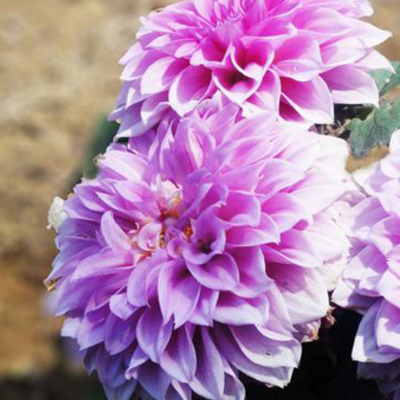
What to do when dahlias won't bloom:
1. Increase light exposure
Whether there is enough light is the key to growing dahlias. Insufficient light will cause the branches to grow leggy and weak; because the plant's internal nutrients are insufficient, it will either fail to bloom or produce few flowers.
2. Increase fertilization
Before planting or before the plant sprouts, sufficient base fertilizer must be applied. If the base fertilizer is insufficient, the number of topdressings can be appropriately increased.
3. Strengthen cold protection
In relatively cold regions, after winter begins, some dry grass and the like should be spread over the ground, or the dahlia's tuberous roots should be dug up, dried, and stored indoors, then planted in pots or in the ground around Qingming the following year.
What to do when dahlia leaves turn yellow and drop:
1. Pay attention to potting soil selection
Dahlias are suitable for cultivation in loose, humus-rich, well-drained sandy loam or artificially prepared nutrient soil.
2. Suitable light and temperature
Dahlias love light and need plenty of sunlight throughout the growing period, but it should not be too intense; during the seedling stage, direct sunlight should be avoided. Dahlias are neither cold-tolerant nor tolerant of intense summer heat. The most suitable growing temperature is 10°C-30°C.
3. Strengthen water and fertilizer management
Dahlias have thick, fleshy tuberous roots and are neither drought-tolerant nor waterlogging-tolerant. Watering should follow the principle of "water thoroughly only when completely dry," and standing water in the pot should be drained promptly during heavy rain. Dahlias love fertilizer; when applying base fertilizer, be careful not to let it touch the tuberous roots to prevent burning them.
4. Strengthen disease prevention and control
The main diseases of dahlias are powdery mildew and leaf spot, so ventilation and chemical control should be strengthened.
That covers the methods for dealing with dahlias that won't bloom and leaves that drop. Growing dahlias well is still a little bit challenging.
How to Grow Dahlias? What Are the Cultivation Methods, and How to Prevent Pest and Disease Invasion
When we talk about dahlias, we can't help but think of their flower colors, which are so vivid. They bloom successively between spring and summer, bloom again after the summer, and wither at the time of frost. Their flower shape resembles that of the magnificent tree peony, and their colors are gorgeous and varied, endearing them to people. Today let's learn about how to grow dahlias, what the cultivation methods are, and how to prevent pest and disease invasion.
How to grow dahlias?
1. Temperature and light:
Dahlias (large or small) like cool and mild climates and love sunlight. Dahlias love light and are not shade-tolerant. If placed in a shaded spot for a long time, they will grow poorly, with weak roots, thin leaves and stems, small and pale flowers, and some may even fail to bloom. They are highly adaptable and can also grow well under high summer temperatures. In late autumn, winter, and early spring, since temperatures are not very high, they should be given direct sunlight to help them carry out photosynthesis and form flower buds, bloom, and set seed. In hot weather or in summer, about 30% of the sunlight should be shaded out. If they are brought indoors for viewing after blooming, they should be placed near southeast-facing doors and windows to extend the flowering period and increase the number of flowers as much as possible.
2. Soil:
Heavy clay soil should be avoided; loose, fertile sandy loam is preferable. The best growing medium is fertile sandy loam, with both good drainage and good sunlight. Dahlias are suitable for loose, humus-rich, well-drained sandy loam. For potting soil when planting dahlias in containers, a culture soil generally made of vegetable garden soil (50%), leaf mold (20%), sand (20%), and dried manure (10%) is suitable. Compacted soil easily causes waterlogging and root rot, so it must not be used. In daily management, loosen the soil promptly and drain standing water from the pot, because dahlia's fleshy tuberous roots rot when the soil contains too much water and air permeability is poor.
3. Watering:
Potted plants should not be waterlogged, otherwise the tuberous roots easily rot. During the growing period, water and fertilize reasonably, and provide sufficient light so the plants grow strong with abundant flowers and lush leaves. In summer, water once a day; in winter, water once every 3-5 days. Dahlias like water but dislike waterlogging; they fear both flooding and drought. This is because dahlias have fleshy tuberous roots, and too much watering easily causes root rot. But dahlias have luxuriant branches and leaves and a high evaporation rate, so they also need more water. If they wilt from lack of water and cannot be replenished in time, then are exposed to sunlight, in mild cases the leaf edges scorch, and in severe cases the lower leaves drop off. Therefore, watering should follow the principle of "water thoroughly only when completely dry." Generally, in the early growth stage when plants are small seedlings, water needs are limited; on sunny days, water once a day, keeping the soil slightly moist as the standard; too dry or too wet are both unsuitable. In the later growth stage, when branches and leaves are lush, water consumption is greater; on sunny days or days with north wind, note that water shortage easily occurs at noon or in the evening, so the amount of watering should be appropriately increased.
4. Fertilizing:
Dahlias are a flowering plant that loves fertilizer. Starting from the seedling stage, generally apply a dilute liquid fertilizer once every 10-15 days. After budding, apply once every 7-10 days. When the flower buds show color, fertilization should stop. Fertilizer should also not be applied when temperatures are high. The amount of fertilizer applied should depend on the plant's growth condition. If the leaves are light in color and thin, it indicates a lack of fertilizer; conversely, if too much fertilizer is applied, the leaf edges scorch or the leaf tips turn yellow; thick leaves with a deep, rich green color indicate appropriate fertilization. The concentration of the fertilizer should be increased each time compared with the previous one; this can make the stems thick and strong.
Dahlia cultivation methods:
(1) Insert stakes to support the plants. Dahlia stems are both hollow and brittle, easily blown over and broken by wind, so bamboo stakes should be inserted in time for support. Staking can also prevent the branches from growing crooked and improve the ornamental value of potted plants. When the plant grows taller than 30 cm, a small bamboo stake should be inserted beside each branch and tied and fixed with hemp fiber (or thin string). As the plant grows taller, longer stakes should be replaced in time, and the last small stake inserted should reach up to the lower part of the flower bud.
(2) Protect the plants for safe overwintering. Dahlias are not cold-tolerant (mainly because the tuberous roots cannot freeze). In November, after the branches and leaves wither, cut off the aboveground part, move it indoors, and store it in the original pot. Alternatively, take out the tuberous roots, let them dry for 1-2 days, then bury them indoors in slightly moist sandy soil at a temperature not exceeding 5 degrees, and plant them in pots again the following spring.
How to prevent pest and disease invasion:
The pests and diseases that dahlias are prone to during cultivation include: powdery mildew, flower rot, snout moths, and red spider mites.
(1) Dahlia powdery mildew:
The disease is severe from September to November, and high temperature and high humidity will promote its occurrence. After being affected, the plant becomes short, the leaf surface becomes uneven or curled, and the tender shoots develop abnormally. After the flower buds are affected, they cannot bloom or can only produce deformed flowers. When the disease is severe, it can cause the leaves to dry up and even the whole plant to die.
Control methods:
① Strengthen care so the plants grow robustly and improve disease resistance. Control watering and increase phosphorus fertilizer. ② When the disease occurs, promptly remove diseased leaves and spray with a 50% amobam aqueous solution diluted 800 times or a 70% thiophanate-methyl solution diluted 000 times for control.
(2) Dahlia flower rot:
It mostly occurs from full bloom to the flower-falling stage. When soil moisture is relatively high and ground temperature is relatively high, the disease is more likely to occur. When the petals are affected, the spots are initially faded green, then turn yellow-brown; after the spots expand, they become irregular in shape, ranging from yellow-brown to gray-brown.
Control methods:
① Strengthen ventilation and light penetration between plants; in the later stage, neither water nor nitrogen fertilizer should be used excessively, and phosphorus and potassium fertilizers should be increased. ② After the bud stage, spray with 0.5% Bordeaux mixture or a 70% thiophanate-methyl solution diluted 1500 times, once every 7-10 days, for a relatively good control effect.
(3) Dahlia snout moth:
This insect mainly harms dahlias and chrysanthemums, with larvae boring into the stems to cause damage. When the damage is severe, the plant cannot bloom and may even be ruined.
Control methods:
Generally from June to September, spray once about every 20 days with a 90% trichlorfon technical solution diluted 800 times, which can kill newly hatched larvae.
(4) Red spider mite:
Red spider mite, namely the carmine spider mite, can be referenced in the control section on carmine spider mite in "Jasmine."
The above is all the knowledge I have learned today about how to grow the herbaceous plant dahlia, what the cultivation methods are, and how to prevent pest and disease invasion. I hope fellow flower lovers will find this article helpful after reading it. If you want to learn more about herbaceous plants, please continue to follow our Succulent Garden, which provides you with more related content!
A Complete Collection of Chinese Flower-Growing Proverbs
The history of flower growing among Chinese people is long and storied. Generation after generation of flower growers have summed up rich experience and passed it down, and when people gathered it together, flower-growing proverbs were formed. Chinese flower-growing proverbs read like idioms and jingles, catchy and full of wisdom. Below, let's look at the Chinese flower-growing proverbs collected and organized by the Flowers and Trees website.
Lilies mostly prefer acidic soil, though a few do not fall in line.Lily bulbs have no skin, so pest and disease control takes real effort.
Help people by helping their hearts; water flowers by watering their roots.
Apply thin fertilizer frequently.
Protecting flowers and fruit is not as good as protecting leaves.
Originally a sun-loving flower, eight hours of sun is best.
Croton likes clay soil.
Sowing takes many years; cuttings bloom in the same (next) year.
If you don't understand shade and sun, you're not a good gardener.
Don't water if not dry; when you water, water thoroughly.
Not choosy about soil and water, it settles in wherever it lands.
Tea wants acidic soil.
Tea prefers the shade of high mountains, yet delights in the early sun.
Sprinkle sulfur powder often, and mildew won't come knocking.
Water thoroughly in the morning, water lightly in the evening.
Achieve a good match for flowers, and fine varieties are right before your eyes.
When bolting and budding, quickly apply phosphorus and potassium.
During the budding and pregnancy stage, potted tea cannot be moved.
If seedlings are hardened after leafing out, the root system develops well.
Control the water well in the early stage, and later the leaves will not easily topple.
Sow in spring and enjoy flowers that same year; sow in autumn and wait until next year for fragrance.
Divide peonies at the spring equinox, and they will never bloom even when old.
Divide tree peonies in the spring breeze, and they will never bloom even when old. (This means not all flowers and plants are suitable for spring planting. Tree peonies have well-developed roots. If transplanted in this season, the roots are bound to be damaged, leading to insufficient nutrient uptake, and the phenomenon of "never blooming even when old" is very likely to occur.)
Take poinsettia cuttings in spring, and they can take shape by autumn of that year.
Spring warms and flowers bloom.
Divide in spring and autumn; take leaf cuttings in May and June.
Plant tree peonies in spring, and they will never bloom even when old.
At the turn of spring and summer, pests and diseases must be prevented.
Store nutrients in spring, go dormant in summer, grow in autumn, and bloom brilliantly in winter.
Coarse sand is best for cuttings.
Single-petal hibiscus is especially afraid of drought.
Nitrogen fertilizer grows branches and leaves; phosphorus fertilizer promotes fruit formation.
With enough nitrogen fertilizer, flowers will not appear.
Block wind and shelter rain through spring and summer; good winter temperatures promote sprouting.
Low temperature and too much water rot the roots and leaves.
When white roots come out of the bottom hole, move from a small pot to a large pot.
Withhold water in winter to suppress new shoots; in spring, more buds will form and more flowers will bloom.
Put on a film cover in winter, and camellias stay warm well.
Winter is easy to pass; spring is hard to get through.
Slipper orchids do not leave the room.
Slipper orchids are afraid of dryness.
Slipper orchids grow under the forest.
Peperomia, fond of warmth and coolness, finds it hard to get through high heat and cold chill.
Azalea roots must not be waterlogged.
Azaleas and Michelia alba like light fertilizer; pomegranate and Chinese rose like strong fertilizer.
Azaleas avoid strong fertilizer; one dose of strong fertilizer, and their little lives are in danger.
Azaleas have shallow roots; do not plant them too deep.
Azaleas like acid and hate salt and alkali.
Apply more organic nitrogen, phosphorus, and potassium; apply less chemical quick-acting fertilizer.
Pinch more, branch more, bloom more.
Below 25 degrees, growth and development are good.
Preventing disease is better than treating it; treating disease must be timely.
Apply less when fertilizer concentration is high, less when sprouting, less when blooming, and less after rain.
Fertilizers fall into two categories: organic and inorganic.
Manure must never touch the leaves; once it touches them, the leaves turn yellow.
Do not settle down in a drafty spot.
Hyacinth: dormant in summer, sown in autumn, sprouts in winter, blooms in spring.
Bromeliads fear cold, not heat.
Bromeliads' cups must never lack water.
When Buddha's hand comes out of the room, prune dead branches; light fertilizer feeding is suitable and should be applied frequently; cleverly use chemicals to prevent diseased branches.
Before the dog days, topdress with phosphorus and nitrogen; during the dog days, topdress with phosphorus and potassium.
Lotus is suited to summer and also to autumn; plant it once this year and it will fill the ditch.
Lucky bamboo does not care whether there is more or less water.
Lucky bamboo is easy to grow, but only fears freezing.
Dry orchids, wet chrysanthemums.
In high temperature and drought, guard against mite damage.
With high temperature and high humidity, powdery mildew easily occurs.
Put a laurel wreath on the wise.
Insufficient light turns variegated leaves green.
Too much light turns leaves yellow.
Poor light leaves the leaves looking sad.
Too little light harms them, too much also harms them.
With ample light, the colors are vivid and the flowers many.
Too much light and the plant stops growing.
Lack of light, and the colors are dull and the flowers small.
Light that is too strong scorches the leaves.
Enough light, and the fragrance is strong.
Monstera deliciosa fears strong light; after bringing it outdoors, place it in the shade.
Monstera deliciosa is phototropic; rotate the pot regularly to prevent uneven growth.
If osmanthus does not rest, next year's shoots will be poor.
Osmanthus loves fertilizer, especially phosphorus and potassium.
When too hot or too cold, stop fertilizing and hold back water.
Wintersweet cannot be killed by drought.
It loves fertilizer but hates concentrated fertilizer.
Good seeds produce good seedlings.
The most economical time to fertilize is ten days after the new shoots stop growing.
Phalaenopsis does not touch mud.
For Phalaenopsis, temperature is the lifeline.
The butterfly flutters about, but fears the cold wind.
Saxifraga stolonifera fears dryness.
Sansevieria is propagated by leaf cuttings.
Prune and fertilize after flowering, and it will sprout shoots and produce flower buds again.
After flowering is when fertilizer is most needed.
Water flowers with snow water, and they will be both large and beautiful.
Too much water during the flowering period makes the flowers drop.
When flowers and leaves turn white, there is not enough light.
Flowers choose their soil; they like it slightly acidic and hate saline-alkaline soil.
When repotting without trimming the roots, plant the original roots into the pot.
Prepare enough soil for repotting early, choose a good flowerpot and disinfect it well, and the base fertilizer at the bottom must be fully decomposed.
Yellow, withered lower leaves are best not picked off.
Cymbidium faberi fears both wetness and dryness.
Whether it lives or dies depends on water; whether it does well depends on fertilizer.
Cryptanthus needs no soil.
Impatiens has fast-ripening seed capsules; do not wait until they split to harvest.
Avoid concentrated fertilizer, avoid raw fertilizer, avoid fertilizer sitting on the roots, and avoid fertilizer when hot.
If a home has no south-facing wall, do not plant hostas and crabapples.
After cutting good cuttings, wait until the cut end forms a gel.
Water when dry, and let it dry between waterings.
Calla lily cannot be killed by watering.
Watering: more in spring and autumn, less in summer and winter.
When watering, observe three things: the flower, the pot, and the weather.
Calendula is naturally tough; it can live wherever it is planted.
Bringing it indoors too early makes the flowers poor.
On the ninth day of the ninth month, prune the pomegranate.
In the ninth month, thin the buds and keep one; in the tenth month, the flower opens as big as a bowl's mouth.
Water the roots with leek juice, and the leaves will be emerald green.
When chrysanthemums show buds at White Dew, remove the side buds without delay.
For Cattleya, the key to flowering is light; too much or too little light is both bad.
Fertilizing during the flowering season burns off both buds and petals.
When chrysanthemum leaves look soft, water them at once.
Control water but not fertilizer, and the stems will be thick and the flowers beautiful.
Water azaleas with aged water, and the leaves will be lush and the flowers vivid. (Aged water: snow water or rainwater that has been stored or left to stand for some time.)
Wintersweet has no shortage of branches; it can be pruned from March to June, but do not prune in other months.
Orchids love the morning sun but fear scorching exposure.
Cold fertilizer for flowers, hot fertilizer for vegetables; if raw fertilizer is used, everything burns up.
Plant roses at the two transitions, when both timing and conditions are right. (The transition between spring and summer, and between autumn and winter.)
Phosphorus promotes flowers, nitrogen grows leaves, and potassium fertilizer strengthens stems and bones.
When Epiphyllum shows flower buds, water at eighty percent.
Keep spring shoots, not autumn shoots. (When pruning, keep spring shoots and remove autumn shoots.)
Keep autumn shoots, not spring shoots. (Remove spring shoots and keep autumn shoots.)
Aloe cannot be dried to death.
Bare-rooted orchids should be washed first when they arrive; newly potted orchids need soaking.
Pothos loves plenty of moisture.
Green cactus balls are grown from their own roots; colorful cactus balls are mostly grafted.
The fragrance of plum blossom comes from bitter cold; without passing through bitter cold, the flowers are hard to open. (During the bud stage, if plum blossoms do not go through a period of low temperature, flowering is often abnormal, with small flowers and flowers and leaves sprouting together.)
Plum loves simplicity and purity.
When the plum rains fall continuously, that is just the time for cuttings.
Narcissus must have some sunlight every day to develop well.
Suddenly exposed to strong light, the leaves will be scorched.
Fertilize sparingly at the seedling stage, and fertilize more once the flower stems grow out.
Do not mistake poppies for cosmos.
Do not water halfway down.
Tree peony prefers dry conditions to wet ones.
Tree peony likes coolness but fears freezing, likes warmth but fears heat, likes light but fears shade, likes dryness but fears wetness.
Drought-tolerant, fears waterlogging.
Drought-tolerant, avoid wetness.
Kalanchoe is drought-tolerant and fears waterlogging.
Peperomia is shade-tolerant, an excellent indoor ornamental.
A well-fed mother means strong children.
Better wet than dry.
When women grow flowers, men leave home. (Russian proverb)
Fears cold, not heat.
The key to potted plum is pruning.
To see flowers on potted plum, the key is getting through summer.
If the potting soil is too wet, the roots suffocate; if the potting soil is too dry, the leaves drop and dry up.
Potting soil should be on the acidic side; heavy clay soil will not do.
Standing water in the pot rots the roots, and soil that is too dry turns the leaves yellow.
A thousand-year-old lotus seed can still sprout.
If cuttings fail, use layering.
If cuttings do not root, layering can multiply the plant.
Good cuttings mean early flowering.
For rooting Epiphyllum cuttings, May and June are best.
Water often with magnetized water, and the flowers will be fresh and the leaves emerald.
Diligent people keep fish; lazy people keep flowers.
Orchids want clear water; jasmine wants rich water.
Tree peony wants clear water; Chinese peony wants rich water.
Hold back water in autumn, and next year the flowers will be beautiful.
Autumn chrysanthemums defy the frost.
Plant cotton rosemallow in autumn and store it in a cellar; plant cuttings next year and the flowering branches will be vigorous.
Keep a pot of mosquito-repellent plant at home, and you need not fear mosquito bites.
Lacking sunlight, the cactus body grows long and spindly.
People eat rice, noodles, and vegetables; flowers eat nitrogen, phosphorus, and potassium. A partial diet often happens, but total neglect will not do.
People have hardness and softness; water has hardness and softness.
If the fleshy roots are not well developed, apply more potassium.
If you want fruit all over the branches, apply more phosphorus and potassium.
If you want large flowers, remove the side buds.
If you want orchids to do well, let the wind blow them tilting and swaying.
Prune in the third month, plant cuttings in the fourth, pinch the tips in the fifth; in the seventh, eighth, and ninth months, pour on the manure water.
Pansy likes coolness; it grows poorly in high temperature and high humidity.
Jasmine cannot be killed by sun.
Camellia fears saline-alkaline soil, and also fears clayey soil.
Camellia has five taboos: avoid alkaline and clayey soil, avoid severe heat and severe cold, avoid scorching sun, avoid fertilizer that is too concentrated, and avoid watering too much.
Misty mountains produce camellias.
Pinch the tips of Chinese peony; trim the feet of tree peony.
In midsummer and severe winter, watering must stop.
Fertilizing: in the first half of the year, the third, fourth, and fifth months; in the second half, the eighth, ninth, and tenth months.
Do not fertilize evenly; give more to the red flowers.
If fertilizer is applied unevenly, the stems will grow unevenly too.
Fertilize sparingly rather than heavily.
Dendrobium orchids love the morning sun.
Pomegranate is fairly drought tolerant; too much water makes the roots rot.
Like a vine but not a vine, it needs support.
With high indoor temperatures and dim light, narcissus leaves turn yellow and the flowering period is short.
When room temperature is high and the air is dry, camellia buds drop easily.
Do not harvest seeds late; pick them before they turn black.
Too much water causes flowers to drop.
Water is the source of all life.
Water temperature should match soil temperature.
Water-grown narcissus needs careful management to have vivid colors and fuller fragrance. (early growth stage)
A fleeting bloom like the epiphyllum.
For the climbing honeysuckle, one pruning every three to four years is best.
Storms come without warning, and flowers have diseases hard to prevent.
Growing lotus in an iron pot gives lush leaves and bright flowers.
Do not fertilize when plants are leggy, when newly planted, during dormancy, or in the height of summer.
Heavy clay soil makes roots rot easily.
When soil is on the alkaline side, leaves turn yellow and discolored; when soil lacks nutrients, branches weaken and stop growing.
When soil is on the alkaline side, chlorosis is easy to get.
For soil moisture, half-moist is best.
Soil is the foundation of roots.
Soils have five colors, each with different properties.
Rabbit's-foot fern fears both cold and heat; no lower than five, no higher than thirty.
All things grow by the sun.
When temperature is suitable, flowers are vigorous.
High temperature with cold water makes leaves wither.
When the temperature passes twenty-five, sowing should stop.
A mild, moist environment is best; grow camellias this way for fine blooms.
Oncidium fears frost but not cold; it can get through the degrees.
To sow asparagus fern, the seeds must first be soaked.
During the flowering period of asparagus fern, the pot must not be moved.
There is no trick to growing asparagus fern; just master fertilizing and watering well.
The colorful ranunculus is a guest of honor at Spring Festival time.
Western azaleas stay above zero, keep dormant and do not grow leggy, with many petals, vivid colors and vigorous flowering branches.
Dahlias love fertilizer; apply plenty of nitrogen and potassium.
Dahlias love light; they need ten hours of sunshine.
Loves light, avoids heat.
Loves moisture, avoids waterlogging.
Loves moisture, fears rainlogging.
Cattleya loves moisture and fears cold.
Loves warmth, avoids high heat.
Loves warmth, not cold-tolerant.
Loves warmth, fears scorching heat; loves fertility, fears strong fertilizer; loves moisture, fears waterlogging.
Loves warmth, fears cold.
Loves sunlight, avoids scorching exposure.
In summer avoid the blazing sun like a furnace; in winter avoid insufficient light.
When summer is too hot, flowers and leaves drop easily.
Do not fertilize when summer temperatures are high.
Why need to understand every word when gazing at flowers? The truest flower lover is the one who cherishes them.
To grow paphiopedilum well, suitable light is very important.
To keep plants short, root pruning is the way.
Sun-facing flowers and trees meet spring early.
Pomegranates facing the sun turn red as fire; apricots facing away from the sun are sour to the core.
The tiny Cryptanthus can make its home in a bottle.
If new leaves curl, it must be too much fertilizer.
Pruning plus pinching back doubles the number of flowers.
Snow water is gold, rain water is silver; frequent tap water makes plants prone to illness.
Lavender, the pride of Portugal.
Tropical orchids grow on trees.
To grow white magnolia well, watering is the key.
Growing flowers without fertilizing is a wasted effort.
A thousand days of growing flowers can be ruined in a moment.
Three years of water for growing flowers. (Growers need years of exploration to master watering techniques.)
To grow flowers, first grow leaves; to grow leaves, first grow roots.
Keeping them alive is easy; keeping them thriving is hard.
Too weak a dose cannot cure the disease; too strong a dose harms the plant.
If you want lilies to bloom often, plant early and harvest late.
If you want to see plum blossoms at Spring Festival, keep things moist a month before.
If you want azaleas to suffer fewer diseases, plant more chives in the garden.
If you want more fruit, do not rub off spring shoots carelessly.
If you want good flowers, feed the fertilizer well.
If you want fragrant flowers and strong leaves, choosing good bulbs is most important.
If you want a profusion of flowers next year, change the soil after potted plum blossoms fade.
If you want plum blossoms to thrive, summer management must keep up.
If you want dianthus to grow well, replace the plants every two or three years.
If you want vivid leaves, strong light and ample fertilizer.
When leaf backs are covered in rust color, spider mites are running rampant.
Do not let water collect in the leaf cluster.
When leaves grow to four or five, do not delay transplanting.
Leaves flat and spread out: light is just right; leaves tilting up: sunlight is too little; leaves drooping: sunlight is too strong.
When the axillary bud is the size of a wheat grain, it is the best time for cleft grafting.
Once drought-stricken, recovery takes several years.
The whole year's plan lies in spring.
Better dry than wet.
Better shallow than deep; if too deep, roots will rot.
The chloranthus cannot be killed by shade, nor the jasmine by sun.
Camellia for shade, peony for sun.
Watering flowers with hard water will harm them.
With light and without light is not the same; only with ample light are flowers fragrant.
With a mind to grow flowers, they do not bloom; without a mind to plant a willow, it grows into shade.
With a mind to plant flowers, they do not bloom; without a mind to plant a willow, it grows into shade.
When young, keep dry; before flowering, keep moist; in summer, water must be ample.
Fish water is fat, rice water is strong; tap water is only safe after standing overnight.
The corn poppy is not delicate; it tolerates cold, fears heat and avoids waterlogging.
Take honeysuckle cuttings in the rainy season; you can enjoy the flowers in summer and autumn the next year.
Tulips need sandy loam.
When it meets acid, primrose turns yellow.
If rose branches are not pruned, next year's flowers will be sparse.
Cut the spent blooms off the rose, and flowers will keep coming endlessly.
The more sun, the redder the flowers; the more sun, the more fruit.
When flowering during bud stage, the soil must be kept moist.
With proper cultivation, few diseases arise.
Soak in cold water before planting, and the tubers develop early.
When planting peonies, cover with no more than one inch of soil.
Planting should not be deep; the head should stick out.
Water in the morning, keep dry at night; this ensures strong leaves and fresh flowers.
Water early, fertilize late.
Morning water is gold, evening water is silver; watering flowers at noon is deadly.
With long-term lack of sunlight, leaves turn yellow; left long in a cold room, leaves turn black.
Long-day or short-day, there must be no day without sunlight.
Fertilize more when plants lack nutrients, more before sprouting, more before budding, more after flowering.
When planting lilies, avoid continuous cropping.
If seeds have a short lifespan, storing them makes sowing difficult.
If seeds are hairy, mixing with soil before sowing works well.
With a large day-night temperature difference, cuttings root better.
With a large day-night temperature difference, growth and development are better.
With a large day-night temperature difference, dendrobium grows better.
With a suitable day-night temperature difference, flowers bloom vigorously.
Amaryllis planted deep will not bloom; winter coral with too much water will not bear fruit.
For Hippeastrum (amaryllis), planting the bulb deep encourages it to produce offsets, while planting it shallow encourages flowering. (This means planting shallow is good for flowering, and planting deep is good for producing small offsets.)
Cordyline fruticosa should not live in a big house. (The flower pot should not be large.)
Nepenthes (pitcher plants) need high temperatures.
Beside the pigsty, osmanthus thrives.
Bamboo rhizomes do not cross a trough, and lotus does not cross a bridge. (Because it is shady under the bridge, lotus cannot grow there.)
Maranta (prayer plant) fears the cold and is shy. (Shy of sunlight.)
Maranta fears strong light.
Though Maranta is pretty to look at, do not be slack about protecting it from the cold.
A crop is a flower, and it all depends on fertilizer to make it thrive.
The redbud (Cercis chinensis) blooms on old wood, while the plum blossom blooms on new branches.
One raised from childhood is one's own daughter; one who enters the home grown up is a daughter-in-law.
So, after reading so many flower-growing proverbs you must have benefited a great deal, but if you only read flower-growing proverbs without getting your hands dirty and growing a few pots of flowers, you will not remember anything. Clever and hardworking flower lovers, hurry up and get to work growing a few pots of flowers, and put the flower-growing proverbs you have read into practice!