Can fig trees be planted at the front door? What medicine to use for foot rot
Figs are familiar to many people; they are a fruit, but a rather delicate one that is hard to store. So can figs be planted at the front door? What medicine to use for foot rot:
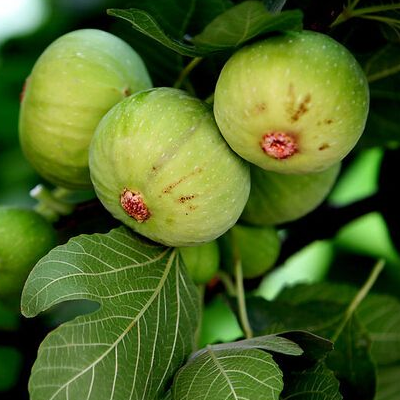
Can figs be planted at the front door:
Many people believe figs are very unlucky, "no flower, no fruit," so they cannot be planted at the front door. Actually, that is not the case at all!
Figs are most suited to being planted in front of or behind the house, and figs are not truly flowerless. If you pick one when the small fig has just emerged at the leaf axil, you can see a small scar at the tip, and on closer look there is a small hole. Cut it into two halves with a knife and you will see many small flowers growing inside, and in two different forms as well.
What medicine to use for foot rot:
Drain promptly, improve light penetration and ventilation in the orchard, and strengthen control of longhorn beetles and other trunk pests; use disease-resistant rootstocks such as trifoliate orange, citrange, and sour orange. For plants already infected, use resistant rootstocks for approach grafting to replace the rootstock. Chemical control: scrape off the lesions and apply medicine; commonly used medicines include carbendazim, thiophanate-methyl, and others.
Most people think figs cannot be planted at the front door, and attention should be paid to foot rot.
What medicine to use for fiddle-leaf fig Phytophthora rot, pest and disease control for fiddle-leaf fig / spray after pruning leaves
As a plant with strong adaptability, the fiddle-leaf fig generally rarely suffers from pests and diseases, but due to environmental reasons, plus improper care by hobbyists, it can also get insects and fall ill. We won't talk about insects; diseases are what we need to focus on, and among them Phytophthora rot is the most serious. So what medicine to use for fiddle-leaf fig Phytophthora rot? Below is the pest and disease control for fiddle-leaf fig, let's take a look!
Pest and disease control for fiddle-leaf fig
(1) Fiddle-leaf fig Phytophthora rot
1. Symptoms
Phytophthora rot is a very common disease of the fiddle-leaf fig and seriously affects its ornamental value. The disease first infects the leaves, causing gray water-soaked lesions to appear, after which the lesions rapidly enlarge, turn dark brown, and rot away.
2. Causes
The occurrence of fiddle-leaf fig Phytophthora rot is often induced by multiple factors. First, the pathogen attaches to the soil or to diseased parts of the plant to overwinter, and once it receives moisture it spreads. In summer, under high temperatures, if the room is not ventilated, Phytophthora rot will suddenly break out.
3. Control methods
After discovering that the fiddle-leaf fig has Phytophthora rot, you should quickly move the plant to a ventilated sunny spot (light should not be too strong), then cut off the severely diseased leaves. As for the mildly diseased leaves, cut off the lesions together with part of the healthy tissue, then spray Bordeaux mixture for protection. Of course, there are many other liquid medicines to choose from, such as 80% zineb wettable powder at 500 times dilution or 25% metalaxyl wettable powder at 500-800 times dilution, etc. Rotating the medicines gives better results.
Note: After clearing away the dead and diseased parts of the fiddle-leaf fig, remember to disinfect. The editor recommends watering the soil with 1% copper sulfate or sprinkling some quicklime powder on it.
4. Prevention
Fiddle-leaf fig Phytophthora rot causes great harm to the plant and seriously affects its ornamental value. Smart people do not wait for things to happen and then think about how to remedy them, but carry out prevention in good time. For this, hobbyists should strengthen daily management according to the growth habits of the fiddle-leaf fig, which helps enhance the plant's disease resistance and make it healthier. The specific preventive measures are as follows:
① The potting soil for the fiddle-leaf fig is best chosen as loose, breathable, well-draining sandy soil;
② Give the fiddle-leaf fig sufficient light; in summer provide appropriate shade to avoid direct sunlight, and in winter let it get more sun;
③ In winter move it indoors for care; the room temperature should preferably not be lower than 10°C, to prevent frost damage that leaves hidden troubles;
④ Water frequently in daily care, but do not water too much; a long-term damp environment does not bring too many benefits;
⑤ Usually pay more attention to cleaning dust off the leaves to keep them tidy and dry.
(2) Fiddle-leaf fig leaf spot disease
1. Causes and symptoms
Besides fiddle-leaf fig Phytophthora rot, when indoor temperatures fluctuate greatly in a short period, or when too much water is given during the dormant period, the fiddle-leaf fig is also prone to leaf spot disease. When the disease occurs, many small brown spots appear on the leaves, and in severe cases the spots cover the entire leaf.
2. Control methods
Promptly remove diseased leaves and destroy them in a centralized way to reduce the source of disease; start spraying from the early stage of the disease to prevent it from spreading, with liquid medicines such as 65% zineb at 500 times dilution or 25% myclobutanil emulsifiable concentrate at 800 times dilution; spraying 1-2 times every 10-15 days can be effective.
Overall, the cultivation method for the fiddle-leaf fig is not difficult, and it has strong adaptability; as long as everyone takes a little care in maintaining it, it will not suffer from pests and diseases. Still, to prevent trouble before it happens and avoid being in a flurry when problems arise, everyone should remember the control methods above. That is all the editor has to introduce about the control of fiddle-leaf fig Phytophthora rot, and I hope it can help everyone.
What medicine to use for grape bitter rot?
Bitter rot mainly harms the fruit, with the damage being more severe on nearly ripe fruit. High temperature, abundant rain, and humidity are the main factors inducing more severe occurrence of bitter rot, so what medicine to use for grape bitter rot?
What medicine to use for grape bitter rot?
(1) Do a good job of orchard sanitation and eliminate the overwintering source of the pathogen
After leaf fall or before taking the vines down from the trellis, thoroughly remove the diseased mummified fruit on and under the trellis, take them outside the orchard in a centralized way and destroy them, treat the places where the pathogen overwinters, and reduce the amount of overwintering inoculum. After the grapevines are put up on the trellis or before bud break, spray the whole orchard once with 30% Longdeng Fulian (tebuconazole·carbendazim) suspension concentrate at 300-400 times dilution, 60% Tongjia (copper calcium·carbendazim) wettable powder at 300-400 times dilution, or 77% Duoning (copper calcium sulfate) wettable powder at 300-400 times dilution, to kill the latent pathogens on the canes.
(2) Spray medicine at the right time during the growing season
Bitter rot mostly occurs sporadically, and generally orchards do not need separate spraying for its control. In the few orchards that had heavier disease in previous years, start spraying 1.5 months before grape harvest or when diseased clusters are first seen, once every 10-15 days, and about 2 consecutive sprays can effectively control the occurrence and damage of this disease. The commonly used effective medicines are the same as the effective medicines for controlling "black rot."