Is the African violet toxic? A detailed guide to propagation methods
The African violet is a very small and beautiful plant, and also a plant very well suited to cultivation, so how do you propagate an African violet? Is the African violet toxic?
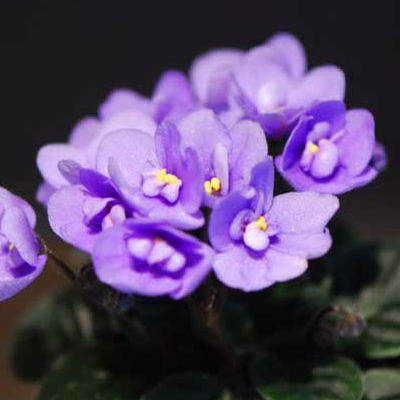
How to propagate an African violet:
1. Leaf-cutting propagation method
The African violet commonly uses cutting propagation, mainly leaf cuttings. After flowering, select healthy, plump leaves, cut them off leaving a 2 cm long petiole, let them dry slightly, insert them into a sand bed, and maintain relatively high air humidity. The room temperature should be 18-24°C. Roots form 3 weeks after insertion, and in 2-3 months young seedlings will be produced; move them into 6 cm pots. During the cutting process, treating with vitamins is beneficial for root formation and subsequent seedling growth of the African violet. Treating the petioles with 25 mg/liter of kinetin for 24 hours is favorable for the formation of adventitious buds. From cutting to flowering takes 4-6 months.
2. Stem-cutting propagation method
Stem-cutting propagation is also a method chosen for the African violet, mainly in spring after the flowers fade. Combined with repotting and changing the soil, the underground tubers are divided and planted. Seedlings form quickly, but the plant shape is not attractive enough, and because the plant has not been renewed, growth is not vigorous enough.
3. Tissue culture propagation method
The currently rather popular propagation method for the African violet is tissue culture propagation, using leaves, petioles, and epidermal tissue as explants. Use MS medium plus 1 mg/liter 6-benzylaminopurine and 1 mg/liter naphthaleneacetic acid. Four weeks after inoculation, adventitious buds grow out, and after 3 months the rooted plantlets can be planted. The plantlets are transplanted into a substrate of half leaf mold and half peat moss soil, with a 100% survival rate. At present, the United States, the Netherlands, Israel and other countries all have African violet test-tube plantlet production. However, this method produces rather many plantlets and is not very suitable for home cultivation.
4. Seed propagation method
African violet seed propagation can be carried out in spring and autumn. For greenhouse cultivation, autumn sowing in September-October is preferable, with a high germination rate, and the seedlings grow robustly, flowering the following spring with large plants and many flowers. Sowing in February means flowering in August, but the growth vigor is slightly poorer and there are fewer flowers. African violet seeds are tiny, so the sowing soil should be fine; after sowing, do not cover with soil, just press flat. The suitable germination temperature is 18-24°C. Germination occurs 15-20 days after sowing, and seedlings are moved in 2-3 months. During the seedling stage, note that the potting soil should not be too wet. Generally, from sowing to flowering takes 6-8 months.
Is the African violet toxic:
No. On the contrary, it also has the effect of improving indoor air quality and purifying the air. While improving the air, it can also regulate mood, soothe emotions, and help relieve excessive stress in life.
Well, that is all for the introduction to the African violet. Friends, you all know now, right? It is not toxic.
Is the African violet toxic? Can the African violet be placed in the bedroom? Non-toxic and good for people
As an ornamental flower, the African violet has strong benefits. Not only are its flowers beautiful, it can also purify the air and beautify the home, and it is deeply loved by flower enthusiasts. However, to grow an African violet indoors, everyone must first clarify two questions: Is the African violet toxic? Can the African violet be placed in the bedroom? For this, let the editor clear up your doubts.
1. Is the African violet toxic? No.
The African violet's delicate, small form and brilliantly colored flowers look poetic and make people's hearts stir. But it is precisely its abundant flowers that make people think it is toxic, so is the African violet toxic? For this, the editor can clearly tell everyone that the African violet is non-toxic. Whether it is the scent, the petals, or the sap, none are toxic; it is merely an ornamental flower.
2. Can the African violet be placed in the bedroom? Not recommended.
After knowing the African violet is non-toxic, many people want to grow it in the bedroom, so can the African violet be placed in the bedroom? For this, the editor's answer is that it is not recommended. Because at night, the African violet will carry out respiration: absorbing oxygen and releasing carbon dioxide. If the bedroom is small and closed off, this will create a situation of competing with people for oxygen, affecting people's sleep.
3. Is keeping an African violet at home good for the body?
1. Highly ornamental, pleasing to look at
Although the bedroom is not suitable for placing an African violet, placing a pot of African violet in other locations at home still has many benefits for people. First, naturally, is that it is highly ornamental and pleasing to look at. As shown in the picture above, the African violet plant is small and delicate, with handsome and elegant flower shapes and rich flower colors, and it is extremely ornamental when placed indoors.
2. Decorating the home, beautifying the environment
The African violet has a long flowering period and brilliant, colorful flowers, and it blooms all year round, making it very suitable for growing indoors. As a potted plant, it can be used to decorate windowsills, living rooms, and coffee tables as a good accent, with an excellent effect of beautifying the home. In an unchanging home, adding a pot of African violet will make it more elegant and distinctive.
3. Absorbing waste gases, purifying the air
Keeping an African violet at home not only brings us visual enjoyment, its ability to purify the air is also very strong. The African violet can not only absorb harmful gases such as carbon dioxide and release oxygen, it can also release a charming floral fragrance, making our home environment fresher.
4. Calming the mind, a great gift
In addition to the above points, keeping an African violet at home can also cultivate our character and enhance our temperament. Not only that, raising an African violet for a long time can also regulate mood, relieve stress, and have a calming effect. In addition, this plant's flower language is eternal love, and it is the best gift that can be given to relatives or a loved one.
Overall, if the bedroom is large or well ventilated, keeping a pot of African violet is very good, but if the bedroom is not large, the editor suggests everyone not keep one. As for whether the African violet is toxic, the editor has introduced that here. Friends who are tempted might as well try keeping a pot. Those who do not know how to grow it can also look at the African violet cultivation methods, hoping to be of help to everyone.
The benefits and effects of the African violet
Have you all seen the plant known as the African violet? This is an ornamental flower native to Africa. It has many varieties, flower sizes vary, and petal shapes also differ, with colors including purple-red, white, blue, and purple, among others. The African violet has not been in our country for long. This plant is most popular and especially common in Europe and America. Below, the editor will introduce the benefits and effects of the African violet, so that friends who like plants can understand it a little more.
The benefits and effects of the African violet1. The greatest effect of the African violet is beautifying the environment and being for people to admire. This plant is not large, but it blooms all year round, its flower shape is very beautiful, and its flower colors are even more varied and alluring. It is one of the most commonly seen plant varieties in garden scenic areas everywhere. In addition, the African violet is also suitable for making into potted plants that can be placed in living rooms, on coffee tables, and windowsills, etc., allowing the indoors to have more natural atmosphere and playing a very good decorative role.
2. The African violet also has quite outstanding purifying effects. This plant has thick leaves and an alluring form, and can bloom all year round. After being placed indoors, it can purify the indoor air, decompose carbon dioxide and other toxic substances in the air, and improve indoor air quality, thereby playing a role in regulating human mood and relieving stress.
3. The African violet also has a certain economic value. When this flower circulates on the market, its price is not low. Large-scale cultivation can bring considerable income to flower farmers. In addition, this plant's flower language is eternal love, and it is the best gift that can be given to relatives or a loved one.